Kirjojen hintavertailu – 12 859 827 kirjaa ja 27 kauppaa

Kirjailija

Michel Warschawski

Kirjat ja teokset yhdessä paikassa: 4 kirjaa, julkaisuja vuosilta 2004–2007, suosituimpiin kuuluu Toward an Open Tomb. Vertaile teosten hintoja ja tarkista saatavuus suomalaisista kirjakaupoista.

4 kirjaa

Kirjojen julkaisuvuodet: 2004–2007.

33 Day War

33 Day War

Gilbert Achcar; Michel Warschawski

Paradigm
2007
nidottu
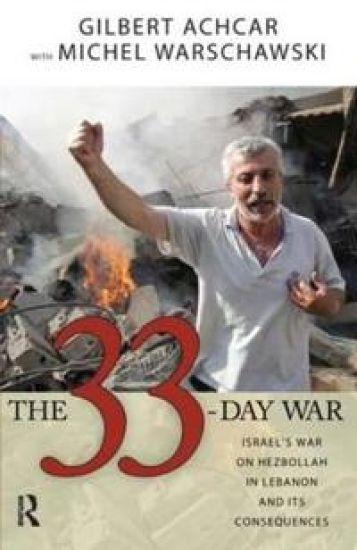
This book assesses the causes and consequences of the impact on the recent Middle East war. The authors describe the popular basis of Hezbollah in Lebanon among the Shiites, but also its relation to the country's other religious communities and political forces. They analyze the regional roles of Syria, Iran, and Hamas as well as the politics of the United States and Europe. The authors dissect the strategic and political background behind recent actions taken by Israel; the impact of Israel's incursion into Lebanon and effects on Lebanon's population -- and the consequences of the war on Israel polity and society.
33 Day War

33 Day War

Gilbert Achcar; Michel Warschawski

Paradigm
2007
sidottu
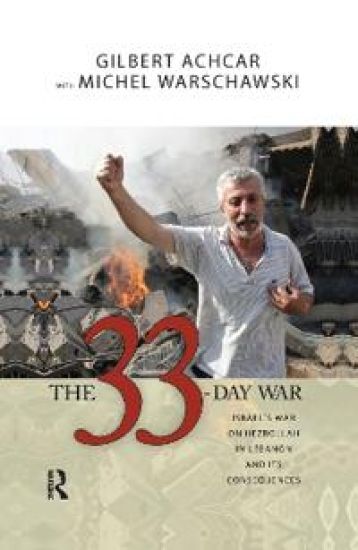
This book assesses the causes and consequences of the impact on the recent Middle East war. The authors describe the popular basis of Hezbollah in Lebanon among the Shiites, but also its relation to the country's other religious communities and political forces. They analyze the regional roles of Syria, Iran, and Hamas as well as the politics of the United States and Europe. The authors dissect the strategic and political background behind recent actions taken by Israel; the impact of Israel's incursion into Lebanon and effects on Lebanon's population -- and the consequences of the war on Israel polity and society.
Toward an Open Tomb

Toward an Open Tomb

Michel Warschawski

MONTHLY REVIEW PRESS,U.S.
2004
sidottu
Since the breakdown of the Oslo peace process in 2000 and the beginning of the second Intifada, conflict has escalated in Israel/Palestine and come to seem irreversible. The overwhelming power of the Israeli military has been unleashed against a largely defenseless population in the occupied territories of the West Bank and Gaza, driving Palestinians to despair and to desperate measures of retaliation. The author of this book, Michel Warschawski, has for many decades been active in building alliances of Jews and Palestinians to oppose the Israeli occupation. In this book, however, he focuses especially on the effects of the occupation on the occupiers--that is, on Israeli society--rather than its victims. Warschawski describes the atrocities of the occupation--from the sack of Ramallah to the massacre in Jenin, the razing of houses and refugee camps, shooting at ambulances and hospitals, the use of Palestinian civilians as human shields--showing how each of these pushes back the boundaries of what was previously thinkable. He documents the resulting shifts in Israeli political thought, citing Ariel Sharon, army officers and even rabbis who begin by describing Palestinians as Nazis and end by relying on the German army's tactics for subjugating the Warsaw ghetto. Toward an Open Tomb seeks to explain the forces within Israeli society and culture that are leading to this self-defeating result. Warschawski has the keen eye of an Israeli insider. He develops a powerful critique of Israeli policies with a persuasive power drawn from his own Jewish origins and his deepening devotion to Jewish traditions.

Toward an Open Tomb

Toward an Open Tomb

Michel Warschawski

Monthly Review Press,U.S.
2004
nidottu
Since the breakdown of the Oslo peace process in 2000 and the beginning of the second Intifada, conflict has escalated in Israel/Palestine and come to seem irreversible. The overwhelming power of the Israeli military has been unleashed against a largely defenseless population in the occupied territories of the West Bank and Gaza, driving Palestinians to despair and to desperate measures of retaliation. The author of this book, Michel Warschawski, has for many decades been active in building alliances of Jews and Palestinians to oppose the Israeli occupation. In this book, however, he focuses especially on the effects of the occupation on the occupiers--that is, on Israeli society--rather than its victims. Warschawski describes the atrocities of the occupation--from the sack of Ramallah to the massacre in Jenin, the razing of houses and refugee camps, shooting at ambulances and hospitals, the use of Palestinian civilians as human shields--showing how each of these pushes back the boundaries of what was previously thinkable. He documents the resulting shifts in Israeli political thought, citing Ariel Sharon, army officers and even rabbis who begin by describing Palestinians as Nazis and end by relying on the German army's tactics for subjugating the Warsaw ghetto. Toward an Open Tomb seeks to explain the forces within Israeli society and culture that are leading to this self-defeating result. Warschawski has the keen eye of an Israeli insider. He develops a powerful critique of Israeli policies with a persuasive power drawn from his own Jewish origins and his deepening devotion to Jewish traditions.