Kirjojen hintavertailu – 12 859 818 kirjaa ja 27 kauppaa

Kirjailija

Michel Wieviorka

Kirjat ja teokset yhdessä paikassa: 8 kirjaa, julkaisuja vuosilta 1983–2025, suosituimpiin kuuluu Solidarity. Vertaile teosten hintoja ja tarkista saatavuus suomalaisista kirjakaupoista.

8 kirjaa

Kirjojen julkaisuvuodet: 1983–2025.

Solidarity

Solidarity

Alain Touraine; François Dubet; Michel Wieviorka; Jan Strzelecki

Cambridge University Press
1983
pokkari
This 1983 book records a fascinating analysis of the Solidarity movement in Poland. Alain Touraine here proposes an understanding of the place of social movements in contemporary society, and a fresh means of analysing them through 'sociological intervention'. In 1981 he and a team of researchers applied these research methods to the Solidarity movements. Groups of Solidarity activists were involved in a discourse over the nature and aims of their political and economic struggle. What emerges is a record of exceptional value in understanding the movement which transformed Polish society, placed firmly in the terms of the Solidarity activists' own understanding of their role, but equally relating this role to a broad analysis of the social structures of eastern Europe. This reflection on forty years of Communist regimes in Europe will appeal to a wide readership interested in Solidarity and Poland.

The Last Jewish Joke

The Last Jewish Joke

Michel Wieviorka

JOHN WILEY AND SONS LTD
2025
sidottu

Halvin toimitettuna 33,90 €

The golden age of Jewish humour flourished in the second half of the twentieth century, enjoyed by Jews and non-Jews alike, but its twilight years are now in sight. Telling jokes has the potential to reaffirm community once religion, political loyalties and victimhood are stripped away: from the 1960s on, a unique cultural dynamism bound up in these jokes reminded Jews around the world of what it means to be Jewish. Often, jokes pit one group against another, but Jewish jokes opted for self-deprecation instead, and in this case, laughing at the group reinforced it. They enabled Jews to live in harmony with others in full conscience of their differences and they safeguarded a desire for survival at the heart of Jewish identity. Moreover, absurd, larger-than-life characters such as Rabbi Jacob generated tolerance, empathy and tenderness among non-Jews after the horror and guilt of the Shoah. From the early 2000s, however, the space that allowed Jewish jokes to flourish began to shrink, due to a decline in the understanding of the Shoah, a less positive image of Israel and a waning of the importance of Jewish culture in American intellectual and cultural life. This playful and personal book by Michel Wieviorka includes Jewish jokes but also laments the disappearance of the Jewish joke and eulogises its ability to allow the thriving of community alongside difference. It is an original and wide-ranging analysis of the evolution of the diaspora and its relationship with the State of Israel, its history and dramas as well as its cultural creativity.
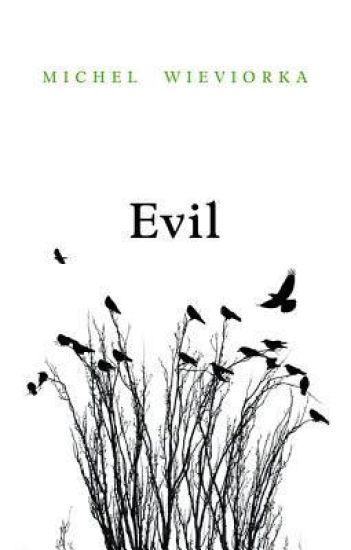
Evil

Evil

Michel Wieviorka

Polity Press
2012
sidottu
In contrast to traditional systems of thought which regarded evil as a supernatural force that explained human misfortune, Michel Wieviorka develops a sociological analysis of evil phenomena. His aim is to explain evil, to reveal its social, political, and cultural sources, and to clarify the processes through which the present-day forms of evil - terrorism, violence, racism, and active hatred - are constituted. A synthesis of the author's detailed studies of these forms of evil, this book offers a fresh approach to the understanding of the darker regions of human behaviour. If we wish to live in an open, democratic world in which each individual constructs his or her own experience and leads his or her own life in a spirit of respect for and solidarity with others, then we must understand the processes that lead in totally different directions, negating the individual's subjectivity and moral and physical integrity. Michel Wieviorka invites us to do just that in this highly topical and engaging book.
Evil

Evil

Michel Wieviorka

Polity Press
2012
nidottu
In contrast to traditional systems of thought which regarded evil as a supernatural force that explained human misfortune, Michel Wieviorka develops a sociological analysis of evil phenomena. His aim is to explain evil, to reveal its social, political, and cultural sources, and to clarify the processes through which the present-day forms of evil - terrorism, violence, racism, and active hatred - are constituted. A synthesis of the author's detailed studies of these forms of evil, this book offers a fresh approach to the understanding of the darker regions of human behaviour. If we wish to live in an open, democratic world in which each individual constructs his or her own experience and leads his or her own life in a spirit of respect for and solidarity with others, then we must understand the processes that lead in totally different directions, negating the individual's subjectivity and moral and physical integrity. Michel Wieviorka invites us to do just that in this highly topical and engaging book.
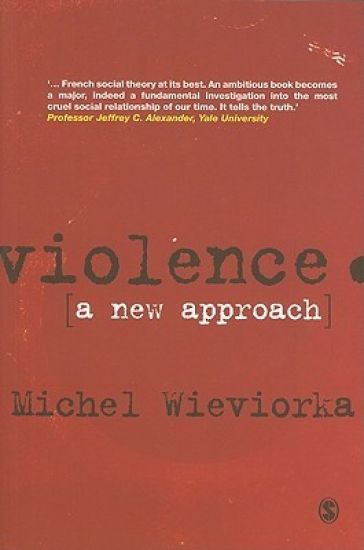
Violence

Violence

Michel Wieviorka

SAGE Publications Ltd
2009
nidottu

Halvin toimitettuna 65,00 €

"Violence is sadly central to social life and yet oddly marginal to social theory. It’s there in the background, not least as Weber defines the state by its monopoly of legitimate violence. But as the example suggests, it’s the control of violence that looms large. Michel Wieviorka does a considerable service by calling our attention to violence itself, and to the theories like those of Sorel and Fanon who took it seriously. Wieviorka addresses the state, the media, and social movements. But perhaps his most important contributions come in examination of the ways in which violence informs and is informed by different dimensions of subjectivity. Thoughtfully intertwining classical theory and contemporary observation this is an engaging book, and one that should spark much new thought and research." - Craig Calhoun, London School of Economics and Political Science Violence is an ever-present phenomenon - obstinately resistant to interpretation. This text offers new tools to understand and analyze violence, presenting a new approach based on the subjectivity of the actor, and on the relation between violence and meaning. The first section discusses violence and conflict, violence and the state, and violence and the media. This provides critical context for developing a new paradigm - in the second section - that gives more importance to the concept of the subject than more classical paradigms. The text distinguishes different possible relations between the meaning of action and violence and proposes a new typology of the subjects involved in violence. It gives particular emphasis to discussing cruelty, violence for violence sake, and 'pure' violence. The relationship between conflict and violence; the place of victims, and the role of the media all shape new forms of violence. This text is an engaged response to these new forms that presents a convincing interpretation and new tools that will be essential for researchers in the social sciences.
Violence

Violence

Michel Wieviorka

SAGE Publications Ltd
2009
sidottu

Halvin toimitettuna 236,90 €

"Violence is sadly central to social life and yet oddly marginal to social theory. It’s there in the background, not least as Weber defines the state by its monopoly of legitimate violence. But as the example suggests, it’s the control of violence that looms large. Michel Wieviorka does a considerable service by calling our attention to violence itself, and to the theories like those of Sorel and Fanon who took it seriously. Wieviorka addresses the state, the media, and social movements. But perhaps his most important contributions come in examination of the ways in which violence informs and is informed by different dimensions of subjectivity. Thoughtfully intertwining classical theory and contemporary observation this is an engaging book, and one that should spark much new thought and research." - Craig Calhoun, London School of Economics and Political Science Violence is an ever-present phenomenon - obstinately resistant to interpretation. This text offers new tools to understand and analyze violence, presenting a new approach based on the subjectivity of the actor, and on the relation between violence and meaning. The first section discusses violence and conflict, violence and the state, and violence and the media. This provides critical context for developing a new paradigm - in the second section - that gives more importance to the concept of the subject than more classical paradigms. The text distinguishes different possible relations between the meaning of action and violence and proposes a new typology of the subjects involved in violence. It gives particular emphasis to discussing cruelty, violence for violence sake, and 'pure' violence. The relationship between conflict and violence; the place of victims, and the role of the media all shape new forms of violence. This text is an engaged response to these new forms that presents a convincing interpretation and new tools that will be essential for researchers in the social sciences.
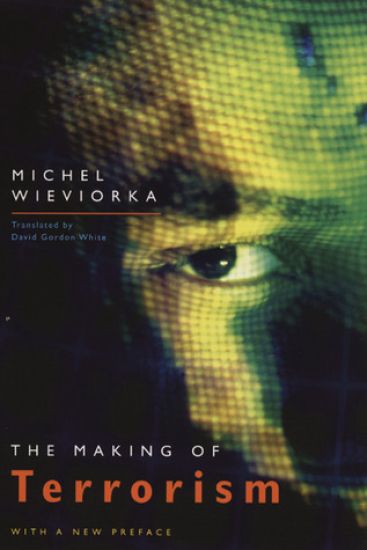
The Making of Terrorism

The Making of Terrorism

Michel Wieviorka

University of Chicago Press
2003
nidottu
This classic and now increasingly important book is an exception in the literature on terrorism. Based on complex observations of actual movement participants, Wieviorka's book addresses a broad spectrum of terrorist activity - from Italian left-wing terrorists to Basque nationalist groups to the international terrorism of the Middle East. The result is an incisive analysis of what terrorists believe and what they hope to achieve through their actions. For this new edition, Wieviorka adds new material that remaps the state of terrorism after the events of 2001.
The Arena of Racism

The Arena of Racism

Michel Wieviorka

SAGE Publications Ltd
1995
nidottu
In this vital addition to the sociological literature on racism, Michel Wieviorka presents a detailed and revisionary analysis of the vocabulary of racism (prejudice, discrimination, segregation and violence), arguing that racism is not reducible to these elementary forms. He shows how the experiences of institutionalized racism in America and anti-Semitism in Europe can be analyzed to provide an understanding of the complex transition from race to racism. As cultural identies are more and more fragmented in our societies, as the social relations defined by industrial capitalism are in decline, so too are ideas of progress and universality. It is in this context of postmodern social and economic flux that Wieviorka puts forward a definition of racism. He demonstrates that racism has to be understood as an action related to factors fixed in the dislocation between the social and the communal.