Kirjojen hintavertailu – 12 903 725 kirjaa ja 27 kauppaa

Kirjailija

Michela Massimi

Kirjat ja teokset yhdessä paikassa: 7 kirjaa, julkaisuja vuosilta 2005–2022, suosituimpiin kuuluu Pauli's Exclusion Principle. Vertaile teosten hintoja ja tarkista saatavuus suomalaisista kirjakaupoista.

7 kirjaa

Kirjojen julkaisuvuodet: 2005–2022.

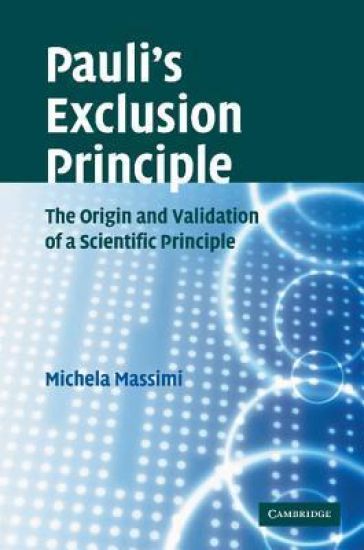
Pauli's Exclusion Principle

Pauli's Exclusion Principle

Michela Massimi

Cambridge University Press
2005
sidottu
There is hardly another principle in physics with wider scope of applicability and more far-reaching consequences than Pauli's exclusion principle. This book explores the principle's origin in the atomic spectroscopy of the early 1920s, its subsequent embedding into quantum mechanics, and later experimental validation with the development of quantum chromodynamics. The reconstruction of this crucial historic episode provides an excellent foil to reconsider Kuhn's view on incommensurability. The author defends the prospective rationality of the revolutionary transition from the old to the new quantum theory around 1925 by focusing on the way Pauli's principle emerged as a phenomenological rule 'deduced' from some anomalous phenomena and theoretical assumptions of the old quantum theory. The subsequent process of validation is historically reconstructed and analysed within the framework of 'dynamic Kantianism'. The variety of themes skilfully interwoven in this book will appeal to philosophers, historians, scientists and anyone interested in philosophy.
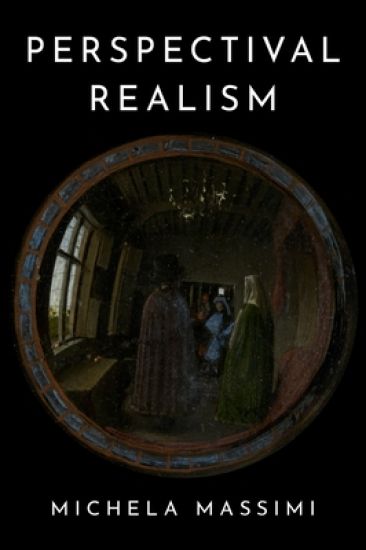
Perspectival Realism

Perspectival Realism

Michela Massimi

OXFORD UNIVERSITY PRESS INC
2022
sidottu
What does it mean to be a realist about science if one takes seriously the view that scientific knowledge is always perspectival, namely historically and culturally situated? In Perspectival Realism, Michela Massimi explores how scientific knowledge grows and evolves thanks to a plurality of epistemic communities occupying a number of scientific perspectives. The result is a philosophical view that goes under the name of "perspectival realism", and it offers a new lens for thinking about scientific knowledge, realism and pluralism in science. Perspectival Realism begins with an exploration of how epistemic communities often resort to several models and a plurality of practices, drawing on examples from nuclear physics, climate science, and developmental psychology. Massimi explains the perspectival nature of scientific representation, the role of scientific models as inferential blueprints, and the variety of scientific realism that naturally accompanies such a view. Perspectival realism is realism about phenomena (rather than about theories or unobservable entities). This novel realist view places epistemic communities and their situated knowledge center stage. The result is a portrait of scientific knowledge as a collaborative inquiry, where the reliability of science is made possible by a plurality of historically and culturally situated scientific perspectives. Along the way, Massimi offers insight into the nature of scientific modelling, scientific knowledge qua modal knowledge, data-to-phenomena inferences, and natural kinds as sortal concepts. Perspectival Realism offers a realist view that takes the multicultural nature of science seriously and couples it with cosmopolitan duties about how one ought to think about scientific knowledge and the distribution of benefits gained from scientific advancements. This is an open access title available under the terms of a CC BY-NC-ND 4.0 International license. It is free to read at Oxford Scholarship Online and offered as a free PDF download from OUP and selected open access locations.
Knowledge From a Human Point of View

Knowledge From a Human Point of View

Michela Massimi; Ana-Maria Cre?u

Saint Philip Street Press
2020
sidottu
This open access book - as the title suggests - explores some of the historical roots and epistemological ramifications of perspectivism. Perspectivism has recently emerged in philosophy of science as an interesting new position in the debate between scientific realism and anti-realism. But there is a lot more to perspectivism than discussions in philosophy of science so far have suggested. Perspectivism is a much broader view that emphasizes how our knowledge (in particular our scientific knowledge of nature) is situated; it is always from a human vantage point (as opposed to some Nagelian "view from nowhere"). This edited collection brings together a diverse team of established and early career scholars across a variety of fields (from the history of philosophy to epistemology and philosophy of science). The resulting nine essays trace some of the seminal ideas of perspectivism back to Kant, Nietzsche, the American Pragmatists, and Putnam, while the second part of the book tackles issues concerning the relation between perspectivism, relativism, and standpoint theories, and the implications of perspectivism for epistemological debates about veritism, epistemic normativity and the foundations of human knowledge. This work was published by Saint Philip Street Press pursuant to a Creative Commons license permitting commercial use. All rights not granted by the work's license are retained by the author or authors.
Knowledge From a Human Point of View

Knowledge From a Human Point of View

Michela Massimi; Ana-Maria Cre?u

Saint Philip Street Press
2020
pokkari
This open access book - as the title suggests - explores some of the historical roots and epistemological ramifications of perspectivism. Perspectivism has recently emerged in philosophy of science as an interesting new position in the debate between scientific realism and anti-realism. But there is a lot more to perspectivism than discussions in philosophy of science so far have suggested. Perspectivism is a much broader view that emphasizes how our knowledge (in particular our scientific knowledge of nature) is situated; it is always from a human vantage point (as opposed to some Nagelian "view from nowhere"). This edited collection brings together a diverse team of established and early career scholars across a variety of fields (from the history of philosophy to epistemology and philosophy of science). The resulting nine essays trace some of the seminal ideas of perspectivism back to Kant, Nietzsche, the American Pragmatists, and Putnam, while the second part of the book tackles issues concerning the relation between perspectivism, relativism, and standpoint theories, and the implications of perspectivism for epistemological debates about veritism, epistemic normativity and the foundations of human knowledge. This work was published by Saint Philip Street Press pursuant to a Creative Commons license permitting commercial use. All rights not granted by the work's license are retained by the author or authors.
Philosophy for Everyone

Philosophy for Everyone

Matthew Chrisman; Duncan Pritchard; Guy Fletcher; Elinor Mason; Jane Suilin Lavelle; Michela Massimi; Alasdair Richmond; Dave Ward

Routledge
2016
nidottu
Philosophy for Everyone begins by explaining what philosophy is before exploring the questions and issues at the foundation of this important subject. Key topics in this new edition and their areas of focus include:Moral philosophy – the nature of our moral judgments and reactions, whether they aim at some objective moral truth, or are mere personal or cultural preferences; and the possibility of moral responsibility given the sorts of things that cause behavior;Political philosophy – fundamental questions about the nature of states and their relationship to the citizens within those statesEpistemology – what our knowledge of the world and ourselves consists in, and how we come to have it; and whether we should form beliefs by trusting what other people tell us;Philosophy of mind – what it means for something to have a mind, and how minds should be understood and explained; Philosophy of science – foundational conceptual issues in scientific research and practice, such as whether scientific theories are true; andMetaphysics - fundamental questions about the nature of reality, such as whether we have free will, or whether time travel is possible. This book is designed to be used in conjunction with the free ‘Introduction to Philosophy’ MOOC (massive open online course) created by the University of Edinburgh’s Eidyn research centre, and hosted by the Coursera platform (www.coursera.org/course/introphil). This book is also highly recommended for anyone looking for a short overview of this fascinating discipline.
Philosophy for Everyone

Philosophy for Everyone

Matthew Chrisman; Duncan Pritchard; Guy Fletcher; Elinor Mason; Jane Suilin Lavelle; Michela Massimi; Alasdair Richmond; Dave Ward

Routledge
2016
sidottu
Philosophy for Everyone begins by explaining what philosophy is before exploring the questions and issues at the foundation of this important subject. Key topics in this new edition and their areas of focus include:Moral philosophy – the nature of our moral judgments and reactions, whether they aim at some objective moral truth, or are mere personal or cultural preferences; and the possibility of moral responsibility given the sorts of things that cause behavior;Political philosophy – fundamental questions about the nature of states and their relationship to the citizens within those statesEpistemology – what our knowledge of the world and ourselves consists in, and how we come to have it; and whether we should form beliefs by trusting what other people tell us;Philosophy of mind – what it means for something to have a mind, and how minds should be understood and explained; Philosophy of science – foundational conceptual issues in scientific research and practice, such as whether scientific theories are true; andMetaphysics - fundamental questions about the nature of reality, such as whether we have free will, or whether time travel is possible. This book is designed to be used in conjunction with the free ‘Introduction to Philosophy’ MOOC (massive open online course) created by the University of Edinburgh’s Eidyn research centre, and hosted by the Coursera platform (www.coursera.org/course/introphil). This book is also highly recommended for anyone looking for a short overview of this fascinating discipline.
Pauli's Exclusion Principle

Pauli's Exclusion Principle

Michela Massimi

Cambridge University Press
2012
pokkari
There is hardly another principle in physics with wider scope of applicability and more far-reaching consequences than Pauli's exclusion principle. This book explores the principle's origin in the atomic spectroscopy of the early 1920s, its subsequent embedding into quantum mechanics, and later experimental validation with the development of quantum chromodynamics. The reconstruction of this crucial historic episode provides an excellent foil to reconsider Kuhn's view on incommensurability. The author defends the prospective rationality of the revolutionary transition from the old to the new quantum theory around 1925 by focusing on the way Pauli's principle emerged as a phenomenological rule 'deduced' from some anomalous phenomena and theoretical assumptions of the old quantum theory. The subsequent process of validation is historically reconstructed and analysed within the framework of 'dynamic Kantianism'. The variety of themes skilfully interwoven in this book will appeal to philosophers, historians, scientists and anyone interested in philosophy.