Kirjojen hintavertailu – 12 903 737 kirjaa ja 27 kauppaa

Kirjailija

Michelangelo Sabatino

Kirjat ja teokset yhdessä paikassa: 6 kirjaa, julkaisuja vuosilta 2011–2026, suosituimpiin kuuluu G. E. Kidder Smith Builds. Vertaile teosten hintoja ja tarkista saatavuus suomalaisista kirjakaupoista.

6 kirjaa

Kirjojen julkaisuvuodet: 2011–2026.

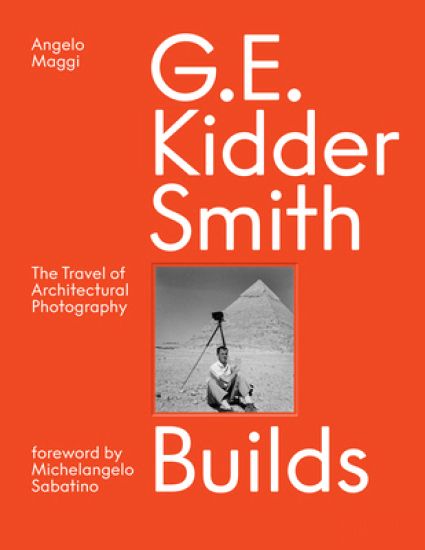
G. E. Kidder Smith Builds

G. E. Kidder Smith Builds

Angelo Maggi; Michelangelo Sabatino; Samuel Pujol Smith

Oro Editions
2022
sidottu
"...the structure of G. E. Kidder Smith Builds, which traces his career first through books and then with exhibitions, means the book is more bibliographical than biographical... it illuminates many aspects of his life not widely known." — Archidose "His life’s work captures an evolutionary era in world history and—as a result—G. E. Kidder Smith Builds is, simply, a book to savor."— More to Come George Everard Kidder Smith (1913–1997) was a multidimensional figure within the wide-ranging field of North American architectural professionals in the second half of the twentieth century. Although he trained as an architect, he chose not to practice within the conventional strictures of an architecture office. Instead, Kidder Smith “designed,” researched, wrote, and photographed a remarkably diverse collection of books about architecture and the built environment. His work and life were deeply interwoven and punctuated by travel related to the research, writing, and promotion of books that sought to reveal the genius loci of the countries whose built environments he admired and wished to share with a broader audience. From the early 1940s to the late 1950s his interest in architecture led him to describe visually the architectural and historical identity of many European countries. After his far-flung travels over the decades, with his wife Dorothea, Kidder Smith focused on his own country and produced a series of ambitious books focused on the United States. Kidder Smith’s vision and narrative betray the gaze of the traveller, the scholar, and the architect.
Modern, Again

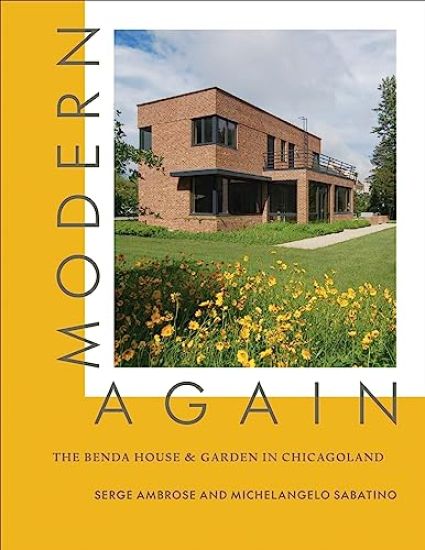
Modern, Again

Serge Ambrose; Michelangelo Sabatino

Oro Editions
2026
sidottu
Modern, Again: The Benda House & Garden in Chicagoland is equal parts a history of modern residential architecture in America and a rewarding journey of preservation and stewardship. Ambrose and Sabatino — co-authors of this book and co-owners of the Winston Elting designed Benda house — summarise their in-depth archival research and hands-on work undertaken for the restoration of their 1939 International Style house in Riverside, a historic village designed by Olmsted & Vaux in Chicago’s western suburbs. The Benda House was commissioned during a time when excitement for modern architecture, art, and design was very much alive amongst the public in America, partly due to the enthusiasm created by Chicago’s Century of Progress International Exposition held between 1933 and 1934 and culminated with the New York World’s Fair of 1939. This book features archival materials ranging from architectural drawings to historic building product catalogues alongside contemporary photographs taken before and after the restoration process. Finally, the co-authors discuss their addition of a new landscaped garden that re-establishes the relationship between nature and this modern house while extending Olmsted’s vision of idealised suburban living in America.
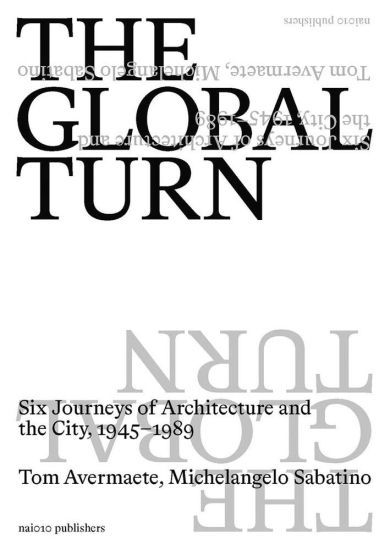
The Global Turn - Six Journeys of Architecture and the City, 1945-1989

The Global Turn - Six Journeys of Architecture and the City, 1945-1989

Tom Avermaete; Michelangelo Sabatino

Netherlands Architecture Institute (NAi Uitgevers/Publishers)
2025
nidottu
An investigation of globalization's effects on architecture and urban design between the start of World War II and the fall of the Berlin WallTo what extent did the circulation of people, commodities and knowledge affect architecture and urban design between World War II and the fall of the Berlin Wall in 1989? Swiss urban studies professor Tom Avermaete teams up with Chicago-based architect Michelangelo Sabatino to interrogate the influence of globalization on postwar architecture. Globalization is a complex phenomenon that has profoundly affected the practice of designers and engineers in the postwar era as it simultaneously expands and shrinks the world in which we live. Avermaete and Sabatino arrive at several conclusions through a diligent analysis of spatial, political and social geographies, from airports and hotels to construction materials and labor. The Global Turn presents their findings in a series of six short essays, providing a fresh viewpoint on a new worldwide environment that gives as much as it takes.
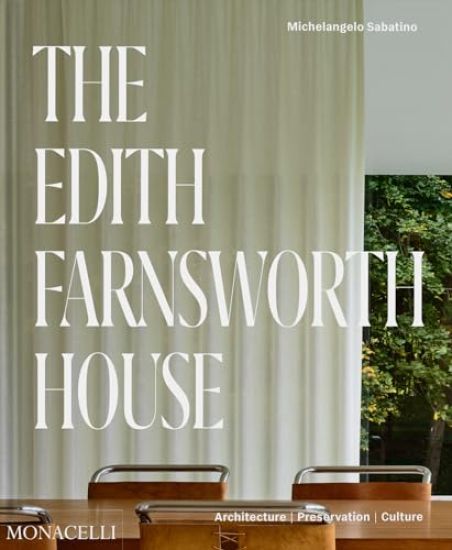
The Edith Farnsworth House

The Edith Farnsworth House

Michelangelo Sabatino; Scott Mehaffey; Hilary Lewis

Monacelli Press
2024
sidottu

Halvin toimitettuna 52,60 €

The comprehensive story of an icon of modern architecture: the Edith Farnsworth House, designed by Mies van der Rohe One of the most famous residences in modern history, a glass and steel marvel that seems to float above its site, the Edith Farnsworth House had been legendary in the public imagination long before it could be widely accessed. This book charts the house’s original design by Mies van der Rohe and periods of neglect, flooding, and new ownership by Lord Peter Palumbo. Now publicly accessible and celebrating twenty years of being owned and administered by the National Trust for Historic Preservation, this icon of modern architecture commissioned by client and patron Edith Farnsworth now gets its due. The Edith Farnsworth House is one of the most prized residences in modern architectural history, whose sometimes fraught history culminates in its publicly accessible life today. The book, which newly foregrounds the key role of client Edith Farnsworth, is written and edited by Michelangelo Sabatino, who contributes deep expertise on modernist architecture, and includes an essay by architectural historian Dietrich Neumann, excerpts of Edith Farnsworth’s unpublished memoir, as well as interviews with Mies’s grandson Dirk Lohan, and the house’s second owner, Lord Peter Palumbo. Published in association with the National Trust for Historic Preservation, this book is published is a trove of cultural and visual history, and includes photographs by Hedrich Blessing, Hiroshi Sugimoto, and Annie Leibovitz, in addition to documentation of cultural collaborations with artists, designers, and performance troupes such as Virgil Abloh, Iñigo Manglano-Ovalle, and Gerard & Kelly.
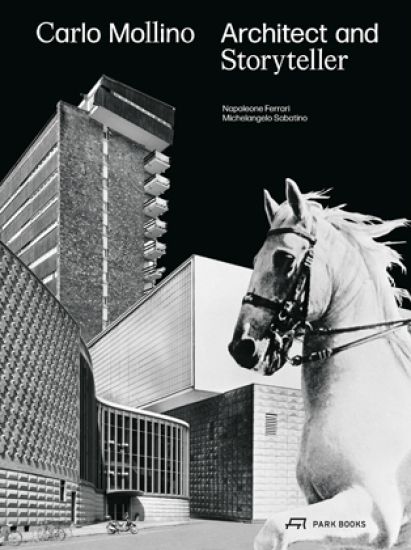
Carlo Mollino

Carlo Mollino

Michelangelo Sabatino; Napoleone Ferrari

Park Books
2021
sidottu

Halvin toimitettuna 102,40 €

Today, Italian architect and designer Carlo Mollino (1905-73) is known chiefly for his furniture designs. He is famous also for his erotic polaroid photography of the 1960s, which has been subject of many exhibitions and has lost nothing of its great appeal to the fashion world today. Much less attention has so far been given to Mollino's architecture, and a comprehensive critical study of his work in this field has been lacking. Yet his built work, although relatively small, constitutes a seminal contribution to modernism that is uniquely marked by a strong relationship with Surrealism. Based on years of research and drawing on rich archival material as well as on Mollino's own writings, this new book is the overdue tribute to an extraordinary personality in 20th-century architecture. It features an exemplary selection of his key designs, both built and unrealised, lavishly illustrated with images and reproductions of previously unpublished plans, drawings, and documents. Rounded out with scholarly essays by expert authors, this is a long-awaited addition to the library of architecture lovers, professionals, and scholars.
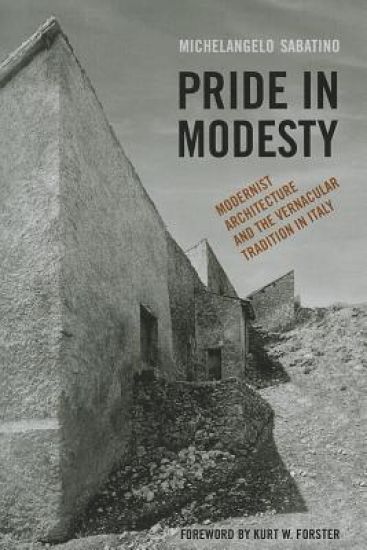
Pride in Modesty

Pride in Modesty

Michelangelo Sabatino

University of Toronto Press
2011
pokkari
Following Italy's unification in 1861, architects, artists, politicians, and literati engaged in volatile debates over the pursuit of national and regional identity. Growing industrialization and urbanization across the country contrasted with the rediscovery of traditionally built forms and objects created by the agrarian peasantry. Pride in Modesty argues that these ordinary, often anonymous, everyday things inspired and transformed Italian art and architecture from the 1920s through the 1970s. Through in-depth examinations of texts, drawings, and buildings, Michelangelo Sabatino finds that the folk traditions of the pre-industrial countryside have provided formal, practical, and poetic inspiration directly affecting both design and construction practices over a period of sixty years and a number of different political regimes. This surprising continuity allows Sabatino to reject the division of Italian history into sharply delimited periods such as Fascist Interwar and Democratic Postwar and to instead emphasize the long, continuous process that transformed pastoral and urban ideals into a new, modernist Italy.