Kirjojen hintavertailu – 12 903 737 kirjaa ja 27 kauppaa

Kirjailija

Michèle Lowrie

Kirjat ja teokset yhdessä paikassa: 4 kirjaa, julkaisuja vuosilta 1997–2023, suosituimpiin kuuluu Civil War and the Collapse of the Social Bond. Vertaile teosten hintoja ja tarkista saatavuus suomalaisista kirjakaupoista.

Nimi esiintyy myös muodoissa: Michele Lowrie

4 kirjaa

Kirjojen julkaisuvuodet: 1997–2023.

Civil War and the Collapse of the Social Bond

Civil War and the Collapse of the Social Bond

Michèle Lowrie; Barbara Vinken

Cambridge University Press
2023
pokkari
Can civil war ever be overcome? Can a better order come into being? This book explores how the Roman civil wars of the first century BCE laid the template for addressing perennially urgent questions. The Roman Republic's collapse and Augustus' new Empire have remained ideological battlegrounds to this day. Integrative and disintegrative readings begun in antiquity (Vergil and Lucan) have left their mark on answers given by Christians (Augustine), secular republicans (Victor Hugo), and disillusioned satirists (Michel Houellebecq) alike. France's self-understanding as a new Rome – republican during the Revolution, imperial under successive Napoleons – makes it a special case in the Roman tradition. The same story returns repeatedly. A golden age of restoration glimmers on the horizon, but comes in the guise of a decadent, oriental empire that reintroduces and exposes everything already wrong under the defunct republic. Central to the price of social order is patriarchy's need to subjugate women.
Civil War and the Collapse of the Social Bond

Civil War and the Collapse of the Social Bond

Michèle Lowrie; Barbara Vinken

Cambridge University Press
2022
sidottu
Can civil war ever be overcome? Can a better order come into being? This book explores how the Roman civil wars of the first century BCE laid the template for addressing perennially urgent questions. The Roman Republic's collapse and Augustus' new Empire have remained ideological battlegrounds to this day. Integrative and disintegrative readings begun in antiquity (Vergil and Lucan) have left their mark on answers given by Christians (Augustine), secular republicans (Victor Hugo), and disillusioned satirists (Michel Houellebecq) alike. France's self-understanding as a new Rome – republican during the Revolution, imperial under successive Napoleons – makes it a special case in the Roman tradition. The same story returns repeatedly. A golden age of restoration glimmers on the horizon, but comes in the guise of a decadent, oriental empire that reintroduces and exposes everything already wrong under the defunct republic. Central to the price of social order is patriarchy's need to subjugate women.
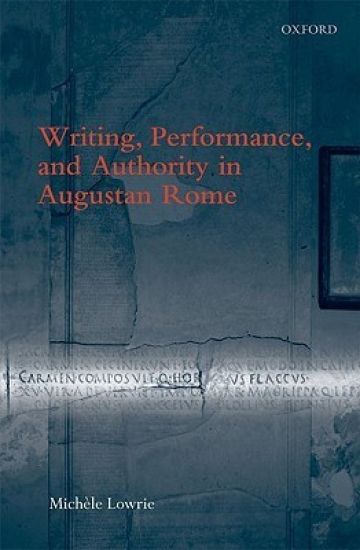
Writing, Performance, and Authority in Augustan Rome

Writing, Performance, and Authority in Augustan Rome

Michele Lowrie

Oxford University Press
2009
sidottu
In Writing, Performance, and Authority in Augustan Rome Michele Lowrie examines how the Romans conceived of their poetic media. Song has links to the divine through prophecy, while writing offers a more quotidian, but also more realistic way of presenting what a poet does. In a culture of highly polished book production where recitation was the fashion, to claim to sing or to write was one means of self-definition. Lowrie assesses the stakes of poetic claims to one medium or another. Generic definition is an important factor. Epic and lyric have traditional associations with song, while the literary epistle is obviously written. But issues of poetic interpretability and power matter even more. The choice of medium contributes to the debate about the relative potency of rival discourses, specifically poetry, politics, and the law. Writing could offer an escape from the social and political demands of the moment by shifting the focus toward the readership of posterity.
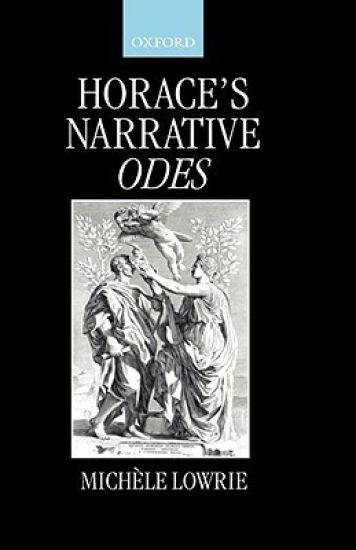
Horace's Narrative Odes

Horace's Narrative Odes

Michèle Lowrie

Clarendon Press
1997
sidottu
Narrative has not traditionally been a subject in the analysis of lyric poetry. This book deconstructs the polarity that divides and binds lyric and narrative means of representation in Horace's Odes. While myth is a canonical feature of Pindaric epinician, Horace cannot adopt the Pindaric mode for aesthetic and political reasons. Roman Callimacheanism's privileging of the small and elegant offers a pretext for Horace to shrink from the difficulty of writing praise poetry in the wake of civil war. But Horace by no means excludes story-telling from his enacted lyric. On the formal level, numerous odes contain narration. Together they constitute a larger narrative told over the course of Horace's two lyric collections. Horace tells the story of his development as a lyricist and of the competing aesthetic and political demands on his lyric poetry. At issue is whether he can ever truly become a poet of praise.