Kirjojen hintavertailu – 12 903 725 kirjaa ja 27 kauppaa

Kirjailija

Michele Schweisfurth

Kirjat ja teokset yhdessä paikassa: 6 kirjaa, julkaisuja vuosilta 2013–2026, suosituimpiin kuuluu Polarised Logics of Pedagogy: Crises, Contexts and Classrooms in the Global South. Vertaile teosten hintoja ja tarkista saatavuus suomalaisista kirjakaupoista.

6 kirjaa

Kirjojen julkaisuvuodet: 2013–2026.

Polarised Logics of Pedagogy: Crises, Contexts and Classrooms in the Global South
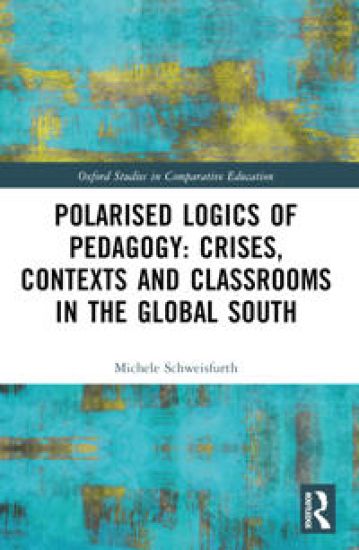
This novel book demonstrates the polarised logics that exist between exploring cultural, structural, political, and historical contexts as a primary focus for pedagogical research versus an interventionist agenda that isolates pedagogy and its components from their environments. Combining theoretical discussions with empirical evidence and case studies, the book provides a synthesising approach to both research and educational planning, recognising pedagogy as an open system while acknowledging that not all teaching methods are equal when it comes to enhancing learning. Considering the so-called learning crisis and learning poverty in the context of Sustainable Development Goal 4 in the wake of the COVID-19 pandemic, this book is also sensitive to concerns about the mental health and wellbeing of young people and the sustainability of the planet. Ultimately providing a timely, informed, and balanced discussion of these issues, this book will appeal to researchers, scholars, and post-graduate and doctoral students working in pedagogical research or international and comparative education, and anyone interested in the relationship between education and international development.
Polarised Logics of Pedagogy: Crises, Contexts and Classrooms in the Global South
This novel book demonstrates the polarised logics that exist between exploring cultural, structural, political, and historical contexts as a primary focus for pedagogical research versus an interventionist agenda that isolates pedagogy and its components from their environments. Combining theoretical discussions with empirical evidence and case studies, the book provides a synthesising approach to both research and educational planning, recognising pedagogy as an open system while acknowledging that not all teaching methods are equal when it comes to enhancing learning. Considering the so-called learning crisis and learning poverty in the context of Sustainable Development Goal 4 in the wake of the COVID-19 pandemic, this book is also sensitive to concerns about the mental health and wellbeing of young people and the sustainability of the planet. Ultimately providing a timely, informed, and balanced discussion of these issues, this book will appeal to researchers, scholars, and post-graduate and doctoral students working in pedagogical research or international and comparative education, and anyone interested in the relationship between education and international development.
Learner-centred Education in International Perspective
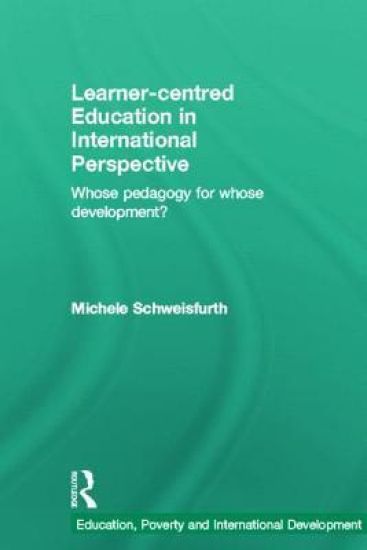
Is learner-centred education appropriate for all societies and classrooms? Learner-centred education (LCE) is a travelling policy, widely promoted by international agencies and national governments. Arguments in favour of this pedagogical tradition refer to theories and evidence from cognitive psychology, claiming that all learners can benefit equally from its judicious use. Beyond the benefits to the individual however, lie a set of assumptions about learner-centred education as a foundation for the building of democratic citizens and societies, suitable for economies of the future. These promises have been questioned by critics who doubt that it is appropriate in all cultural and resource contexts, and there is considerable evidence in the global South of perennial problems of implementation. In the light of these debates, is LCE still a good development ‘bet’? This book provides an authoritative and balanced investigation of these issues, exploring the contextual factors from global movements to local resourcing realities which have fuelled it as a discourse and affected its practice. In the light of the theoretical underpinnings and research evidence, the book addresses pressing questions: to what extent is learner-centred education a sound choice for policy and practice in developing countries? And if it is a sound choice, under which conditions is it a viable one? The book is divided into three key parts:- Learner-centred Education as a Global Phenomenon - Learner-centred Education in Lower and Middle-income Countries - Lessons and Resolutions This book provides a much-needed fresh analysis of the concept and practice of LCE. It will be valuable reading for academics and post-graduates with a focus on comparative and international education, along with policy-makers in developing countries and development agencies.
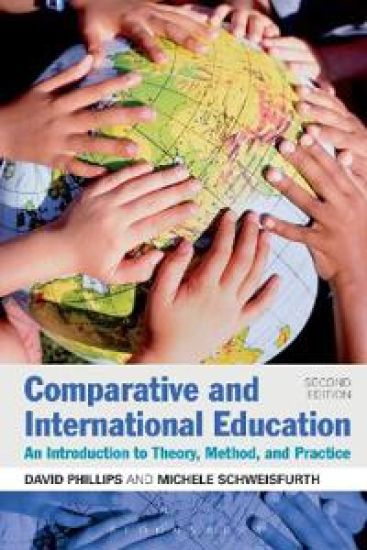
Comparative and International Education

Comparative and International Education

David Phillips; Michele Schweisfurth

Bloomsbury Academic USA
2014
sidottu
With a foreword by Professor Erwin H. Epstein. A unique introduction to this important field, providing a comprehensive overview of the key themes, including:- defining comparative and international education- how comparative studies in education have developed- methodological approaches to comparative and international education research- the relationship between education and national development- the power of comparative studies in investigating student achievement and school effectiveness- what comparative studies have taught us about educational issues such as policy borrowing, processes of transition, post-conflict education, education in small states, pedagogy, and citizenship.
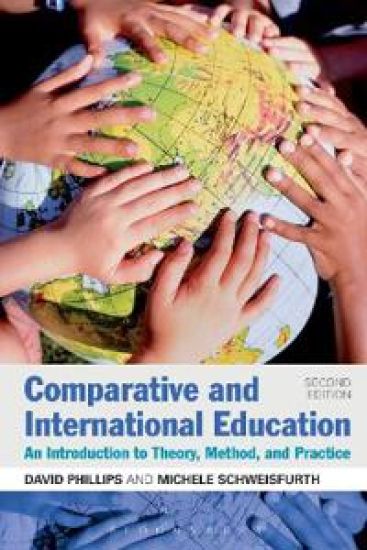
Comparative and International Education

Comparative and International Education

David Phillips; Michele Schweisfurth

Bloomsbury Academic USA
2014
nidottu

Halvin toimitettuna 36,50 €

This revised and updated second edition of Comparative and International Education: An Introduction to Theory, Method and Practice provides a comprehensive and authoritative introduction to the key themes, definitions and approaches in this important field. It covers the history, theory, and methods of comparative and international education, as well as the relationship with education and national development, and outlines what we can learn from comparative studies. Clear explanations are complemented with examples of real research in the field including work on policy borrowing, learner-centred pedagogy and university internationalization.
Learner-centred Education in International Perspective
Is learner-centred education appropriate for all societies and classrooms? Learner-centred education (LCE) is a travelling policy, widely promoted by international agencies and national governments. Arguments in favour of this pedagogical tradition refer to theories and evidence from cognitive psychology, claiming that all learners can benefit equally from its judicious use. Beyond the benefits to the individual however, lie a set of assumptions about learner-centred education as a foundation for the building of democratic citizens and societies, suitable for economies of the future. These promises have been questioned by critics who doubt that it is appropriate in all cultural and resource contexts, and there is considerable evidence in the global South of perennial problems of implementation. In the light of these debates, is LCE still a good development ‘bet’? This book provides an authoritative and balanced investigation of these issues, exploring the contextual factors from global movements to local resourcing realities which have fuelled it as a discourse and affected its practice. In the light of the theoretical underpinnings and research evidence, the book addresses pressing questions: to what extent is learner-centred education a sound choice for policy and practice in developing countries? And if it is a sound choice, under which conditions is it a viable one? The book is divided into three key parts:- Learner-centred Education as a Global Phenomenon - Learner-centred Education in Lower and Middle-income Countries - Lessons and Resolutions This book provides a much-needed fresh analysis of the concept and practice of LCE. It will be valuable reading for academics and post-graduates with a focus on comparative and international education, along with policy-makers in developing countries and development agencies.