Kirjojen hintavertailu – 12 859 819 kirjaa ja 27 kauppaa

Kirjailija

Michelle Millar Fisher

Kirjat ja teokset yhdessä paikassa: 4 kirjaa, julkaisuja vuosilta 2017–2021, suosituimpiin kuuluu The Rainbow Flag. Vertaile teosten hintoja ja tarkista saatavuus suomalaisista kirjakaupoista.

4 kirjaa

Kirjojen julkaisuvuodet: 2017–2021.

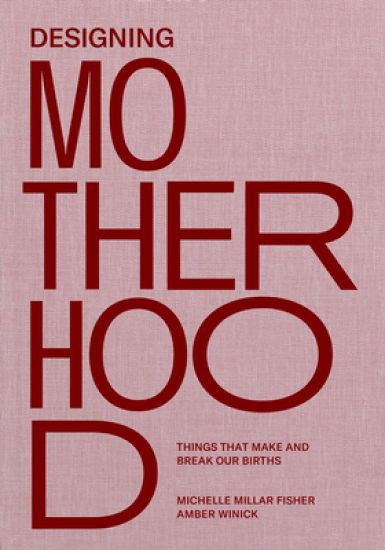
Designing Motherhood

Designing Motherhood

Michelle Millar Fisher; Amber Winick

MIT Press
2021
sidottu
More than eighty designs--iconic, archaic, quotidian, and taboo--that have defined the arc of human reproduction. While birth often brings great joy, making babies is a knotty enterprise. The designed objects that surround us when it comes to menstruation, birth control, conception, pregnancy, childbirth, and early motherhood vary as oddly, messily, and dramatically as the stereotypes suggest. This smart, image-rich, fashion-forward, and design-driven book explores more than eighty designs--iconic, conceptual, archaic, titillating, emotionally charged, or just plain strange--that have defined the relationships between people and babies during the past century. Each object tells a story. In striking images and engaging text, Designing Motherhood unfolds the compelling design histories and real-world uses of the objects that shape our reproductive experiences. The authors investigate the baby carrier, from the Snugli to BabyBjörn, and the (re)discovery of the varied traditions of baby wearing; the tie-waist skirt, famously worn by a pregnant Lucille Ball on I Love Lucy, and essential for camouflaging and slowly normalizing a public pregnancy; the home pregnancy kit, and its threat to the authority of male gynecologists; and more. Memorable images--including historical ads, found photos, and drawings--illustrate the crucial role design and material culture plays throughout the arc of human reproduction. The book features a prologue by Erica Chidi and a foreword by Alexandra Lange. ContributorsLuz Argueta-Vogel, Zara Arshad, Nefertiti Austin, Juliana Rowen Barton, Lindsey Beal, Thomas Beatie, Caitlin Beach, Maricela Becerra, Joan E. Biren, Megan Brandow-Faller, Khiara M. Bridges, Heather DeWolf Bowser, Sophie Cavoulacos, Meegan Daigler, Anna Dhody, Christine Dodson, Henrike Dreier, Adam Dubrowski, Michelle Millar Fisher, Claire Dion Fletcher, Tekara Gainey, Lucy Gallun, Angela Garbes, Judy S. Gelles, Shoshana Batya Greenwald, Robert D. Hicks, Porsche Holland, Andrea Homer-Macdonald, Alexis Hope, Malika Kashyap, Karen Kleiman, Natalie Lira, Devorah L Marrus, Jessica Martucci, Sascha Mayer, Betsy Joslyn Mitchell, Ginger Mitchell, Mark Mitchell, Aidan O’Connor, Lauren Downing Peters, Nicole Pihema, Alice Rawsthorn, Helen Barchilon Redman, Airyka Rockefeller, Julie Rodelli, Raphaela Rosella, Loretta J. Ross, Ofelia Pérez Ruiz, Hannah Ryan, Karin Satrom, Tae Smith, Orkan Telhan, Stephanie Tillman, Sandra Oyarzo Torres, Malika Verma, Erin Weisbart, Deb Willis, Carmen Winant, Brendan Winick, Flaura Koplin Winston

Design by Accident – For a New History of Design

Design by Accident – For a New History of Design

Alexandra Midal; Michelle Millar Fisher; Paola Antonelli

Sternberg Press
2020
nidottu

Halvin toimitettuna 34,60 €

A counterhistory and new historiography of design. In Design by Accident, Alexandra Midal declares the autonomy of design, in and on its own terms. This meticulously researched work proposes not only a counterhistory but a new historiography of design, shedding light on overlooked historical landmarks and figures while reevaluating the legacies of design's established luminaries from the nineteenth century to the present. Midal rejects both linear narratives of progress and the long-held perception of design as a footnote to the histories of fine art and architecture. By weaving critical analysis of the canon of design history and theory together, with special attention to the writings of designers themselves, she draws out the nuances and radical potentials of the discipline--from William Morris's ambivalence toward industry, to Catharine Beecher's proto-feminist household appliances, to the Bauhaus's Expressionist origins, and the influence of Herbert Marcuse on Joe Colombo.
The Rainbow Flag

The Rainbow Flag

Michelle Millar Fisher

Museum of Modern Art
2019
sidottu
The remarkable story of how Gilbert Baker and his friends created the iconic Rainbow Flag in 1978 Flags are brilliant and clever works of art and design, and they bring people together under a common banner. This colorful story follows a group of friends who helped dye and sew strips of cloth to create the first Rainbow Flags for the San Francisco Gay Freedom Day Parade in 1978. Led by a young artist named Gilbert Baker, the friends set out to create a flag that people could march behind during the Pride Parade. They knew the flag needed to be bright, in order to be seen by everyone as they marched. It needed to be bold, to lead the crowd. And it needed to be beautiful, like the love celebrated by the parade The result is an iconic flag that has become an international symbol of the gay pride movement.
Items: Is Fashion Modern?

Items: Is Fashion Modern?

Paola Antonelli; Michelle Millar Fisher

Museum of Modern Art
2017
sidottu
Items: Is Fashion Modern? presents 111 items of clothing and accessories that have had a profound impact on the world in the 20th and 21st centuries. Arranged A-Z encyclopedia-style, it includes designs as iconic as Levi's 501 jeans, the pearl necklace and Yves Saint Laurent's Le Smoking, and as ancient and rich as the sari, the Breton shirt, the kippah and the keffiyeh. The catalog accompanies the first fashion exhibition to be mounted at MoMA since 1944. An essay by curator Paola Antonelli opens the volume, highlighting the Museum's unique perspective on fashion and exploring the latter's role in the changing international landscape of design. The 111 texts that follow trace the history of each item in relation to cultural forces past and present, touching on labor, marketing, technology, religion, politics, aesthetics and popular culture, among many others. These concise essays are richly illustrated with a lively mix of archival images, fashion photography, film stills and documentary shots. Punctuating the book are newly commissioned portfolios by five international contemporary photographers--Omar Victor Diop, Bobby Doherty, Catherine Losing, Monika Mogi and Kristin-Lee Moolman. Each photographer was assigned to represent the objects in one alphabetically ordered section of the book, and their diverse responses bring a vibrant creative energy to the project. Design objects are complex indicators of larger social, cultural, political and economic contexts, and fashion is no exception. Kaleidoscopic yet exacting, Items takes readers through the history and significance of clothing that has changed the world, from the bucket hat's multifaceted sartorial journey to the ubiquity and perennial popularity of the white t-shirt and the ever-changing silhouette of the little black dress. It locates new centers of gravity for the field of fashion and asserts its role as an incisive and confident contributor to the broad pantheon of design and the visual arts.