Kirjojen hintavertailu – 12 903 725 kirjaa ja 27 kauppaa
Kirjailija
Miguel De Cervantes
Kirjat ja teokset yhdessä paikassa: 429 kirjaa, julkaisuja vuosilta 1989–2026, suosituimpiin kuuluu Don Quixote. Vertaile teosten hintoja ja tarkista saatavuus suomalaisista kirjakaupoista.
En Burgos, ciudad ilustre y famosa, no ha muchos a os que en ella viv an dos caballeros principales y ricos: el uno se llamaba don Diego de Carriazo y el otro don Juan de Avenda o. El don Diego tuvo un hijo, a quien llam de su mismo nombre, y el don Juan otro, a quien puso don Tom s de Avenda o. A estos dos caballeros mozos, como quien han de ser las principales personas de este cuento, por escusar y ahorrar letras, les llamaremos con solos los nombres de Carriazo y de Avenda o. In the famous city of Burgos there lived two wealthy cavaliers, one of whom was called Don Diego de Carriazo, and the other Don Juan de Avenda o. Don Diego had a son called after himself, and Don Juan another, whose name was Don Tomas de Avenda o. These two young gentlemen being the principal persons of the following tale, we shall for the sake of brevity call them Carriazo and Avenda o.
Novelas ejemplares ("Exemplary Novels") is a series of twelve novellas that follow the model established in Italy, written by Miguel de Cervantes between 1590 and 1612. The collection was printed in Madrid in 1613 by Juan de la Cuesta, and received well in the wake of the first part of Don Quixote. Cervantes boasted in his foreword to have been the first to write novelas in the Spanish language: My genius and my inclination prompt me to this kind of writing; the more so as I consider (and with truth) that I am the first who has written novels in the Spanish language, though many have hitherto appeared among us, all of them translated from foreign authors. But these are my own, neither imitated nor stolen from anyone; my genius has engendered them, my pen has brought them forth, and they are growing up in the arms of the press. The novellas are usually grouped into two series: those characterized by an idealized nature and those of a realistic nature. Those idealized in nature, which are the closest to the Italian models, are characterized by plots dealing with amorous entanglements, by improbable plots, by the presence of idealized characters and psychological development, and the low reflection of reality. They include: El amante liberal, Las dos doncellas, La espa ola inglesa, La se ora Cornelia and La fuerza de la sangre. These were the most popular of the novellas at the time. The realistic in nature cater to the descriptions of realistic characters and environments, with intentional criticism in many cases. The realistic in nature are the best-known stories today: Rinconete y Cortadillo, El licenciado Vidriera, La gitanilla, El casamiento enga oso (which leads directly into the fantasy El coloquio de los perros), and La ilustre fregona. However, the separation between the two groups is not sharp and elements of the idealistic may be found in some of the realistic novels.
Novela y coloquio que pas entre Cipi n y Berganza, perros del Hospital de la Resurrecci n, que est en la Ciudad de Valladolid, fuera de la puerta del campo, a quien com nmente llaman Los perros de Mahude. CIPI N.-Berganza amigo, dejemos esta noche el Hospital en guarda de la confianza y retir monos a esta soledad y entre estas esteras, donde podremos gozar sin ser sentidos de esta no vista merced que el cielo en un mismo punto a los dos nos ha hecho. Dialogue between scipio and berganza, dogs of the hospital of the resurrection in the city of valladolid, commonly called the dogs of mahudes.the deceitful marriage. Scip. Berganza, my friend, let us leave our watch over the hospital to-night, and retire to this lonely place and these mats, where, without being noticed, we may enjoy that unexampled favour which heaven has bestowed on us both at the same moment.
Sal a del hospital de la Resurrecci n, que est en Valladolid fuera de la puerta del Campo, un soldado que por servirle su espada de b culo y por la flaqueza de sus piernas y amarillez de su rostro mostra ba bien claro que aunque no era el tiempo muy caluroso deb a de haber sudado en veinte d as todo el humor que quiz granje en una hora. Iba haciendo pinitos y dando traspi s como convaleciente, y al entrar por la puerta de la ciudad vio que hacia l ven a un su amigo a quien no hab a visto en m s de seis meses, el cual, santigu ndose como si viera alguna mala visi n, lle g ndose a l le dijo... From the Hospital of the Resurrection, which stands just beyond the Puerta del Campo, in Valladolid, there issued one day a soldier, who, by the excessive paleness of his countenance, and the weakness of his limbs, which obliged him to, lean upon his sword, showed clearly to all who set eyes on him that, though the weather was not very warm, he must have sweated a good deal in the last few weeks. He had scarcely entered the gate of the city, with tottering steps, when he was accosted by an old friend who had not seen him for the last six months, and who approached the invalid, making signs of the cross as if he had seen a ghost. "What; is all this?" he cried; "do I, indeed, behold the Se or Alferez Campuzano? Is it possible that I really see you in this country? Why, I thought you were in Flanders trailing a pike, instead of hobbling along with your sword for a walking-stick. How pale-how emaciated you look "
No ha muchos a os que de un lugar de Extremadura sali un hidalgo, nacido de padres nobles, el cual, como un otro Pr digo, por diversas partes de Espa a, Italia y Flandes anduvo gastando as los a os como la hacienda; y, al fin de muchas peregrinaciones, muertos ya sus padres y gastado su patrimonio, vino a parar a la gran ciudad de Sevilla, donde hall ocasi n muy bastante para acabar de consumir lo poco que le quedaba. Vi ndose, pues, tan falto de dineros, y aun no con muchos amigos, se acogi al remedio a que otros muchos perdidos en aquella ciudad se acogen, que es el pasarse a las Indias, refugio y amparo de los desesperados de Espa a, iglesia de los alzados, salvoconducto de los homicidas, pala y cubierta de los jugadores (a quien llaman ciertos los peritos en el arte), a agaza general de mujeres libres, enga o com n de muchos y remedio particular de pocos. Not many years ago there issued from a town in Estramadura a hidalgo nobly born, who, like another prodigal son, went about various parts of Spain, Italy, and Flanders, squandering his years and his wealth. At last, after long peregrinations, his parents being dead and his fortune spent, he made his appearance in the great city of Seville, where he found abundant opportunity to get rid of the little he had left. Finding himself then so bare of money, and not better provided with friends, he adopted the remedy to which many a spendthrift in that city has recourse; that is, to betake themselves to the Indies, the refuge of the despairing sons of Spain, the church of the homeless, the asylum of homicides, the haven of gamblers and cheats, the general receptacle for loose women, the common centre of attraction for many, but effectual resource of very few. A fleet being about to sail for Tierrafirma, he agreed with the admiral for a passage, got ready his sea-stores and his shroud of Spanish grass cloth, and embarking at Cadiz, gave his benediction to Spain, intending never to see it again. The fleet slipped from its moorings, and, amidst the general glee of its living freight, the sails were spread to the soft and prosperous gale, which soon wafted them out of sight of land into the wide domains of the great father of waters, the ocean.
Novelas ejemplares ("Exemplary Novels") is a series of twelve novellas that follow the model established in Italy, written by Miguel de Cervantes between 1590 and 1612. The collection was printed in Madrid in 1613 by Juan de la Cuesta, and received well in the wake of the first part of Don Quixote. Cervantes boasted in his foreword to have been the first to write novelas in the Spanish language: My genius and my inclination prompt me to this kind of writing; the more so as I consider (and with truth) that I am the first who has written novels in the Spanish language, though many have hitherto appeared among us, all of them translated from foreign authors. But these are my own, neither imitated nor stolen from anyone; my genius has engendered them, my pen has brought them forth, and they are growing up in the arms of the press. The novellas are usually grouped into two series: those characterized by an idealized nature and those of a realistic nature. Those idealized in nature, which are the closest to the Italian models, are characterized by plots dealing with amorous entanglements, by improbable plots, by the presence of idealized characters and psychological development, and the low reflection of reality. They include: El amante liberal, Las dos doncellas, La espa ola inglesa, La se ora Cornelia and La fuerza de la sangre. These were the most popular of the novellas at the time. The realistic in nature cater to the descriptions of realistic characters and environments, with intentional criticism in many cases. The realistic in nature are the best-known stories today: Rinconete y Cortadillo, El licenciado Vidriera, La gitanilla, El casamiento enga oso (which leads directly into the fantasy El coloquio de los perros), and La ilustre fregona. However, the separation between the two groups is not sharp and elements of the idealistic may be found in some of the realistic novels.
Los trabajos de Persiles y Sigismunda, historia setentrional es la ltima obra de Miguel de Cervantes, publicada p stuma en Madrid en 1617. Se trata de una novela bizantina que no hay que confundir con la comedia Persiles y Sigismunda (1633) de Francisco de Rojas Zorrilla, inspirada en ella. El propio Cervantes la consider su mejor obra; sin embargo la cr tica da este t tulo un nimemente a Don Quijote de la Mancha. En ella escribi la dedicatoria al Conde de Lemos el 19 de abril de 1616, cuatro d as antes de morir, donde se despide de la vida citando estos versos: Puesto ya el pie en el estribo, con las ansias de la muerte, gran se or, esta te escribo.
La Galatea es una novela de Miguel de Cervantes publicada en 1585 en Alcal de Henares con el t tulo de Primera parte de La Galatea, dividida en seis libros. La novela empez probablemente a redactarse cuando Cervantes volvi de su cautiverio en Argel (diciembre de 1580). Tuvo poco xito en las librer as, sobre todo, si se compara con el enorme de la Diana de Montemayor y el grand simo de la Diana enamorada de Gil Polo. Cervantes tuvo durante toda su vida un alt simo concepto de su novela y la intenci n de publicar la segunda parte, pero muri sin haberlo hecho. Que pena.
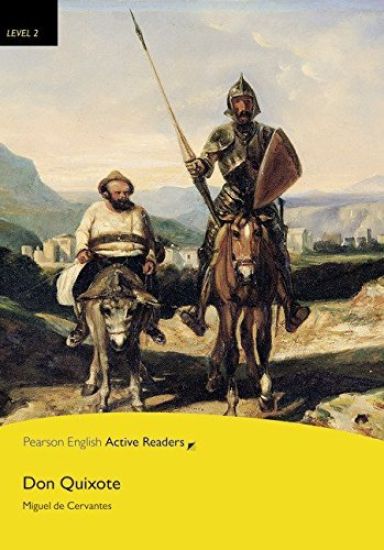
This reader is accompanied with a CD that contains the full audio of the text in MP3 format. Don Quixote wants a different life, so he leaves his village with Sancho Panza. The two men want to be a knight and his squire from an earlier age. Will they find adventures? Will they be famous? Will they change the world? This is their story.
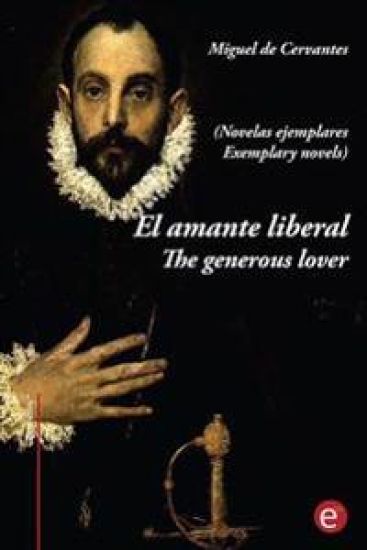
El amante liberal es una de las novelas cortas que contiene la obra de Miguel de Cervantes llamada "Novelas ejemplares". Re ne elementos de la novela morisca y la novela bizantina, aunque al mismo tiempo critica impl citamente algunos aspectos de sta ltima. En la novela aparece, junto al tema del amor generoso, el del cautiverio, que en Cervantes tiene tintes biogr ficos, aunque se a adan otros inventados. The generous lover is one of the short novels that contains the work of Miguel de Cervantes called "Exemplary novels". It brings together elements of the Moorish novel and the Byzantine novel, although at the same time it implicitly criticizes some aspects of the latter. In the novel appears, next to the subject of generous love, the one of the captivity, that in Cervantes has biographical dyes, although other invented ones are added.
L'intrigue couvre les aventures d'un pauvre hidalgo (gentilhomme) de la Manche, d nomm Alonso Quichano, et obs d par les livres de chevalerie, qu'il collectionne dans sa biblioth que de fa on maladive. Ceux-ci troublent son jugement au point que Quichano se prend un beau jour pour le chevalier errant Don Quichotte, dont la mission est de parcourir l'Espagne pour combattre le mal et prot ger les opprim s. Il prend la route, mont sur son vieux cheval Rossinante, et prend pour cuyer un na f paysan, Sancho Panza, qui chevauche un ne. Don Quichotte voit dans la moindre auberge un ch teau enchant , prend les filles de paysans pour de belles princesses et les moulins vent pour des g ants envoy s par de m chants magiciens. Il fait d'une paysanne de son pays, Dulcin e du Toboso, qu'il ne rencontrera jamais, la dame de ses pens es qui il jure amour et fid lit . Sancho Panza, dont la principale pr occupation est, comme son nom l'indique, de se remplir la panse, estime que son ma tre souffre de visions, mais se conforme sa conception du monde, et entreprend avec lui de briser l'envo tement dont est victime Dulcin e. Miguel de Cervantes Saavedra (29 septembre 1547 Alcal de Henares - 22 avril 1616 Madrid) est un romancier, po te et dramaturge espagnol. Il est c l bre pour son roman L'Ing nieux Hidalgo Don Quichotte de la Manche, publi en 1605 et reconnu comme le premier roman moderne. Cervantes m ne d'abord une vie aventureuse de soldat et participe la bataille de L pante en 1571, o il perd l'usage de la main gauche. Cette main paralys e lui vaut le surnom de Manchot de L pante . Le 26 septembre 1575, son retour vers l'Espagne, il est captur par les barbaresques avec son fr re, Rodrigo, et, malgr quatre tentatives d' vasion, il reste captif Alger. En 1580, il est rachet en m me temps que d'autres prisonniers espagnols et regagne son pays. Mari et s par de son pouse et occupant diverses fonctions, il se lance alors dans l' criture par le roman pastoral La Galatea en 1585. En 1605, il publie la premi re partie de ce qui reste comme son chef-d'oeuvre: L'ing nieux Hidalgo Don Quichotte de la Manche dont la deuxi me partie ne para t qu'en 1615. Sa parodie grandiose des romans de chevalerie et la cr ation des personnages mythiques de Don Quichotte, Sancho Panza et Dulcin e, ont fait de Cervantes la plus grande figure de la litt rature espagnole. 18 ans, Louis Viardot quitte Dijon pour faire des tudes de droit Paris; puis il se lance dans le journalisme (1823). Il travaille notamment au Globe ( partir de 1828), et se lie avec Pierre Leroux, qui le pr sente George Sand. En 1838, il devient directeur du Th tre des Italiens. Mais il abandonne ce poste apr s son mariage avec Pauline Garcia (1821-1910) en 1840, avin de se consacrer la carri re de son pouse et de la suivre dans ses tourn es. En 1841, il fonde la Revue ind pendante avec Pierre Leroux et George Sand. F ru de litt rature et d'art, passionn par l'Espagne, il traduit en fran ais Cervantes (Don Quichotte). Il a galement traduit des auteurs russes (Nicolas Gogol et Alexandre Pouchkine) en collaborant avec Ivan Tourgu niev et contribu faire conna tre la litt rature russe en France, quoique ne connaissant pas la langue: Fait Saint-P tersbourg, ce travail m'appartient moins qu' des amis qui ont bien voulu me dicter en fran ais le texte original. Je n'ai rien fait de plus que des retouches sur les mots et les phrases; et si le style est moi en partie, c'est eux seuls qu'est le sens. (Pr face du recueil de Nouvelles Russes de Nicolas Gogol, Paulin, 1845.)
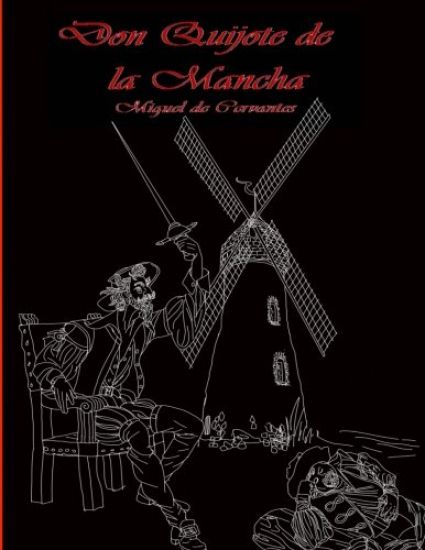
Don Quixote fully titled The Ingenious Gentleman Don Quixote of La Mancha, is a Spanish novel by Miguel de Cervantes Saavedra. Originally published in two volumes. Don Quixote is considered the most influential work of literature from the Spanish Golden Age. The story follows the adventures of a hidalgo named Mr. Alonso Quixano that loses his sanity and decides to set out to revive chivalry, undo wrongs, and bring justice to the world, under the name Don Quixote de la Mancha. He recruits a simple farmer, Sancho Panza, as his squire.