Kirjailija
Miguel De Cervantes
Kirjat ja teokset yhdessä paikassa: 429 kirjaa, julkaisuja vuosilta 1989–2026, suosituimpiin kuuluu Don Quixote. Vertaile teosten hintoja ja tarkista saatavuus suomalaisista kirjakaupoista.
Nimi esiintyy myös muodoissa: Miguel de Cervantès
429 kirjaa
Kirjojen julkaisuvuodet: 1989–2026.



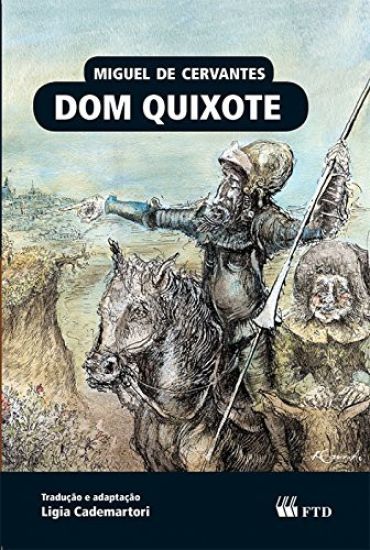
Depois de ler muitas novelas de cavalaria, um fidalgo pobre resolve se tornar cavaleiroandante. Adota o nome de Dom Quixote de la Mancha, em homenagem regi o da Espanha em que nasceu. Conta com a ajuda de um campon s, Sancho Pan a, que se torna seu escudeiro. Sua imagina o desenfreada o faz ver tudo de modo alucinado: moinhos se tornam gigantes; rebanhos se tornam ex rcitos; pousada, castelo e assim por diante.
L'Ingenieux Hidalgo Don Quichotte de la Manche
Miguel De Cervantes; Daniel Fernandez
Classiques Garnier
2022
nidottu
A simple squire sets off on the roads, thinking he is a knight. Believing he is resuscitating the past, he gives birth to the first of modern novels. This edition, with a new translation and the most complete critical apparatus in French, is based on the most recent studies.
Geschichte des Zigeunerm dchens - Eine Novelle ist ein unver nderter, hochwertiger Nachdruck der Originalausgabe. Hansebooks ist Herausgeber von Literatur zu unterschiedlichen Themengebieten wie Forschung und Wissenschaft, Reisen und Expeditionen, Kochen und Ern hrung, Medizin und weiteren Genres. Der Schwerpunkt des Verlages liegt auf dem Erhalt historischer Literatur. Viele Werke historischer Schriftsteller und Wissenschaftler sind heute nur noch als Antiquit ten erh ltlich. Hansebooks verlegt diese B cher neu und tr gt damit zum Erhalt selten gewordener Literatur und historischem Wissen auch f r die Zukunft bei.

Don Quixote is a Spanish novel by Miguel de Cervantes. It was originally published in two parts, in 1605 and 1615. A founding work of Western literature, it is often labeled as the first modern novel and one of the greatest ever written. Don Quixote is also one of the most-translated books in the world. The plot revolves around the adventures of a member of the lowest nobility, an hidalgo (""Son of Someone""), from La Mancha named Alonso Quixano, who reads so many chivalric romances that he either loses or pretends to have lost his mind in order to become a knight-errant (caballero andante) to revive chivalry and serve his nation, under the name Don Quixote de la Mancha. He recruits a simple farmer, Sancho Panza, as his squire, who often employs a unique, earthy wit in dealing with Don Quixote's rhetorical monologues on knighthood, already considered old-fashioned at the time, and representing the most vivid realism in contrast to his master's idealism. In the first part of the book, Don Quixote does not see the world for what it is and prefers to imagine that he is living out a knightly story. When first published, Don Quixote was usually interpreted as a comic novel. After the French Revolution, it was better known for its central ethic that individuals can be right while society is quite wrong and was seen as a story of disenchantment. In the 19th century, it was seen as social commentary, but no one could easily tell ""whose side Cervantes was on"". Many critics came to view the work as a tragedy in which Don Quixote's idealism and nobility are viewed by the post-chivalric world as insane, and are defeated and rendered useless by common reality. By the 20th century, the novel had come to occupy a canonical space as one of the foundations of modern literature.
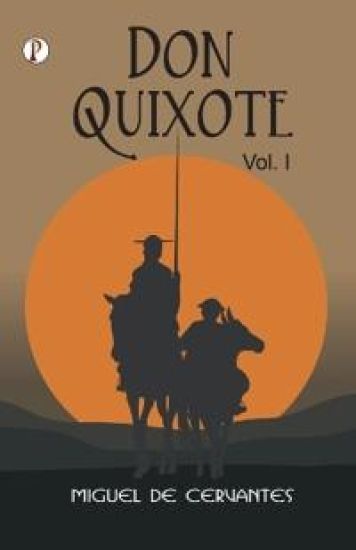
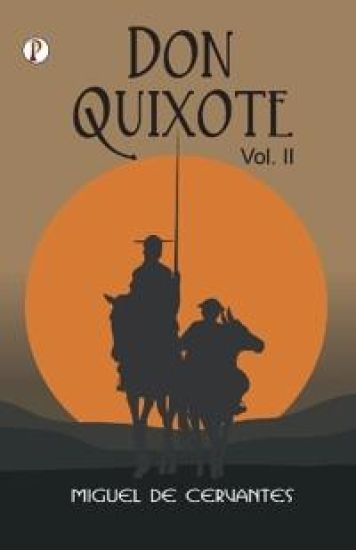
Don Quixote is a Spanish novel by Miguel de Cervantes. It was originally published in two parts, in 1605 and 1615. A founding work of Western literature, it is often labeled as the first modern novel and one of the greatest ever written. Don Quixote is also one of the most-translated books in the world. The plot revolves around the adventures of a member of the lowest nobility, an hidalgo (""Son of Someone""), from La Mancha named Alonso Quixano, who reads so many chivalric romances that he either loses or pretends to have lost his mind in order to become a knight-errant (caballero andante) to revive chivalry and serve his nation, under the name Don Quixote de la Mancha. He recruits a simple farmer, Sancho Panza, as his squire, who often employs a unique, earthy wit in dealing with Don Quixote's rhetorical monologues on knighthood, already considered old-fashioned at the time, and representing the most vivid realism in contrast to his master's idealism. In the first part of the book, Don Quixote does not see the world for what it is and prefers to imagine that he is living out a knightly story. When first published, Don Quixote was usually interpreted as a comic novel. After the French Revolution, it was better known for its central ethic that individuals can be right while society is quite wrong and was seen as a story of disenchantment. In the 19th century, it was seen as social commentary, but no one could easily tell ""whose side Cervantes was on"". Many critics came to view the work as a tragedy in which Don Quixote's idealism and nobility are viewed by the post-chivalric world as insane, and are defeated and rendered useless by common reality. By the 20th century, the novel had come to occupy a canonical space as one of the foundations of modern literature.