Kirjojen hintavertailu – 12 903 725 kirjaa ja 27 kauppaa
Kirjailija
Miguel De Cervantes
Kirjat ja teokset yhdessä paikassa: 429 kirjaa, julkaisuja vuosilta 1989–2026, suosituimpiin kuuluu Don Quixote. Vertaile teosten hintoja ja tarkista saatavuus suomalaisista kirjakaupoista.
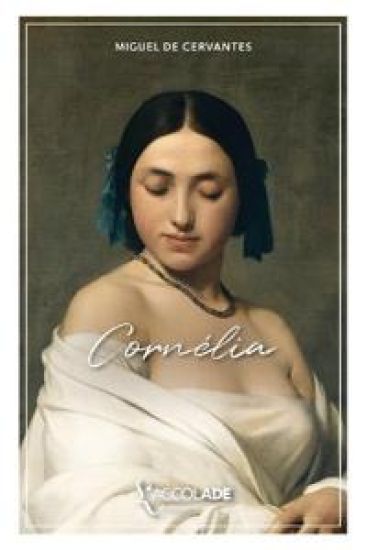
Deux jeunes Espagnols mettent entre parenth ses leurs tudes afin de voyager. Ils finissent par s'installer Bologne, en Italie, o de rocambolesques aventures vont se multiplier, se croiser, puis converger sur une myst rieuse personne: Corn lia Bentibolli, la vertu et la lign e aussi renomm es que son indicible beaut . Cette jeune femme est cependant condamn e au secret... Corn lia est une des c l bres Nouvelles exemplaires de Miguel de Cervantes, publi es pour la premi re fois Madrid en 1613. En dition bilingue espagnol/fran ais, avec lecture audio int gr e: Non seulement vous pouvez lire Corn lia en fran ais et en espagnol, mais vous pouvez aussi couter la lecture de cet ouvrage soit dans sa version originale hispanique, soit dans sa traduction fran aise, gr ce votre t l phone, tablette ou webcam. L'id al pour am liorer votre ma trise de la langue de Cervant s... ou de Moli re
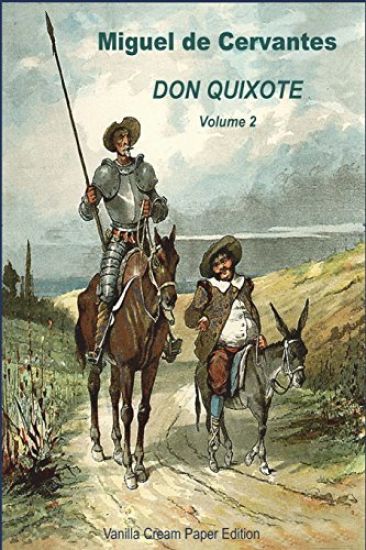
Rare edition with unique illustrations and elegant classic cream paper. Don Quixote (spelled "Quijote" in modern Spanish) is two separate volumes, now nearly always published as one, that cover the adventures of Don Quixote, also known as the knight or man of La Mancha, a hero who carries his enthusiasm and self-deception to unintentional and comic ends. On one level, Don Quixote works as a satire of the romances of chivalry, which, though still popular in Cervantes' time, had become an object of ridicule among more demanding critics. The choice of a madman as hero also served a critical purpose, for it was "the impression of ill-being or 'in-sanity, ' rather than a finding of dementia or psychosis in clinical terms, that defined the madman for Cervantes and his contemporaries." Indeed, the concept of madness was "associated with physical or moral displacement, as may be seen in the literal and figurative sense of the adjectives eccentric, extravagant, deviant, aberrant, etc." The novel allows Cervantes to illuminate various aspects of human nature. Don Quixote is noble-minded, enthusiastic admirer of everything good and great, yet having all these fine qualities accidentally blended with a relative kind of madness. He is paired with a character of opposite qualities, Sancho Panza, a man of low self-esteem, who is a compound of grossness and simplicity. Don Quixote is cited as the first classic model of the modern romance or novel, and it has served as the prototype of the comic novel. The humorous situations are mostly burlesque, and it includes satire. Don Quixote is one of the Encyclop?dia Britannica's Great Books of the Western World, while the Russian author Fyodor Dostoyevsky called it "the ultimate and most sublime work of human thinking." 36] It is in Don Quixote that Cervantes coined the popular phrase "the proof of the pudding is in the eating" (por la muestra se conoce el pano), which still sees heavy use in the shortened form of "the proof is in the pudding," and "who walks much and reads much, knows much and sees much" (quien anda mucho y lee mucho, sabe mucho y ve mucho). Includes unique illustrations
Rare edition with unique illustrations and elegant classic cream paper. Don Quixote (spelled "Quijote" in modern Spanish) is two separate volumes, now nearly always published as one, that cover the adventures of Don Quixote, also known as the knight or man of La Mancha, a hero who carries his enthusiasm and self-deception to unintentional and comic ends. On one level, Don Quixote works as a satire of the romances of chivalry, which, though still popular in Cervantes' time, had become an object of ridicule among more demanding critics. The choice of a madman as hero also served a critical purpose, for it was "the impression of ill-being or 'in-sanity, ' rather than a finding of dementia or psychosis in clinical terms, that defined the madman for Cervantes and his contemporaries." Indeed, the concept of madness was "associated with physical or moral displacement, as may be seen in the literal and figurative sense of the adjectives eccentric, extravagant, deviant, aberrant, etc." The novel allows Cervantes to illuminate various aspects of human nature. Don Quixote is noble-minded, enthusiastic admirer of everything good and great, yet having all these fine qualities accidentally blended with a relative kind of madness. He is paired with a character of opposite qualities, Sancho Panza, a man of low self-esteem, who is a compound of grossness and simplicity. Don Quixote is cited as the first classic model of the modern romance or novel, and it has served as the prototype of the comic novel. The humorous situations are mostly burlesque, and it includes satire. Don Quixote is one of the Encyclop?dia Britannica's Great Books of the Western World, while the Russian author Fyodor Dostoyevsky called it "the ultimate and most sublime work of human thinking". 36] It is in Don Quixote that Cervantes coined the popular phrase "the proof of the pudding is in the eating" (por la muestra se conoce el pano), which still sees heavy use in the shortened form of "the proof is in the pudding", and "who walks much and reads much, knows much and sees much" (quien anda mucho y lee mucho, sabe mucho y ve mucho). Includes unique illustrations
Hailed by Dostoyevsky as "The final and greatest utterance of the human mind," Don Quixote constitutes a founding work of modern Western literature. Cervantes' masterpiece has been translated into more than sixty languages, and the novel's fantasy-driven "knight," Don Quixote, and his loyal squire, Sancho Panza, rank among fiction's most recognized characters. Their adventures have been interpreted for film, opera, and ballet, and they head a cast of characters that comprises a diverse array of beliefs and perspectives, reflecting the historical realities of seventeenth-century Spain. Within its absorbing re-creation of the world during Cervantes' time, this parody of chivalric romances and epic of heroic idealism forms a strikingly contemporary narrative. The author is often credited with inventing the concept of the novel, addressing himself to the readers rather than the characters or the action. This edition of his landmark work presents the acclaimed 1755 Tobias Smollett translation.
Personas que hablan en ella: -CAURAL , capit n de Argel -YZUF, renegado -Cuatro MOROS -Otro MORO -UNO -Dos OTROS -Un VIEJO -JUANICO, un hijo suyo] -FRANCISQUITO, otro hijo suyo] -Un SACRIST N -COSTANZA, cristiana -CAPIT N cristiano -Dos ARCABUCEROS cristianos -Don FERNANDO -GUARDI N Baj -Un CAUTIVO -Un CRISTIANO cautivo -Don LOPE, cautivo -VIVANCO, cautivo -HAZ N, renegado -ZARAHOJA, moro -HAZ N Baj , rey de Argel -El CAD -HALIMA, mora, mujer de Caural -ZARA, mora -Tres MOR ILL]OS peque os
This book was converted from its physical edition to the digital format by a community of volunteers. You may find it for free on the web. Purchase of the Kindle edition includes wireless delivery.
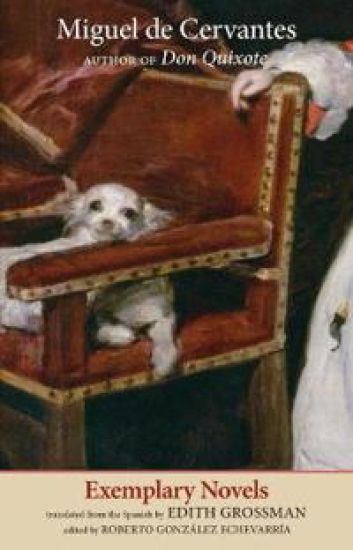
Edith Grossman, celebrated for her brilliant translation of Don Quixote, offers a dazzling new version of another Cervantes classic “Compressed masterworks, containing great canvases and big ideas in just a few pages. . . . A pleasure.”—Kirkus Reviews The twelve novellas gathered in Exemplary Novels reveal the extraordinary breadth of Cervantes’s imagination: his nearly limitless ability to create characters, invent plots, and entertain readers across continents and centuries. The assemblage of characters (eloquent witches, talking dogs, Gypsy orphans, and an array of others), the twisting plots, and the moral heart at the core of each short tale proved instantly irresistible to readers. Love is the overarching theme. Now, as when it was published in Spain in 1613, the book brings readers pure entertainment, but also a subtle artistry that invites deeper investigation. Edith Grossman’s translation brings this timeless classic to English-language readers in an edition that will delight those already familiar with Cervantes’s work as well as those about to be enchanted for the first time. Roberto González Echevarría’s illuminating introduction to the volume serves as both an appreciation of Cervantes’s brilliance and a critical guide to the novellas and their significance.