Kirjojen hintavertailu – 12 859 829 kirjaa ja 27 kauppaa

Kirjailija

Miguel Vatter

Kirjat ja teokset yhdessä paikassa: 10 kirjaa, julkaisuja vuosilta 2013–2026, suosituimpiin kuuluu Living Law. Vertaile teosten hintoja ja tarkista saatavuus suomalaisista kirjakaupoista.

10 kirjaa

Kirjojen julkaisuvuodet: 2013–2026.

Machiavelli and the Religion of the Ancients

Machiavelli and the Religion of the Ancients

Miguel Vatter

EDINBURGH UNIVERSITY PRESS
2026
sidottu
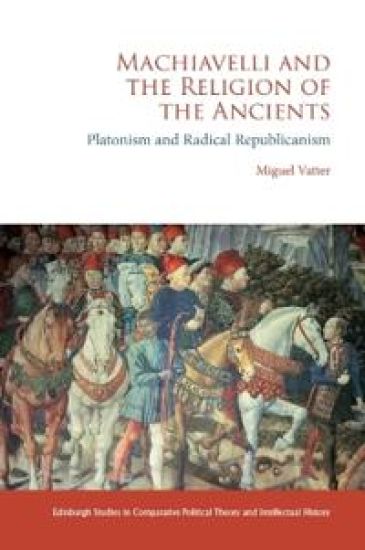
Machiavellianism and Platonism are traditionally opposed, as realism is to idealism, and might is to right. This book questions this opposition, arguing that Machiavelli is far more influenced by Platonism than by Epicureanism. The Platonism at the time of the Medici is marked by the reception of Arabic/Islamic and Byzantine interpretations of Plato. These portray Platonism as an expression of an “ancient theology” that offers an alternative to Christianity by undoing a stark opposition between faith and knowledge; emphasising the political and state-founding role of prophets; affirming the continuity between humans and animals; and defending the rationality of divine and human law. Miguel Vatter contends that from these alternative approaches to Platonism, Machiavelli draws a critique of both the Catholic Church and of Humanism, rejecting their oligarchic tendencies in favour of a radical form of republicanism.
Living Law

Living Law

Miguel Vatter

OXFORD UNIVERSITY PRESS INC
2026
nidottu
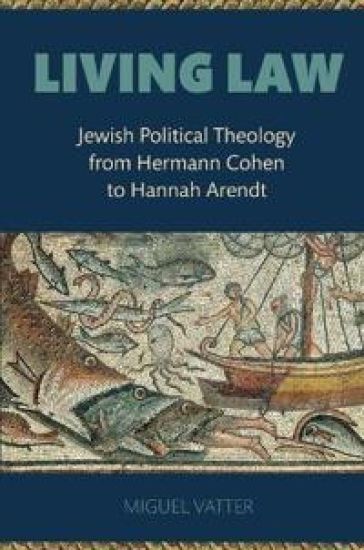
It is often assumed that modern democratic government has a special link with Christianity or was made possible due to Christianity. As a challenge to this belief and echoing a long-held assumption in the republican tradition, Hannah Arendt once remarked that "Washington's and Napoleon's heroes were named Moses and David." In this book, Miguel Vatter reconstructs the political theology of German Jewish philosophers during the twentieth century and their attempts to bring together the Biblical teachings on politics with the Greek and Roman traditions of political philosophy. Developed alongside modern experiences with anti-Semitism, the rise of Zionism, and the return of charismatic authority in mass societies, Jewish political theology in the twentieth century advances the radical hypothesis that the messianic idea of God's Kingdom correlates with a post-sovereignty, anarchist political condition of non-domination. Importantly, Jewish philosophers combined this messianic form of democracy with the ideal of cosmopolitan constitutionalism, which is itself based on the identity of divine law and natural law. This book examines the paradoxical unity of anarchy and rule of law in the democratic political theology developed by Hermann Cohen, Franz Rosenzweig, Gershom Scholem, Leo Strauss, and Hannah Arendt. Critical of the Christian theological underpinnings of modern representative political institutions, this group of highly original thinkers took up the banner of Philo's project to unify Greek philosophy with Judaism, and rejected the separation between faith and reason, as well as the division between Biblical revelation and pagan philosophy. The Jewish political theology they developed stands for the idea that human redemption is inseparable from the redemption of nature. Living Law offers an alternative genealogy of political theology that challenges the widespread belief that modern republican political thought is derived from Christian sources.

Living Law

Living Law

Miguel Vatter

Oxford University Press Inc
2021
sidottu
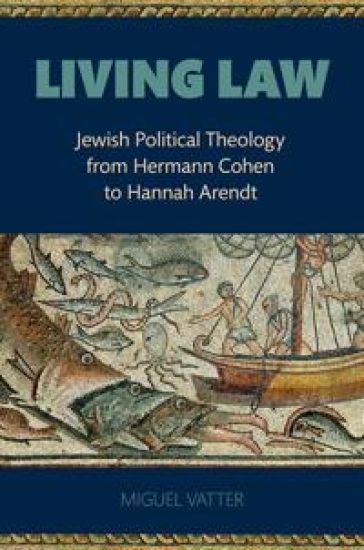
It is often assumed that modern democratic government has a special link with Christianity or was made possible due to Christianity. As a challenge to this belief and echoing a long-held assumption in the republican tradition, Hannah Arendt once remarked that "Washington's and Napoleon's heroes were named Moses and David." In this book, Miguel Vatter reconstructs the political theology of German Jewish philosophers during the twentieth century and their attempts to bring together the Biblical teachings on politics with the Greek and Roman traditions of political philosophy. Developed alongside modern experiences with anti-Semitism, the rise of Zionism, and the return of charismatic authority in mass societies, Jewish political theology in the twentieth century advances the radical hypothesis that the messianic idea of God's Kingdom correlates with a post-sovereignty, anarchist political condition of non-domination. Importantly, Jewish philosophers combined this messianic form of democracy with the ideal of cosmopolitan constitutionalism, which is itself based on the identity of divine law and natural law. This book examines the paradoxical unity of anarchy and rule of law in the democratic political theology developed by Hermann Cohen, Franz Rosenzweig, Gershom Scholem, Leo Strauss, and Hannah Arendt. Critical of the Christian theological underpinnings of modern representative political institutions, this group of highly original thinkers took up the banner of Philo's project to unify Greek philosophy with Judaism, and rejected the separation between faith and reason, as well as the division between Biblical revelation and pagan philosophy. The Jewish political theology they developed stands for the idea that human redemption is inseparable from the redemption of nature. Living Law offers an alternative genealogy of political theology that challenges the widespread belief that modern republican political thought is derived from Christian sources.
Divine Democracy

Divine Democracy

Miguel Vatter

Oxford University Press Inc
2020
sidottu
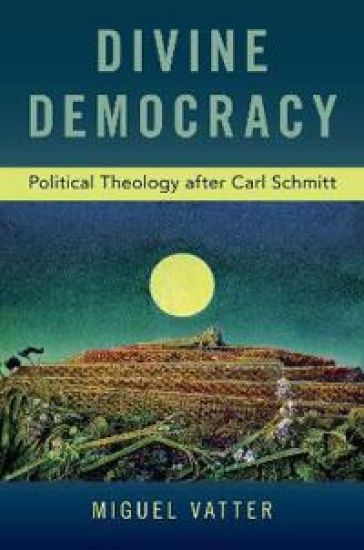
How secular are the political and legal concepts that underpin liberal democracy? Carl Schmitt first coined the term political theology to show the dependency of modern western jurisprudence and political science on Christian theological discourse, and in so doing criticized the claim to religious neutrality of liberal institutions. In this book, Miguel Vatter reconstructs how and why the discourse of political theology was adopted and repurposed by anti-Schmittian thinkers, from Eric Voegelin through Jacques Maritain and Ernst Kantorowicz to Jürgen Habermas, to bolster the legitimacy of liberal democratic government. The book traces the way in which crucial political concepts for liberal democracy--including sovereignty, representation, government, constitutionalism, human rights, and public reason--are transformed when they become part of a discourse on political theology. Vatter's aim is to provide an intellectual history of political theology in the 20th century. His study reveals the overdetermined role that religion plays in contemporary democratic political and legal theory as an ultimate source of legitimacy for government and as wellspring for revolutionary aspirations.
Divine Democracy

Divine Democracy

Miguel Vatter

Oxford University Press Inc
2020
nidottu
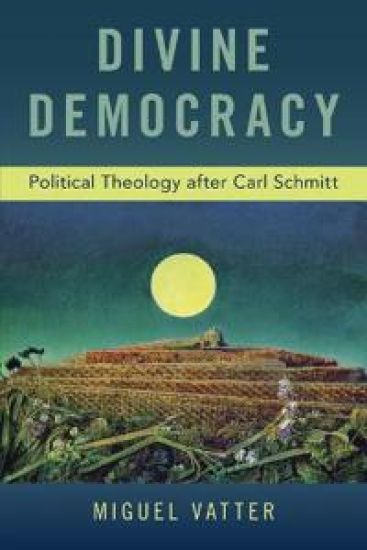
How secular are the political and legal concepts that underpin liberal democracy? Carl Schmitt first coined the term political theology to show the dependency of modern western jurisprudence and political science on Christian theological discourse, and in so doing criticized the claim to religious neutrality of liberal institutions. In this book, Miguel Vatter reconstructs how and why the discourse of political theology was adopted and repurposed by anti-Schmittian thinkers, from Eric Voegelin through Jacques Maritain and Ernst Kantorowicz to Jürgen Habermas, to bolster the legitimacy of liberal democratic government. The book traces the way in which crucial political concepts for liberal democracy--including sovereignty, representation, government, constitutionalism, human rights, and public reason--are transformed when they become part of a discourse on political theology. Vatter's aim is to provide an intellectual history of political theology in the 20th century. His study reveals the overdetermined role that religion plays in contemporary democratic political and legal theory as an ultimate source of legitimacy for government and as wellspring for revolutionary aspirations.
Between Form and Event

Between Form and Event

Miguel Vatter; the Author

Fordham University Press
2014
pokkari
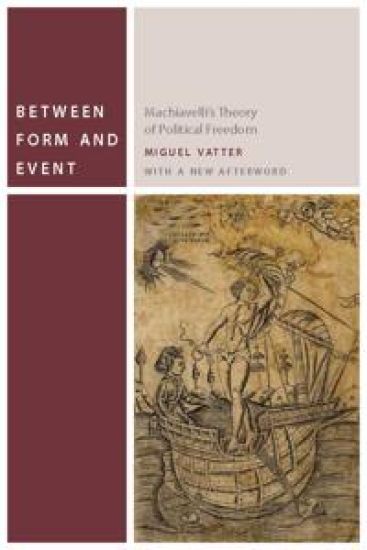
Machiavelli uncovers the productive function of social conflict in establishing a new idea of popular power and its legal institutions whose function is to relativize the command of the state and check the abuses of the privileged groups in society. Henceforth, every legitimate form of government must at the same time be inscribed with its immanent critique and imminent subversion: The possibility of political form is conditioned by the possibility of changing it in an event of political revolution. The book argues that Machiavelli's new understanding of political freedom presupposes a revolutionary change in the way that history is conceived. Machiavelli changes the paradigm of action from the classical idea that virtue means acting in correspondence to what the times demand to a modern idea of virtue wherein acting means going against the times in order to effect a radical new beginning. In so doing, Machiavelli becomes the first political philosopher of the event.
The Republic of the Living

The Republic of the Living

Miguel Vatter

Fordham University Press
2014
pokkari
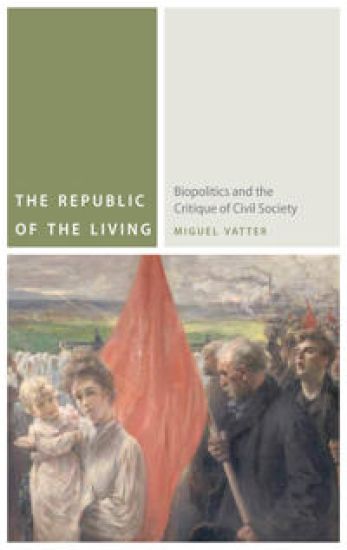
This book takes up Foucault's hypothesis that liberal "civil society," far from being a sphere of natural freedoms, designates the social spaces where our biological lives come under new forms of control and are invested with new forms of biopower. In order to test this hypothesis, its chapters examine the critical theory of civil society—from Hegel and Marx through Lukacs, Adorno, Benjamin, and Arendt—from the new horizon opened up by Foucault's turn to biopolitics and its reception in recent Italian theory. Negri, Agamben, and Esposito have argued that biopolitics not only denotes new forms of domination over life but harbors within it an affirmative relation between biological life and politics that carries an emancipatory potential. The chapters of this book take up this suggestion by locating this emancipatory potential in the biopolitical feature of the human condition that Arendt called "natality." The book proceeds to illustrate how natality is the basis for a republican articulation of an affirmative biopolitics. It aims to renew the critical theory of civil society by pursuing the traces of natality as a "surplus of life" that resists the oppressive government of life found in the capitalist political economy, in the liberal system of rights, and in the bourgeois family. By contrast, natality offers the normative foundation for a new "republic of the living." Finally, natality permits us to establish a relation between biological life and contemplative life that reverses the long-held belief in a privileged relationship of thinking to the possibility of our death. The result is a materialist, atheological conception of contemplative life as eternal life.
The Republic of the Living

The Republic of the Living

Miguel Vatter

Fordham University Press
2014
sidottu
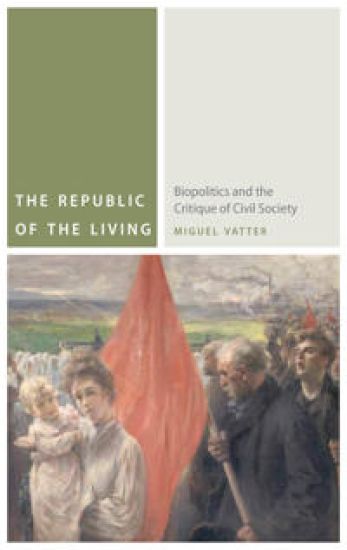
This book takes up Foucault's hypothesis that liberal "civil society," far from being a sphere of natural freedoms, designates the social spaces where our biological lives come under new forms of control and are invested with new forms of biopower. In order to test this hypothesis, its chapters examine the critical theory of civil society—from Hegel and Marx through Lukacs, Adorno, Benjamin, and Arendt—from the new horizon opened up by Foucault's turn to biopolitics and its reception in recent Italian theory. Negri, Agamben, and Esposito have argued that biopolitics not only denotes new forms of domination over life but harbors within it an affirmative relation between biological life and politics that carries an emancipatory potential. The chapters of this book take up this suggestion by locating this emancipatory potential in the biopolitical feature of the human condition that Arendt called "natality." The book proceeds to illustrate how natality is the basis for a republican articulation of an affirmative biopolitics. It aims to renew the critical theory of civil society by pursuing the traces of natality as a "surplus of life" that resists the oppressive government of life found in the capitalist political economy, in the liberal system of rights, and in the bourgeois family. By contrast, natality offers the normative foundation for a new "republic of the living." Finally, natality permits us to establish a relation between biological life and contemplative life that reverses the long-held belief in a privileged relationship of thinking to the possibility of our death. The result is a materialist, atheological conception of contemplative life as eternal life.
Machiavelli's 'The Prince'

Machiavelli's 'The Prince'

Miguel Vatter

Bloomsbury Academic USA
2013
nidottu
Machiavelli's influence on modern politics and the importance of his thought for the development of modern political ideas has long been universally acknowledged. The Prince has become a key text in Philosophy and Political Theory, one that is widely read and studied. Machiavelli's most important work is a hugely exciting, yet challenging, piece of philosophical writing. In Machiavelli's 'The Prince': A Reader's Guide, Miguel Vatter offers a clear and thorough account of this key philosophical work. Setting Machiavelli's text in its historical and philosophical context, the book offers a detailed review of the key themes (epistemological, social, ethical and theological-political) and a lucid commentary that will enable readers to rapidly navigate the text. Geared towards the specific requirements of students who need to reach a sound understanding of the text as a whole, the guide explores the complex and important ideas inherent in the text and provides a cogent survey of the reception and influence of Machiavelli's work. This is the ideal companion to study this most influential of texts.
Machiavelli's 'The Prince'

Machiavelli's 'The Prince'

Miguel Vatter

Bloomsbury Academic USA
2013
sidottu
Machiavelli's influence on modern politics and the importance of his thought for the development of modern political ideas has long been universally acknowledged. The Prince has become a key text in Philosophy and Political Theory, one that is widely read and studied. Machiavelli's most important work is a hugely exciting, yet challenging, piece of philosophical writing. In Machiavelli's 'The Prince': A Reader's Guide, Miguel Vatter offers a clear and thorough account of this key philosophical work. Setting Machiavelli's text in its historical and philosophical context, the book offers a detailed review of the key themes (epistemological, social, ethical and theological-political) and a lucid commentary that will enable readers to rapidly navigate the text. Geared towards the specific requirements of students who need to reach a sound understanding of the text as a whole, the guide explores the complex and important ideas inherent in the text and provides a cogent survey of the reception and influence of Machiavelli's work. This is the ideal companion to study this most influential of texts.