Kirjailija
Mike Brown
Kirjat ja teokset yhdessä paikassa: 50 kirjaa, julkaisuja vuosilta 2000–2026, suosituimpiin kuuluu Digging for Victory. Vertaile teosten hintoja ja tarkista saatavuus suomalaisista kirjakaupoista.
50 kirjaa
Kirjojen julkaisuvuodet: 2000–2026.
On 3 September 1939, Prime Minister Neville Chamberlain sat tensely at a microphone, using radio to declare that ‘this country is at war with Germany’. During the ensuing wartime years, the BBC was the sole radio broadcaster in Britain, boosting morale through programmes such as ‘ITMA’ and ‘Worker’s Playtime’; helping the Home Front with useful hints and advice; transmitting government messages; and providing news. Personalities and stars became household names – Tommy Handley, Arthur Askey, Ethel and Doris Walters, Mr Middleton – and their catchphrases could be heard everywhere. And yet, as this fascinating book explains, the BBC chose to avoid propaganda, and had to tread a fine line between what the people wanted to hear and what it was felt they should hear.
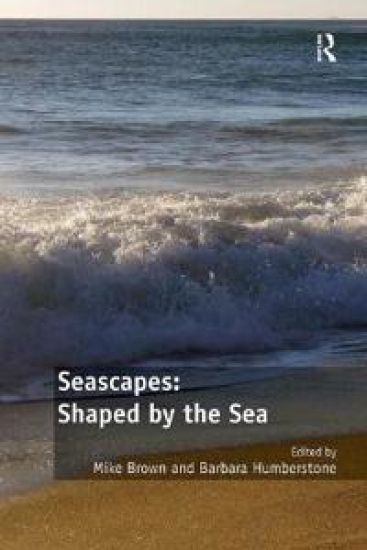
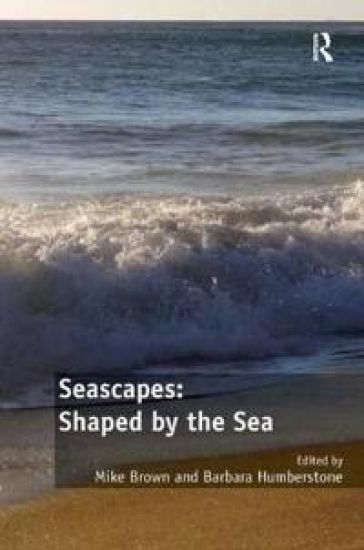
Despite the fact that the sea covers 70 per cent of the Earth’s surface, and is integral to the workings of the world, it has been largely neglected or perceived as marginal in modern consciousness. This edited collection disrupts notions of the sea as ’other’, as foreign and featureless, through specific, situated accounts which highlight the centrality of the sea for the individuals concerned. Bringing together academics who combine scholarly expertise with lived experiences on, in and with the sea, it examines humans’ relationships with the sea. Through the use of auto-ethnographic accounting, the contributors reflect on how the sea has shaped their sense of identity, belonging and connection. They examine what it is to be engaged with the sea, and narrate their lived, sentient, corporeal experiences. The sea is a cultural seascape just as it is physical reality. The sea shapes us and we, in turn, attempt to ’shape it’ as we construct various versions of it that reflect our on-going and mutable relationship with it. The use of embodied accounts, as a way of conveying lived-experiences, and the integration of relevant theoretical frames for understanding the broader cultural implications provide new opportunities to understand seascapes.
The Vision of the Patriarchs: Messages to Us from Revealed Insights of the Jewish Pioneers
Mike Brown
Mike Brown
2017
nidottu
The 1960s, known as the ‘Swinging Sixties’, are recognised as a landmark decade both by those who lived through them and those who look back in awe at the revolutionary changes in fashion, style and sexual freedom. Continuing interest and appreciation of vintage fashion mean that 1960s styles, hair and make-up have seen a huge increase in popularity and the need for detailed information on this period has never been so great. The ‘Swinging Sixties’ saw young designers such as Mary Quant producing exciting new clothes modelled by the likes of Jean Shrimpton and Twiggy. New clothing styles were created – like the miniskirt – and new materials came to prominence including PVC and Perspex. But achieving the ‘1960s Look’ is not just about the clothing but also the hairstyles, make-up, shoes, and many other accessories, all of which Mike Brown covers in detail. Using contemporary sources, photographs and meticulous research ‘The 1960s Look’ walks you through the decade telling you how men, women and children dressed - and why they looked the way they did. Lavishly illustrated throughout this book takes you back to a decade of fab miniskirts, groovy Beatles’ jackets, swinging Edwardian military uniforms, Mods in parkas and Rockers in leathers, plus the hairstyles, jewellery, make-up, and so much else that went to make up ‘the 1960s look’.
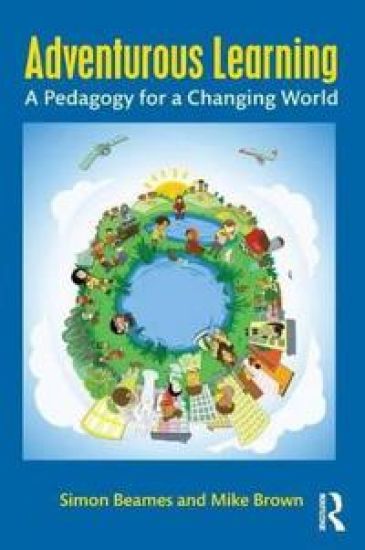
Adventurous Learning interrogates the word ‘adventure’ and explores how elements of authenticity, agency, uncertainty and mastery can be incorporated into educational practices. It outlines key elements for a pedagogy of adventurous learning and provides guidelines grounded in accessible theory. Teachers of all kinds can adapt these guidelines for indoor and outdoor teaching in their own culturally specific, place-responsive contexts, without any requirement to learn a new program or buy an educational gimmick. As forces of standardization and regulation continue to pervade educational systems across the globe, both teaching and learning have been starved of creativity, choice and ‘real world’ relevance. Many teachers are keen to improve their practice yet feel constrained by the institutional structures within which they work. By carefully examining adventure and its role in education, teachers can become better able to design and deliver engaging programmes that are underpinned by sound pedagogical principles, and which have deep and enduring meaning for their students.
Despite the fact that the sea covers 70 per cent of the Earth’s surface, and is integral to the workings of the world, it has been largely neglected or perceived as marginal in modern consciousness. This edited collection disrupts notions of the sea as ’other’, as foreign and featureless, through specific, situated accounts which highlight the centrality of the sea for the individuals concerned. Bringing together academics who combine scholarly expertise with lived experiences on, in and with the sea, it examines humans’ relationships with the sea. Through the use of auto-ethnographic accounting, the contributors reflect on how the sea has shaped their sense of identity, belonging and connection. They examine what it is to be engaged with the sea, and narrate their lived, sentient, corporeal experiences. The sea is a cultural seascape just as it is physical reality. The sea shapes us and we, in turn, attempt to ’shape it’ as we construct various versions of it that reflect our on-going and mutable relationship with it. The use of embodied accounts, as a way of conveying lived-experiences, and the integration of relevant theoretical frames for understanding the broader cultural implications provide new opportunities to understand seascapes.
The Utility symbol, CC41, is one of the most iconic symbols in the history of clothing in Britain; instantly recognisable to anyone who lived in Britain through the Second World War or the immediate post-war years. Clothes rationing began in June 1941 in an effort to cut down the nation's consumption of scarce resources; the Utility scheme was started 3 months later as a method of providing cheap, but well-made clothes for the less-well-off. The scheme was such a success that over the next few years it was extended to cover goods as widespread as shoes, furniture, lighters, pencils and household linen. Mike Brown looks at the background to, and the evolution of, the clothing scheme and the symbol as it changed to include more items of clothing, from underwear to fur coats. He also addresses the often misunderstood subject of 'Super Utility', and the so-called 'Dinner plate' mark, uncovering the truth behind a subject shrouded in mystery since its introduction. From somewhat hit-and-miss early garments, through to 'the Couturier scheme', the Utility symbol grew to be a mark of quality and value, which, post-war, slowly deteriorated until many were removed from clothes as a symbol of 'cheap and cheerful', and often not even cheerful clothes. A fascinating explanation of a little understood scheme with a wealth of knowledge complimented by colour photographs and original illustrations throughout.
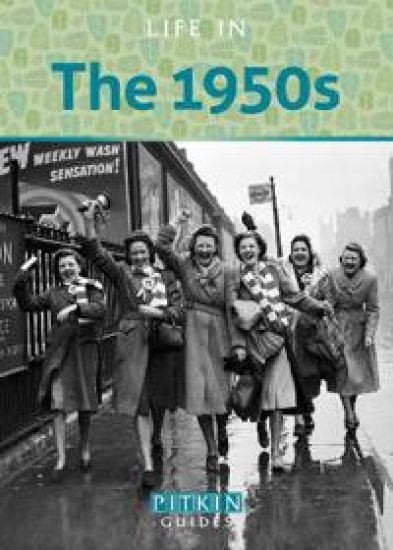
The 1950s began in the shadow of War. In Britain, food was still rationed as the country strove to pay off the huge debts that were the legacy of war. However by the end of the decade, the British had ‘never had it so good’, as prime Minister Harold MacMillan told them. In this book, Mike Brown looks at some of the major aspects of living in Britain at that time of change; how ordinary people lived, worked and played, of the experiences of childhood, and of a new group - teenagers. How did people spend their new-found wealth, what they ate, wore, watched and listened to; the stories and people who made the headlines - Royals, politicians, and stars of music and screen, in an age overshadowed by the Cold War. The book will appeal to those who lived through it, and to those wishing to know more about life for their parents and grand-parents.
The 1960s have gone down in history as the swinging sixties; when the permissive society swept the country in a haze of mini-skirts, psychedelic posters, pop festivals and ‘love-ins’. But what was it really like for ordinary British people? In this book, Mike Brown looks at some of the major aspects of living in Britain at the time; how we lived, worked and played, how we shopped, what we ate, wore, drove, watched and listened to. He looks at the stories and people who made the headlines; the mods and rockers, the ‘beautiful people’, but most of all, how ordinary people really lived and reacted to events such as the Cuban Missile Crisis, the Great Train robbery, and the first moon landing. The book will bring back memories for those who were there, and, for those who were not yet born, it will give them an idea of what the 60s were really like.
Missile!Missile!Missile!: A Personal Experience
Mike Brown
Createspace Independent Publishing Platform
2013
nidottu
The outbreak of war in 1939 saw the disappearance of many traditional British celebrations. Guy Fawkes’ Night went immediately – gunpowder production was needed for the war effort and bonfires contravened the blackout. Summer holidays became a thing of the past and Easter all but disappeared as chocolate – and even real eggs – went ‘on the ration’. In spite of this the nation remained determined to celebrate Christmas as a time of family and community; a time when war could be set aside, if only for a day. Drawing upon personal recollections, contemporary Mass Observation reports, newspaper articles, advertisements, and personal and archive photographs, Mike Brown looks at each wartime Christmas on the British Home Front, from 1939 to 1944. He explores how people celebrated Christmas despite the problems of shortages, rationing, the blackout, Luftwaffe raids and the absence of family members who had been called up or evacuated. Life in Britain changed dramatically as the war progressed; the annual celebration of Christmas provides fascinating yearly ‘snapshots’, illuminating the changes over six years of conflict.
The solar system most of us grew up with included nine planets, with Mercury closest to the sun and Pluto at the outer edge. Then, in 2005, astronomer Mike Brown made the discovery of a lifetime: a tenth planet, Eris, slightly bigger than Pluto. But instead of adding one more planet to our solar system, Brown's find ignited a firestorm of controversy that culminated in the demotion of Pluto from real planet to the newly coined category of "dwarf" planet. Suddenly Brown was receiving hate mail from schoolchildren and being bombarded by TV reporters--all because of the discovery he had spent years searching for and a lifetime dreaming about. A heartfelt and personal journey filled with both humor and drama, How I Killed Pluto and Why It Had It Coming is the book for anyone, young or old, who has ever imagined exploring the universe--and who among us hasn't?
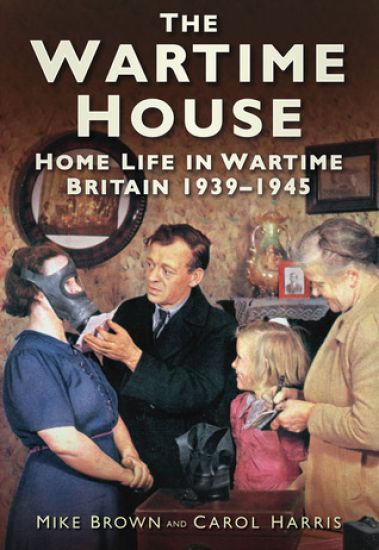
What was it like to live in Britain during the Second World War? What kind of house did the average family live in? How did people cope with the ever-present threat of air-raids, not to mention the hardship of food and clothes rationing? How was a typical suburban home built? What were the choices open to householders when it came to interior decoration and furnishing? How did the war affect the domestic routines of an average household? The demands of a nation at war had many other far-reaching effects on the average home. How did women cope with bringing up a family single-handedly after their husbands were conscripted for military service? How did they use the rations and keep up their families spirits? What was it like to 'Make do and Mend' or 'Dig for Victory', or to sleep in an Anderson shelter? By looking at the lives of ordinary people who inhabited the semi-detached world of suburbia, Mike Brown and Carol Harris have painted a vivid picture of daily life on the Home Front in wartime Britain.
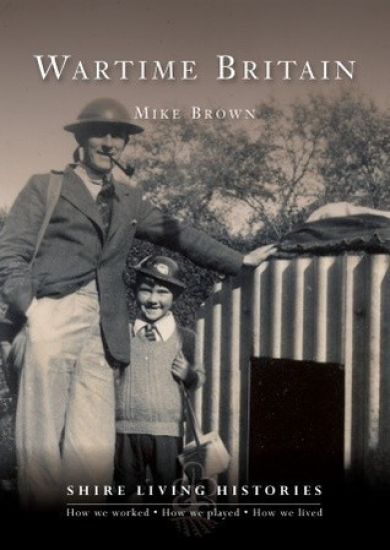
The Second World War affected every aspect of life on the home front. From food rationing to air raid shelters, war work to the Squander Bug, those left at home had to take huge changes in their stride as Britain mobilised, economised, and saved in the name of Victory. Wartime Britain takes a look at what these changes actually meant for families: how families coped when parents went to fight and children were evacuated; how pets were fed during rationing; the rise in road accidents during the blackout; and 'shelter cough'.
This timely book offers an alternative vision for outdoor education practice. A Pedagogy of Place calls into question some of the underlying assumptions and 'truths' about outdoor education, putting forward alternatives to current practice that are responsive to local conditions and cultural traditions. In this renewal of outdoor education philosophy and practice, the emphasis is upon responding to - and empathizing with - the outdoors as particular places rich in local meaning and significance. Current outdoor education theory and practice is influenced by cultural ideas about risk and adventure, and by psychological theories of personal and social development. However, in recent decades, the professional discourse of outdoor education has made a noticeable shift which has resulted in a mismatch between theory and practice: traditional notions of proving oneself 'against' the challenges of the outdoors are antithetical to the development of an empathetic relationship with outdoor places. A Pedagogy of Place is the first of its kind to articulate a renewal of philosophy and practice for outdoor education that is in keeping with the educational needs of today's young people as they grapple with considerable social and ecological changes in a rapidly changing world. The authors draw extensively on international, national, and local literature, and provide compelling case studies drawn from the Australian and New Zealand contexts.
Intelligent Information Integration in B2B Electronic Commerce
Borys Omelayenko; Michel Klein; Alan Flett; Ellen Schulten; Mike Brown; Guy Botquin; Gloria Dabiri
Springer-Verlag New York Inc.
2010
nidottu
Internet and web technology penetrates many aspects of our daily life. Its importance as a medium for business transactions will grow exponentially during the next few years. In terms of the involved market volume, the B2B area will hereby be the most interesting area. Also, it will be the place, where the new technology will lead to drastic changes in established customer relationships and business models. In an era where open and flexible electronic commerce provides new types of services to its users, simple 1-1 connections will be replaced by n-m relationships between customers and vendors. This new flexibility in electronic trading will generate serious challenges. The main problem stems from the heterogeneity of information descriptions used by vendors and customers, creating problems in both manual trading and in direct 1-1 electronic trading. In the case of B2B market places, it becomes too serious to be neglected. Product descriptions, catalog formats and business documents are often unstructured and non-standardized. Intelligent solutions that mechanize the structuring, standardizing, aligning, and personalizing process are a key requisite for successfully overcoming the current bottlenecks of B2B electronic commerce while enabling its further growth. Intelligent Information Integration in B2B Electronic Commerce discusses the main problems of information integration in this area and sketches several technological solution paths. Intelligent Information Integration in B2B Electronic Commerce is designed to meet the needs of a professional audience composed of researchers and practitioners in industry and graduate level students in Computer Science.
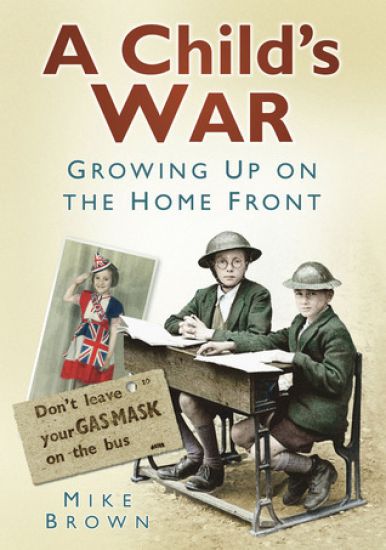
When the Second World War broke out in September 1939, it came as no surprise to the children of Germany: the Nazis had been preparing them for a war ever since they had come to power in 1933. To British children it was an altogether different matter. Children all over Britain were deeply affected by the war: many were separated from their parents by evacuation or bereavement; all had to 'make do and mend' with clothes and toys; and some even died while contributing to the war effort at home. In this moving and often amusing account, Mike Brown describes what life was like on the Home Front during the war from a child's point of view. His fully illustrated narrative includes details of evacuation, rationing, coping with gas masks and air raids, entertainment and the important - and often dangerous - roles of the Boy Scouts and Girl Guides. This photographic history pays tribute to the generation of girls and boys who grew up under the shadow of the Second World War.