Kirjojen hintavertailu – 12 903 724 kirjaa ja 27 kauppaa

Kirjailija

Mike Bunn

Kirjat ja teokset yhdessä paikassa: 14 kirjaa, julkaisuja vuosilta 2008–2026, suosituimpiin kuuluu The Assault on Fort Blakeley. Vertaile teosten hintoja ja tarkista saatavuus suomalaisista kirjakaupoista.

14 kirjaa

Kirjojen julkaisuvuodet: 2008–2026.

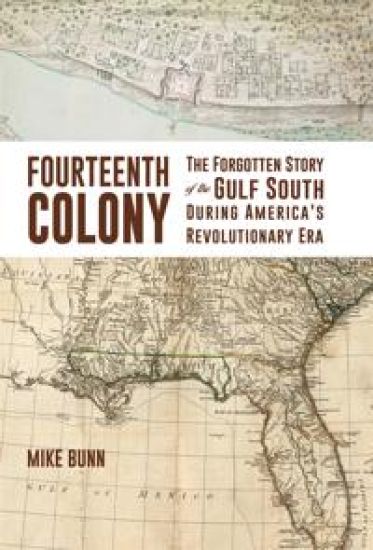
Fourteenth Colony

Fourteenth Colony

Mike Bunn

UNIVERSITY OF GEORGIA PRESS
2026
pokkari
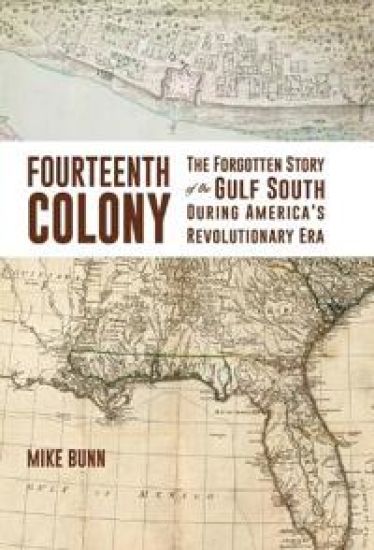
The British colony of West Florida—which once stretched from the mighty Mississippi to the shallow bends of the Apalachicola and portions of what are now the states of Florida, Alabama, Mississippi, and Louisiana—is the forgotten fourteenth colony of America's Revolutionary era. The colony's eventful years as a part of the British Empire form an important and compelling interlude in Gulf Coast history that has for too long been overlooked. For a host of reasons, including the fact that West Florida did not rebel against the British Government, the colony has long been dismissed as a loyal but inconsequential fringe outpost, if considered at all. But the colony's history showcases a tumultuous political scene featuring a halting attempt at instituting representative government; a host of bold and colorful characters; a compelling saga of struggle and perseverance in the pursuit of financial stability; and a dramatic series of battles on land and water which brought about the end of its days under the Union Jack. In Fourteenth Colony, historian Mike Bunn offers the first comprehensive history of the colony, introducing readers to the Gulf Coast's remarkable British period and putting West Florida back in its rightful place on the map of Colonial America.
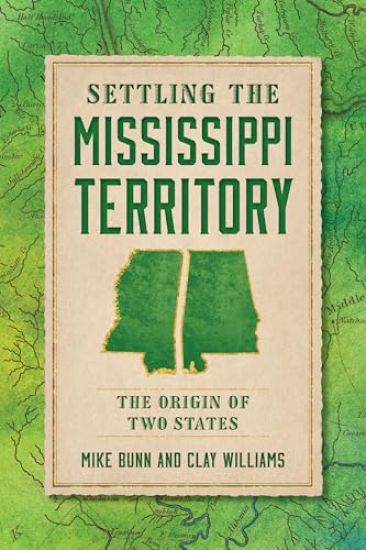
Settling the Mississippi Territory: The Origin of Two States
The Territory That Built Two States The Mississippi Territory existed as a political entity for nearly two decades. It stretched from the Tennessee border southward to the Gulf of Mexico and was bounded on the east by the state of Georgia and the west by the mighty Mississippi River. This enormous swath of America's southwestern frontier in 1817 was divided into the state of Mississippi and the Alabama Territory. Two years later, Alabama entered the Union as a state. Between 1798 and 1817, the territory transitioned from a sparsely inhabited backwoods frontier to a thriving and dynamic centerpiece in one of the fastest-developing regions of the country. Mike Bunn and Clay Williams chronicle that story in a richly illustrated introduction and guide to discovery of this pivotal era.
This Southern Metropolis

This Southern Metropolis

Mike Bunn

UNIVERSITY OF GEORGIA PRESS
2024
sidottu
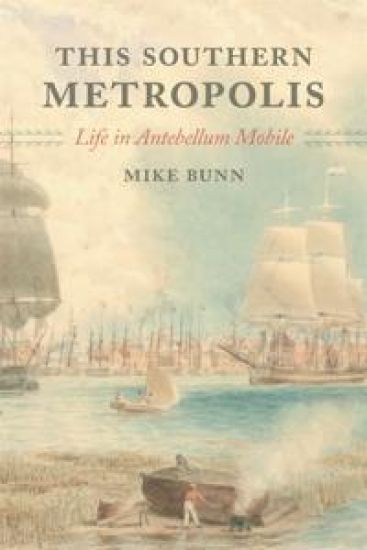
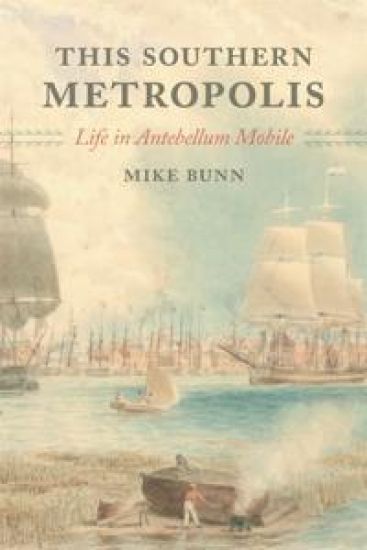
Based on visitor descriptions of antebellum Mobile, Alabama’s physical and social environment, this book captures a place and time that is particular to Gulf Coast history. Mobile’s foundational era is a period in which the city transformed from a struggling colonial outpost into one of the nation’s most significant economic powerhouses, largely owing to the cotton trade and the labor of enslaved people. On the eve of the Civil War, the Mobile ranked as the fourth most populous community in what would soon become the Confederacy, and within the Gulf Coast region, it stood second only to New Orleans in population, wealth, and influence. In addition to ranking as one of the busiest ports in the United States, the city’s remarkable architecture, beautiful natural setting, and abundance of entertainment options combined to make it one of the South’s most distinctive communities. Its cultural diversity only added to its uniqueness. In addition to being home to the largest white population of any community in Alabama, the city also claimed the state’s largest free Black, foreign-born, and Creole communities. Mobile was the slave-trading center of the state until the 1850s as well and remained thoroughly intertwined with the institution of slavery throughout the antebellum period. By 1860 Mobile's population stood at nearly thirty thousand people, making it the twenty-seventh-largest city in the United States overall. Although numerous histories of Mobile have been published, none have focused on the dozens of evocative firsthand accounts published by antebellum-era visitors. These writings allowed literary-minded travelers, who were often consciously looking for things that struck them as singular about a place, to become proxy tour guides for their contemporary readers. In attempting to capture the essence of the city’s reality at a specific moment in time, Mobile’s antebellum visitors have left us a unique record of one of the South’s most historic communities.
This Southern Metropolis

This Southern Metropolis

Mike Bunn

UNIVERSITY OF GEORGIA PRESS
2024
pokkari
Based on visitor descriptions of antebellum Mobile, Alabama’s physical and social environment, this book captures a place and time that is particular to Gulf Coast history. Mobile’s foundational era is a period in which the city transformed from a struggling colonial outpost into one of the nation’s most significant economic powerhouses, largely owing to the cotton trade and the labor of enslaved people. On the eve of the Civil War, the Mobile ranked as the fourth most populous community in what would soon become the Confederacy, and within the Gulf Coast region, it stood second only to New Orleans in population, wealth, and influence. In addition to ranking as one of the busiest ports in the United States, the city’s remarkable architecture, beautiful natural setting, and abundance of entertainment options combined to make it one of the South’s most distinctive communities. Its cultural diversity only added to its uniqueness. In addition to being home to the largest white population of any community in Alabama, the city also claimed the state’s largest free Black, foreign-born, and Creole communities. Mobile was the slave-trading center of the state until the 1850s as well and remained thoroughly intertwined with the institution of slavery throughout the antebellum period. By 1860 Mobile's population stood at nearly thirty thousand people, making it the twenty-seventh-largest city in the United States overall. Although numerous histories of Mobile have been published, none have focused on the dozens of evocative firsthand accounts published by antebellum-era visitors. These writings allowed literary-minded travelers, who were often consciously looking for things that struck them as singular about a place, to become proxy tour guides for their contemporary readers. In attempting to capture the essence of the city’s reality at a specific moment in time, Mobile’s antebellum visitors have left us a unique record of one of the South’s most historic communities.
Old Southwest to Old South

Old Southwest to Old South

Mike Bunn; Clay Williams

UNIVERSITY PRESS OF MISSISSIPPI
2023
sidottu
Mississippi’s foundational epoch—in which the state literally took shape—has for too long remained overlooked and shrouded in misunderstanding. Yet the years between 1798, when the Mississippi Territory was created, and 1840, when the maturing state came into its own as arguably the heart of the antebellum South, was one of remarkable transformation. Beginning as a Native American homeland subject to contested claims by European colonial powers, the state became a thoroughly American entity in the span of little more than a generation. In Old Southwest to Old South: Mississippi, 1798–1840, authors Mike Bunn and Clay Williams tell the story of Mississippi’s founding era in a sweeping narrative that gives these crucial years the attention they deserve. Several key themes, addressing how and why the state developed as it did, rise to the forefront in the book’s pages. These include a veritable list of the major issues in Mississippi history: a sudden influx of American settlers, the harsh saga of Removal, the pivotal role of the institution of slavery, and the consequences of heavy reliance on cotton production. The book bears witness to Mississippi’s birth as the twentieth state in the Union, and it introduces a cast of colorful characters and events that demand further attention from those interested in the state’s past. A story of relevance to all Mississippians, Old Southwest to Old South explains how Mississippi’s early development shaped the state and continues to define it today.
Assault on Fort Blakeley

Assault on Fort Blakeley

Mike Bunn

History PR
2021
sidottu
On the afternoon of April 9, 1865, some sixteen thousand Union troops launched a bold, coordinated assault on the three-mile-long line of earthworks known as Fort Blakeley. The charge was one of the grand spectacles of the Civil War, the climax of a weeks-long campaign that resulted in the capture of Mobile--the last major Southern city to remain in Confederate hands. Historian Mike Bunn takes readers into the chaos of those desperate moments along the waters of the storied Mobile-Tensaw Delta. With a crisp narrative that also serves as a guided tour of Alabama's largest Civil War battlefield, the book pioneers a telling of Blakeley's story through detailed accounts from those who participated in the harrowing siege and assault.
Fourteenth Colony

Fourteenth Colony

Mike Bunn

UNIVERSITY OF GEORGIA PRESS
2020
sidottu
The British colony of West Florida—which once stretched from the mighty Mississippi to the shallow bends of the Apalachicola and portions of what are now the states of Florida, Alabama, Mississippi, and Louisiana—is the forgotten fourteenth colony of America's Revolutionary era. The colony's eventful years as a part of the British Empire form an important and compelling interlude in Gulf Coast history that has for too long been overlooked. For a host of reasons, including the fact that West Florida did not rebel against the British Government, the colony has long been dismissed as a loyal but inconsequential fringe outpost, if considered at all. But the colony's history showcases a tumultuous political scene featuring a halting attempt at instituting representative government; a host of bold and colorful characters; a compelling saga of struggle and perseverance in the pursuit of financial stability; and a dramatic series of battles on land and water which brought about the end of its days under the Union Jack. In Fourteenth Colony, historian Mike Bunn offers the first comprehensive history of the colony, introducing readers to the Gulf Coast's remarkable British period and putting West Florida back in its rightful place on the map of Colonial America.

Early Alabama

Early Alabama

Mike Bunn

The University of Alabama Press
2019
nidottu
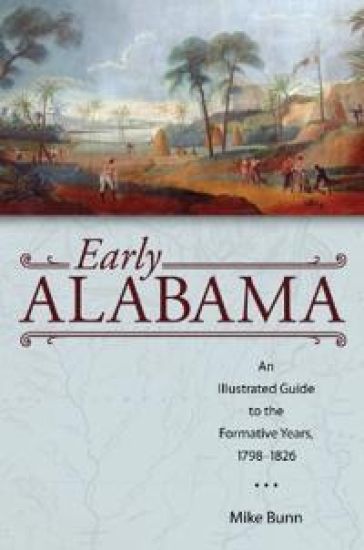
An illustrated guidebook documenting the history and sites of the state's origins. Alabama's territorial and early statehood years represent a crucial formative period in its past, a time in which the state both literally and figuratively took shape. The story of the remarkable changes that occurred within Alabama as it transitioned from frontier territory to a vital part of the American union in less than a quarter century is one of the most compelling in the state's past. This history is rich with stories of charismatic leaders, rugged frontiersmen, a dramatic and pivotal war that shaped the state's trajectory, raging political intrigue, and pervasive sectional rivalry. Many of Alabama's modern cities, counties, and religious, educational, and governmental institutions first took shape within this time period. It also gave way to the creation of sophisticated trade and communication networks, the first large-scale cultivation of cotton, and the advent of the steamboat. Contained within this story of growth and innovation is a parallel story, the dispossession of Native groups of their lands and the forced labor of slaves, which fueled much of Alabama's early development. Early Alabama:An Illustrated Guide to the Formative Years, 1798–1826 serves as a traveler's guidebook with a fast-paced narrative that traces Alabama's developmental years. Despite the great significance of this era in the state's overall growth, these years are perhaps the least understood in all of the state's history and have received relatively scant attention from historians. Mike Bunn has created a detailed guide—appealing to historians and the general public—for touring historic sites and structures including selected homes, churches, businesses, government buildings, battlefields, cemeteries, and museums.
Civil War Eufaula

Civil War Eufaula

Mike Bunn

History Press Library Editions
2013
sidottu
Told here for the first time is the compelling story of the Bluff City during the Civil War. Historian and preservationist Mike Bunn takes you from the pivotal role Eufaula played in Alabama's secession and early enthusiasm for the Confederate cause to its aborted attempt to become the state's capital and its ultimate capture by Union forces, chronicling the effects of the conflict on Eufaulans along the way. Civil War Eufaula "draws on a wide range of firsthand individual perspectives, including those of husbands and wives, political leaders, businessmen, journalists, soldiers, students and slaves, to produce a mosaic of observations on shared experiences. Together, they communicate what it was like to live in this riverside trading town during a prolonged and cataclysmic war. It is the story of ordinary people in extraordinary times."
Civil War Eufaula

Civil War Eufaula

Mike Bunn

History Press
2013
nidottu
Told here for the first time is the compelling story of the Bluff City during the Civil War. Historian and preservationist Mike Bunn takes you from the pivotal role Eufaula played in Alabama's secession and early enthusiasm for the Confederate cause to its aborted attempt to become the state's capital and its ultimate capture by Union forces, chronicling the effects of the conflict on Eufaulans along the way. Civil War Eufaula draws on a wide range of firsthand individual perspectives, including those of husbands and wives, political leaders, businessmen, journalists, soldiers, students and slaves, to produce a mosaic of observations on shared experiences. Together, they communicate what it was like to live in this riverside trading town during a prolonged and cataclysmic war. It is the story of ordinary people in extraordinary times.
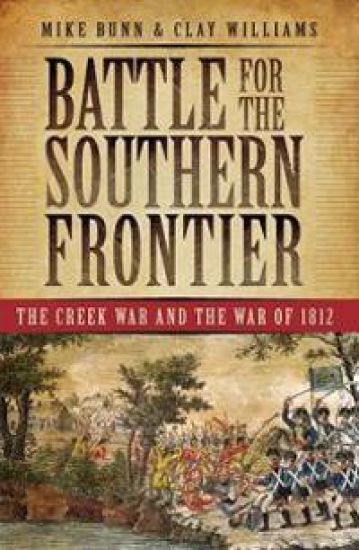
Battle for the Southern Frontier: The Creek War and the War of 1812
This comprehensive book is the first to chronicle both wars and document the sites on which they were fought. It sheds light on how the wars led to the forced removal of Native Americans from the region, secured the Gulf South against European powers, facilitated increased migration into the area, furthered the development of slave-based agriculture and launched the career of Andrew Jackson.
Battle for the Southern Frontier: The Creek War and the War of 1812

Battle for the Southern Frontier: The Creek War and the War of 1812

Mike Bunn; Clay Williams

History Press Library Editions
2008
sidottu
This comprehensive book is the first to chronicle both wars and document the sites on which they were fought. It sheds light on how the wars led to the forced removal of Native Americans from the region, secured the Gulf South against European powers, facilitated increased migration into the area, furthered the development of slavebased agriculture and launched the career of Andrew Jackson.