

Kirjailija
Mike Harris
Kirjat ja teokset yhdessä paikassa: 35 kirjaa, julkaisuja vuosilta 2003–2026, suosituimpiin kuuluu Normal People. Vertaile teosten hintoja ja tarkista saatavuus suomalaisista kirjakaupoista.
35 kirjaa
Kirjojen julkaisuvuodet: 2003–2026.

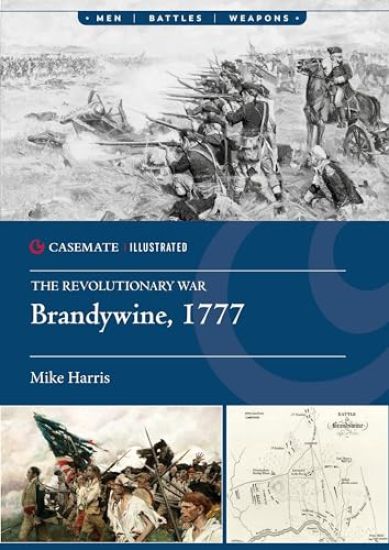
Ted, please can we have a full blurb] Brandywine will cover Spring 1777 through the battle of September 11. Summaries of major movements/engagements from April-September 1777 will be covered, and then I'll do a deeper dive into the battle itself.

SERMON ON THE MOUND will guide you into your greatness It is a collection of inspirational, instructional, and interactive pitches for faith-based athletes to up their success. You will get fundamental guidance to strengthen your game and spiritual growth from Mike s decades of experiences as a ballplayer and a believer. Baseball Pastor Mike s unique intertwining of baseball analogies, rhymes, and biblical principles will have you learning, laughing, and leaning on God more. It will motivate deeper appreciation for the game while not overlooking God. Each chapter inning has set ups, baseball situations, intriguing stories, bible study sermons, post-game inner views, questions, and closing prayer. The Ball Player s Prayer Focus is lit The final inning will have you dealing at the plate looking great on the field and in life Athletes of all types (players, parents, coaches, teams plus the entire baseball and Christian community) would greatly benefit from this book. Mike Harris has been a leader in ministry and in multiple communities for decades. He has a Bachelor s Degree in Pastoral Counseling, Sports Psychology, Biblical Studies from Palm Beach Atlantic University, a campus minister and assistant head coach. Mike is a former professional baseball player, multi-year minor league all-star, coach, scouting supervisor (Cardinals & White Sox). Baseball Pastor Mike founded Miracles Baseball Academy of Houston, a Non-Profit Christian baseball organization, Diamond Baseball Training developing thousands via camps, coaches clinics, private and group instructions. Placed hundreds in college/universities, dozens in pro baseball including his own son; Senior advisor, camp director, former program director for nationally known Scorpions Baseball. Baseball Pastor Mike is an ordained minister, author, speaker, chaplain, consultant, missionary, serves on several boards. Recipient of the Presidential Achievement Award for his community efforts. He and his wife Liz resides in Houston, Texas. They are gratefully blessed with children and grandchildren.

A unique Seventy Year Experiment in Personal Health and Consistent Physical Training leading to International Sporting Attainment
Mike Harris
Consilience Media
2022
nidottu
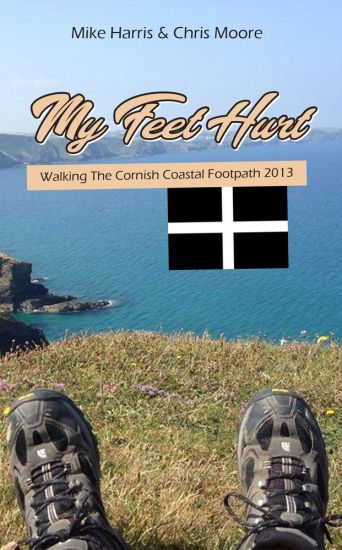
My Feet Hurt: Walking the Cornish Coastal Footpath 2013
Mike Harris
New Generation Publishing
2019
nidottu
Turning 50 is a big deal and there are a lot of different ways to celebrate this big day. This is the story of how Mike Harris decided to celebrate his big five-o. Along with his friend, Chris More, he decided to take a short stroll of about 200-220 miles around the Cornish Coastal footpath visiting pubs along the way. The trip proved both challenging, memorable and beautiful. Mike and Chris hope to inspire others to gather up their walking boots, as they describe their two-week journey around the coast.
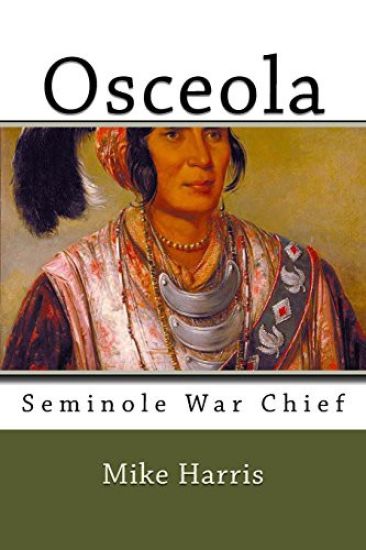
Osceola was born Billy Powell in 1804, in what was known at the time as a "Mississippi Territory". His mother, a Creek Indian, married a white trader, but left him early in Billy's life and took her son to 'Spanish Florida', where he grew up with a tribe of "free men" the Spanish called "Seminoli". All the "Seminoli" were farmers, who lived in Northern and Central Florida, where they raised a variety of crops, herds of cattle and a large number of horses and ponies. In the early 1800's, whenever 'Negro' slaves wanted to escape their life in the fields up North, more often than not, they headed South into 'Spanish Florida', where they knew the "Seminoli" would take them in and give them their freedom. Consequently, with so many settlers in Georgia, Alabama, Tennessee and Carolina losing 'Negro' slaves, the U. S government tried to help the settlers by removing all the Indians from Florida, so they could resettle them in a new 'Indian Territory', the government set up West of the Mississippi River. Early in Billy Powell's life, his name was changed to Osceola. He definitely did not think the U. S. government had any right to move all Indians out West, especially since, he believed, all the land, water and animals were given to the people by the Great Spirit Billy began organizing many of his friends and convinced them to join him in his fight against Army troops of the U. S. government. Unfortunately, they also had to convince some of their own Seminole Chiefs When the government offered the Chiefs good money for their cattle, ponies and horses, plus free food and supplies, while they waited for schooners to take them out West, many of the Chiefs wanted to accept the governments offer, which Osceola opposed When Osceola and his loyal braves began winning battles against the U. S. Army, the Army shipped thousands of armed soldiers with cannon batteries into Florida, to stop the 'up-start' renegade Osceola once and for all That's when Osceola decided to lead his people to South Florida and convinced them to move into the Everglades an Big Cypress Swamp, where the U. S. Army was unable to follow them or maneuver their horses, troops and cannons. Many Seminole's definitely didn't want to move into a swamp with snakes and alligators, since they had lived their whole as farmers on solid ground. But when Osceola was able to prove to them the Army could not reach them in the swamp, many decided to stay, where they live to this day, the only Indian Tribe never to surrender to the U. S. government How Billy Powell became Osceola, how he led his people against the U. S. government and how he became a famous Seminole War Chief is what this story is all about. Only by deceit and trickery was Osceola, very sick at the time, lured to Fort Marian located close to St. Augustine and captured by Army troops, before being transferred to Fort Moultrie outside of Charleston, South Carolina. While in custody a very famous artist painted Osceola's picture, which was wildly distributed internationally, which enabled Osceola to become the most famous Indian War Chief in the U. S. When Osceola died in prison, his head was removed and kept as a souvenir for years, until it was donated to a museum and lost in a fire.



Amelia Earhart: THE LOST STAR: Was Amelia Earhart Killed Because She Stumbled Upon An Illegal Operation Run By American And Japanese Officials?
Eldridge Bravo; Mike Harris
Createspace Independent Publishing Platform
2017
nidottu
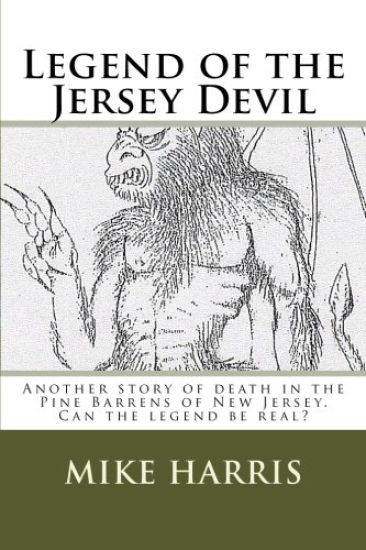
Legend of the Jersey Devil: Another story of death in the Pine Barrens of New Jersey. Can the legend be real?
Mike Harris
Createspace Independent Publishing Platform
2017
nidottu
To many people the Jersey Devil is real. It's not just a legend. Stories have been told for years about a demon of some kind living in the Pine lands and dirt roads of New Jersey that looks partly like a kangaroo, with the face of a horse, the head of a dog, bat-like wings and has horns and a tail. For more than three hundred years stories have been told about this creature, prowling the pine forests of Southern New Jersey and emerging from time to time to frighten and cause deaths of people living in the area. It seems the origin of the Jersey Devil started back in the 1700's, when Mrs. Lucy Leeds of Estellville, New Jersey gave birth to her thirteenth child. The child she delivered was reported to have been a baby devil that escaped into a nearby swamp and has been terrorizing people ever since. There have been lots of stories about the Jersey Devil over the years raiding chicken coops, farms, destroying crops, killing animals and even killing people. People in more than fifty different towns and villages in the area claim to have seen the creature whenever it has emerged from its lair in the Pine lands. On more than one occasion a posy has been formed to search for and catch the Devil, but so far all attempts have been unsuccessful. On one occasion a $100,000 reward was offered for anyone who could bring in the Devil, dead or alive. There have even been reports of the death of the Jersey Devil from time to time, but these have also proved to be inconclusive. Even the scientific community has not been able to prove or explain one way or the other, if the Jersey Devil truly exists or not? But a lot of people believe the Jersey Devil is real. Reliable people, including police, government officials, businessmen and others have claimed to have seen the Jersey Devil and the results of its destruction and killings. It's not unusual, even to this day, for someone to travel down the Garden State Parkway in New Jersey and report seeing something "unusual looking", off in the woods as they drive by Is the creature real? Are the stories true? Or, is it just a legend made up by people who have too much time on their hands? In any case the story you are about to read recounts another of these stories, this one taking place in 1984. Did it really happen? Only you can read the account, make up your own mind and decide for yourself. But I don't think I would want to be taking any camping trips out into the Pine Barrens of New Jersey anytime soon. Like many others, I might not be able to return to tell others of my experience.

Amelia Earhart's Final Flight: On Amelia Earhart's Final Flight She Landed on Mili Atoll and Was Captured by the Japanese.
David O'Malley; Mike Harris
Createspace Independent Publishing Platform
2017
nidottu
The Versailles Treaty after WWI "Mandated Islands" in the Pacific to the Japanese. President Roosevelt felt the Japanese were illegally installing military fortification on these "Mandated Islands" which was in direct violation of the WWI Treaty. Amelia Earhart, a popular female pilot who set many aviation records, wanted to increase her popularity by flying around-the-world. This would be a huge accomplishments that no pilot, man or woman, had attempted before. She left California, March 17, 1937, in a twin-engine Lockheed Electra and flew to Honolulu on the first leg of her historic flight with Fred Noonan and Harry Manning as her navigators. Unfortunately, she crashed on take-off and her Electra was so badly damaged, it had to be shipped back to the Lockheed plant in California for repairs. Amelia and her publisher husband, George Putnam didn't have the money to repair her Electra and make another attempt to fly around-the-world, so Mr. Putnam approached President Roosevelt and asked if the U. S. government could help? FDR had met Amelia previously and knew of her plans to fly around-the-world. In 1937, FDR believed the Japanese were illegally preparing for war on "Mandated" islands in the Pacific. Marine Colonel Earl Ellis tried to sneak into Truk Atoll to gather information, but was caught on the island of Palau and killed. FDR believed that maybe a civilian pilot who was going to fly around-the-world might have a better chance to obtain the information he needed, so agreed to help Amelia on her request. But, FDR only did so, if Amelia would agree to take a few pictures of Japanese island fortifications along the way. Although a staunch 'pacifist' Amelia agreed to the president's stipulations. The U. S. government helped plan her second attempt, provided her plane with larger engines, installed additional fuel tanks and reconnaissance cameras, but did so with little fanfare or publicity. Instead of flying from East to West as she planned on her first attempt, she flew West to East with only Fred Noonan as her navigator. Prior to her flight it's reported she was sworn into the Army Air Force as an officer and confided to a friend, "Imagine me being a spy " Amelia left California on May 21st and headed for Miami, Puerto Rico, Brazil, Africa, India, Bangkok, Singapore and Dutch East Indies, where Mr. F. O. Furman, a Lockheed maintenance specialist, met Amelia and checked her Electra and cameras for 3-days. At each stop, 55-gallon drums of fuel would be waiting for her, even if she flew into a field that was not on her announced itinerary. She and Fred Noonan left Lae, New Guinea on July 1st, 1937 and headed for Howland Island, 2,556 miles away. The Coast Guard Cutter ITASCA waited just off Howland to handle all communications as she approached. Unfortunately, when Harry Manning was the designated navigator on her first attempt, he arranged for Navy ships to communicate with her in Morse Code. No one told the Navy vessels that Manning was no longer her navigator. Neither Amelia or Fred could read Morse Code Amelia Earhart's Final Flight tells the story of how she crashed on Mili Atoll in the Marshall Islands, was captured by the Japanese, taken to Saipan where she was held in prison for several years before being killed. Eye-witnesses in the Marshall Islands and on Saipan provided the true accounts of what actually happened to Amelia on her historic flight, what happened when she was captured, how she was killed and reaction by U. S. and Japanese leaders. It also relates how U. S. Marines found Amelia's briefcase and also found her Electra on Saipan when they attacked in 1944. David O'Malley, a member of the Writers Guild, wrote an interesting screenplay that's based on these eye-witness reports. It gives a rational explanation why both the U. S. and Japan have kept Amelia's capture and death a secrete since her Fin

Death March: A True Account of What Really Happened When American, Filipino and Japanese Forces Took Part in the Infamous WWII Death March!
Mike Harris
Createspace Independent Publishing Platform
2017
nidottu
Jumping all in to a new career. It’s a dream likely far removed from where you’re at today. We’re talking about a bold move—a move other people may think you aren’t qualified for or capable of. But it can be done. In Career 180s, Mike Harris proves it with the inspiring stories of ten brave individuals who dove headfirst into their new careers—careers they chose and pursued with vigor. Yes, they had doubts, and yes, they had to learn new things—but they charged ahead anyway. Do you have what it takes to do a Career 180? Regardless of how you answer, one thing is for sure: after reading the stories in this book, you’ll be more prepared, more inspired, and more ready to pursue your passion than ever before. Who knows . . . this book may be what it takes for you to start pursuing that new career!
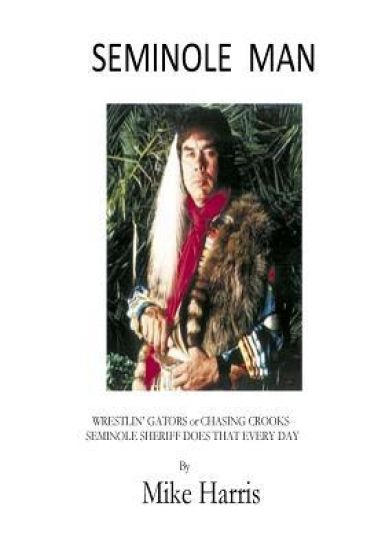
A group of tourists are caught up in the excitement of watching a Seminole Indian wrestle a 7-foot gator with his bare hands. It's a daring display of courage and skill mixed with a touch of showmanship that's much appreciated by the cheering crowd. That night, after all the tourists have left the village, four Seminole elders gather around a small campfire. Buck, leader of the tribe, used to be quite an alligator wrestler in his day. Micco, Jumper and Two Feathers, each ten years younger than Buck, also used to be good with gators. But now, like Buck, they're all past their prime and relegated to helping around the village while the younger men carry on the Seminole tradition of wrestling gators for the tourists. Buck invites James, a young lad of fifteen, to join the elders at the campfire. He tells the young man that he alone has been chosen from all the other boys in the village to carry on the time-honored Seminole tradition of wrestling alligators. Buck tells James that tomorrow they're going to take him back into the Big Cypress and teach him how to catch and wrestle the sacred alligator. James' mother is not happy that her son has been chosen for the honor. Ten years earlier his dad was killed trying to wrestle a huge gator on the other side of the swamp. She doesn't want the same thing to happen to her son. It turns out that Buck was with James' dad when he died. He told everyone that the reason James' dad got killed was because he was "showing off" for the tourists and got careless. That wasn't true. It was Buck who got careless and was directly responsible for the death of the boy's dad. Many Seminole's believe that if a gator kills a man it steals his soul and won't release the soul to the Great Spirit. The only way to get the man's soul back is for his son to catch and subdue the same gator. Buck has chosen James, it seems, to clear a very bad case of a guilty conscience. When the group arrives in the Big Cypress, Micco, Jumper and Two Feathers are shocked to find out the gator that killed James' dad is a 16-foot monster. They know there's no way the boy can catch and subdue the gator without help. So they agree to rally around the boy and together they help him subdue the incredibly large reptile. Buck tells James that he can kill or let the gator go. James doesn't want to kill such a magnificent creature and agrees to let the gator go with the admonition, "OK, Big Fella, you owe me one " Twenty years later, James is now educated and the elected Sheriff of Hendry County, located on the edge of the Big Cypress Swamp. When big city cops in Miami have trouble with a gang running drugs through the swamp, then call on the Hendry Sheriff, now known throughout South Florida as the 'Seminole Man'. When James finds Santo, the head drug runner, driving his drug cargo in a large airboat through the swamp, James crashes his much smaller airboat into Santo's craft to stop him. When James is thrown into shallow water, Santo repeatedly tries to run over the defenseless Sheriff with his airboat. As darkness approaches, James lures Santo towards a spit of sand and his heavy craft becomes stuck. James and Santo engage in a no-holds-barred fight for survival in the dark stained waters, with neither man able to gain the upper hand. When James stumbles, Santo sees his chance and starts to stab a knife into James' chest, but the monster gator appears from out of nowhere, grabs Santo by the arm and drags him to his death. James and "Big Fella" are now even Fast life and fast girls contrast with the simple life of the Seminole, who's morality is dictated not so much by power and might, but by nature and the Great Spirit. James uses modern police techniques to catch criminals, but he also uses the ways of his Indian heritage. The result is a mixture of blending old ways with the new in a never ending battle for survival...an
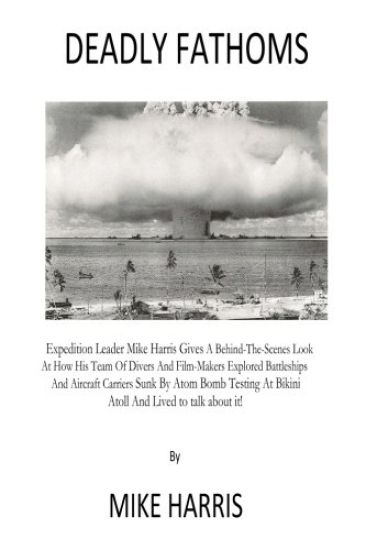
Deadly Fathoms: Now For The First Time Expedition Leader Mike Harris Gives A Behind-The-Scenes Look At How His Team of Divers And Film
Mike Harris
Createspace Independent Publishing Platform
2017
nidottu
In 1946 the U. S. Navy conducted 'Operation Crossroads' at Bikini Lagoon in the Marshall Islands. They placed dozens of old American WWII ships, plus captured German and Japanese warships (battleships, aircraft carriers, submarines, freighters, troop carriers) in Bikini Lagoon and subjected them to two atom bomb tests. Prior to the tests they loaded each ship full of fuel and ammunition, trying to replicate wartime conditions, so they could see what would happen to the ships when they were hit by a nuclear explosion. The Navy didn't put any people on the ships, but they did place many live animals in crates on the ships, so they could see what would happen when they became contaminated by radiation poisoning from the atomic blasts. During the first test which they called 'Able', a B-29 dropped a bomb from a height of 500 feet over the target area. Surprisingly, not many ships were sunk during this first atomic blast. The Navy then conducted a second test two weeks later which they called 'Baker'. During this test they hung a bomb 50 feet under a small landing craft before detonating it. When the atomic device exploded it sent a huge column of water and island debris into the air, which did sink many of the huge ships in the lagoon. Because of strong and lingering radiation almost all of the ships had to be towed to a deep part of the Pacific Ocean and sunk. Also because of the radiation contamination, all the Bikini people who had to leave their atoll before the tests, were never able to return. When I tried to get government officials to give me permission to take a team of divers and film-makers to Bikini, so I could produce a film about diving on ships at Bikini sunk by atom bomb testing, the officials never actually gave me permission. Always believing the glass is half-full, I reasoned they might not have said "yes", but they also didn't say "no". So, I put together an expedition team and flew over to Majuro Atoll in the Marshall Islands. We rented an island freighter called the "Mieco Queen", then went on a wonderful dive trip to Wotje Atoll, Kwajalein Atoll and Bikini Atoll. At Wotje, we dove on a Japanese freighter that had never been dived upon before. I also dove on a Japanese Kawaneshi Flying Boat that was sunk 50-feet deep in Wotje Lagoon. At Kwajalein we dove on the German Heavy Cruiser Prinz Eugen, which was the sister ship of the German Battleship Bismarc. Then at Bikini we had to fight deadly radiation and sharks, but were able to dive on the U. S. Battleship Arkansas, the Japanese Battleship Nagato (which was Admiral Yamamoto's Flagship when he attacked Pearl Harbor) and we dove on the U. S. Aircraft Carrier Saratoga. She was sitting right-side-up on the bottom, so we could land our two wet-subs on her flight deck, just like Hellcats did during WWII. In Saratoga's hanger deck we were able to sit in several of the Hellcats that were still tied down in place even after being subjected to two atom bomb tests. I produced a film when I returned home called "Deadly Fathoms" which featured famed film and TV star Rod Serling and "Fathoms" won a Silver Medal at the Atlanta International Film Festival. I think you'll like to read about how we did survive the radiation, sharks and multiple deep dives into Bikini Lagoon...and lived to talk about it Mike Harris Producer-Director Expedition Leader


Transmit Receive Modules for Radar and Communication Systems
Mike Harris; Rick Sturdivant
Artech House Publishers
2015
sidottu
The use of electronically scanned phased arrays is increasing in systems such as radar, wireless networks, and satellite ground terminals. An important and necessary component for these systems is the transmit receive (T/R) module, which provides the amplification and electronic beam steering that is required for proper function. This new resource presents a comprehensive overview of all design, fabrication, integration, and implementation issues associated with T/R modules for radar and communications. This book provides engineers and researchers with practical designs and 44 examples of analysis, circuits, and components used in T/R modules. It also provides a solid explanation of the theory for how T/R modules operate and how they can be optimized. In addition, this book shows how the latest technical advances in silicon germanium (SiGe) and gallium nitride (GaN) are allowing levels of performance that were previously unachievable. The book concludes with informative chapters on testing, cost considerations, and the future of next generation T/R modules.