Kirjojen hintavertailu – 12 859 829 kirjaa ja 27 kauppaa

Kirjailija

Mike Higton

Kirjat ja teokset yhdessä paikassa: 21 kirjaa, julkaisuja vuosilta 2004–2026, suosituimpiin kuuluu Christ Inexhaustible. Vertaile teosten hintoja ja tarkista saatavuus suomalaisista kirjakaupoista.

21 kirjaa

Kirjojen julkaisuvuodet: 2004–2026.

Christ Inexhaustible

Christ Inexhaustible

Mike Higton

Cambridge University Press
2026
nidottu
How can Christians navigate the kaleidoscopic landscape of devotion to Jesus? In this study, Higton explores what it might mean to worship and follow the Jesus who can wear so many faces and call with so many voices. Higton proposes a high Christology, in which the Word is the image of God's inexhaustible life, the incarnation makes that Word present in flesh that is itself inexhaustible, and the Spirit unfolds this inexhaustible life in a profusion of forms of devotion. Each such form is an improvisation upon Scripture and an experiment in love, and each also fraught with failure. In conversation with Black, womanist, and trans theologies, Higton argues that, for all the problems that beset it, the classical Christological tradition can be a resource for liberative theologies. He also shows that works of doctrinal theology can remain visibly rooted in specific lives and contexts, and oriented towards mercy, justice, and love.

Christ Inexhaustible

Christ Inexhaustible

Mike Higton

Cambridge University Press
2026
sidottu
How can Christians navigate the kaleidoscopic landscape of devotion to Jesus? In this study, Higton explores what it might mean to worship and follow the Jesus who can wear so many faces and call with so many voices. Higton proposes a high Christology, in which the Word is the image of God's inexhaustible life, the incarnation makes that Word present in flesh that is itself inexhaustible, and the Spirit unfolds this inexhaustible life in a profusion of forms of devotion. Each such form is an improvisation upon Scripture and an experiment in love, and each also fraught with failure. In conversation with Black, womanist, and trans theologies, Higton argues that, for all the problems that beset it, the classical Christological tradition can be a resource for liberative theologies. He also shows that works of doctrinal theology can remain visibly rooted in specific lives and contexts, and oriented towards mercy, justice, and love.
Christian Doctrine

Christian Doctrine

Mike Higton

SCM PRESS
2024
nidottu
Providing an accessible one-volume guide to Christian doctrine, this is a thorough re-write of the first edition. Since the original was published, many students and teachers of doctrine, in theological colleges and beyond, have been learning to take more seriously the global context of their work, and to recognise the difference made by facets of their identities and social locations like race, class, gender, and disability. In this edition, Mike Higton seeks to do justice to this learning, and invites readers to understand doctrine as an unfinished conversation between many different voices. Fully updated for clarity and yet retaining its role as a rigorous introduction to its subject, the book includes new ‘interruptions’, which introduce voices that question the book’s arguments and offer new directions for readers to pursue.
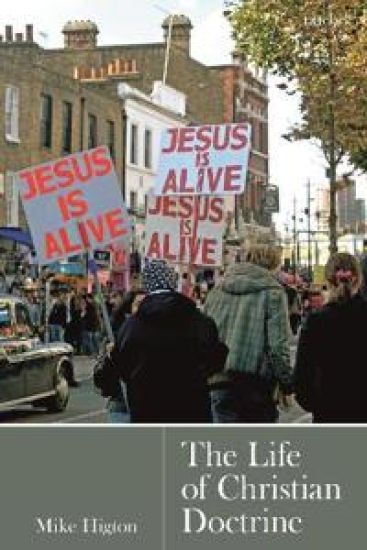
The Life of Christian Doctrine

The Life of Christian Doctrine

Mike Higton

T. T.Clark Ltd
2022
nidottu
The lives of Christian churches are shaped by doctrinal theology. That is, they are shaped by practices in which ideas about God and God’s ways with the world are developed, discussed and deployed. This book explores those practices, and asks why they matter for communities seeking to follow Jesus. Taking the example of the Church of England, this book highlights the embodied, affective and located reality of all doctrinal practices – and the biases and exclusions that mar them. It argues that doctrinal theology can in principle help the church know God better, even though doctrinal theologians do not know God better than their fellow believers. It claims that it can help the church to hear in Scripture challenges to its life, including to its doctrinal theology. It suggests that doctrinal disagreement is inevitable, but that a better quality of doctrinal disagreement is possible. And, finally, it argues that, by encouraging attention to voices that have previously been ignored, doctrinal theology can foster the ongoing discovery of God’s surprising work.
Kerygmatic Hermeneutics

Kerygmatic Hermeneutics

Swee Sum Lam; Mike Higton

Pickwick Publications
2021
sidottu
Kerygmatic Hermeneutics takes a reader at once into a concrete apprehension of God in his scriptural truth through flowing in the Spirit. With the Spirit working with Scripture, a reader navigates in a to-ing and fro-ing between the general claims of God and the patterns of his actions in the world, and the embodiment of these general claims in the concrete particularity of contemporary living. This to-ing and fro-ing shapes an embodied witness to the world. In this account, an interpretation of scriptural truth is incomplete until Christ is proclaimed in the power of the Spirit to bring life. This brings the world into an encounter with God. Kerygmatic Hermeneutics is an account of how one may make theology in the Pentecostal-charismatic tradition. This constructive theological account also yields a practice of interpretation of Scripture in a community of faith. This formulation of kerygmatic theology and its hermeneutical practice opens theology to empirical enquiry and spiritual discernment in a post-Christian western world. This account is also existentially relevant for the global south and east, especially where readers find themselves having to speak apologetically into diverse religious and spiritual practices in daily encounters.
Kerygmatic Hermeneutics

Kerygmatic Hermeneutics

Swee Sum Lam; Mike Higton

Pickwick Publications
2021
pokkari
Kerygmatic Hermeneutics takes a reader at once into a concrete apprehension of God in his scriptural truth through flowing in the Spirit. With the Spirit working with Scripture, a reader navigates in a to-ing and fro-ing between the general claims of God and the patterns of his actions in the world, and the embodiment of these general claims in the concrete particularity of contemporary living. This to-ing and fro-ing shapes an embodied witness to the world. In this account, an interpretation of scriptural truth is incomplete until Christ is proclaimed in the power of the Spirit to bring life. This brings the world into an encounter with God. Kerygmatic Hermeneutics is an account of how one may make theology in the Pentecostal-charismatic tradition. This constructive theological account also yields a practice of interpretation of Scripture in a community of faith. This formulation of kerygmatic theology and its hermeneutical practice opens theology to empirical enquiry and spiritual discernment in a post-Christian western world. This account is also existentially relevant for the global south and east, especially where readers find themselves having to speak apologetically into diverse religious and spiritual practices in daily encounters.
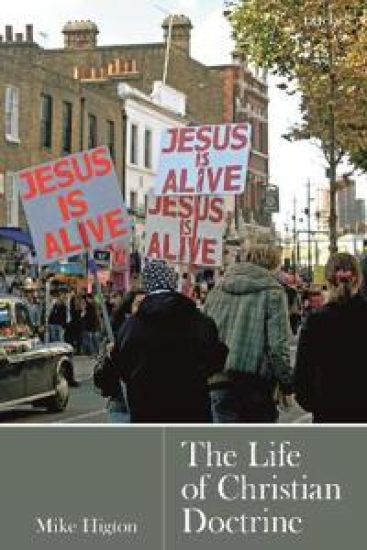
The Life of Christian Doctrine

The Life of Christian Doctrine

Mike Higton

T. T.Clark Ltd
2020
sidottu
The lives of Christian churches are shaped by doctrinal theology. That is, they are shaped by practices in which ideas about God and God’s ways with the world are developed, discussed and deployed. This book explores those practices, and asks why they matter for communities seeking to follow Jesus. Taking the example of the Church of England, this book highlights the embodied, affective and located reality of all doctrinal practices – and the biases and exclusions that mar them. It argues that doctrinal theology can in principle help the church know God better, even though doctrinal theologians do not know God better than their fellow believers. It claims that it can help the church to hear in Scripture challenges to its life, including to its doctrinal theology. It suggests that doctrinal disagreement is inevitable, but that a better quality of doctrinal disagreement is possible. And, finally, it argues that, by encouraging attention to voices that have previously been ignored, doctrinal theology can foster the ongoing discovery of God’s surprising work.
The Routledge Companion to the Practice of Christian Theology
This Companion introduces readers to the practice of Christian theology, covering what theologians do, why they do it, and what steps readers can take in order to become theological practitioners themselves. The volume aims to capture the variety of practices involved in doing theology, highlighting the virtues that guide them and the responsibilities that shape them. It also shows that the description of these practices, virtues and responsibilities is itself theological: what Christian theologians do is shaped by the wider practices and beliefs of Christianity. Written by a team of leading theologians, the Companion provides a unique resource for students and scholars of theology alike.
A Theology of Higher Education

A Theology of Higher Education

Mike Higton

Oxford University Press
2013
nidottu
In this book, Mike Higton provides a constructive critique of Higher Education policy and practice in the UK, the US and beyond, from the standpoint of Christian theology. He focuses on the role universities can and should play in forming students and staff in intellectual virtue, in sustaining vibrant communities of inquiry, and in serving the public good. He argues both that modern secular universities can be a proper context for Christians to pursue their calling as disciples to learn and to teach, and that Christians can contribute to the flourishing of such universities as institutions devoted to learning for the common good. In the process he sets out a vision of the good university as secular and religiously plural, as socially inclusive, and as deeply and productively entangled with the surrounding society. Along the way, he engages with a range of historical examples (the medieval University of Paris, the University of Berlin in the nineteenth century, and John Henry Newman's work in Oxford and Dublin) and with a range of contemporary writers on Higher Education from George Marsden to Stanley Hauerwas and from David Ford to Rowan Williams.
Modern Theology

Modern Theology

Rachel Muers; Mike Higton

Routledge
2012
nidottu
This book offers a fresh and up-to-date introduction to modern Christian theology. The ‘long nineteenth century’ saw enormous transformations of theology, and of thought about religion, that shaped the way both Christianity and ‘religion’ are understood today. Muers and Higton provide a lucid guide to the development of theology since 1789, giving students a critical understanding of their own ‘modern’ assumptions, of the origins of the debates and the fields of study in which they are involved, and of major modern thinkers. Modern Theology:introduces the context and work of a selection of major nineteenth-century thinkers who decisively affected the shape of modern theology presents key debates and issues that have their roots in the nineteenth century but are also central to the study of twentieth- and twenty-first-century theology includes exercises and study materials that explicitly focus on the development of core academic skills. This valuable resource also contains a glossary, timeline, annotated bibliographies and illustrations.
Modern Theology

Modern Theology

Rachel Muers; Mike Higton

Routledge
2012
sidottu
This book offers a fresh and up-to-date introduction to modern Christian theology. The ‘long nineteenth century’ saw enormous transformations of theology, and of thought about religion, that shaped the way both Christianity and ‘religion’ are understood today. Muers and Higton provide a lucid guide to the development of theology since 1789, giving students a critical understanding of their own ‘modern’ assumptions, of the origins of the debates and the fields of study in which they are involved, and of major modern thinkers. Modern Theology:introduces the context and work of a selection of major nineteenth-century thinkers who decisively affected the shape of modern theology presents key debates and issues that have their roots in the nineteenth century but are also central to the study of twentieth- and twenty-first-century theology includes exercises and study materials that explicitly focus on the development of core academic skills. This valuable resource also contains a glossary, timeline, annotated bibliographies and illustrations.
A Theology of Higher Education

A Theology of Higher Education

Mike Higton

Oxford University Press
2012
sidottu
In this book, Mike Higton provides a constructive critique of Higher Education policy and practice in the UK, the US and beyond, from the standpoint of Christian theology. He focuses on the role universities can and should play in forming students and staff in intellectual virtue, in sustaining vibrant communities of inquiry, and in serving the public good. He argues both that modern secular universities can be a proper context for Christians to pursue their calling as disciples to learn and to teach, and that Christians can contribute to the flourishing of such universities as institutions devoted to learning for the common good. In the process he sets out a vision of the good university as secular and religiously plural, as socially inclusive, and as deeply and productively entangled with the surrounding society. Along the way, he engages with a range of historical examples (the medieval University of Paris, the University of Berlin in the nineteenth century, and John Henry Newman's work in Oxford and Dublin) and with a range of contemporary writers on Higher Education from George Marsden to Stanley Hauerwas and from David Ford to Rowan Williams.
SCM Core Text

SCM Core Text

Mike Higton

SCM Press
2008
nidottu
The SCM Core Text: Christian Doctrine offers an up-to-date, accessible introduction to one of the core subjects of theology. Written for second and third-year university students, it shows that Christian Doctrine is not a series of impossible claims to be clung to with blind faith. Mike Higton argues that it is, rather, a set of claims that emerge in the midst of Christian life, as Christian communities try to make enough sense of their lives and of their world to allow them to carry on. Christian communities have made sense of their own life, and the life of the wider world in which they are set, as life created by God to share in God's own life. They have seen themselves and their world as laid hold of God's life in Jesus of Nazareth, and as having the Spirit of God's own life actively at work within them. This book explores these and other central Christian doctrines, and in each case, shows how the doctrine makes sense, and how it is woven into Christian life. It will help readers to see what sense it might make to say the things that Christian doctrine says, and how that doctrine might affect the way that one looks at everything: the natural world, gossip, culture, speaking in tongues, politics, dieting, human freedom, love, High Noon, justice, computers, racism, the novels of Jane Austin, parenthood, death and fashion.
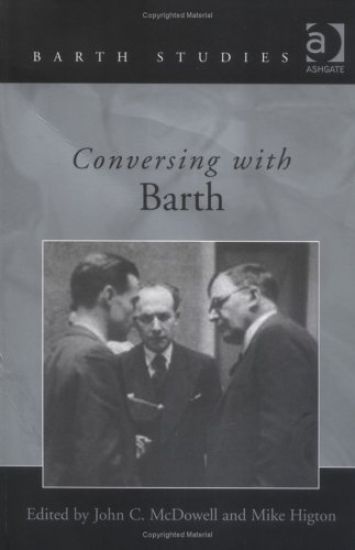
Conversing with Barth

Conversing with Barth

John C. McDowell; Mike Higton

Ashgate Publishing Limited
2004
nidottu
Karl Barth addressed all the major themes of dogmatic theology, and in so doing made his own distinctive contribution to each of the ongoing conversations that constitute that theology. This book presents important new 'conversations with Barth' by leading contemporary theologians and Barth scholars. Each contributor offers their own distinctive emphasis to bring to light the ways in which the depths of Barth's work may illuminate or be illuminated by the work of other prominent thinkers who preceded or followed him. The conversations they host between Barth and other philosophers and theologians raise critical questions in the reading and appreciation of Barth's thought, and explore a wide range of themes in dogmatic theology. This book not only adds to the comprehension of the riches of Barth's theology but also presents an important contribution to the ongoing conversations and debates alive in theology today. Contributors: Nicholas Lash, John Webster, Timothy Gorringe, Graham Ward, George Hunsinger, Ben Quash, Mike Higton, John McDowell, Eugene Rogers, Katherine Sonderegger, David Clough, David Ford.
Christ, Providence and History

Christ, Providence and History

Mike Higton

T. T.Clark Ltd
2004
nidottu
Hans Frei was born in Germany in 1922 and moved to the USA with his family during World War II. After studying under Niebuhr at Yale University he took up a teaching post there. In the 1960's he went to Europe undertaking research in both Gottingen and Cambridge. He died in 1988 at the peak of his career. This book is the first full study of the whole of Hans Frei's work, from his doctoral thesis on Karl Barth in the 1950's to his great unfinished project on the history of modern theology in the 1980's. Higton draws on a wide range of unpublished material in the Frei archives to present a comprehensive, fresh and original interpretation of Frei's theology. He places Frei's well-known work on biblical hemeneutics firmly in the context of his theological wrestling with Barth and of the dominant traditions of Western Protestant theology. Here is an unprecedented portrait of Frei as a theologian fundamentally concerned with the ability of theology to speak about, and to, the public world - and to regard that world as providentially ordered in Jesus Christ, without diminishing its concrete contingency and freedom. Frei emerges not just a powerful historian of theology, but a persuasive,