Kirjojen hintavertailu – 12 859 829 kirjaa ja 27 kauppaa
Kirjailija
Mike Hill
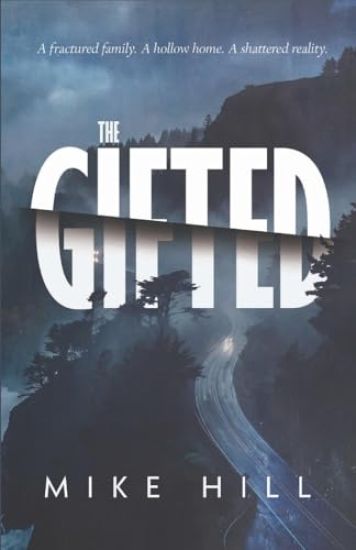
Kirjat ja teokset yhdessä paikassa: 24 kirjaa, julkaisuja vuosilta 2001–2026, suosituimpiin kuuluu The Gifted. Vertaile teosten hintoja ja tarkista saatavuus suomalaisista kirjakaupoista.
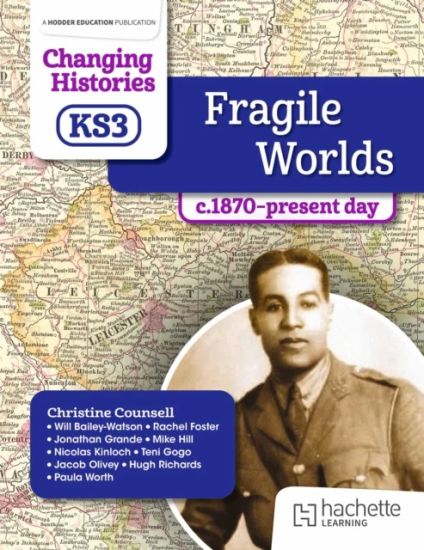
Christine Counsell; Will Bailey-Watson; Rachel Foster; Teni Gogo; Jonathan Grande; Mike Hill; Nicolas Kinloch; Jacob Olivey; Hugh Richards; Paula Worth
Change the history that pupils learn at Key Stage 3. Reframe familiar topics, discover forgotten stories and amplify unheard voices. Through an evocative, story-based approach, this ground-breaking course brings together historical scholarship and enquiry, presenting a truly diverse, inclusive and ambitious history curriculum. This is the history we owe to our pupils. This is the past for today and tomorrow. > Establish a strong foundation of British history. A clear, chronological spine underpins each book, empowering pupils with the knowledge they need to understand, question or disrupt national narratives. > Journey far beyond Britain. Move between local and global, between small details and wider developments, as the books blend depth and overview, expanding pupils' knowledge of people, places and events around the world and the links between them. > Use the power of story to transform your teaching. Captivated by vivid, intriguing narratives, pupils will remember more than they ever have before. See their literacy improve as they encounter a wide vocabulary in context, become immersed in rich, quality texts, and enjoy hearing the book read aloud or reading it themselves. > Teach a diverse curriculum with confidence. Gender, class, race and religion are treated with sensitivity and sophistication, intrinsically woven into the content to create perspective on social, economic, religious and political history. > Stay up to date with historical scholarship. The authors have undertaken extensive reading, so every chapter is informed by current research from historians such as Helen Castor, Ruby Lal and Toby Green. > Deliver the aspirational curriculum that Ofsted expects. The course embodies the requirements for scope, coherence, rigour and sequencing. The Changing Histories curriculum is a progression model. Skills and knowledge are built systematically across each lesson sequence and new material makes sense to pupils because of the content covered earlier. > Trust a meticulously planned approach. Each 'enquiry' chapter helps pupils to shape an extended answer to the overarching question, with carefully paced 'steps' that support pupils in processing substantive knowledge. Shorter 'story summary' chapters keep narratives moving in between the enquiries. > Benefit from some of the best minds in history education. Leaders in history curriculum, practice, research and debate, the authors have poured their expertise into every page, making quality history accessible to all.
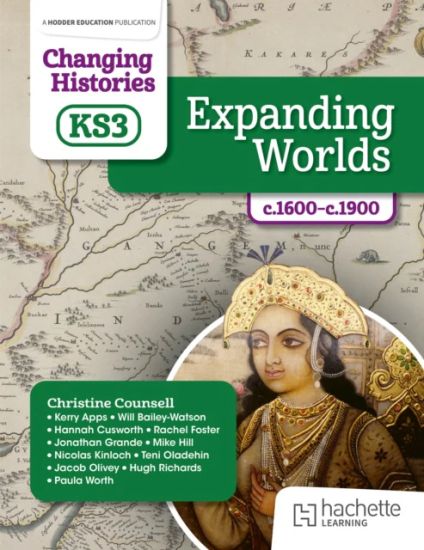
Christine Counsell; Kerry Apps; Will Bailey-Watson; Hannah Cusworth; Rachel Foster; Teni Gogo; Jonathan Grande; Mike Hill; Nicolas Kinloch; Jacob Olivey; Hugh Richards; Paula Worth
Change the history that pupils learn at Key Stage 3. Reframe familiar topics, discover forgotten stories and amplify unheard voices. Through an evocative, story-based approach, this ground-breaking course brings together historical scholarship and enquiry, presenting a truly diverse, inclusive and ambitious history curriculum. This is the history we owe to our pupils. This is the past for today and tomorrow.> Establish a strong foundation of British history. A clear, chronological spine underpins each book, empowering pupils with the knowledge they need to understand, question or disrupt national narratives.> Journey far beyond Britain. Move between local and global, between small details and wider developments, as the books blend depth and overview, expanding pupils' knowledge of people, places and events around the world and the links between them.> Use the power of story to transform your teaching. Captivated by vivid, intriguing narratives, pupils will remember more than they ever have before. See their literacy improve as they encounter a wide vocabulary in context, become immersed in rich, quality texts, and enjoy hearing the book read aloud or reading it themselves.> Teach a diverse curriculum with confidence. Gender, class, race and religion are treated with sensitivity and sophistication, intrinsically woven into the content to create perspective on social, economic, religious and political history.> Stay up to date with historical scholarship. The authors have undertaken extensive reading, so every chapter is informed by current research from historians such as Helen Castor, Ruby Lal and Toby Green.> Deliver the aspirational curriculum that Ofsted expects. The course embodies the requirements for scope, coherence, rigour and sequencing. The Changing Histories curriculum is a progression model. Skills and knowledge are built systematically across each lesson sequence and new material makes sense to pupils because of the content covered earlier.> Trust a meticulously planned approach. Each 'enquiry' chapter helps pupils to shape an extended answer to the overarching question, with carefully paced 'steps' that support pupils in processing substantive knowledge. Shorter 'story summary' chapters keep narratives moving in between the enquiries.> Benefit from some of the best minds in history education. Leaders in history curriculum, practice, research and debate, the authors have poured their expertise into every page, making quality history accessible to all.
A comprehensive reference guide to the published writings of Graham Greene, this book surveys not only Greene's literary work - including his fiction, poetry and drama - but also his other published writings. Accessibly organised over five central sections, the book provides the most up-to-date listing available of Greene's journalism, his published letters and major interviews. The Writings of Graham Greene also includes a bibliography of major secondary writings on Greene and a substantial and fully cross-referenced index to aid scholars and researchers working in the field of 20th Century literature.
Over a 60-year career, Graham Greene was a prolific writer. While his published works established him as one of the great writers of the twentieth century, much of his writing was never to see the light of day and has been gathered together in a number of archives across the UK, Ireland, USA and Canada The second volume of The Works of Graham Greene is a comprehensive guide to the archives of Greene's writing. The book details archival holdings of unpublished novels, short stories, plays, film scripts, journals, poetry, fragments of writing, and letters, as well as manuscripts and typescripts of published works. Analysing and contextualising the unpublished work, the book is fully cross-referenced throughout and includes a substantial index as well as practical guidance for students, scholars and researchers on accessing and making the most of each of the archives.
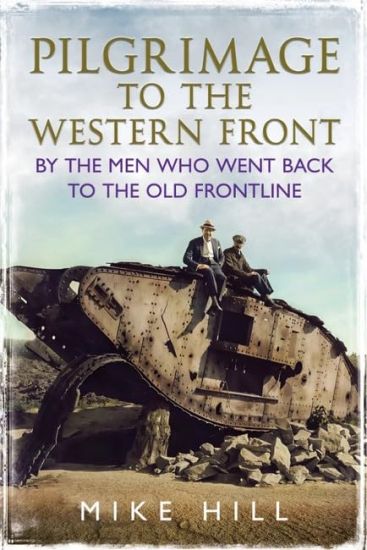
In the years after the First World War, thousands of men who had fought on the battlefields were drawn back to the Western Front. For the former soldier, these journeys of remembrance offered a chance to pay homage to their past and to see what peace looked like in those places where they had only known war. Pilgrimage to the Western Front gathers together the first-hand accounts of veterans as they retrace their wartime footsteps and stand again at the scenes where they lived through history's bloodiest conflict. The fascinating reports reveal what they found on their return and their reflections and memories of places still healing from the devastation of the war years. Discover their emotions and what greeted the battle-scarred men as they revisited old haunts, met former friends and foes, and confronted their past. Illustrated with remarkable archive images of the destruction of post-war France and Belgium, many drawn from the collection of the Commonwealth War Graves Commission, this volume features fifty personal stories spanning each of the interwar years. Join those who witnessed the Great War on a poignant voyage back to the Western Front and see a world recovering from one great conflict and edging towards another.
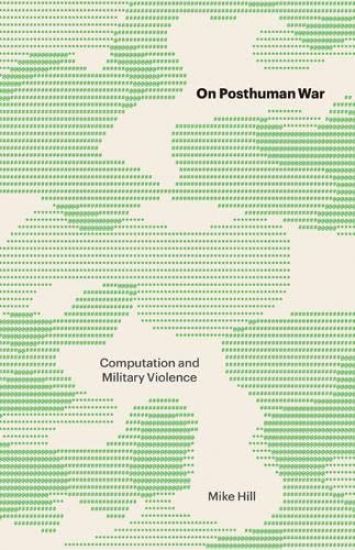
Tracing war’s expansion beyond the battlefield to the concept of the human being itself As military and other forms of political violence become the planetary norm, On Posthuman War traces the expansion of war beyond traditional theaters of battle. Drawing on counterinsurgency field manuals, tactical manifestos, data-driven military theory, and asymmetrical-war archives, Mike Hill delineates new “Areas of Operation” within a concept of the human being as not only a social and biological entity but also a technical one. Delving into three human-focused disciplines newly turned against humanity, OnPosthuman War reveals how demography, anthropology, and neuroscience have intertwined since 9/11 amid the “Revolution in Military Affairs.” Beginning with the author’s personal experience training with U. S. Marine recruits at Parris Island, Hill gleans insights from realist philosophy, the new materialism, and computational theory to show how the human being, per se, has been reconstituted from neutral citizen to unwitting combatant. As evident in the call for “bullets, beans, and data,” whatever can be parted out, counted, and reassembled can become war materiel. Hill shows how visible and invisible wars within identity, community, and cognition shift public-sphere activities, like racial identification, group organization, and even thought itself, in the direction of war. This shift has weaponized social activities against the very notion of society. On Posthuman War delivers insights on the latest war technologies, strategies, and tactics while engaging in questions poised to overturn the foundations of modern political thought.
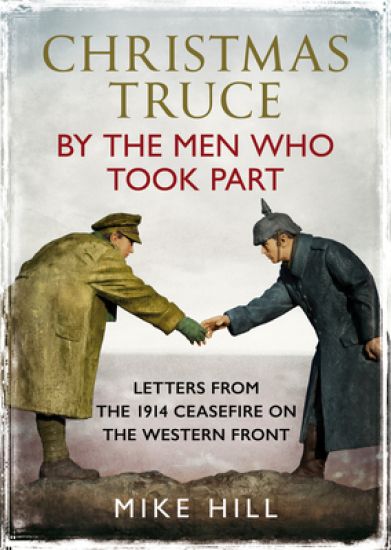
The Christmas Truce of 1914 remains a moment of enduring fascination more than a century after the day the First World War guns fell silent. Now for the first time hundreds of first person accounts of this most extraordinary period of history have been gathered together telling the story in their own words of the soldiers who met in peace in No Man's Land. The stories of men from English, Irish, Scottish and Welsh regiments who played and joked, sang and danced, swapped gifts and shared food and drink with the enemy before returning to war on the Western Front. 'Christmas Truce By The Men Who Took Part' is the largest collection ever drawn together of letters sent home by the officers and soldiers who laid down their guns and shook hands with their foes. The eye opening accounts of the unofficial armistice between German and British forces capture the trepidation and exhilaration, the curiosity, anger, joy and despair of that first Christmas on the unforgiving battlegrounds of the Great War.
Who is Mike Hill? For 49 years, he attempted to answer the question, to no avail. Hill was known to the world as the polished, versatile talent with multi-decade broadcast experience. After joining ESPN in 2004, Hill made a name for himself at the network, beginning at the highlight desk for ESPN News and later transitioning to some of the carrier's highest-priority programming, appearing as a host on SportsCenter, NFL Live, Baseball Tonight and NBA Tonight among others. In August of 2013, Hill joined FOX Sports. The embodiment of professionalism, Hill appeared to be living the American Dream; however, his private, internal struggles were taking a toll on his ability to live and to love. Eventually, the mounting trauma resulting from childhood memories of witnessing his mother victimized by domestic violence, a lack of proper male tutelage, discovering that his stepfather was a murder for hire, and the demise of two marriages, forced Hill to his breaking point. Amidst a silent cry for help and a quest to heal from within, forced him to pick up his pen to chronicle the most prolific moments of his life.
Over a 60-year career, Graham Greene was a prolific writer. While his published works established him as one of the great writers of the twentieth century, much of his writing was never to see the light of day and has been gathered together in a number of archives across the UK, Ireland, USA and Canada The second volume of The Works of Graham Greene is a comprehensive guide to the archives of Greene's writing. The book details archival holdings of unpublished novels, short stories, plays, film scripts, journals, poetry, fragments of writing, and letters, as well as manuscripts and typescripts of published works. Analysing and contextualising the unpublished work, the book is fully cross-referenced throughout and includes a substantial index as well as practical guidance for students, scholars and researchers on accessing and making the most of each of the archives.
The Other Adam Smith represents the next wave of critical thinking about the still under-examined work of this paradigmatic Enlightenment thinker. Not simply another book about Adam Smith, it allows and even necessitates his inclusion in the realm of theory in the broadest sense. Moving beyond his usual economic and moral philosophical texts, Mike Hill and Warren Montag take seriously Smith's entire corpus, his writing on knowledge, affect, sociability and government, and political economy, as constituting a comprehensive—though highly contestable—system of thought. We meet not just Smith the economist, but Smith the philosopher, Smith the literary critic, Smith the historian, and Smith the anthropologist. Placed in relation to key thinkers such as Hume, Lord Kames, Fielding, Hayek, Von Mises, and Agamben, this other Adam Smith, far from being localized in the history of eighteenth-century economic thought or ideas, stands at the center of the most vibrant and contentious debates of the twentieth and twenty-first centuries.
From the basic standards of hospital and residential care to questions about assisted suicide, debates around end of life issues are rarely out of the news. This succinct guide represents current pastoral and theological thinking in the Church of England and offers guidelines for ethical decision-making and the highest standards of pastoral care in often complex and challenging situations. Chapter One outlines the theological and ethical framework for the Church’s contribution to end of life debates Chapter Two explores the questions to be asked about physician assisted suicide Chapter Three considers the ethical and pastoral issues involved in organ donation Chapter Four offers a hospital chaplain’s perspective on healthcare issues towards the end of life. In addition, a useful reference section includes key documents from the Church of England.
This is a complete and up-to-date reference guide to the published writings of Graham Greene, from his literary writings to published letters and interviews. A comprehensive reference guide to the published writings of Graham Greene, this book surveys not only Greene's literary work - including his fiction, poetry and drama - but also his other published writings. Accessibly organised over five central sections, the book provides the most up-to-date listing available of Greene's journalism, his published letters and major interviews. "The Writings of Graham Greene" also includes a bibliography of major secondary writings on Greene and a substantial and fully cross-referenced index to aid scholars and researchers working in the field of 20th Century literature.
Cold War Cornhuskers relates the day-by-day, month-by-month history of the 307th Bomb Wing at Lincoln Air Force Base during the hectic days of the Cold War. For the first time, the inside story of a Strategic Air Command bomb wing is brought to the public. The history is told by those who served within the wing and official Air Force documents and photos.