Kirjojen hintavertailu – 12 859 818 kirjaa ja 27 kauppaa

Kirjailija

Mike Hitches

Kirjat ja teokset yhdessä paikassa: 30 kirjaa, julkaisuja vuosilta 2001–2021, suosituimpiin kuuluu Anglesey Railways Through Time. Vertaile teosten hintoja ja tarkista saatavuus suomalaisista kirjakaupoista.

30 kirjaa

Kirjojen julkaisuvuodet: 2001–2021.

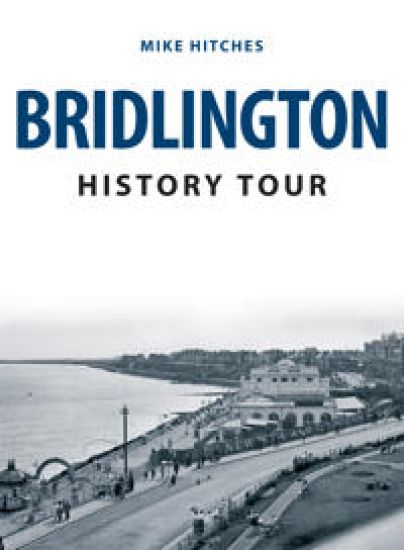
Bridlington History Tour

Bridlington History Tour

Mike Hitches

Amberley Publishing
2021
nidottu
Bridlington History Tour provides a fascinating glimpse into the past of this Yorkshire coastal town. With its bustling harbour, beautiful beaches and picturesque promenades, it is easy to see why it has become a favourite destination for holidaymakers. In this book, author Mike Hitches guides readers around its streets and buildings, showing how its famous landmarks used to look and how they have changed over the years, as well as exploring some of its lesser-known sights and hidden corners. This pocket-sized guide reveals how the town has altered and highlights the way of life for past generations. With the help of a handy location map, readers are invited to discover for themselves the history and the changing face of Bridlington.
Scarborough History Tour

Scarborough History Tour

Mike Hitches

Amberley Publishing
2020
nidottu
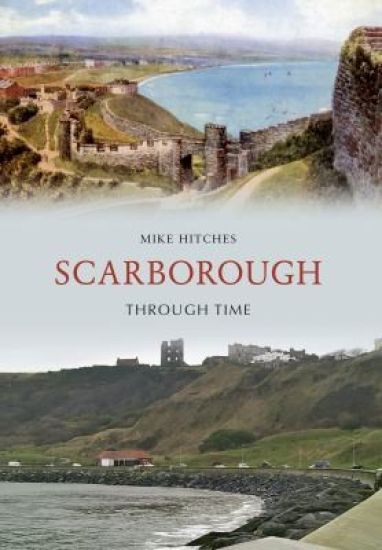
Scarborough History Tour offers a fascinating glimpse into the past of this famous Yorkshire seaside resort. Over the centuries, the original fishing town evolved to become a popular holiday destination. Author Mike Hitches guides readers around its streets and buildings, showing how its famous landmarks used to look and how they have changed over the years, as well as exploring some of its lesser-known sights and hidden corners. This pocket-sized guide reveals how the town has altered and highlights the way of life for past generations. With the help of a handy location map, readers are invited to discover for themselves the history and the changing face of Scarborough.
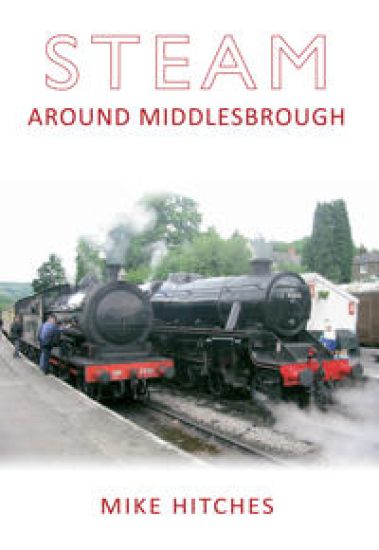
Steam Around Middlesbrough

Steam Around Middlesbrough

Mike Hitches

Amberley Publishing
2014
nidottu
The north-east of England and the Middlesbrough area are the birthplace and cradle of modern railways. Collieries had been established in the North East since the Industrial Revolution and wagonways were constructed using horse power to transfer coal from pitheads to the coast for onward shipment to the capital and elsewhere. The Stockton & Darlington Railway (S&DR), the first public railway in the world, received royal assent in 1821. In 1831, Middlesbrough became part of the infant railway network when the S&DR extended its line from Stockton. At that time, Middlesbrough was no more than a small fishing community, but it did lie downstream of shallows which had to be negotiated by ships sailing from Stockton Wharf. Soon afterwards, ironstone deposits were discovered nearby and, along with coal, were brought to Middlesbrough by rail, allowing the establishment of a thriving iron and steel industry. From then until the Beeching Axe of the 1960s, the railways around Middlesbrough were still busy with passengers and freight. Much of the railway system around Middlesbrough remains intact, serving industries in the area, but local stations have ceased to exist, much like the steam locomotives that were a major part of the history of the area for some 150 years.
Hull to Bridlington Railway Through Time

Hull to Bridlington Railway Through Time

Mike Hitches

Amberley Publishing
2014
nidottu
The stretch of railway line between Hull and Bridlington forms part of northern England’s historic Yorkshire Coast Line (or the Hull to Scarborough line), which runs from Hull Paragon to Bridlington and Scarborough and is around 55 miles long. Since it was opened by the York & North Midland Railway in the mid-1800s, the line and its many stations have maintained many of their original features and much of their charm. Today, the line is operated by Northern Rail and there is much to see along the way – from the busy city of Hull to the Victorian seaside resort of Bridlington, including picturesque villages and pleasant market towns, as well as wonderful sea and countryside views. In Hull to Bridlington Railway Through Time, author Mike Hitches takes a journey along this historic route, showing the changes that have taken place over time and features that have remained the same.
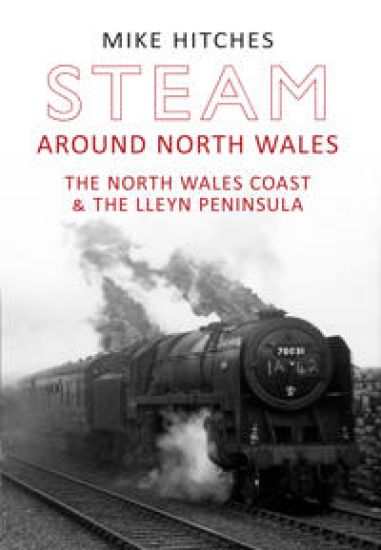
Steam Around North Wales

Steam Around North Wales

Mike Hitches

Amberley Publishing
2013
nidottu
The North Wales landscape contains everything from steelworks and collieries to national parks and seaside resorts. Thus, there was plenty of traffic to interest the various railway companies that would be established in the area. The main reason for a railway in North Wales, however, was to create a speedier link between Westminster and Ireland. Although the most important railway in North Wales was the Chester & Holyhead, the first to enter the locality was the Shrewsbury & Chester Railway, opened in 1846. The C&HR was opened two years later to connect London with Ireland via Holyhead. From these early beginnings, we explore the whole history of the railways in the area, through mergers and grouping, and the trains that ran on the lines, from 'The Irish Mail' to 'The Welsh Dragon' and summer excursion trains. Despite the 'Modernisation Plan' and 'Beeching Report', the lines to Holyhead and the Cambrian would, once again, see steam as preserved locos headed excursions from 1989 onwards, reliving those wonderful steam days. In Steam Around North Wales, Mike Hitches explores the railway history of the area in the glory days of steam. Days when the railway formed an important part of the infrastructure and thousands of passengers used the trains. Mike covers shed allocations, timetables and preserved lines in this well-illustrated book.
Steam Around Harrogate & the Dales

Steam Around Harrogate & the Dales

Mike Hitches

Amberley Publishing
2013
nidottu
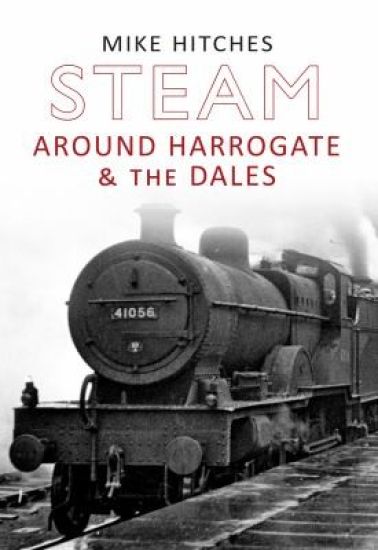
Gateway to the Yorkshire Dales, Harrogate has long been a centre of railway activity, being first approached by George Hudson's York & North Midland Railway, closely followed by the Leeds & Thirsk Railway (later to become the Leeds Northern Railway). The town still retains a railway network, now serving commuters to Leeds, Bradford and elsewhere. Several branches served the dales themselves, although they only operated rare passenger services through places like Wensleydale, Nidderdale and Teesdale, most traffic being agricultural. Many of these branches were closed following the Beeching Report in the 1960s, but a section of the Wensleydale branch remains open and allows a picturesque ride through one of the dales, thanks to part of the line remaining open until the 1990s to serve a local quarry at Redmire. The East Coast Main Line north of York to Darlington is also represented as it too served the dales branches. Perhaps the most famous line in the area is the ex-Midland Railway's Settle - Carlisle route, saved by Michael Portillo, the Conservative Transport Secretary, in the 1980s, when British Rail wished to close it. The line now plays host to steam excursions and is very popular with railway enthusiasts. In Steam Around Harrogate & the Dales, Mike Hitches explores the railway history of another area of Yorkshire in the glory days of steam. Days when the railway formed an important part of the infrastructure and thousands of passengers used the trains. Mike covers shed allocations, timetables and preserved lines in this well-illustrated book.
Steam Around York & the East Riding

Steam Around York & the East Riding

Mike Hitches

AMBERLEY PUBLISHING
2012
nidottu
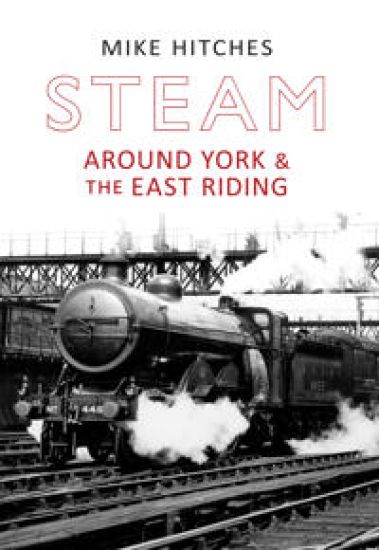
Stronghold of the Romans, and later the Vikings, York was to become the powerbase of the infamous ‘Railway King’, George Hudson, whose empire would eventually extend from the far north of England to the south and south-west. Today, York is the home of the National Railway Museum where many old steam locos are on display, along with diesel and electric types from Britain and abroad. Indeed, the NRM provides many of the steam locos operating excursion trains to Scarborough. In Steam Around York & the East Riding the glorious days of steam traction around York and the East Riding have been recaptured; the days when the railway was an important part of the infrastructure in the area and the trains were used by thousands of passengers for holidays to local seaside resorts and beyond, via the docks at Hull and Goole, as well as freight goods and shipping. Through a multitude of pictures furnished with informative captions from an acknowledged expert, the heyday and decline of the railways of York and the East Riding is explored in depth and the services, engines and locations of this remarkable industry are recorded for posterity.
Wolverhampton Railways Through Time

Wolverhampton Railways Through Time

Mike Hitches

Amberley Publishing
2011
nidottu
From humble beginnings, Wolverhampton grew to become a significant railway town. Its success hinged upon its industrial might, which attracted several train companies to the town all hoping to profit from the area's trade and prosperity. The railways were the scene of bitter enmity, devious schemes and unlikely alliances, as rival companies fought to gain the upper hand. The legacy of this was two railway stations, numerous goods yards and the works at Stafford Road. In the twenty-first century, as Britain's heavy industry has declined, the railways are no longer central to the life of Wolverhampton as they once were. Many trains which still pass through the town, but they now carry tourists and business people rather than hauling coal. Wolverhampton Railways Through Time brings to life the intricate and fascinating story of the Black Country's rail network.
Filey Through Time

Filey Through Time

Mike Hitches

Amberley Publishing
2011
nidottu
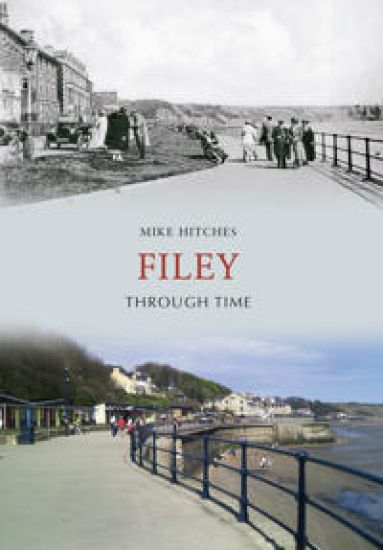
The North Yorkshire seaside town of Filey started life as an important fishing village. Whole families were employed in the industry and the fish caught here were transported to Lancashire and beyond, first by horse and cart and later by train. The railway's arrival in North Yorkshire had a dramatic effect, as suddenly fish was available to the workingclass masses of the industrial towns and cities. By the late nineteenth century, 160 fish wagons were leaving Filey station daily. As tourists began to flock to the town to 'sea bathe' for their health, hotels sprang up on the seafront, hosting many wealthy and distinguished Victorian visitors, such as Charles Dickens, J. R. R. Tolkein, and even royalty! Tourism has remained the lifeblood of Filey ever since. In the 1950s, the heyday of seaside holidays, Filey and the nearby Butlins holiday camp attracted thousands of visitors every year and day trippers still flock to the town today.
Whitby West Cliff Station

Whitby West Cliff Station

Mike Hitches; Paul Hughes

Amberley Publishing
2011
nidottu
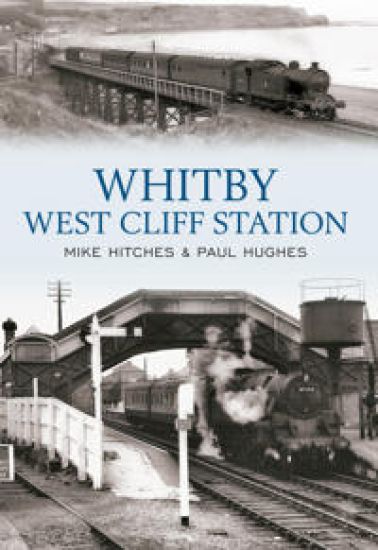
The traditional Yorkshire fishing town of Whitby was transformed by the development of the railways in the nineteenth century. Steam locomotion was crucial in attracting the Victorian holidaymakers who helped change the town's fortunes. Ideally situated at the crossing point of two railway routes, Whitby offered clean sea air to those wishing to escape from Britain's industrial towns and cities. As a counterpart to the principal station of Whitby Town, West Cliff station - established in 1883 as part of the Whitby, Redcar & Middlesbrough Union Railway - served as a busy interchange for travellers for almost eighty years. The West Cliff area of the town duly developed into a fashionable locale, catering to the summer's many visitors. This book is a thorough exploration of this station's history - its birth and its flourishing, its demise and its afterlife. It is awash with facts, detailing with affection and accuracy the services run, the engines involved, and the architecture and infrastructure created. Illustrated throughout with photographs, maps and diagrams, Whitby West Cliff Station records for posterity the character and career of this multifaceted establishment.
Birmingham Railways Through Time

Birmingham Railways Through Time

Mike Hitches

AMBERLEY PUBLISHING
2011
nidottu
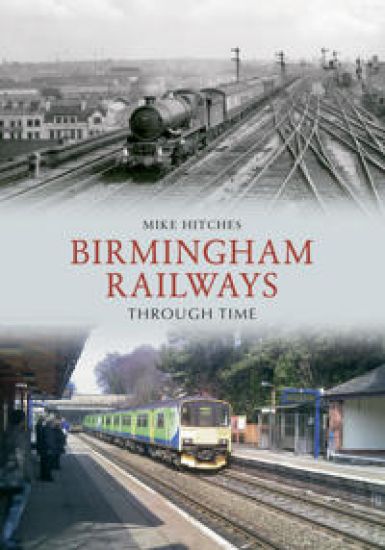
The railway network within Birmingham has long been important for the movement of passengers and freight to serve the centre and its suburbs, and as the road network around Birmingham has become more congested, the railways in the city have, once more, taken on an important role. As the network declined in the twentieth century, trains were regarded as shabby and also suffered from poor punctuality and stations became unkempt and many had no staff, although the majority of the network remained intact. However, things began to change during the 1980s. Today, 'Cross-City' services operate from a number of Birmingham stations, and similar services function between Wolverhampton and Walsall, and other cities. The stations serving the city centre have very different and fascinating histories. New Street was the first to appear, built by the London & North Western Railway in 1854. The station at Snow Hill was built by the Great Western Railway and opened in 1852. Moor Street terminus was opened in 1909 close to the tunnel mouth on the Snow Hill line. The station was abandoned for a while but has since been beautifully restored to something near its former glory and now allows termination of Chiltern Railways' trains from London (Marylebone). Indeed, such renovations have ensured that Birmingham is still well served by a modern railway network.
Steam Around Leeds

Steam Around Leeds

Mike Hitches

Amberley Publishing
2010
nidottu
The manufacture of woollen products was one of the foremost industries in Leeds and the West Riding of Yorkshire. The railway companies were keen to gain a foothold in the region to profit from the movement of raw wool and finished products which had been transported along the Leeds and Liverpool Canal and River Aire since the eighteenth century. The discovery of coal in the south of the county, which was to power the mills and factories within the West Riding and further afield, was another attraction for the railways. Several railway companies competed for freight and passenger traffic, including the York and North Midland Railway, controlled by 'The Railway King', George Hudson. Indeed, he also had influence in other railways serving the locality, including the North Midland Railway, and was responsible for the formation of the Midland Railway, which also served the area. Before the 1923 'grouping', five railway companies competed for traffic in the West Riding: the Midland Railway, the Great Northern Railway, the Lancashire and Yorkshire Railway, the North Eastern Railway, and the London and North Western Railway. Each company had their own stations, locosheds, and warehouses in Leeds and the West Riding, creating a diverse pattern of architectural styles. With each company producing their own engines, there was also a great variety of locomotive design. The independence of and competition between the railway companies combined to form an intriguing background to the story of the railway systems in Leeds and the West Riding.

Rails to Rosslare

Rails to Rosslare

Mike Hitches

Amberley Publishing
2010
nidottu
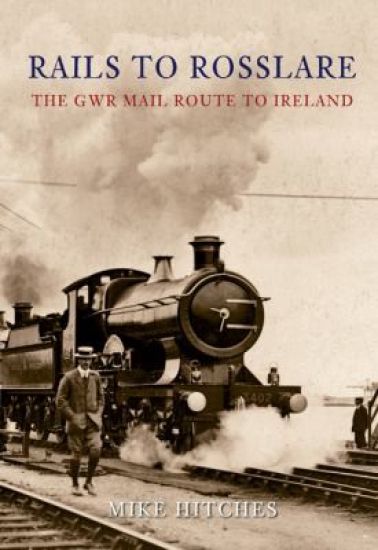
The Great Western Railway route from Paddington to Fishguard was the company's attempt to compete with the London & North Western Railway's Irish route between Euston and Holyhead and to compete for mail traffic to Dublin. While the GWR failed to take the mail contract for Dublin, the company did win mail contracts for the south of Ireland and were involved in developments of the railways there, not least the Great Southern & Western Railway, which ran anywhere between Rosslare, Waterford, Cork, and Dublin. While the port at Fishguard was not as successful as that at Holyhead, it did attract Cunard ocean liners, like the Mauretania and ill-fated Lusitania, as they returned from New York before the outbreak of the First World War. Special trains were run in connection with the capital making quick time, beating timings from the liners' home port at Liverpool. GWR Irish services brought welcome revenue to the Paddington company, and as the company see its 175th year, it is important to tell the story of this much neglected route.
Steam Around Wolverhampton

Steam Around Wolverhampton

Mike Hitches

The History Press Ltd
2009
nidottu
Wolverhampton sits deep within the Black Country and through the ages has been a centre for industry from the wool trade to the discovery of coal and iron. The development of good transport links became paramount to the town's growth and thus the canals were built to connect it to Birmingham and Liverpool. Shortly afterwards new rail links were developed, following the routes laid out by the canals. Before nationalisation, Wolverhampton was served by three railway companies: the Great Western, the London & North Western and the Midland - later just the GWR and LMS. These companies fought bitterly over access to the town, which soon became one of the more important railway towns in Britain. At its height, there were two stations, three locosheds and originally its own locomotive works, which built and maintained engines. All these features are included in this fascinating book, together with many photographs of passenger and freight traffic at this busy railway centre.
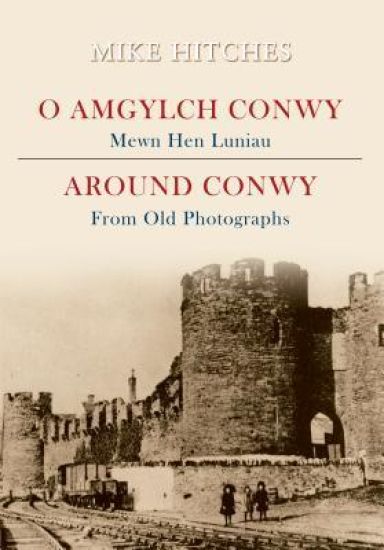
Around Conwy From Old Photographs

Around Conwy From Old Photographs

Mike Hitches

Amberley Publishing
2009
nidottu
Around Conwy From Old Photographs offers a captivating glimpse into the history of this area, providing the reader with a visual representation of Conwy's intriguing and chequered history. Drawing upon an eclectic collection of photographs, Mike Hitches presents the reader with an insight into the history and life of this town. Around Conwy From Old Photographs provides something for everyone, whether they have lived in the area all their lives, or whether they are just visiting this beautiful town or the north Welsh coast. It also shows how photography has continually evolved to keep up with an ever changing society.