Kirjojen hintavertailu – 12 859 819 kirjaa ja 27 kauppaa

Kirjailija

Mike Huggins

Kirjat ja teokset yhdessä paikassa: 8 kirjaa, julkaisuja vuosilta 1999–2018, suosituimpiin kuuluu Horse Racing and British Society in the Long Eighteenth Century. Vertaile teosten hintoja ja tarkista saatavuus suomalaisista kirjakaupoista.

8 kirjaa

Kirjojen julkaisuvuodet: 1999–2018.

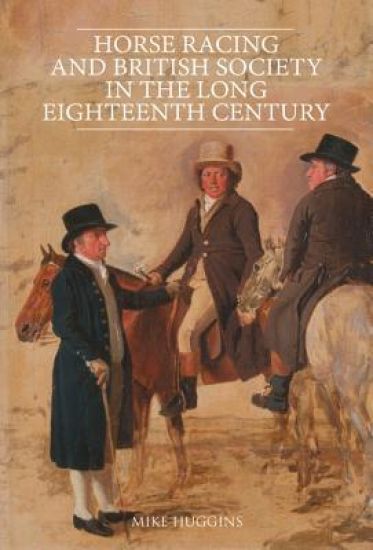
Horse Racing and British Society in the Long Eighteenth Century
Horse racing was the first and longest-lasting of Britain's national sports. Horse racing was the first and longest-lasting of Britain's national sports. This book explores the cultural world of racing and its relationship with British society in the long eighteenth century. It examines how and why race meetings changed from a marginal and informal interest for some of the elite to become the most significant leisure event of the summer season. Going beyond sports history, the book firmly places racing in its cultural, social, political and economic context. Racing's development was linked to the growth of commercialized leisure in the eighteenth century, a product of rising wealth amongst the middling group; changes in transport; the expansion of the newspaper press; and the new democratic and individualistic spirit of the age, especially the more flexible social codes of the late Georgian and Regency eras. In this book, horse racing emerges as the first 'proto-modern'sport, with links with the widespread popularity of gaming and betting which forced ever-increasing codification, regulation and event organization. Racing also gave expression to highly nuanced concepts of local, regional, national, class, gender (primarily male) and political identities. Drawing on the fields of social, cultural and sports history and utilizing many hitherto ignored or under-exploited sources, the book revises current histories of eighteenth-century leisure and sport, showing how horse racing links to debates about commercialization, consumer behaviour, the 'urban renaissance' and human-horse relationships. It also sheds new light not only on racehorse ownership,but also on the hitherto hidden world of racing's key professionals: jockeys, trainers, bloodstock breeders, stud grooms and stable hands. MIKE HUGGINS is Emeritus Professor of Cultural History at the University of Cumbria.
Vice and the Victorians

Vice and the Victorians

Mike Huggins

Bloomsbury Academic
2015
sidottu
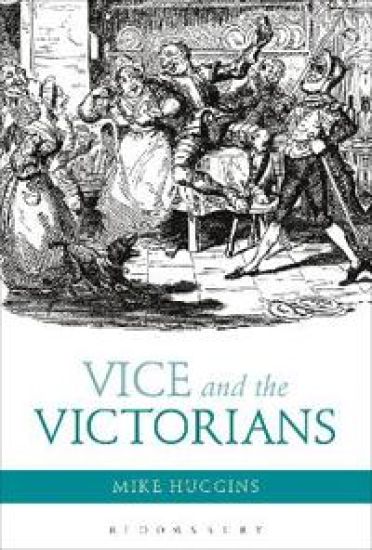
Vice and the Victorians explores the ways the Victorian world gave meanings to the word 'vice', and the role this complex notion played in shaping society. Mike Huggins provides a richer and more nuanced understanding of a term that, despite its vital importance to the Victorians, has thus far lacked a clear definition. Each chapter explores a different facet of vice. Firstly, the book seeks to define exactly what vice meant to the Victorians, exploring how the language of vice was used as a tool to beat down opposition and dissent. It considers the cultural geography and spatial dimensions of vice in the public and private spheres, before moving on to look at specific vices: the unholy trinity of drink, sex and gambling. Finally, it shifts from vice to virtue and the efforts of moral reformers, and reassesses the relationship between vice and respectability in Victorian life. In his lively and engaging discussion, Mike Huggins draws on a range of theory and exploits a wide variety of texts and representations from the periodical press, parliamentary reports and Acts, novels, obscene publications, paintings and posters, newspapers, sermons, pamphlets and investigative works. This will be an illuminating text for undergraduates studying Victorian Britain as well as anyone wishing to gain a more nuanced understanding of Victorian society.
Vice and the Victorians

Vice and the Victorians

Mike Huggins

Bloomsbury Academic
2015
nidottu
Vice and the Victorians explores the ways the Victorian world gave meanings to the word 'vice', and the role this complex notion played in shaping society. Mike Huggins provides a richer and more nuanced understanding of a term that, despite its vital importance to the Victorians, has thus far lacked a clear definition. Each chapter explores a different facet of vice. Firstly, the book seeks to define exactly what vice meant to the Victorians, exploring how the language of vice was used as a tool to beat down opposition and dissent. It considers the cultural geography and spatial dimensions of vice in the public and private spheres, before moving on to look at specific vices: the unholy trinity of drink, sex and gambling. Finally, it shifts from vice to virtue and the efforts of moral reformers, and reassesses the relationship between vice and respectability in Victorian life. In his lively and engaging discussion, Mike Huggins draws on a range of theory and exploits a wide variety of texts and representations from the periodical press, parliamentary reports and Acts, novels, obscene publications, paintings and posters, newspapers, sermons, pamphlets and investigative works. This will be an illuminating text for undergraduates studying Victorian Britain as well as anyone wishing to gain a more nuanced understanding of Victorian society.
The Victorians and Sport

The Victorians and Sport

Mike Huggins

Hambledon Continuum
2007
nidottu
Many of the sports that have spread across the world, from athletics and boxing to golf and tennis, had their origins in nineteenth-century Britain. They were exported around the world by the British Empire, and Britain's influence in the world led to many of its sports being adopted in other countries. "The Victorians and Sport" is a highly readable account of the role sport played in both Victorian Britain and its empire. Major sports attracted mass followings and were widely reported in the press. Great sporting celebrities, such as the cricketer Dr W. G. Grace, were the best-known people in the country, and sporting rivalries provoked strong loyalties and passionate emotions. Mike Huggins provides fascinating details of individual sports and sportsmen. He also shows how sport was an important part of society and of many people's lives.
Sport and the English, 1918-1939

Sport and the English, 1918-1939

Mike Huggins; Jack Williams

Routledge
2005
sidottu
A thorough, innovative yet entertaining and readable analysis of sport as an expression of the values and social relations of a nation. Covering the years between the two World Wars, the central place of sport in English life is brought into sharp focus, providing insight into issues of gender, class, religion and locality, ideas of morality, continuity and change, and what it meant to be English during this pivotal time. Themes include: the nature of sport and its place in national life how sport was portrayed in the media and through the sports stars of the age tradition and change in sport and in society gaining meaning from sport: the pursuit of pleasure, a moral code, and ideas of Englishness class, social conflict and social cohesion. This original and lucid study is ideal for students of sport and social history, and anyone with an interest in the social role of sport.
The Victorians and Sport

The Victorians and Sport

Mike Huggins

Hambledon Continuum
2004
sidottu
Many of the sports that have spread across the world, from athletics and boxing to golf and tennis, had their origins in nineteenth-century Britain. They were exported around the world by the British Empire, and Britain's influence in the world led to many of its sports being adopted in other countries. (Americans, however, liked to show their independence by rejecting cricket for baseball.) The Victorians and Sport is a highly readable account of the role sport played in both Victorian Britain and its empire. Major sports attracted mass followings and were widely reported in the press. Great sporting celebrities, such as the cricketer Dr W. G. Grace, were the best-known people in the country, and sporting rivalries provoked strong loyalties and passionate emotions. Mike Huggins provides fascinating details of individual sports and sportsmen. He also shows how sport was an important part of society and of many people's lives.
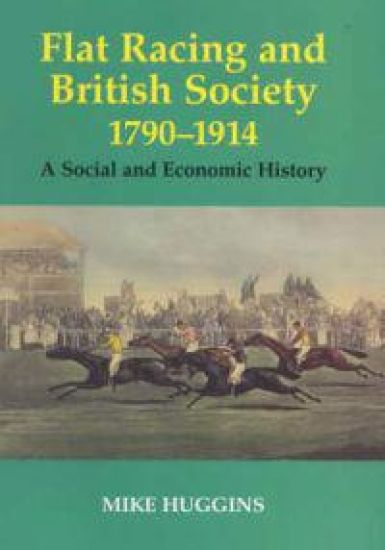
Flat Racing and British Society, 1790-1914
2001 North American Society for Sports History Book of the YearThis volume studies the formative period of racing between 1790 and 1914. This was a time when, despite the opposition of a respectable minority, attendance at horse races, betting on horses, or reading about racing increasingly became central leisure activities of much of British society.