Kirjojen hintavertailu – 12 903 735 kirjaa ja 27 kauppaa

Kirjailija

Mike Tooley

Kirjat ja teokset yhdessä paikassa: 33 kirjaa, julkaisuja vuosilta 1997–2026, suosituimpiin kuuluu Aircraft Engineering Principles. Vertaile teosten hintoja ja tarkista saatavuus suomalaisista kirjakaupoista.

33 kirjaa

Kirjojen julkaisuvuodet: 1997–2026.

Aircraft Engineering Principles

Aircraft Engineering Principles

Lloyd Dingle; Mike Tooley

TAYLOR FRANCIS LTD
2026
sidottu
Aircraft Engineering Principles covers the essential mathematics, electrical principles, mechanical principles, physical principles and aerodynamics, and adds a new chapter on electrical power supplies and distribution systems and more on flight aerodynamics. It is for anyone studying for licensed maintenance engineer status as well as those working to the range of aeronautical engineering qualifications. It meets international regulatory requirements and qualifications for aircraft engineers, that are increasingly globally harmonised; and also serves as a reference for professionals in aircraft manufacturing and operation. In particular, it covers Modules 1, 2, 3, 4, 8 and 11.1 of JAR-66/ECAR-66 in full and to a depth appropriate for those engaged in aircraft maintenance certification and will also provide a valuable reference for those taking ab initio programmes in JAR-147/ECAR-147 and FAR-147. It also suits the general requirements of introductory aerospace engineering courses at undergraduate level. Numerous written and multiple-choice question papers are provided at the end of each chapter, and interactive question papers are provided in the eBook+ version of the book..
Aircraft Engineering Principles

Aircraft Engineering Principles

Lloyd Dingle; Mike Tooley

TAYLOR FRANCIS LTD
2026
nidottu
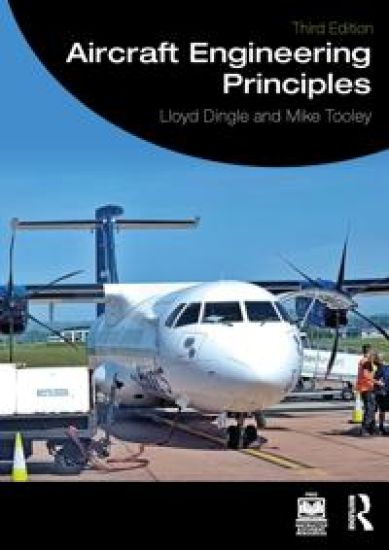
Aircraft Engineering Principles covers the essential mathematics, electrical principles, mechanical principles, physical principles and aerodynamics, and adds a new chapter on electrical power supplies and distribution systems and more on flight aerodynamics. It is for anyone studying for licensed maintenance engineer status as well as those working to the range of aeronautical engineering qualifications. It meets international regulatory requirements and qualifications for aircraft engineers, that are increasingly globally harmonised; and also serves as a reference for professionals in aircraft manufacturing and operation. In particular, it covers Modules 1, 2, 3, 4, 8 and 11.1 of JAR-66/ECAR-66 in full and to a depth appropriate for those engaged in aircraft maintenance certification and will also provide a valuable reference for those taking ab initio programmes in JAR-147/ECAR-147 and FAR-147. It also suits the general requirements of introductory aerospace engineering courses at undergraduate level. Numerous written and multiple-choice question papers are provided at the end of each chapter, and interactive question papers are provided in the eBook+ version of the book..
Aircraft Communications and Navigation Systems

Aircraft Communications and Navigation Systems

Mike Tooley; David Wyatt

TAYLOR FRANCIS LTD
2024
sidottu
Introducing the principles of communications and navigation systems, this book is written for anyone pursuing a career in aircraft maintenance engineering or a related aerospace engineering discipline, and in particular will be suitable for those studying for licensed aircraft maintenance engineer status. It systematically addresses the relevant sections (Air Transport Association of America chapters 23/34) of modules 11 and 13 of part-66 of the European Aviation Safety Agency (EASA) syllabus and is ideal for anyone studying as part of an EASA and FAR-147-approved course in aerospace engineering. Delivers the essential principles and knowledge base required by Airframe and Propulsion (A&P) Mechanics for Modules 11 and 13 of the EASA Part-66 syllabus and BTEC National awards in aerospace engineeringSupports mechanics, technicians and engineers studying for a Part-66 qualificationComprehensive and accessible, with self-test questions, exercises and multiple choice questions to enhance learning for both independent and tutor-assisted studyAdditional resources and interactive materials are available at the book's companion website at www.66web.co.ukThis new and updated third edition provides readers with an overview of the latest key technologies that underpin the functioning of safety-critical systems such as those used in flight management, reporting, navigation, and air traffic control.
Aircraft Communications and Navigation Systems

Aircraft Communications and Navigation Systems

Mike Tooley; David Wyatt

TAYLOR FRANCIS LTD
2024
nidottu
Introducing the principles of communications and navigation systems, this book is written for anyone pursuing a career in aircraft maintenance engineering or a related aerospace engineering discipline, and in particular will be suitable for those studying for licensed aircraft maintenance engineer status. It systematically addresses the relevant sections (Air Transport Association of America chapters 23/34) of modules 11 and 13 of part-66 of the European Aviation Safety Agency (EASA) syllabus and is ideal for anyone studying as part of an EASA and FAR-147-approved course in aerospace engineering. Delivers the essential principles and knowledge base required by Airframe and Propulsion (A&P) Mechanics for Modules 11 and 13 of the EASA Part-66 syllabus and BTEC National awards in aerospace engineeringSupports mechanics, technicians and engineers studying for a Part-66 qualificationComprehensive and accessible, with self-test questions, exercises and multiple choice questions to enhance learning for both independent and tutor-assisted studyAdditional resources and interactive materials are available at the book's companion website at www.66web.co.ukThis new and updated third edition provides readers with an overview of the latest key technologies that underpin the functioning of safety-critical systems such as those used in flight management, reporting, navigation, and air traffic control.
Aircraft Digital Electronic and Computer Systems
Aircraft Digital Electronic and Computer Systems is a thorough introduction to the principles and practice of aircraft digital electronic, avionic and computer systems. New to this third edition, integrated modular avionics (IMA) provides an overview of networked avionics found in the latest generation of transport aircraft. Cabin systems covers cabin networks, intercommunication, and core systems. Aircraft information systems examines flight deck operation aided by electronic flight bags (EFB) and includes a case study that highlights the importance of information systems, as well as the potential consequences of their failure. The new edition contains several hundred test questions, and its companion website, www.66web.co.uk, offers additional resource material. With full coverage of Module 5 and avionics topics in Modules 11 and 13, this book is ideal for those studying towards licensed aircraft maintenance engineer status, both independently and part of an EASA Part-66 or FAR-147 approved course. It will also appeal to those taking City & Guilds, EDEXCEL National or Higher National Units or a First/Foundation Degree in an aerospace related discipline.
Aircraft Digital Electronic and Computer Systems
Aircraft Digital Electronic and Computer Systems is a thorough introduction to the principles and practice of aircraft digital electronic, avionic and computer systems. New to this third edition, integrated modular avionics (IMA) provides an overview of networked avionics found in the latest generation of transport aircraft. Cabin systems covers cabin networks, intercommunication, and core systems. Aircraft information systems examines flight deck operation aided by electronic flight bags (EFB) and includes a case study that highlights the importance of information systems, as well as the potential consequences of their failure. The new edition contains several hundred test questions, and its companion website, www.66web.co.uk, offers additional resource material. With full coverage of Module 5 and avionics topics in Modules 11 and 13, this book is ideal for those studying towards licensed aircraft maintenance engineer status, both independently and part of an EASA Part-66 or FAR-147 approved course. It will also appeal to those taking City & Guilds, EDEXCEL National or Higher National Units or a First/Foundation Degree in an aerospace related discipline.
Engineering Science

Engineering Science

Mike Tooley; Lloyd Dingle

Routledge
2020
nidottu
Focusing primarily on core topics in mechanical and electrical science, students enrolled on a wide range of higher education engineering courses at undergraduate level will find Engineering Science, second edition, an invaluable aid to their learning. With updated and expanded content, this new edition covers sections on the mechanics of materials, dynamics, thermodynamics, electrostatics and electromagnetic principles, and a.c./d.c. circuit theory. Entirely new sections are devoted to the study of gyroscopes and the effect of applied torques on their behaviour, and the use of Laplace transformation as a tool for modelling complex networks of inductance, capacitance and resistance. In addition, a new overview of the decibel (dB) introduces a handy technique for expressing logarithmic ratios. Knowledge-check and review questions, along with activities, are included throughout the book, and the necessary background mathematics is integrated alongside the appropriate areas of engineering. The result is a clear and easily accessible textbook that encourages independent study and covers the essential scientific principles that students will meet at this level. The book is supported with a companion website for students and lecturers at www.key2engineeringscience.com, and it includes:• Solutions to the Test Your Knowledge and Review Questions in the book• Further guidance on Essential Mathematics with introductions to vectors, vector operations, the calculus and differential equations, etc.• An extra chapter on steam properties, cycles and plant• Downloadable SCILAB scripts that help simplify some of the advanced mathematical content• Selected illustrations from the book
Engineering Science

Engineering Science

Mike Tooley; Lloyd Dingle

Routledge
2020
sidottu
Focusing primarily on core topics in mechanical and electrical science, students enrolled on a wide range of higher education engineering courses at undergraduate level will find Engineering Science, second edition, an invaluable aid to their learning. With updated and expanded content, this new edition covers sections on the mechanics of materials, dynamics, thermodynamics, electrostatics and electromagnetic principles, and a.c./d.c. circuit theory. Entirely new sections are devoted to the study of gyroscopes and the effect of applied torques on their behaviour, and the use of Laplace transformation as a tool for modelling complex networks of inductance, capacitance and resistance. In addition, a new overview of the decibel (dB) introduces a handy technique for expressing logarithmic ratios. Knowledge-check and review questions, along with activities, are included throughout the book, and the necessary background mathematics is integrated alongside the appropriate areas of engineering. The result is a clear and easily accessible textbook that encourages independent study and covers the essential scientific principles that students will meet at this level. The book is supported with a companion website for students and lecturers at www.key2engineeringscience.com, and it includes:• Solutions to the Test Your Knowledge and Review Questions in the book• Further guidance on Essential Mathematics with introductions to vectors, vector operations, the calculus and differential equations, etc.• An extra chapter on steam properties, cycles and plant• Downloadable SCILAB scripts that help simplify some of the advanced mathematical content• Selected illustrations from the book
Electronic Circuits

Electronic Circuits

Mike Tooley

Routledge
2019
sidottu
Electronics explained in one volume, using both theoretical and practical applications. Mike Tooley provides all the information required to get to grips with the fundamentals of electronics, detailing the underpinning knowledge necessary to appreciate the operation of a wide range of electronic circuits, including amplifiers, logic circuits, power supplies and oscillators. The 5th edition includes an additional chapter showing how a wide range of useful electronic applications can be developed in conjunction with the increasingly popular Arduino microcontroller, as well as a new section on batteries for use in electronic equipment and some additional/updated student assignments. The book's content is matched to the latest pre-degree level courses (from Level 2 up to, and including, Foundation Degree and HND), making this an invaluable reference text for all study levels, and its broad coverage is combined with practical case studies based in real-world engineering contexts. In addition, each chapter includes a practical investigation designed to reinforce learning and provide a basis for further practical work. A companion website at http://www.key2electronics.com offers the reader a set of spreadsheet design tools that can be used to simplify circuit calculations, as well as circuit models and templates that will enable virtual simulation of circuits in the book. These are accompanied by online self-test multiple choice questions for each chapter with automatic marking, to enable students to continually monitor their own progress and understanding. A bank of online questions for lecturers to set as assignments is also available.
Electronic Circuits

Electronic Circuits

Mike Tooley

Routledge
2019
nidottu

Halvin toimitettuna 59,20 €

Electronics explained in one volume, using both theoretical and practical applications. Mike Tooley provides all the information required to get to grips with the fundamentals of electronics, detailing the underpinning knowledge necessary to appreciate the operation of a wide range of electronic circuits, including amplifiers, logic circuits, power supplies and oscillators. The 5th edition includes an additional chapter showing how a wide range of useful electronic applications can be developed in conjunction with the increasingly popular Arduino microcontroller, as well as a new section on batteries for use in electronic equipment and some additional/updated student assignments. The book's content is matched to the latest pre-degree level courses (from Level 2 up to, and including, Foundation Degree and HND), making this an invaluable reference text for all study levels, and its broad coverage is combined with practical case studies based in real-world engineering contexts. In addition, each chapter includes a practical investigation designed to reinforce learning and provide a basis for further practical work. A companion website at http://www.key2electronics.com offers the reader a set of spreadsheet design tools that can be used to simplify circuit calculations, as well as circuit models and templates that will enable virtual simulation of circuits in the book. These are accompanied by online self-test multiple choice questions for each chapter with automatic marking, to enable students to continually monitor their own progress and understanding. A bank of online questions for lecturers to set as assignments is also available.
Engineering GNVQ

Engineering GNVQ

Mike Tooley

Routledge
2019
sidottu
This book presents the content of the GNVQ in a way that encourages students to explore engineering for themselves, developing the expertise and knowledge required at this level. As well as a clear and accessible text, emphasis is placed on learning through activities, and self-evaluation through frequent knowledge-checks. Practice questions are also provided, and will prove particularly helpful for externally assessed units. Much of this book is completely new - reflecting a major syllabus revision that has taken place. The inclusion of the key optional unit, Applied Science and Mathematics for Engineering, extends the book in a way that will really make it core reading for all Intermediate GNVQ students. This book is the only text endorsed by Edexcel for Intermediate and Foundation engineering GNVQs. The content of the optional unit has also been designed to match City & Guilds requirements.
Aircraft Electrical and Electronic Systems

Aircraft Electrical and Electronic Systems

David Wyatt; Mike Tooley

Routledge
2018
nidottu
Introducing the principles of aircraft electrical and electronic systems, this book is written for anyone pursuing a career in aircraft maintenance engineering or a related aerospace engineering discipline, and in particular will be suitable for those studying for licensed aircraft maintenance engineer status. It systematically addresses the relevant sections of modules 11 and 13 of part-66 of the EASA syllabus, and is ideal for anyone studying as part of an EASA and FAR-147 approved course in aerospace engineering. Delivers the essential principles and knowledge base required by Airframe and Propulsion (A&P) Mechanics for Modules 11 and 13 of the EASA Part-66 syllabus and BTEC National awards in aerospace engineering Supports Mechanics, Technicians and Engineers studying for a Part-66 qualification Comprehensive and accessible, with self-test questions, exercises and multiple choice questions to enhance learning for both independent and tutor-assisted studyThis second edition has been updated to incorporate: complex notation for the analysis of alternating current (AC) circuits; an introduction to the "all electric aircraft" utilising new battery technologies; updated sensor technology using integrated solid-state technology micro-electrical-mechanical sensors (MEMS); an expanded section on helicopter/rotary wing health usage monitoring systems (HUMS).
Aircraft Electrical and Electronic Systems

Aircraft Electrical and Electronic Systems

David Wyatt; Mike Tooley

Routledge
2018
sidottu
Introducing the principles of aircraft electrical and electronic systems, this book is written for anyone pursuing a career in aircraft maintenance engineering or a related aerospace engineering discipline, and in particular will be suitable for those studying for licensed aircraft maintenance engineer status. It systematically addresses the relevant sections of modules 11 and 13 of part-66 of the EASA syllabus, and is ideal for anyone studying as part of an EASA and FAR-147 approved course in aerospace engineering. Delivers the essential principles and knowledge base required by Airframe and Propulsion (A&P) Mechanics for Modules 11 and 13 of the EASA Part-66 syllabus and BTEC National awards in aerospace engineering Supports Mechanics, Technicians and Engineers studying for a Part-66 qualification Comprehensive and accessible, with self-test questions, exercises and multiple choice questions to enhance learning for both independent and tutor-assisted studyThis second edition has been updated to incorporate: complex notation for the analysis of alternating current (AC) circuits; an introduction to the "all electric aircraft" utilising new battery technologies; updated sensor technology using integrated solid-state technology micro-electrical-mechanical sensors (MEMS); an expanded section on helicopter/rotary wing health usage monitoring systems (HUMS).
Aircraft Communications and Navigation Systems

Aircraft Communications and Navigation Systems

Mike Tooley; David Wyatt

Routledge
2017
nidottu
Introducing the principles of communications and navigation systems, this book is written for anyone pursuing a career in aircraft maintenance engineering or a related aerospace engineering discipline, and in particular will be suitable for those studying for licensed aircraft maintenance engineer status. It systematically addresses the relevant sections (Air Transport Association of America chapters 23/34) of modules 11 and 13 of part-66 of the European Aviation Safety Agency (EASA) syllabus and is ideal for anyone studying as part of an EASA and FAR-147-approved course in aerospace engineering. Delivers the essential principles and knowledge base required by Airframe and Propulsion (A&P) Mechanics for Modules 11 and 13 of the EASA Part-66 syllabus and BTEC National awards in aerospace engineering Supports mechanics, technicians and engineers studying for a Part-66 qualification Comprehensive and accessible, with self-test questions, exercises and multiple choice questions to enhance learning for both independent and tutor-assisted study Additional resources and interactive materials are available at the book's companion website at www.66web.co.uk
Aircraft Engineering Principles

Aircraft Engineering Principles

Lloyd Dingle; Mike Tooley

Routledge
2017
sidottu
The ideal textbook for anyone working towards a career in aircraft maintenance engineering Written to meet the needs of aircraft maintenance certifying staff, this book covers the basic knowledge requirements of ECAR 66 (previously JAR-66) for all aircraft engineers within Europe. ECAR 66 regulations are being continuously harmonised with Federal Aviation Administration (FAA) requirements in the USA, making this book ideal for all aerospace students. ECAR 66 modules 1, 2, 3, 4, and 8 are covered in full and to a depth appropriate for Aircraft Maintenance Engineers (AME). This book will also serve as a valuable reference for those taking programs in ECAR 147 and FAR 147 establishments. In addition, the necessary mathematics, aerodynamics and electrical principles have been included to meet the requirements of introductory aerospace engineering courses. To aid learning and to prepare readers for examinations, numerous written and multiple-choice questions are provided with a large number of revision questions at the end of each chapter.
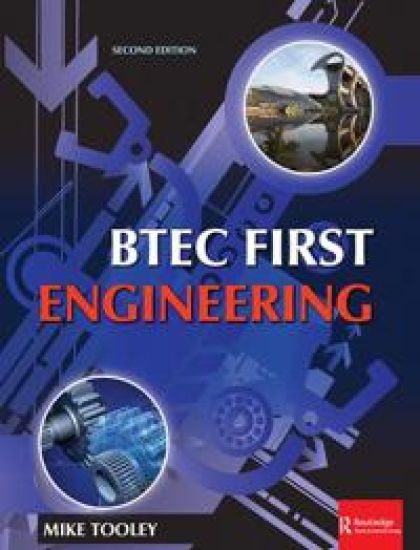
BTEC First Engineering

BTEC First Engineering

Mike Tooley

Routledge
2017
sidottu
A clearly written and easily accessible textbook that encourages independent study, covering all the core material required for the BTEC First Certificate and Diploma. Knowledge-check questions and activities are included throughout, along with review questions and worked mathematical examples, all of which relate to real-world engineering contexts. Students will gain a valuable insight into various areas of engineering technology and related industries, providing a potential springboard to further training, qualifications, or suitable employment. For those students wishing to progress to BTEC National, this textbook covers all the vital material required as a prerequisite to NVQ Level 3. New in this edition: Updated in line with the 2010 changes to the BTEC First specifications Includes detailed information on assessment, featuring example questions and answers Layout and design changes provide extra clarity
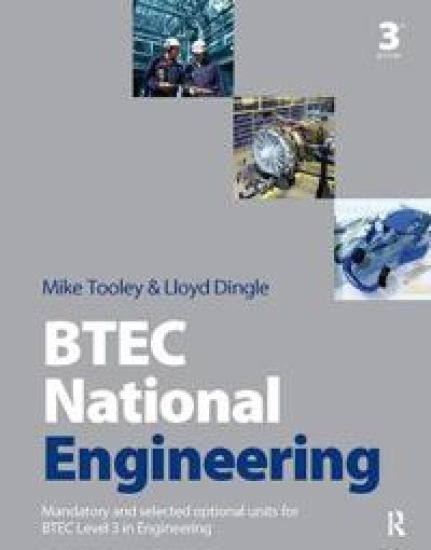
BTEC National Engineering

BTEC National Engineering

Mike Tooley

Routledge
2017
sidottu
All the mandatory units of the 2010 BTEC Level 3 Engineering specification, plus selected popular optional units Clear, full colour layout and numerous activities, worked examples and questions with answers, make it easy for students to learn and revise for their exams Content you can trust ? written by two lecturers with over 50 years combined experience of designing and delivering engineering qualifications Free student website with interactive quizzes, downloads and additional material o support learning The third edition of this bestselling textbook ensures that all the mandatory units of 2010 BTEC Level 3 Engineering specification are fully covered in a way that encourages students to explore engineering for themselves, developing the expertise and knowledge required at this level. Key points and definitions highlight the most important concepts and hundreds of activities and worked examples help put theory in context. Questions throughout the text, with answers provided, allow students to test their knowledge as they go, while end of unit review questions are ideal for exam revision and set course work. For lecturers a Tutor Support DVD-ROM is available to help with the delivery of the programme: BTEC National Engineering Tutor Support Material, ISBN 978-0-08-096683-0. Units covered: Unit 1 ? Health and Safety in the Workplace, Unit 2 ? Communications for Engineering Technicians, Unit 3 ? Engineering Project, Unit 4 ? Mathematics for Engineering technicians, Unit 5 ? Mechanical Principles and Applications, Unit 6 ? Electrical and Electronic Principles, Unit 7 ? Business Operations in Engineering, Unit 8 ? Engineering Design. A free student website, including answers to all activities, is available at http://www.key2study.com/btecnat and features: Interactive quizzes with automatic marking and feedback A free comprehensive 2D CAD packa
Engineering Technologies

Engineering Technologies

Mike Tooley

Routledge
2017
nidottu
Engineering Technologies covers the mandatory units for the EAL Level 3 Diploma in Engineering and Technology: Each compulsory unit is covered in detail with activities, case studies and self-test questions where relevant. Review questions are provided at the end of each chapter and a sample multiple-choice examination is included at the end of the book. The book has been written to ensure that it covers what learners need to know. Answers to selected questions in the book, together with a wealth of supporting resources, can be found on the book’s companion website. Numerical answers are provided in the book itself. Written specifically for the EAL Level 3 Diploma in Engineering and Technology, this book covers the two mandatory units: Engineering and Environmental Health and Safety, and Engineering Organizational Efficiency and Improvement. Within each unit, the learning outcomes are covered in detail and the book includes activities and ‘Test your knowledge’ sections to check your understanding. At the end of each chapter is a checklist to make sure you have achieved each objective before you move on to the next section. At www.key2engtech.com, you can download answers to selected questions found within the book, as well as reference material and resources. This book is a ‘must-have’ for all learners studying for their EAL Level 3 Diploma award in Engineering and Technology.
Engineering Technologies

Engineering Technologies

Mike Tooley

Routledge
2016
nidottu
Covers the three mandatory units of the EAL Level 2 Diploma in Engineering and Technology Each compulsory unit is covered in detail with activities, practice exercises and examples where relevantReview questions are provided at the end of each chapter and a sample multiple-choice examination paper is included at the end of the bookContains expert advice that has been written in collaboration with EAL to ensure that it covers what learners need to knowAnswers to selected questions in the book, together with other supporting resources, can be found at the book’s companion website. Numerical answers are provided in the book itself. Written specifically for the EAL Level 2 Diploma in Engineering and Technology, this book covers the three mandatory units on this course: Engineering Environment Awareness, Engineering Techniques, and Engineering Principles. Within each unit, the Learning Outcomes are covered in detail and the book includes activities and test your knowledge sections to check your understanding. At the end of each chapter is a checklist to make sure you have achieved each objective before you move onto the next section. At www.key2engtech.com, you can download answers to selected questions found within the book, as well as reference material and resources to support several other EAL units. This book is a must have for all learners studying for their EAL Level 2 Diploma award in Engineering and Technology and contains all of the essential knowledge you need to complete this course.
PC Based Instrumentation and Control
PC Based Instrumentation and Control is a guide to implementing computer control, instrumentation and data acquisition using a standard PC and some of the more traditional computer languages. Numerous examples of configurations and working circuits, as well as representative software, make this a practical, hands-on guide to implementing PC-based testing and calibration systems and increasing efficiency without compromising quality or reliability. Guidance is given on modifying the circuits and software routines to meet the reader's specific needs. The third edition includes updated coverage of PC hardware and bus systems, a new chapter on virtual instruments and an introduction to programming and software development in a modern 32-bit environment. Additional examples have been included, with source code and executables available for download from the companion website www.key2control.com.