

Kirjailija
Mikhail Artsybashev
Kirjat ja teokset yhdessä paikassa: 5 kirjaa, julkaisuja vuosilta 2001–2026, suosituimpiin kuuluu Sanine. Vertaile teosten hintoja ja tarkista saatavuus suomalaisista kirjakaupoista.
5 kirjaa
Kirjojen julkaisuvuodet: 2001–2026.
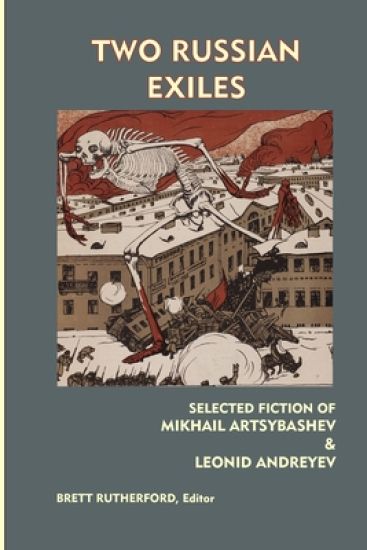
Two Russian Exiles: Selected Fiction
Leonid Andreyev; Mikhail Artsybashev
Independently Published
2019
nidottu
Mikhail Artsybashev (1878-1927) and Leonid Andreyev (1871-1919) both spent their last years in exile from Soviet Russia, and saw their works banned in their native land. Each had gained notoriety for shocking the reading public and alarming the authorities. Artsybashev was a realist and an anarchist. Describing one Artsybashev story, an American critic wrote, "Twenty-three pages are sufficient for the author to produce a finished work that begins in laughter, and ends in horror so awful that no one should read it whose nerves are not under control." Andreyev took the world as he found it, and wove an obsessive web of war, sexuality, and death, so much so that he has been called the Russian Edgar Allan Poe. These ten stories, edited/adapted and introduced by Brett Rutherford, are as fresh as today's headlines. With a journalist's sharp focus, they deal with sexual predators, murderers, political fanatics, mass shooters, corrupt officials, the traumas visited upon soldiers in battle, and the dehumanization of a people as they are pulled into a civil war against their fellow citizens. These two authors lived in times that tested and distorted the very idea of what it is to be human, and their stories are an unflinching warning. As an outsider and anarchist, Artsybashev seems not to have an answer to the dilemmas he portrays, but he is there to show us that all these things are human; they are what people do. Andreyev has more soul and humanity, and his retreat into the Finnish countryside, to look at Russia from outside rather than be killed within in, shows him as a principled man who still had hope for his people, even if it seemed that humanistic values were no longer an assured progression. This is the 258th publication of The Poet's Press.
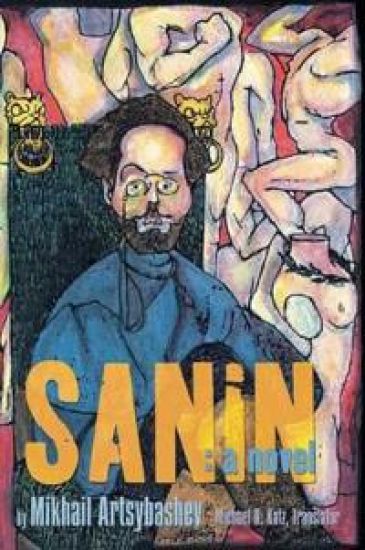
Introduction by Otto Boele Afterword by Nicholas Luker "It evoked almost unprecedented discussions, like those at the time of Turgenev's Fathers and Sons. Some praised the novel far more than it deserved, others complained bitterly that it was a defamation of youth. I may, however, without exaggeration assert that no one in Russia took the trouble to fathom the ideas of the novel. The eulogies and condemnations are equally one-sided." Thus did Mikhail Artsybashev (1878-1927), whose novels and short stories are suffused with themes of sex, suicide, and murder, describe the reaction to publication in 1907 of Sanin, his second novel. The work provoked heated debates among the Russian reading public, and the journal in which it was published serially was soon closed down by the authorities. The hero of Artsybashev's novel exhibits a set of new values to be contrasted with the morality of the older Russian intelligentsia. Sanin is an attractive, clever, powerful, life-loving man who is, at the same time, an amoral and carnal animal, bored both by politics and by religion. During the novel he lusts after his own sister, but defends her when she is betrayed by an arrogant officer; he deflowers an innocent-but-willing virgin; and encourages a Jewish friend to end his self-doubts by committing suicide. Sanin's extreme individualism greatly appealed to young people in Russia during the twilight years of the Romanov regime. "Saninism" was marked by sensualism, self-gratification, and self-destruction—and gained in credibility in an atmosphere of moral and spiritual despondency. Artybashev drew upon a wide range of sources for his inspiration—Sanin owes debts to Dostoevsky's Notes from Underground, Nietzsche's notion of the "superman," and the work of the individualist anarchist philosopher Johann Kaspar Schmidt. Michael R. Katz's translation of this controversial novel is the first into English in almost seventy years. "Russian pornography is not plain pornography such as the French and Germans produce, but pornography with ideas."—Kornei Chukovsky "Those who saw in the much discussed novel only suggestive scenes, shocking their morality or titillating their senses, were mistaken; it was, as usual in Russia, a book with a message, and Sanin slept with all his mistresses to prove a thesis rather than to obey a natural urge."—Marc Slonim