Kirjojen hintavertailu – 12 859 818 kirjaa ja 27 kauppaa

Kirjailija

Mikkel Flyverbom

Kirjat ja teokset yhdessä paikassa: 4 kirjaa, julkaisuja vuosilta 2011–2021, suosituimpiin kuuluu Klassisk og moderne medieteori. Vertaile teosten hintoja ja tarkista saatavuus suomalaisista kirjakaupoista.

4 kirjaa

Kirjojen julkaisuvuodet: 2011–2021.

Klassisk og moderne medieteori

Klassisk og moderne medieteori

Jakob Linaa Jensen; Kirsten Drotner; Ida Willig; Kim Christian Schrøder; Stig Hjarvard; Eva Redvall; Mark Blach-Ørsten; Mikkel Fugl Eskjær; Line Nybro Petersen; Mette Mortensen; Anders Horsbøl; Lina Dencik; Julie Uldam; Klaus Bruhn Jensen; Eva Jørholt; Jostein Gripsrud; Nete Nørgaard Kristensen; David Mathieu; Niels Brügger; Ib Bondebjerg; Mikkel Flyverbom; Gorm Larsen; Anne Jerslev; Bolette Blaagaard; Jacob Ørmen; Stine Lomborg; Kjetil Sandvik; Anja Bechmann; Max Hänska-Ahy; Asta Smedegaard Nielsen

Gyldendal
2021
nidottu
Klassisk og moderne medieteori er den første samlede danske fremstilling af medieteoriens centrale retninger, skoler og paradigmer. Behovet for en dansksproget grundbog om medieteori er blevet udtalt i takt med medie- og kommunikationsvidenskabens vækst i Danmark siden 1980’erne og interessen for mediernes rolle i tilstødende videnskaber. Medier udgør en central del af den moderne tilværelse og det moderne samfundsliv. Det gælder alt fra politik, kultur og religion til arbejde, fritid og forbrug. Bogen søger at udbrede kendskabet til førende teorier om medier og kommunikation. Desuden viser den, hvordan vores medieteoretiske forståelse har ændret sig i takt med forandringer i det medie- og informationsteknologiske landskab. Bogen tilbyder en historisk oversigt over medieteoriens fremkomst og udvikling. Tidsmæssigt griber bogen tilbage til det 20. århundredes begyndelse, hvor de første medieteoretiske betragtninger blev formuleret. Derpå følger en gennemgang af efterkrigstidens mere systematiske udvikling af medieteorien. Bogen slutter med en række teorier, der sætter forståelsesrammer for de ændringer, som de sidste års medieteknologiske udvikling – og i særdeleshed de digitale medier – afstedkommer for relationerne mellem medier, mennesker og samfund. Bogen er opbygget kronologisk og består af tre dele: ”Klassisk medie- og kommunikationsteori”, ”Nyere medieteori” og ”Forandringer af medier og kommunikation”. De enkelte kapitler præsenterer periodens centrale teorier og afsluttes med en oversigt over nøglebegreber.
The Digital Prism

The Digital Prism

Mikkel Flyverbom

Cambridge University Press
2019
sidottu
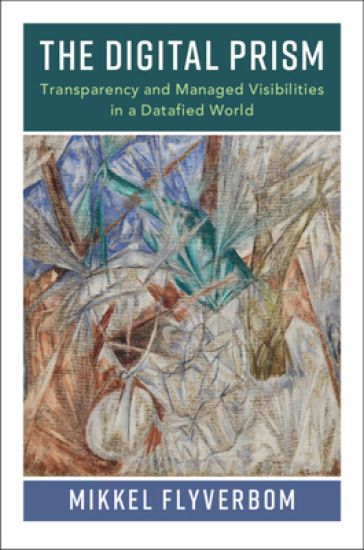
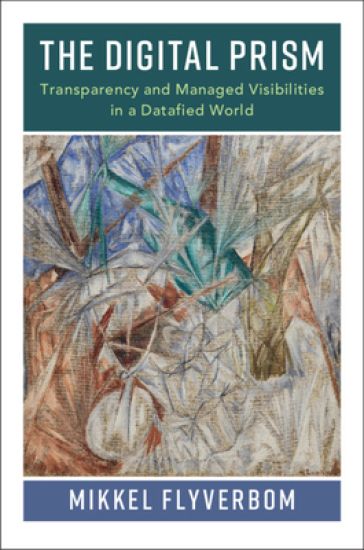
We live in times of transparency. Digital technologies expose everything we do, like, and search for, and it is difficult to remain private and out of sight. Meanwhile, many people are concerned about the unchecked powers of tech giants and the hidden operations of big data, artificial intelligence and algorithms and call for more openness and insight. How do we - as individuals, companies and societies - deal with these technological and social transformations? Seen through the prism of digital technologies and data, our lives take new shapes and we are forced to manage our visibilities carefully. This book challenges common ways of thinking about transparency, and argues that the management of visibilities is a crucial, but overlooked force that influences how people live, how organizations work, and how societies and politics operate in a digital, datafied world.
The Digital Prism

The Digital Prism

Mikkel Flyverbom

Cambridge University Press
2019
pokkari
We live in times of transparency. Digital technologies expose everything we do, like, and search for, and it is difficult to remain private and out of sight. Meanwhile, many people are concerned about the unchecked powers of tech giants and the hidden operations of big data, artificial intelligence and algorithms and call for more openness and insight. How do we - as individuals, companies and societies - deal with these technological and social transformations? Seen through the prism of digital technologies and data, our lives take new shapes and we are forced to manage our visibilities carefully. This book challenges common ways of thinking about transparency, and argues that the management of visibilities is a crucial, but overlooked force that influences how people live, how organizations work, and how societies and politics operate in a digital, datafied world.
The Power of Networks

The Power of Networks

Mikkel Flyverbom

Edward Elgar Publishing Ltd
2011
sidottu
With an ever-growing number of users, the Internet is central to the processes of globalization, cultural formations, social encounters and economic development. These aside, it is also fast becoming an important political domain. Struggles over disclosure, access and governance are only the most visible signs that the Internet is quickly becoming a site of fierce political conflict involving states, technical groups, business and civil society. As the debate over the global politics of the Internet intensifies, this book will be a valuable guide to anyone seeking to understand the emergence, organization and shape of this new issue. In this vivid study, Mikkel Flyverbom captures how questions about the digital divide and the information revolution, dialogues with stakeholders, and networked forms of organization have become key features of the global politics of the Internet. Tracing the making and stabilization of this transnational issue in and around the United Nations over almost a decade, this book demonstrates how multi-stakeholder networks make new political domains accessible and unsettle established ways of organizing transnational governance. The Power of Networks offers a rich account of the practices and effects of organizing global politics and governance through dialogues and collaborations among governments, business and societies the world over. Offering a novel analytical vocabulary for the study of ordering, governance and organization in global politics, and its relationship to the growth of the Internet, this innovative ethnographic study of hybrid organizations and entangled forms of power in global politics shows how insights from actor-network theory and the Foucauldian governmentality literature can reinvigorate studies of transnational governance and organizational processes. It will appeal to anyone interested in emergent network issues in global politics, as well as practitioners and researchers focusing on multi-stakeholder processes, and students and scholars searching for a fresh perspective on organization, power and global politics.