Kirjojen hintavertailu – 12 903 725 kirjaa ja 27 kauppaa

Kirjailija

Milada Polišenská

Kirjat ja teokset yhdessä paikassa: 3 kirjaa, julkaisuja vuosilta 2015–2025, suosituimpiin kuuluu The Fight of Exiled Journalist and Anti-Communist Activist Josef Josten. Vertaile teosten hintoja ja tarkista saatavuus suomalaisista kirjakaupoista.

3 kirjaa

Kirjojen julkaisuvuodet: 2015–2025.

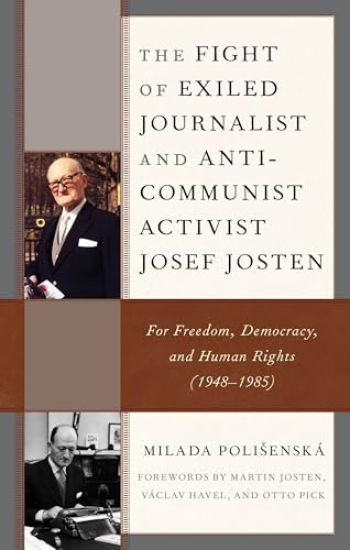
The Fight of Exiled Journalist and Anti-Communist Activist Josef Josten

The Fight of Exiled Journalist and Anti-Communist Activist Josef Josten

Milada Polišenská; Martin Josten; Václav Havel; Otto Pick

BLOOMSBURY PUBLISHING PLC
2025
sidottu
The Fight of Exiled Journalist and Anti-Communist Activist Josef Josten: For Freedom, Democracy, and Human Rights (1948–1985) explores the life and work of exiled Czech journalist Josef Josten (1913-1985) and his fight against the communist Soviet regime in his homeland. Josten was a tireless journalist, activist, and organizer of campaigns and initiatives to expose communist strategy and tactics. During his exile, he set up the Free Czechoslovakia Information Service, which issued the regular bulletin Features and News from Behind the Iron Curtain. His work culminated in the Free Czechoslovakia Campaign, and the establishment of the British Committee for the Defense of the Unjustly Prosecuted. This book offers insight into the Soviet directives regarding their relationship with Great Britain, the struggles of the Czech exile community, and the infiltration of the exile movement by Soviet secret agents.
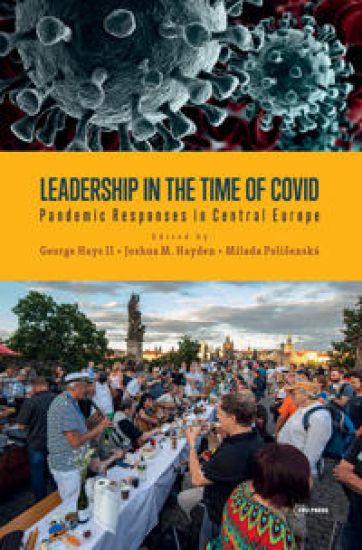
Leadership in the Time of Covid

Leadership in the Time of Covid

Milada Polišenská

CENTRAL EUROPEAN UNIVERSITY PRESS
2023
sidottu
The Covid pandemic has put all modern societies to a serious test of resilience. The interdisciplinary research on which this book is based examined how four European governments behaved in these circumstances. During the months of the crisis, the team of experts coordinated by the editors of this volume took a close look at the decision-making processes in the Czech Republic, Hungary, Poland, and Slovakia – the so-called Visegrad Four. The inquiries focused on experiences from the academic, health, economic and social fields. The methods of comparison included surveys, interviews, discourse analysis, for which the adaptive leadership theory provided the conceptual framework. The conclusions are both academic and practical. Aside the description of the pandemic responses, the research had a formative dimension: how can an adaptive leadership approach better help societies manage the health and societal impacts of similar challenges? The spectrum of emerging anti-democratic tendencies in the region provided the specific context of the exercise. The four states face varying degrees of democratic backsliding as well as illiberal influences that have affected their response to the pandemic, which gives this research on the Visegrad Four a worldwide resonance.
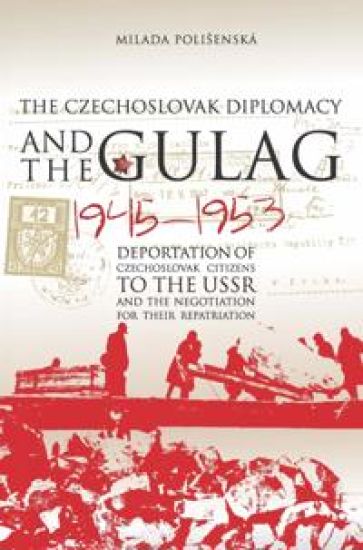
Czechoslovak Diplomacy and the Gulag

Czechoslovak Diplomacy and the Gulag

Milada Polišenská

Central European University Press
2015
sidottu
After the entry of the Red Army into Czechoslovak territory in 1945, Red Army authorities began to arrest and deport Czechoslovak citizens to labor camps in the Soviet Union. The regions most affected were Eastern and South Slovakia and Prague. The Czechoslovak authorities repeatedly requested a halt to the deportations and that the deported Czechoslovaks be returned immediately. It took a long time before these protests generated any response. Czechoslovak Diplomacy and the Gulag focuses on the diplomatic and political aspects of the deportations. The author explains the steps taken by the Czechoslovak Government in the repatriation agenda from 1945 to 1953 and reconstructs the negotiations with the Soviets. The research tries to answer the question of why and how the Russians deported the civilian population from Czechoslovakia which was their allied country already during the war. Key words: 1. World War, 1939–1945—Deportations from Czechoslovakia. 2. Forced labor—Soviet Union—History. 3. Labor camps—Soviet Union—History. 4. Czechs—Soviet Union—History. 5. Slovaks—Soviet Union—History. 6. Czechoslovakia—Foreign relations—Soviet Union. 7. Soviet Union—Foreign relations—Czechoslovakia. 8. Czechoslovakia—Foreign relations—1945–1992. 9. Repatriation—Czechoslovakia—History.