Kirjojen hintavertailu – 12 903 725 kirjaa ja 27 kauppaa

Kirjailija

Milan Vego

Kirjat ja teokset yhdessä paikassa: 21 kirjaa, julkaisuja vuosilta 1996–2026, suosituimpiin kuuluu Operational Art. Vertaile teosten hintoja ja tarkista saatavuus suomalaisista kirjakaupoista.

21 kirjaa

Kirjojen julkaisuvuodet: 1996–2026.

Operational Decision-Making

Operational Decision-Making

Milan Vego

ANTHEM PRESS
2026
sidottu
The number and importance of the decisions vary for each level of war. The higher the level of war, the fewer decisions are made and the larger the time window for making them. Operational commanders make fewer decisions, but the impact of these decisions is much greater than those made at the tactical level. The key for making sound operational decisions is to have an accurate picture of the operational situation. Such a picture cannot be obtained by a simple sum of tactical data or information. In fact, the operational situation should be built as a synthesis of strategic and tactical information pertaining to the operational commander’s area of responsibility plus his area of interest. It deals with both military and nonmilitary aspects of the situation. This is especially true for the operational commander and, to a lesser extent, for subordinate tactical commanders. The operational commander must make his decisions by considering trends in the operational situation several weeks or even months into the future. In contrast, the tactical commander is concerned with the developments of the tactical situation, from a few hours to 72 or 96 hours in the future. Information technologies should be considered as aids in making operational decisions, not as the masters of the entire decision-making process. The personality traits, professional education, experience, judgment, and wisdom of the operational commander are the key to making sound operational or strategic decisions. Combat decision is an arbitrary term for the decisions made by any command echelon that directly or indirectly deals with the employment of one’s combat forces across the spectrum of conflict. In terms of their consequences for the situation in a theater, strategic, tactical, and operational combat decisions are differentiated. Operational decisions are made by operational or operational-tactical commanders. They are intended to have a major effect on a campaign or major operation during its planning, preparation, and execution phases. The commander’s most important operational decisions pertain to changes in the original objectives, shift from offensive to defensive, shift of the sector of main effort or point of main attack (defense), concentration or counter concentration, maneuver or counter maneuver, use or non-use of tactical or operational fires, change in sequencing and synchronization, shift in phases, ordering of operational pause, commitment of operational reserves, pursuit or counter pursuit, and consolidation of operational/strategic success. Other operational decisions are aimed at changing, altering, modifying, or rescinding decisions made by subordinate commanders if their decisions and actions endanger the overall mission accomplishment. The operational decisions in the post-hostilities phase of a campaign are relatively few but are also critical for consolidating the strategic success achieved during the major combat phase. They include a decision to disarm the enemy’s large forces, arrest and take into custody the leading members of the defeated enemy, redeploy friendly forces to another part of the respective theatre, bring in fresh friendly forces to fight an insurgency, or plan and execute deception. The main method in making a decision is by using an estimate of a military situation. In military terms, the commander’s estimate of the situation is understood as a logical process of reasoning by which a commander considers all the factors affecting a military situation to determine a course of action to accomplish a given mission. The estimate is a reasoned solution to a problem in which each step in the process incrementally leads to a decision that, without these steps, could be arrived at only by an accident. In the estimate, the commander assesses the situation and then tries to embark on a certain course of action aimed at changing the situation for the better or at least taking advantage of the given situation. The ultimate result of the estimate should be a sound decision. The estimate of the situation makes the chances of reaching a sound decision much higher than if an ad hoc method is used. One of the prerequisites for making a quick decision is to grasp the essential points of a given situation quickly and then evaluate them properly. It is in this determination that one’s reasoning and imaginative faculties come into play. In conducting the estimate of the situation, the commander should focus his mental efforts on the most important things. The facts of the situation should be clearly differentiated from assumptions or speculation. All the facts should have a proof. The commander should remain calm. He should think quickly but should not act in haste. He should rethink the situation and make the decision independently while receiving reports from his subordinates. The commander should express his decision in short, clear sentences. The estimate of the situation should not be conducted for the purpose of justifying a decision made beforehand.
Operational Art

Operational Art

Milan Vego

TAYLOR FRANCIS LTD
2026
nidottu
This book describes and explains the theory of operational art – an intermediate field of theory and practice between tactics and strategy. This book is one of relatively few works in the English language on the theory of operational art. It deals predominantly with the theory of operational art as applied to preparing, planning and conducting a high-intensity conventional war. In contrast to other works, the book is written in broad terms, rather than focusing on national military culture and experience, which allows more flexibility in adjusting to new evidence. The book explains the theory of operational art in all three physical dimensions (land, sea, and air/space) and describes/analyses various aspects of operational art in general terms, using historical examples to facilitate the understanding of the theory. The case studies focus on examples of major campaigns and operations in both the more recent and distant history of warfare, including the current Ukraine–Russia war. This book will be of much interest to students of strategic studies, military history, defense studies, and International Relations, as well as military professionals.
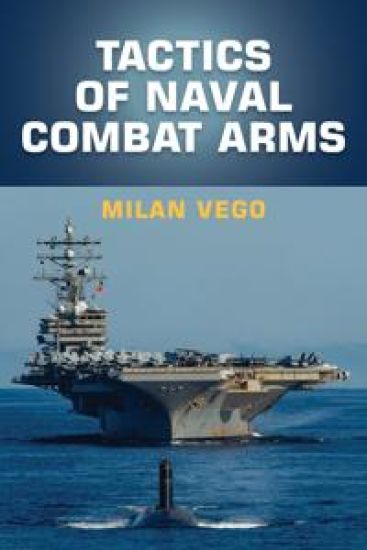
Tactics of Naval Combat Arms

Tactics of Naval Combat Arms

Milan Vego

Naval Institute Press
2025
sidottu

Halvin toimitettuna 45,60 €

This new volume from the Blue and Gold Professional Library describes and analyzes the tactical employment of naval combat arms, including surface forces, submarine forces, naval aviation, and naval special forces in a high-intensity conventional war at sea. Tactics of Naval Combat Arms is framed by combat missions of each naval combat arm and explained as part of the much broader operational framework of obtaining or denying sea control. Tactical techniques and applications are explained in accessible terms, including coverage of naval special forces and respective unmanned vehicles. The book contains six appendices covering the scouting methods used by surface combatants, attack submarines, and naval combat/ASW aircraft, avoidance maneuvering by submarines, and use of weapons by naval aircraft. Written as a sequel to General Naval Tactics, this new work offers essential insight for naval leaders and strategists.
Operational Art

Operational Art

Milan Vego

TAYLOR FRANCIS LTD
2025
sidottu

Halvin toimitettuna 240,40 €

This book describes and explains the theory of operational art – an intermediate field of theory and practice between tactics and strategy. This book is one of relatively few works in the English language on the theory of operational art. It deals predominantly with the theory of operational art as applied to preparing, planning and conducting a high-intensity conventional war. In contrast to other works, the book is written in broad terms, rather than focusing on national military culture and experience, which allows more flexibility in adjusting to new evidence. The book explains the theory of operational art in all three physical dimensions (land, sea, and air/space) and describes/analyses various aspects of operational art in general terms, using historical examples to facilitate the understanding of the theory. The case studies focus on examples of major campaigns and operations in both the more recent and distant history of warfare, including the current Ukraine–Russia war. This book will be of much interest to students of strategic studies, military history, defense studies, and International Relations, as well as military professionals.
Exercising Control of the Sea

Exercising Control of the Sea

Milan Vego

TAYLOR FRANCIS LTD
2022
nidottu

Halvin toimitettuna 58,10 €

This book explains both the strategic and the operational aspects of exercising control of the sea. The struggle for sea control consists of three mutually related and overlapping phases: obtaining, maintaining and exercising sea control. It is in the phase of exercising sea control when one’s strategic or operational success is exploited; otherwise, the fruits of victories achieved would be wasted. This work describes the strategy of a stronger side in wartime after a desired degree of control has been obtained, which is followed by a discussion on the objectives and main methods used in exercising sea control. The remaining chapters explain and analyze in some detail each of the main methods of exercising sea control: defence and protection of one’s own and destruction/neutralization of the enemy’s military-economic potential at sea, capturing the enemy’s operationally important positions ashore, destroying/weakening the enemy’s military-economic potential ashore and supporting one’s ground forces in their offensive and defensive operations on the coast. This book will be of much interest to students of strategic studies, sea power and naval history.
General Naval Tactics

General Naval Tactics

Milan Vego

Naval Institute Press
2020
sidottu
In General Naval Tactics, Naval War College professor and renowned tactical expert Milan Vego describes and explains those aspects of naval tactics most closely related to the human factor. Specifically, he explains in some detail the objectives and methods/elements of tactical employment of naval forces, command and control, combat support, tactical design, decision-making and planning/execution, leadership, doctrine, and training. Vego derives certain commonalities of naval tactics that occurred in recent and distant wars at sea. Many parts of his theoretical constructs are based on works of a number of well-known and influential naval theoreticians such as Admirals Alfred T. Mahan, Bradley A. Fiske, Raoul Castex, and Ren?® Daveluy and influential naval theoreticians. Whenever possible, the author illustrates each aspect of theory by carefully selected examples from naval history--making the theory more understandable and interesting. Vego aims to present theory that is general in nature and therefore, more durable in its validity. The more general the theory, the greater the possibility of accommodating changes based on new interpretations of past events and as a result of gaining fresh insight from the lessons learned.
Exercising Control of the Sea

Exercising Control of the Sea

Milan Vego

Routledge
2020
sidottu
This book explains both the strategic and the operational aspects of exercising control of the sea. The struggle for sea control consists of three mutually related and overlapping phases: obtaining, maintaining and exercising sea control. It is in the phase of exercising sea control when one’s strategic or operational success is exploited; otherwise, the fruits of victories achieved would be wasted. This work describes the strategy of a stronger side in wartime after a desired degree of control has been obtained, which is followed by a discussion on the objectives and main methods used in exercising sea control. The remaining chapters explain and analyze in some detail each of the main methods of exercising sea control: defence and protection of one’s own and destruction/neutralization of the enemy’s military-economic potential at sea, capturing the enemy’s operationally important positions ashore, destroying/weakening the enemy’s military-economic potential ashore and supporting one’s ground forces in their offensive and defensive operations on the coast. This book will be of much interest to students of strategic studies, sea power and naval history.
Maritime Strategy and Sea Denial

Maritime Strategy and Sea Denial

Milan Vego

Routledge
2020
nidottu

Halvin toimitettuna 60,40 €

This book focuses on the theory and practice of maritime strategy and operations by the weaker powers at sea. Illustrated by examples from naval and military history, the book explains and analyzes the strategies of the weaker side at sea in both peacetime and wartime; in defense versus offense; the main prerequisites for disputing control of the sea; and the conceptual framework of disputing control of the sea. It also explains and analyzes in some detail the main methods of disputing sea control – avoiding/seeking decisive encounters, weakening enemy naval forces over time, counter-containment of enemy naval forces, destroying the enemy’s military-economic potential at sea, attacks on the enemy coast, defense of the coast, defense/capturing important positions/basing areas, and defense/capturing of a choke point. A majority of the world’s navies are currently of small or medium-size. In the case of a war with a much stronger opponent, they would be strategically on the defensive, and their main objective then would be to dispute control of the sea by a stronger side at sea. This book provides a practical guide to such a strategy. This book would be of much interest to students of naval power, maritime security, strategic studies and military/naval history.
Operational Warfare at Sea

Operational Warfare at Sea

Milan Vego

Routledge
2020
nidottu
This work explains and critically examines the main theoretical aspects of operational warfare at sea. It utilizes diverse examples from naval history, ranging from the ancient era to the present day, to offer a comprehensive description and analysis of the key components of operational warfare at sea today. Specifically, it explains the military/naval objectives, levels of war, types of major naval/joint operations and maritime campaigns, and their main elements. In contrast to many works, this book focuses on the role of the naval operational commanders in command and control and decision-making. It also describes in great detail the main elements of naval operational leadership and operational thinking, which are illustrated by examples of successful warfighting admirals. This new edition has been completely revised and updated, with three new chapters, and analyses in even more detail the planning and execution of major naval/joint operations and maritime campaigns. This book is intended to serve as a primer of how to plan, prepare, and execute major naval/joint operations and maritime campaigns for naval operational commanders and their staffs, but will also be of great interest to students of naval power, strategic studies, and military history in general.
Maritime Strategy and Sea Denial
This book focuses on the theory and practice of maritime strategy and operations by the weaker powers at sea. Illustrated by examples from naval and military history, the book explains and analyzes the strategies of the weaker side at sea in both peacetime and wartime; in defense versus offense; the main prerequisites for disputing control of the sea; and the conceptual framework of disputing control of the sea. It also explains and analyzes in some detail the main methods of disputing sea control – avoiding/seeking decisive encounters, weakening enemy naval forces over time, counter-containment of enemy naval forces, destroying the enemy’s military-economic potential at sea, attacks on the enemy coast, defense of the coast, defense/capturing important positions/basing areas, and defense/capturing of a choke point. A majority of the world’s navies are currently of small or medium-size. In the case of a war with a much stronger opponent, they would be strategically on the defensive, and their main objective then would be to dispute control of the sea by a stronger side at sea. This book provides a practical guide to such a strategy. This book would be of much interest to students of naval power, maritime security, strategic studies and military/naval history.
Operational Warfare at Sea

Operational Warfare at Sea

Milan Vego

Routledge
2017
sidottu
This work explains and critically examines the main theoretical aspects of operational warfare at sea. It utilizes diverse examples from naval history, ranging from the ancient era to the present day, to offer a comprehensive description and analysis of the key components of operational warfare at sea today. Specifically, it explains the military/naval objectives, levels of war, types of major naval/joint operations and maritime campaigns, and their main elements. In contrast to many works, this book focuses on the role of the naval operational commanders in command and control and decision-making. It also describes in great detail the main elements of naval operational leadership and operational thinking, which are illustrated by examples of successful warfighting admirals. This new edition has been completely revised and updated, with three new chapters, and analyses in even more detail the planning and execution of major naval/joint operations and maritime campaigns. This book is intended to serve as a primer of how to plan, prepare, and execute major naval/joint operations and maritime campaigns for naval operational commanders and their staffs, but will also be of great interest to students of naval power, strategic studies, and military history in general.
Maritime Strategy and Sea Control

Maritime Strategy and Sea Control

Milan Vego

Routledge
2017
nidottu

Halvin toimitettuna 85,80 €

This book focuses on the key naval strategic objectives of obtaining and maintaining sea control. During times of war, sea control, or the ability of combatants to enjoy naval dominance, plays a crucial role in that side’s ability to attain overall victory. This book explains and analyzes in much greater detail sea control in all its complexities, and describes the main methods of obtaining and maintaining it. Building on the views of naval classical thinkers, this book utilizes historical examples to illustrate the main methods of sea control. Each chapter focuses on a particular method, including destroying the enemy forces by a decisive action, destroying enemy forces over time-attrition, containing enemy fleet, choke point control, and capturing important enemy's positions/basing area, The aim is to provide a comprehensive theory and practice of the struggle for sea control at the operational level. It should therefore provide a guide to practitioners on how to plan and conduct operational warfare at sea. The book will be of much interest to students of naval strategy, defence studies and security studies.
Maritime Strategy and Sea Control
This book focuses on the key naval strategic objectives of obtaining and maintaining sea control. During times of war, sea control, or the ability of combatants to enjoy naval dominance, plays a crucial role in that side’s ability to attain overall victory. This book explains and analyzes in much greater detail sea control in all its complexities, and describes the main methods of obtaining and maintaining it. Building on the views of naval classical thinkers, this book utilizes historical examples to illustrate the main methods of sea control. Each chapter focuses on a particular method, including destroying the enemy forces by a decisive action, destroying enemy forces over time-attrition, containing enemy fleet, choke point control, and capturing important enemy's positions/basing area, The aim is to provide a comprehensive theory and practice of the struggle for sea control at the operational level. It should therefore provide a guide to practitioners on how to plan and conduct operational warfare at sea. The book will be of much interest to students of naval strategy, defence studies and security studies.
The Battle for Leyte

The Battle for Leyte

Milan Vego

Naval Institute Press
2006
sidottu
One of the largest and most complex military efforts ever undertaken, the Leyte Operation was the Allies’ first and most important major combined operation to liberate the Philippine archipelago. The stakes were high: a successful landing at Leyte was critical to a subsequent assault on Luzon and total control of the Philippines. If Japan lost the Philippines, its supply of oil and other strategic raw materials would be cut off and its Navy doomed to an inglorious end. In this comprehensive study, one of the world’s leading authorities on the subject addresses all aspects of the two-month-long ground, sea, and air invasion, and presents a complete evaluation of theater-wide command, organization, intelligence, and logistics. Drawing on a wealth of Allied and Japanese primary documents and countless secondary sources, Milan Vego describes and analyzes the operational planning and preparation as well as the execution of actions on both sides. Focusing on the operational versus tactical aspects of the struggle, he critically assesses the major decisions made by the senior commanders. His access to the Allied Magic radio intercepts allows him to shed light on what Allied and Japanese commanders knew and did not know about each other. Unlike other books on the subject, Vego draws conclusions and provides operational lessons learned based on his conclusions. A large number of maps, figures, and tables enhance the text. Milan Vego has been Professor of Operations at the U. S. Naval War College in Newport, Rhode Island since 1991. He is also the author of Soviet Naval Tactics, among other books and journal articles, and lectures widely in the U. S. and abroad.
Austro-Hungarian Naval Policy, 1904-1914
This unique and comprehensive account describes the interplay of internal and external factors in the emergence of the Austro-Hungarian Navy from a coastal defence force in 1904 to a respectable battle force capable of the joint operations with other Triple Alliance fleets in the Mediterranean by the eve of World War I. By 1914 the Austro-Hungarian Navy was the sixth largest navy in the world and the quality of its officers and men was widely recognised by most European naval observers at the time. The book describes the relationships between naval leaders, the heir to the throne Archduke Francis Ferdinand, and the Parliament in shaping the dual Monarchy's naval policy. It also shows how the changes in foreign policy in Italy and underlying animosities between Rome and Vienna led to a naval race in the Adriatic that eventually bolstered Germany's naval position in respect to Great Britain in the North Sea.