Kirjojen hintavertailu – 12 903 725 kirjaa ja 27 kauppaa

Kirjailija

Miles Glendinning

Kirjat ja teokset yhdessä paikassa: 9 kirjaa, julkaisuja vuosilta 1996–2026, suosituimpiin kuuluu Building Modern Scotland. Vertaile teosten hintoja ja tarkista saatavuus suomalaisista kirjakaupoista.

9 kirjaa

Kirjojen julkaisuvuodet: 1996–2026.

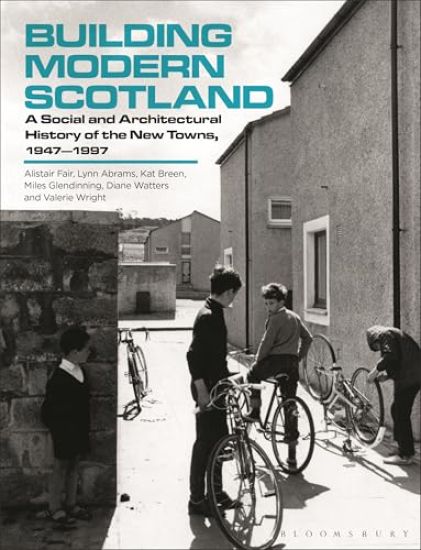
Building Modern Scotland

Building Modern Scotland

Alistair Fair; Lynn Abrams; Kat Breen; Miles Glendinning; Diane Watters; Valerie Wright

BLOOMSBURY PUBLISHING PLC
2026
nidottu
Combining architectural and social history, this open access book tells for the first time the in-depth story of Scotland’s new towns. One of the most significant episodes in modern architectural, urban and social history, Scotland’s postwar new towns offered new housing, new ways of life and new jobs. Begun between the late 1940s and the late 1960s, the new towns – East Kilbride, Glenrothes, Cumbernauld, Livingston and Irvine – were a key element of the planned Welfare State, attracting international attention and widespread publicity. These were places of architectural innovation, and economic and social change. Building Modern Scotland tells a new history of the new towns, combining architectural and social history to illustrate what was planned, what was built, and how these places were experienced by the communities who lived and worked in them. It positions the new towns at the heart of modern Scottish history, showing how they represented an ambition to make a modern, transformed nation. The book surveys each new town’s planning and design before turning to key topics such as housing, family life, work and opportunity, and community. Drawing on archives and oral history, the book will appeal to historians of modern architecture and design as well as readers interested in modern social history. It provides a new account of modern Scotland, its buildings, places and people, and argues that a better understanding of the new towns’ history and value should inform present-day decision-making. The ebook editions of this book are available open access under a CC BY-NC-ND 4.0 licence on bloomsburycollections.com. Open access was funded by the Leverhulme Trust.
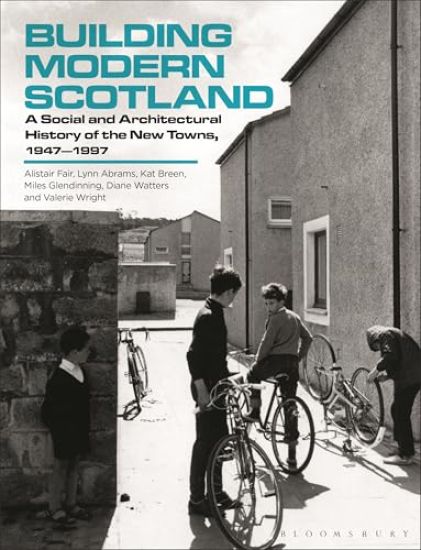
Building Modern Scotland

Building Modern Scotland

Alistair Fair; Lynn Abrams; Kat Breen; Miles Glendinning; Diane Watters; Valerie Wright

BLOOMSBURY PUBLISHING PLC
2025
sidottu
Combining architectural and social history, this open access book tells for the first time the in-depth story of Scotland’s new towns. One of the most significant episodes in modern architectural, urban and social history, Scotland’s postwar new towns offered new housing, new ways of life and new jobs. Begun between the late 1940s and the late 1960s, the new towns – East Kilbride, Glenrothes, Cumbernauld, Livingston and Irvine – were a key element of the planned Welfare State, attracting international attention and widespread publicity. These were places of architectural innovation, and economic and social change. Building Modern Scotland tells a new history of the new towns, combining architectural and social history to illustrate what was planned, what was built, and how these places were experienced by the communities who lived and worked in them. It positions the new towns at the heart of modern Scottish history, showing how they represented an ambition to make a modern, transformed nation. The book surveys each new town’s planning and design before turning to key topics such as housing, family life, work and opportunity, and community. Drawing on archives and oral history, the book will appeal to historians of modern architecture and design as well as readers interested in modern social history. It provides a new account of modern Scotland, its buildings, places and people, and argues that a better understanding of the new towns’ history and value should inform present-day decision-making. The ebook editions of this book are available open access under a CC BY-NC-ND 4.0 licence on bloomsburycollections.com. Open access was funded by the Leverhulme Trust.
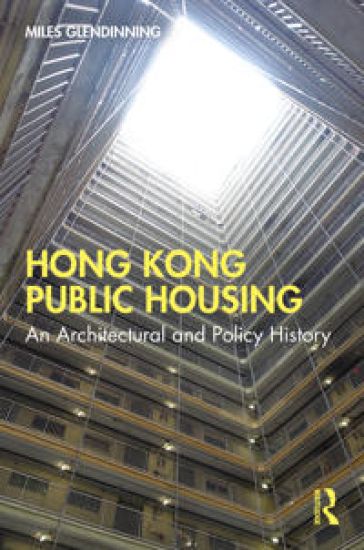
Hong Kong Public Housing

Hong Kong Public Housing

Miles Glendinning

TAYLOR FRANCIS LTD
2024
sidottu
Hong Kong Public Housing provides the first comprehensive history of one of the most dramatic episodes in the global history of the modern built environment: the vast public housing programme sponsored by successive Hong Kong governments from the 1950s, in a quest to build up the territory into a lasting ‘people’s home’. And unlike many of its counterparts elsewhere, this is a programme still ongoing today – a case of ‘history in progress’ – as Hong Kong now boasts one of the world’s longest-lasting public housing programmes. During that time, it has been not just a mirror of the cultural and economic values of Hong Kong society but also a reflection of more nebulous, fast-changing perceptions of identity – and a testament to the community-building achievements of Hongkongers over these years. This authoritative study combines architectural history with the broader social, political, and cultural aspects of housing production – particularly the geo-political issues of sovereignty and decolonisation that uniquely, and fundamentally, structured the trajectory of Hong Kong public housing and territory development. Exploring the relationship between built form, ideology, and administrative governance, it shows how massive state intervention interacted at times uneasily with Hong Kong’s dominant laissez-faire ethos, to help maintain the legitimacy of successive administrations during an era of ‘auto-decolonisation’, and support an interstitial society suspended between two sovereignties. Following more recent political changes, Hong Kong’s public housing heritage has also become a focus of nostalgic community pride – a monumental achievement of ‘Home Building’ which this book documents and celebrates for posterity.
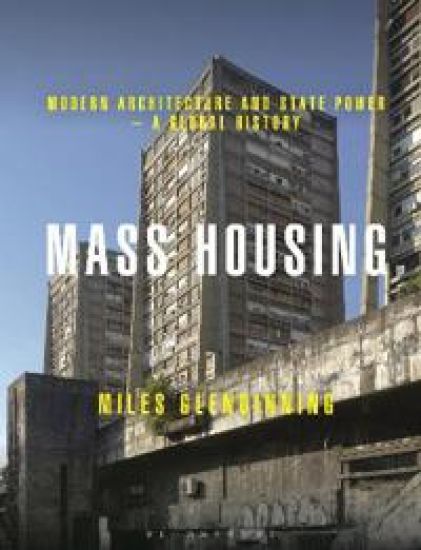
Mass Housing

Mass Housing

Miles Glendinning

Bloomsbury Visual Arts
2021
nidottu

Halvin toimitettuna 35,60 €

Shortlisted for the Alice Davis Hitchcock Medallion 2021 (The Society of Architectural Historians of Great Britain)"It will become the standard work on the subject." Literary ReviewThis major work provides the first comprehensive history of one of modernism’s most defining and controversial architectural legacies: the 20th-century drive to provide ‘homes for the people’. Vast programmes of mass housing – high-rise, low-rise, state-funded, and built in the modernist style – became a truly global phenomenon, leaving a legacy which has suffered waves of disillusionment in the West but which is now seeing a dramatic, 21st-century renaissance in the booming, crowded cities of East Asia. Providing a global approach to the history of Modernist mass-housing production, this authoritative study combines architectural history with the broader social, political, cultural aspects of mass housing – particularly the ‘mass’ politics of power and state-building throughout the 20th century. Exploring the relationship between built form, ideology, and political intervention, it shows how mass housing not only reflected the transnational ideals of the Modernist project, but also became a central legitimizing pillar of nation-states worldwide. In a compelling narrative which likens the spread of mass housing to a ‘Hundred Years War’ of successive campaigns and retreats, it traces the history around the globe from Europe via the USA, Soviet Union and a network of international outposts, to its ultimate, optimistic resurgence in China and the East – where it asks: Are we facing a new dawn for mass housing, or another ‘great housing failure’ in the making?
Scotch Baronial

Scotch Baronial

Miles Glendinning; Aonghus MacKechnie

Bloomsbury Visual Arts
2021
nidottu
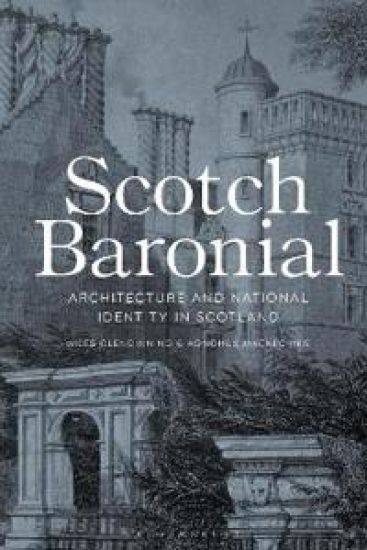
This book takes a timely look at how Scotland’s national politics have been expressed in its buildings, exploring the role the architecture of Scotland – in particular its world-famous ‘castle architecture’ – has played the ongoing narrative of Scots national identity. Scotch Baronial examines many of the country’s most important historic buildings – from the palaces left behind by the ‘lost’ monarchy, to revivalist castles and proud town halls – examining their architectural styles and tracing their wildly fluctuating political and national connotations. An introduction to a key episode in British architectural history, and a valuable resource for anyone studying the role of architecture in narratives of nationalism and empire globally, Scotch Baronial ends by bringing the story into the 21st century, exploring how contemporary ‘neo-modernist’ architecture in today’s Scotland, as exemplified in the Holyrood parliament, relates to concepts of national identity in architecture over the previous centuries.
Scotch Baronial

Scotch Baronial

Miles Glendinning; Aonghus MacKechnie

Bloomsbury Visual Arts
2019
sidottu
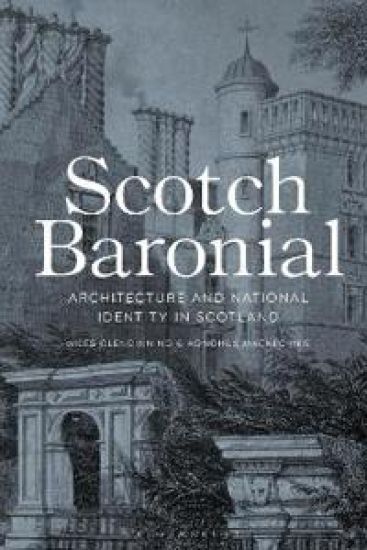
As the debate about Scottish independence rages on, this book takes a timely look at how Scotland’s politics have been expressed in its buildings, exploring how the architecture of Scotland – in particular the constantly-changing ideal of the ‘castle’ – has been of great consequence to the ongoing narrative of Scottish national identity. Scotch Baronial provides a politically-framed examination of Scotland’s kaleidoscopic ‘castle architecture’, tracing how it was used to serve successive political agendas both prior to and during the three ‘unionist centuries’ from the early 17th century to the 20th century. The book encompasses many of the country’s most important historic buildings – from the palaces left behind by the ‘lost’ monarchy, to revivalist castles and the proud town halls of the Victorian age – examining their architectural styles and tracing their wildly fluctuating political and national connotations. It ends by bringing the story into the 21st century, exploring how contemporary ‘neo-modernist’ architecture in today’s Scotland, as exemplified in the Holyrood parliament, relates to concepts of national identity in architecture over the previous centuries.
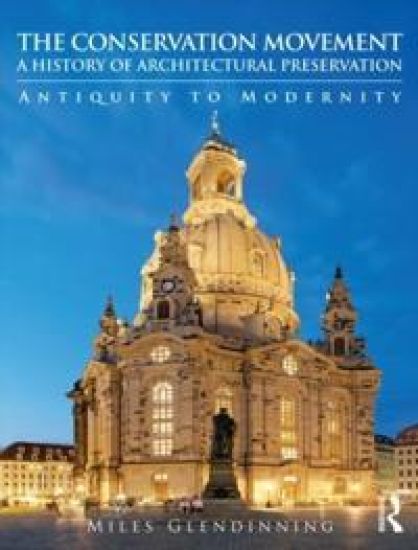
The Conservation Movement: A History of Architectural Preservation
Winner of the 2016 Antoinette Forrester Downing Award presented by the Society of Architectural Historians. In many cities across the world, particularly in Europe, old buildings form a prominent part of the built environment, and we often take it for granted that their contribution is intrinsically positive. How has that widely-shared belief come about, and is its continued general acceptance inevitable? Certainly, ancient structures have long been treated with care and reverence in many societies, including classical Rome and Greece. But only in modern Europe and America, in the last two centuries, has this care been elaborated and energised into a forceful, dynamic ideology: a ‘Conservation Movement’, infused with a sense of historical destiny and loss, that paradoxically shared many of the characteristics of Enlightenment modernity. The close inter-relationship between conservation and modern civilisation was most dramatically heightened in periods of war or social upheaval, beginning with the French Revolution, and rising to a tragic climax in the 20th-century age of totalitarian extremism; more recently the troubled relationship of ‘heritage’ and global commercialism has become dominant. Miles Glendinning’s new book authoritatively presents, for the first time, the entire history of this architectural Conservation Movement, and traces its dramatic fluctuations in ideas and popularity, ending by questioning whether its recent international ascendancy can last indefinitely.
The Conservation Movement: A History of Architectural Preservation

The Conservation Movement: A History of Architectural Preservation

Miles Glendinning

Routledge
2013
nidottu

Halvin toimitettuna 117,60 €

Winner of the 2016 Antoinette Forrester Downing Award presented by the Society of Architectural Historians. In many cities across the world, particularly in Europe, old buildings form a prominent part of the built environment, and we often take it for granted that their contribution is intrinsically positive. How has that widely-shared belief come about, and is its continued general acceptance inevitable? Certainly, ancient structures have long been treated with care and reverence in many societies, including classical Rome and Greece. But only in modern Europe and America, in the last two centuries, has this care been elaborated and energised into a forceful, dynamic ideology: a ‘Conservation Movement’, infused with a sense of historical destiny and loss, that paradoxically shared many of the characteristics of Enlightenment modernity. The close inter-relationship between conservation and modern civilisation was most dramatically heightened in periods of war or social upheaval, beginning with the French Revolution, and rising to a tragic climax in the 20th-century age of totalitarian extremism; more recently the troubled relationship of ‘heritage’ and global commercialism has become dominant. Miles Glendinning’s new book authoritatively presents, for the first time, the entire history of this architectural Conservation Movement, and traces its dramatic fluctuations in ideas and popularity, ending by questioning whether its recent international ascendancy can last indefinitely.
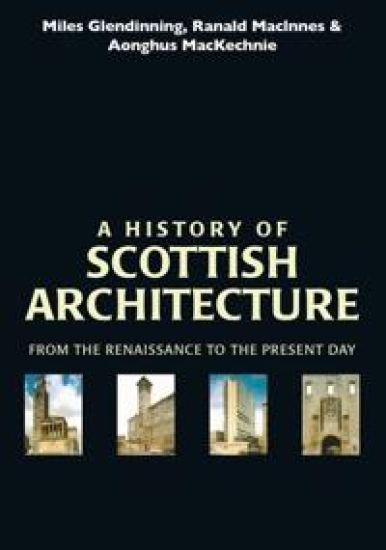
A History of Scottish Architecture

A History of Scottish Architecture

Miles Glendinning; Ranald MacInnes; Aonghus McKechnie

Edinburgh University Press
1996
nidottu
At last - here is a single volume authoritative history of Scottish architecture. This compact yet comprehensive account combines factual description of the vast and fertile range of visual forms and key architects in each period with a wide-ranging analysis of their social, ideological and historical context. As Scotland has often been closely involved with new trends in western architecture, this book highlights the interaction of Scottish developments with broader European and international movements. From the beginnings of the Renaissance in the 15th century right up to the 1990s ,this much-needed survey covers the entire post-medieval story in one volume.