Kirjojen hintavertailu – 12 859 819 kirjaa ja 27 kauppaa
Kirjailija
Miles Hewstone
Kirjat ja teokset yhdessä paikassa: 4 kirjaa, julkaisuja vuosilta 1989–2026, suosituimpiin kuuluu Crossed Categorization, Stereotyping, and Intergroup Relations. Vertaile teosten hintoja ja tarkista saatavuus suomalaisista kirjakaupoista.
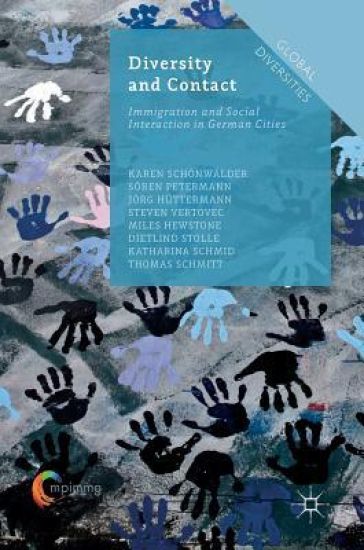
This book analyzes how the socio-demographic and cultural diversity of societies affect the social interactions and attitudes of individuals and groups within them. Focusing on Germany, where in some cities more than one third of the population are first or second-generation immigrants, it examines how this phenomenon impacts on the ways in which urban residents interact, form friendships, and come to trust or resent each other. The authors, a distinguished team of sociologists, political scientists, social psychologists, anthropologists and geographers, present the results of their wide-ranging empirical research, which combines a 3-wave-panel survey, qualitative fieldwork, area explorations and analysis of official data. In doing so, they offer representative findings and deeper insights into how residents experience different neighbourhood contexts. Their conclusions are a significant contribution to our understanding of the implications of immigration and diversity, and of the conditions and consequences of intergroup interaction. This ground-breaking work will appeal to scholars across the Social Sciences.
This 1986 study presents an insightful perspective on public attitudes towards the European Community. It contains a review of the findings from public opinion surveys of the time on this issue, but goes beyond straightforward description to provide a real understanding of European attitudes. A variety of social-psychological theories are used to test a model of the structure underlying Community attitudes. The original data reported in the present study parallel the findings from much larger, representative and long-term surveys of public opinion. Thus Miles Hewstone is able to derive from his research a wide-ranging analysis of cross-national differences in attitudinal support, the Community's impact on its citizens, and the likely trends in attitude and voting behaviour. At a time when the entry of Spain and Portugal had further expanded the Community's membership, such issues were particularly timely and this clear and penetrating study especially welcome.
Attribution theory deals with how people explain social behavior - their causal attributions or common-sense explanations. Causal Attribution provides a major assessment of attribution theory in social psychology during the last forty years. It reviews in detail the variety of theoretical perspectives and established phenomena in attribution theory and provides a unique integration. A brief introduction to the classic attribution theories is followed by a review of some of the fundamental questions. The core of the book is made up of four central chapters, one on each of Doise's levels of explanation. Intra-personal attribution has studied the logic, cognitive processes and knowledge structures underlying causal attributions. Interpersonal attribution centers on attribution in social interaction and in close relationships, especially marriage. Intergroup attribution highlights the consequences of social categorization: attributions at this level often favor the ingroup and sustain ingroup conflict. Societal attributions link attributions to wider social beliefs, such as conspiracy theories, and refer to phenomena such as poverty, unemployment and riots. This volume emphasizes the breadth and depth of attribution research, and argues persuasively that an attributional approach has a promising future, as well as a distinguished past, in social psychology.