Kirjojen hintavertailu – 12 859 828 kirjaa ja 27 kauppaa

Kirjailija

Milton J Nieuwsma

Kirjat ja teokset yhdessä paikassa: 8 kirjaa, julkaisuja vuosilta 2016–2023, suosituimpiin kuuluu Miracle On Chestnut Street. Vertaile teosten hintoja ja tarkista saatavuus suomalaisista kirjakaupoista.

8 kirjaa

Kirjojen julkaisuvuodet: 2016–2023.

Dateline

Dateline

Milton J Nieuwsma; Tom Stites

BRICK TOWER PRESS
2023
pokkari
"A favorite shelf in my bookcase leads with By-Line: Ernest Hemingway, a compendium of journalism the great novelist wrote to support himself as he worked on his fiction. Right next to it is Ernie's War, dispatches by Ernie Pyle, the most famous of World War II correspondents. Milton Nieuwsma's fine volume joins this shelf of honor." -From the foreword by Tom Stites, two-time Pulitzer Prize-winning editor/journalist"Compassion and humility radiate from Milt's pen. I followed him to Auschwitz twenty-five years after he wrote his evocative account of the 50th anniversary of the camp's liberation. His exhortation to listen to the stories of the survivors is a sample of his great writing: 'To turn away is to kill them a second time. But to listen is to confront the monster that lurks in the human soul.' A must read."-Malcolm Brabant, correspondent, PBS NewsHour; author, The Daughter of Auschwitz Before he turned to writing for public television, Milton Nieuwsma traveled the world covering stories for the Chicago Tribune and other major newspapers. This book is a compendium of 21 of his best pieces-20 from the earth and one from hell. He takes you to the Arctic and the Antarctic; to the Amazon and the Nile; to Auschwitz, the scene of humanity's greatest crime, and to a rural Mississippi courtroom where the acquittal of Emmett Till's killers sparked the civil rights movement. "Milt Nieuwsma is a master of his craft," writes Tom Stites. "Its value still leaps out of the page at the reader." MILTON NIEUWSMA is a two-time Emmy Award-winning writer and creator of the acclaimed PBS programs Surviving Auschwitz: Children of the Shoah and Inventing America: Conversations with the Founders. TOM STITES is a former editor at the Chicago Tribune and New York Times.

Miracle on Chestnut Street

Miracle on Chestnut Street

Milton J Nieuwsma; Bill Barker

Ibooks
2022
sidottu
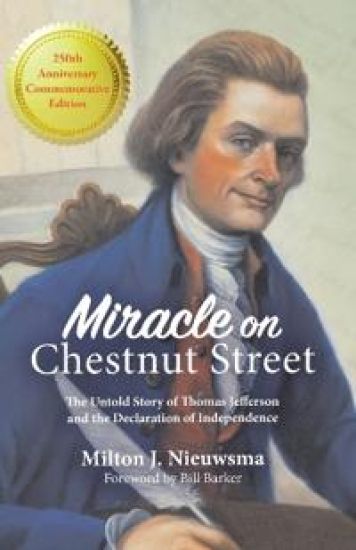
"Miracle on Chestnut Street reminds us that the creation of our nation was indeed-and still is-a miracle." -From the foreword by Bill Barker, premiere Jefferson interpreter.Tom Jefferson, a young plantation owner from Virginia, was the least likely member of the Second Continental Congress to make a name for himself. When he arrived in Philadelphia in 1775 it was by default; he had been sent as a substitute for a distant cousin. He resented having to leave his sickly wife and young daughters at home where they needed his attention. Most of all, he disdained politics. Yet we associate Jefferson's name more than any other with what happened on the most important day in American history: July 4, 1776. Notwithstanding many other defining moments in our nation's past-Appomattox, Pearl Harbor, the Apollo moon landing, 9/11 to name a few-the Declaration of Independence that Jefferson wrote and the Continental Congress adopted on that date symbolizes more than any other event what America stands for as a nation. Now, for the first time, the story of that historic event is told from Jefferson's point-of-view. Drawing from his letters, journals, diaries and extensive on-site research, Milton Nieuwsma recreates the sixteen most important months in Jefferson's life: from his election to the Continental Congress to the Declaration of Independence. It's the story of how a young man entered the world stage through the back door-and how the ideas he expressed in that document still resonate in the 21st century.
Miracle On Chestnut Street

Miracle On Chestnut Street

Milton J Nieuwsma; Bill Barker

Ibooks for Young Readers
2021
pokkari
Milton Nieuwsma explains why he wrote Miracle on Chestnut Street and reflects on Thomas Jefferson, the man and his legacy: So why did you write this book?" For a couple of reasons. One was to tell the story of the Declaration of Independence from Jefferson's point of view and in real time. The other reason was to restore his rightful place in history." Why do you say that?" Well, he's had a pretty rough go of it the past few decades, first because of DNA and then because of the 1619 Project." What do you think is Jefferson's biggest legacy?" More than anyone, he defined the idea of America, the idea that individual freedom is basic to our way of life. He was our country's first human rights champion. Even with all of our problems today, our country is still a beacon of hope and freedom to people around the world. We owe that mainly to Jefferson." Tom Jefferson, a young plantation owner from Virginia, was the least likely member of the Second Continental Congress to make a name for himself. When he arrived in Philadelphia in 1775 it was by default; he had been sent as a substitute for a distant cousin. He resented having to leave his sickly wife and young daughters at home where they needed his attention. Most of all, he disdained politics. Yet we associate Jefferson's name more than any other with what happened on the most important day in American history: July 4, 1776. Notwithstanding many other defining moments in our nation's past-Appomattox, Pearl Harbor, the Apollo moon landing, 9/11 to name a few-the Declaration of Independence that Jefferson wrote and the Continental Congress adopted on that date symbolizes more than any other event what America stands for as a nation. Now, for the first time, the story of that historic event is told from Jefferson's point-of-view. Drawing from his letters, journals, diaries and other sources, as well as from on-site research at Monticello (Jefferson's home in Virginia), Colonial Williamsburg and Independence National Historical Park in Philadelphia, two-time Emmy-wining writer Milton Nieuwsma recreates the sixteen most important months in Jefferson's life, from his election to the Continental Congress to the Declaration of Independence. Miracle on Chestnut Street is not only an inside account of how a piece of paper came to define the American republic; it's the story of how a young man entered the world stage through the back door-and how the ideas he expressed in that document still resonate in the 21st century.
Inventing America-Conversations with the Founders (HC)
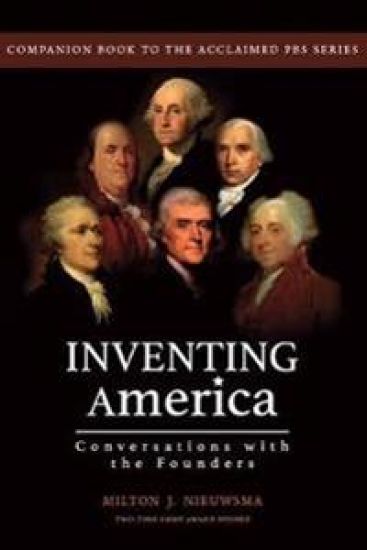
"Insightful... Entertaining... A reminder of how much we owe our forefathers."--Richard Beeman, author of Plain, Honest Men: The Making of the American Constitution." Inventing America is a terrific way to introduce our nation's founders to a new generation of Americans."--Gleaves Whitney, presidential historianAt the close of the Constitutional Convention of 1787 in Philadelphia an elderly woman approached Benjamin Franklin as he was leaving the Pennsylvania State House. "Tell me, Dr. Franklin, she said, "do we have a republic or a monarchy?" Dr. Franklin replied: "A republic, madam, if you can keep it." What would our Founding fathers think if they could see our country today? Would they turn over in their graves? Or would they be astonished that our republic is still alive? George Washington, who presided at the 1787 convention, predicted it wouldn't last twenty years, so take a guess. Inventing America: Conversations with the Founders takes you behind the scenes of the creation of the Declaration of Independence, the U. S. Constitution, and the Bill of Rights. See how these are not just dusty old parchments stored away in a museum but how they define us as Americans and serve--through good times and bad--as a beacon of freedom to the world.
Inventing America-Conversations with the Founders

Inventing America-Conversations with the Founders

Milton J Nieuwsma

Brick Tower Press
2020
pokkari
"Insightful... Entertaining... A reminder of how much we owe our forefathers."--Richard Beeman, author of Plain, Honest Men: The Making of the American Constitution"Inventing America is a terrific way to introduce our nation's founders to a new generation of Americans."--Gleaves Whitney, presidential historianAt the close of the Constitutional Convention of 1787 in Philadelphia an elderly woman approached Benjamin Franklin as he was leaving the Pennsylvania State House. "Tell me, Dr. Franklin, she said, "do we have a republic or a monarchy?" Dr. Franklin replied: "A republic, madam, if you can keep it." What would our Founding fathers think if they could see our country today? Would they turn over in their graves? Or would they be astonished that our republic is still alive? George Washington, who presided at the 1787 convention, predicted it wouldn't last twenty years, so take a guess. Inventing America: Conversations with the Founders takes you behind the scenes of the creation of the Declaration of Independence, the U. S. Constitution, and the Bill of Rights. See how these are not just dusty old parchments stored away in a museum but how they define us as Americans and serve as a beacon of democracy to the world.
Surviving Auschwitz (Lib)

Surviving Auschwitz (Lib)

Milton J Nieuwsma; Tova Friedman

Ibooks
2019
sidottu
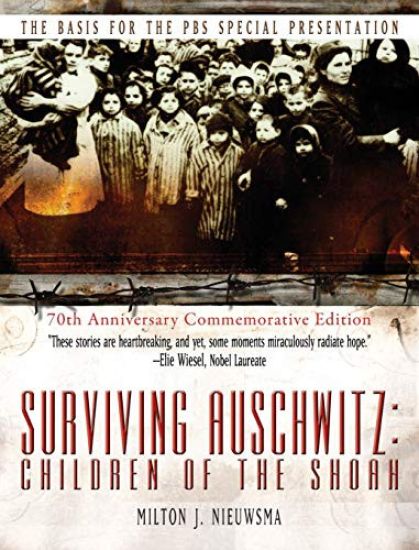
In the waning months of World War II, a Soviet regiment entered Auschwitz-Birkenau, Adolph Hitler's infamous concentration camp, and found seven thousand prisoners on the brink of death from illness and starvation. Among them were three young girls from a town in central Poland called Tomaszow Mazowiecki. Before being deported to Auschwitz, Tova Friedman, Rachel Hyams and Frieda Tenenbaum had already survived the Jewish ghetto in their town and two slave labor camps. Now, thanks to their Soviet liberators, they survived the Kinderlager, the children's barracks at Auschwitz that were nothing more than a holding area for the gas chambers. When the regiment's commander, Marshal Ivan Koneff, discovered the children--their limbs thin as toothpicks, most of them unable to walk--he broke down and wept. The date was January 27, 1945. Tova was 6, Rachel 7, and Frieda 10. A quarter century ago, on the 50th anniversary of their liberation, Tova, Rachel and Frieda first told the world about their Auschwitz ordeal. Today, on the 75th anniversary of their liberation, they tell their stories again--although Rachel, who died in 2008, can no longer tell her story in person. It is to her, along with the million-and-a-half children who died in the Holocaust, that we dedicate this edition of Surviving Auschwitz.
Surviving Auschwitz

Surviving Auschwitz

Milton J Nieuwsma; Tova Friedman

iBooks
2019
pokkari
In the waning months of World War II, a Soviet regiment entered Auschwitz-Birkenau, Adolph Hitler's infamous concentration camp, and found seven thousand prisoners on the brink of death from illness and starvation. Among them were three young girls from a town in central Poland called Tomaszow Mazowiecki. Before being deported to Auschwitz, Tova Friedman, Rachel Hyams and Frieda Tenenbaum had already survived the Jewish ghetto in their town and two slave labor camps. Now, thanks to their Soviet liberators, they survived the Kinderlager, the children's barracks at Auschwitz that were nothing more than a holding area for the gas chambers. When the regiment's commander, Marshal Ivan Koneff, discovered the children--their limbs thin as toothpicks, most of them unable to walk--he broke down and wept. The date was January 27, 1945. Tova was 6, Rachel 7, and Frieda 10. A quarter century ago, on the 50th anniversary of their liberation, Tova, Rachel and Frieda first told the world about their Auschwitz ordeal. Today, on the 75th anniversary of their liberation, they tell their stories again--although Rachel, who died in 2008, can no longer tell her story in person. It is to her, along with the million-and-a-half children who died in the Holocaust, that we dedicate this edition of Surviving Auschwitz.