Kirjailija
Ming Yang
Kirjat ja teokset yhdessä paikassa: 15 kirjaa, julkaisuja vuosilta 2012–2026, suosituimpiin kuuluu yi jing mi dan dian ding wei ji shu gu ji GPS zhui zong zhan zhi jue dui wei yi su du. Vertaile teosten hintoja ja tarkista saatavuus suomalaisista kirjakaupoista.
15 kirjaa
Kirjojen julkaisuvuodet: 2012–2026.
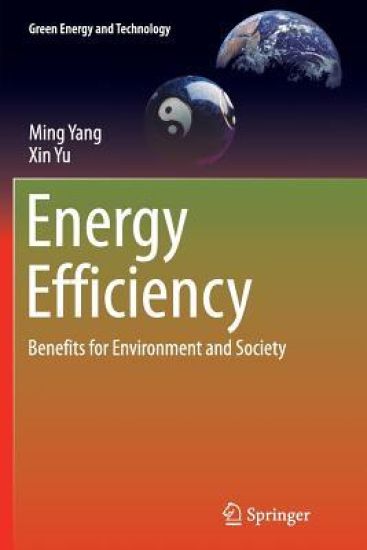
This book discusses how energy efficiency benefits the global environment, national energy security, local pollution mitigation, natural resource conservation, and utility bill reduction. In addition, this book provides many hands-on skills and knowledge to identify and develop energy efficiency projects. The literature review shows that energy efficiency has become the first fuel in the world energy supply. With empirical analyses, this book indicates that without continued investment in energy efficiency, neither China nor the U. S. could achieve their carbon emission reduction targets that were announced on November 13, 2014 during the Beijing 2014 APEC meeting. The authors argue that energy efficiency will become the first tool to mitigate climate change. These include (1) identifying energy efficiency barriers, (2) developing energy policies, (3) investing in energy efficient technologies, (4) undertaking project cost-effectiveness analysis, (5) de-risking and financing energy efficiency projects; (6) developing and managing energy service companies, and (7) promoting urban transport efficiency. Two case studies in energy efficiency improvement in electrical motors and industrial boilers are also presented. This book is written for college and university students, practitioners, researchers, consultants, project developers, and policy makers who want to dedicate their professional careers in global energy efficiency improvement, climate change mitigation, local clean air initiatives, and energy bill reduction.

yi jing mi dan dian ding wei ji shu gu ji GPS zhui zong zhan zhi jue dui wei yi su du
Zhi Jia Chen; Ming Yang
¿¿¿¿¿¿¿
2015
nidottu
Methods and Tools for Resilience and Dynamic Risk Assessment of Chemical Processes
Chi-Min Shu; Ming Yang; Hao Sun; Meng Qi; Zhirong Wang
Elsevier - Health Sciences Division
2026
nidottu
Methods and Tools for Resilience and Dynamic Risk Assessment of Chemical Processes introduces systematic approaches in risk assessment in chemical process safety along with relevant tools, models and latest methodologies for assessing safety and resilience in chemical processes, systems engineering, risk and resilience engineering, and simulation and modelling. The first chapters in this book outline the theoretical framework of chemical process safety, emphasizing the integration of safety into chemical engineering through key ideas like inherent safety and corporate culture. It highlights the significance of Process Hazard Identification (PHI) methods, including traditional techniques and advancements such as AI, for effectively identifying and mitigating hazards. Further chapters investigate advanced hazard assessment methodologies like Systems Theoretic Process Analysis (STPA) and Risk-Based Process Safety (RBPS), alongside dynamic risk assessment techniques. The text also discusses the evolution of "resilience" in process safety, resilience assessment methods, and simulation tools for enhancing safety. This book includes real-world case studies coupled with insights on future trends in technology to help researchers and students alike to conduct their own future research into risk and resilience assessment in chemical process safety fields. This book will be an invaluable guide to anyone working in chemical process safety, particularly within the fields of risk assessment, systems modelling and control.
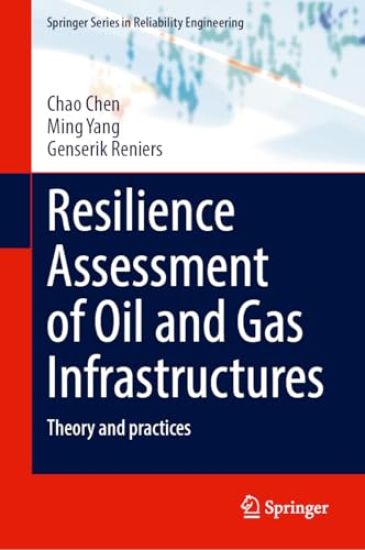
Resilience Assessment of Oil and Gas Infrastructures
Chao Chen; Ming Yang; Genserik Reniers
Springer Nature Switzerland AG
2026
sidottu
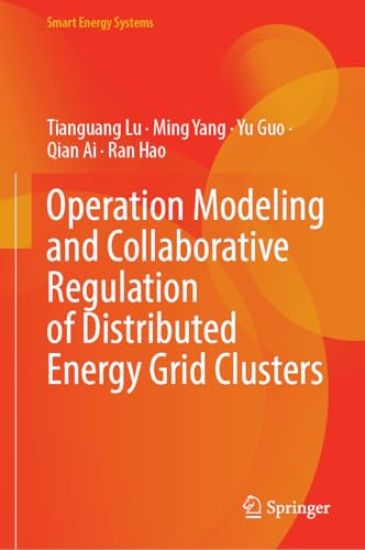
Operation Modeling and Collaborative Regulation of Distributed Energy Grid Clusters
Tianguang Lu; Ming Yang; Yu Guo; Qian Ai; Ran Hao
Springer Nature Switzerland AG
2025
sidottu
This book delves into modeling, multi-cluster interactive dispatch, and multi-energy coordination in distributed energy grid clusters, focusing on the integrated operation and scheduling of electricity, heating, and gas systems.
Basic Theories of Intellectual Property Transaction
Ming Yang
Springer Nature Switzerland AG
2025
sidottu
From the perspective of the market, this book discusses the basic theories and operation mechanism of intellectual property transactions based on the behavior choice theory, aiming to deeply understand how the specific systems and rules of intellectual property are operated or applied beyond the external form of system application. China's long-standing intellectual property legal doctrines and the corresponding knowledge system (whether legislative, judicial or theoretical research) deserve reflection in three aspects: (i) the neglect of market principles; (ii) the lack of behaviorism research perspectives and methods, and (iii) the lack of systematic degree of existing research. This book is an introspection on the basic theoretical research of intellectual property in China from the above three aspects. This book closely focuses on the coupling relationship between "system implementation" and "behavior choice," along with the logical context of intellectual property transactions, the institutional mechanism behind the specific transaction forms is investigated, and its benefits are analyzed. And, the essence of the economic mechanism of the intellectual property system is deeply interpreted from both theoretical and practical aspects. The target audience is intellectual property law researcher, and the content level is the theoretical foundation research. Starting from the principles of the entitlement of intellectual property, this book tries to reveal the institutional implication of the creation of right, the boundary of right and the attribute of right. And, this book also tries to sort out the matching attribute between the existing intellectual property systems and the operation of the intellectual property market. Finally, by analyzing the correlation between the market environment and the subject's behavior choice, this book tries to clarify the internal logic between "system," "market" and "behavior." These aforesaid features will help IP researchers deeply understand how existing legal systems and rules affect specific intellectual property transactions.
Integrating Safety and Security Management to Protect Chemical Industrial Areas from Domino Effects
Chao Chen; Genserik Reniers; Ming Yang
Springer Nature Switzerland AG
2022
nidottu
This book provides insight into domino effects in industrial chemical sites and process industries. It is about the integration of safety and security resources to prevent and mitigate domino effects in the process industries. It explains how chemical industrial areas, comprised of various hazardous installations, are susceptible to a chain of undesired events, or domino effects, triggered by accidental events or intentional attacks and then presents solutions to prevent them. Firstly, the book provides a dynamic graph approach to model the domino effects induced by accidental fire or intentional fire, considering the spatial-temporal evolution of fires. Then, a dynamic risk assessment method based on a discrete dynamic event tree is proposed to assess the likelihood of VCEs and the vulnerability of installations, addressing the time dependencies in vapor cloud dispersion and the uncertainty of delayed ignitions. A dynamic methodology based on dynamic graphs and Monte Carlois provided to assess the vulnerability of individuals and installations exposed to multi-hazards, such as fire, explosion and toxic release during escalation events. Based on these domino effect models, an economic approach is developed to integrate safe and security resources, obtaining the most cost–benefit protection strategy for preventing domino effects. Finally, a resilience-based approach is provided to find out the most cost-resilient way to protect chemical industrial areas, addressing possible domino effects. This integrated approach will be of interest to researchers, industrial engineers, chemical engineers and safety managers and will help professionals to new solutions in the area of safety and security.
Integrating Safety and Security Management to Protect Chemical Industrial Areas from Domino Effects
Chao Chen; Genserik Reniers; Ming Yang
Springer Nature Switzerland AG
2021
sidottu
This book provides insight into domino effects in industrial chemical sites and process industries. It is about the integration of safety and security resources to prevent and mitigate domino effects in the process industries. It explains how chemical industrial areas, comprised of various hazardous installations, are susceptible to a chain of undesired events, or domino effects, triggered by accidental events or intentional attacks and then presents solutions to prevent them. Firstly, the book provides a dynamic graph approach to model the domino effects induced by accidental fire or intentional fire, considering the spatial-temporal evolution of fires. Then, a dynamic risk assessment method based on a discrete dynamic event tree is proposed to assess the likelihood of VCEs and the vulnerability of installations, addressing the time dependencies in vapor cloud dispersion and the uncertainty of delayed ignitions. A dynamic methodology based on dynamic graphs and Monte Carlois provided to assess the vulnerability of individuals and installations exposed to multi-hazards, such as fire, explosion and toxic release during escalation events. Based on these domino effect models, an economic approach is developed to integrate safe and security resources, obtaining the most cost–benefit protection strategy for preventing domino effects. Finally, a resilience-based approach is provided to find out the most cost-resilient way to protect chemical industrial areas, addressing possible domino effects. This integrated approach will be of interest to researchers, industrial engineers, chemical engineers and safety managers and will help professionals to new solutions in the area of safety and security.
This book presents a comprehensive and cutting-edge overview of the educational governance reform trajectory and the latest issues in China, addressing several important topics such as administration, internal management, provision, enrollment, employment, financing, examinations, evaluation and quality assurance. In addition, this important and timely book discusses the educational system at all levels, from primary and secondary schools to colleges and universities, and each chapter ends with a discussion of the status quo, problems facing China and coping strategies for further reform. The past 68 years (1949-2016) have seen a sea change in social, economic, cultural, political and educational fields. Systematically describing the educational landscape in China, the book also reveals how the massive changes in China have shaped education, and how education has responded to the new demands placed on it. Offering essential insights into educational reform in China, the book represents a valuable resource, especially for researchers and graduate students in the field of education.
Energy efficiency plays and will continue to play an important role in the world to save energy and mitigate greenhouse gas (GHG) emissions. However, little is known on how much additional capital should be invested to ensure using energy efficiently as it should be, and very little is known which sub-areas, technologies, and countries shall achieve maximum greenhouse gas emissions mitigation per dollar of investment in energy efficiency worldwide. Analyzing completed and slowly moving energy efficiency projects by the Global Environment Facility during 1991-2010, Closing the Gap: GEF Experiences in Global Energy Efficiency evaluates impacts of multi-billion-dollar investments in the world energy efficiency. It covers the following areas: 1. Reviewing the world energy efficiency investment and disclosing the global energy efficiency gap and market barriers that cause the gap;2. Leveraging private funds with public funds and other resources in energy efficiency investments; using these funds in tangible and intangible asset investments; 3. Investment effectiveness indollars per metric ton of CO2 emissions mitigation in 10 energy efficiency sub-areas;4. Major barriers causing failure and abandonments in energy efficiency investments;5. Quantification of direct and indirect CO2 emissions mitigations inside and outside a project boundary; and6. Classification and estimation of CO2 emissions mitigations from tangible and intangible asset investments. Closing the Gap: GEF Experiences in Global Energy Efficiency can serve as a handbook for policymakers, project investors and managers, and project implementation practitioners in need of benchmarks in energy efficiency project investments for decision-making. It can also be used by students, researchers and other professionals in universities and research institutions in methodology development for evaluating energy efficiency projects and programs.
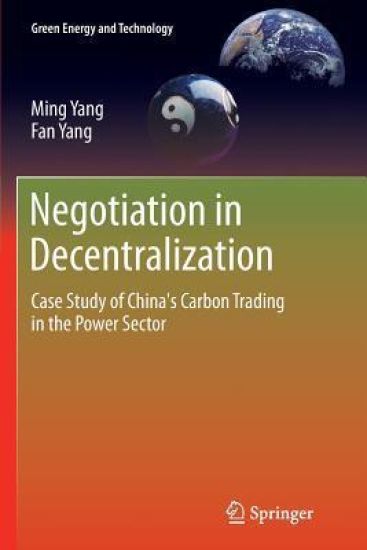
The Chinese government set a target to reduce China’s carbon intensity by 40%-45% in 2020 at its 2005 level. To achieve this target, the government has allocated targets to provinces, cities, and large enterprises, and selected five pilot provinces and eight cities for CO2 emission trading. Such emission trading process will involve decentralization, optimization, and negotiation. The prime objective of this book is to perform academic research on simulating the negotiation process. Through this research, a methodological framework and its implementation are set up to analyze, model and facilitate the process of negotiation among central government and individual energy producers under environmental, economical and social constraints. Negotiation In Decentralization: Case Study Of China's Carbon Trading In The Power Sector discusses research carried out on negotiation issues in China regarding Chinese power sector reform over the past 30 years. Results show that conflicts exist between power groups and the national government, and that the most current negotiation topics in China's power industry are demand and supply management, capital investment, energy prices, and CO2 emission mitigations. Negotiation In Decentralization: Case Study Of China's Carbon Trading In The Power Sector is written for government policy makers, energy and environment industry investors, energy program and project managers, environment conservation specialists, university professors, researchers, and graduate students. It aims to provide a methodology and a tool that can resolve difficult negotiation issues and change a loss-loss situation to a win-win situation for key players in a decentralized system, including government policymakers, energy producers, and environment conservationists.
Energy efficiency plays and will continue to play an important role in the world to save energy and mitigate greenhouse gas (GHG) emissions. However, little is known on how much additional capital should be invested to ensure using energy efficiently as it should be, and very little is known which sub-areas, technologies, and countries shall achieve maximum greenhouse gas emissions mitigation per dollar of investment in energy efficiency worldwide. Analyzing completed and slowly moving energy efficiency projects by the Global Environment Facility during 1991-2010, Closing the Gap: GEF Experiences in Global Energy Efficiency evaluates impacts of multi-billion-dollar investments in the world energy efficiency. It covers the following areas: 1. Reviewing the world energy efficiency investment and disclosing the global energy efficiency gap and market barriers that cause the gap;2. Leveraging private funds with public funds and other resources in energy efficiency investments; using these funds in tangible and intangible asset investments; 3. Investment effectiveness indollars per metric ton of CO2 emissions mitigation in 10 energy efficiency sub-areas;4. Major barriers causing failure and abandonments in energy efficiency investments;5. Quantification of direct and indirect CO2 emissions mitigations inside and outside a project boundary; and6. Classification and estimation of CO2 emissions mitigations from tangible and intangible asset investments. Closing the Gap: GEF Experiences in Global Energy Efficiency can serve as a handbook for policymakers, project investors and managers, and project implementation practitioners in need of benchmarks in energy efficiency project investments for decision-making. It can also be used by students, researchers and other professionals in universities and research institutions in methodology development for evaluating energy efficiency projects and programs.
The Chinese government set a target to reduce China’s carbon intensity by 40%-45% in 2020 at its 2005 level. To achieve this target, the government has allocated targets to provinces, cities, and large enterprises, and selected five pilot provinces and eight cities for CO2 emission trading. Such emission trading process will involve decentralization, optimization, and negotiation. The prime objective of this book is to perform academic research on simulating the negotiation process. Through this research, a methodological framework and its implementation are set up to analyze, model and facilitate the process of negotiation among central government and individual energy producers under environmental, economical and social constraints. Negotiation In Decentralization: Case Study Of China's Carbon Trading In The Power Sector discusses research carried out on negotiation issues in China regarding Chinese power sector reform over the past 30 years. Results show that conflicts exist between power groups and the national government, and that the most current negotiation topics in China's power industry are demand and supply management, capital investment, energy prices, and CO2 emission mitigations. Negotiation In Decentralization: Case Study Of China's Carbon Trading In The Power Sector is written for government policy makers, energy and environment industry investors, energy program and project managers, environment conservation specialists, university professors, researchers, and graduate students. It aims to provide a methodology and a tool that can resolve difficult negotiation issues and change a loss-loss situation to a win-win situation for key players in a decentralized system, including government policymakers, energy producers, and environment conservationists.