Kirjojen hintavertailu – 12 859 829 kirjaa ja 27 kauppaa

Kirjailija

Minjeong Kim

Kirjat ja teokset yhdessä paikassa: 7 kirjaa, julkaisuja vuosilta 2008–2022, suosituimpiin kuuluu Discourse Analysis of Languaging and Literacy Events in Educational Settings. Vertaile teosten hintoja ja tarkista saatavuus suomalaisista kirjakaupoista.

7 kirjaa

Kirjojen julkaisuvuodet: 2008–2022.

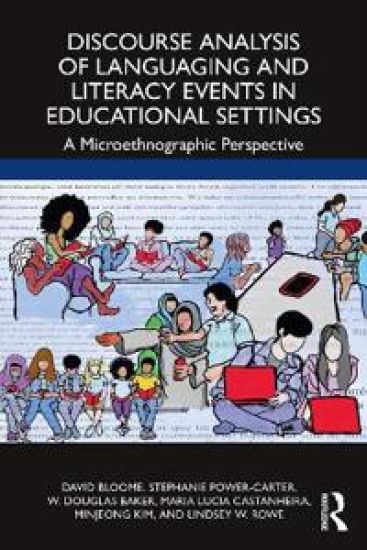
Discourse Analysis of Languaging and Literacy Events in Educational Settings

Discourse Analysis of Languaging and Literacy Events in Educational Settings

David Bloome; Stephanie Power-Carter; W. Douglas Baker; Maria Lucia Castanheira; Minjeong Kim; Lindsey W. Rowe

TAYLOR FRANCIS LTD
2022
nidottu
This book provides a comprehensive introduction to the use of microethnographic discourse analysis for researching, theorizing, and reconceptualizing the uses of language and literacy in educational settings. The authors apply an ethnographic perspective to discourse analysis to emphasize how teachers and students use spoken and written language to construct knowledge, opportunities for learning, and social relationships. The authors demonstrate how microethnographic discourse analysis at different levels of scale can provide deeper understandings into the nuanced, complex social interactions and relationships that exist in and across educational contexts, including meaning-making, literacy practices, power relations, and the social construction of personhood. Each chapter offers philosophically and theoretically grounded principles for using microethnographic discourse analysis and example cases that reflect the principles presented. Ideal for researchers, teacher educators, and teachers, this essential text on discourse analysis, languaging, and literacy provides a grounding to further examine critical questions challenging educators.
Discourse Analysis of Languaging and Literacy Events in Educational Settings

Discourse Analysis of Languaging and Literacy Events in Educational Settings

David Bloome; Stephanie Power-Carter; W. Douglas Baker; Maria Lucia Castanheira; Minjeong Kim; Lindsey W. Rowe

TAYLOR FRANCIS LTD
2022
sidottu
This book provides a comprehensive introduction to the use of microethnographic discourse analysis for researching, theorizing, and reconceptualizing the uses of language and literacy in educational settings. The authors apply an ethnographic perspective to discourse analysis to emphasize how teachers and students use spoken and written language to construct knowledge, opportunities for learning, and social relationships. The authors demonstrate how microethnographic discourse analysis at different levels of scale can provide deeper understandings into the nuanced, complex social interactions and relationships that exist in and across educational contexts, including meaning-making, literacy practices, power relations, and the social construction of personhood. Each chapter offers philosophically and theoretically grounded principles for using microethnographic discourse analysis and example cases that reflect the principles presented. Ideal for researchers, teacher educators, and teachers, this essential text on discourse analysis, languaging, and literacy provides a grounding to further examine critical questions challenging educators.
Elusive Belonging

Elusive Belonging

Minjeong Kim

UNIVERSITY OF HAWAI'I PRESS
2021
nidottu
Elusive Belonging examines the post-migration experiences of Filipina marriage immigrants in rural South Korea. Marriage migration—crossing national borders for marriage—has attracted significant public and scholarly attention, especially in new destination countries, which grapple with how to integrate marriage migrants and their children and what that integration means for citizenship boundaries and a once-homogenous national identity. In the early twenty-first century many Filipina marriage immigrants arrived in South Korea under the auspices of the Unification Church, which has long served as an institutional matchmaker. Based on ethnographic fieldwork, Elusive Belonging examines Filipinas who married rural South Korean bachelors in the first decade of the twenty-first century. Turning away from the common stereotype of Filipinas as victims of domestic violence at the mercy of husbands and in-laws, Minjeong Kim provides a nuanced understanding of both the conflicts and emotional attachments of their relationships with marital families and communities. Her close-up accounts of the day-to-day operations of the state’s multicultural policies and public programs show intimate relationships between Filipinas, South Korean husbands, in-laws, and multicultural agents, and how various emotions of love, care, anxiety, and gratitude affect immigrant women’s fragmented citizenship and elusive sense of belonging to their new country. By offering the perspectives of varied actors, the book reveals how women’s experiences of tension and marginalization are not generated within the family alone; they also reflect the socioeconomic conditions of rural Korea and the state’s unbalanced approach to "multiculturalism." Against a backdrop of the South Korean government’s multicultural policies and projects aimed at integrating marriage immigrants, Elusive Belonging attends to the emotional aspects of citizenship rooted in a sense of belonging. It mediates between a critique of the assimilation inherent in Korea’s "multiculturalism" and the contention that the country’s core identity is shifting from ethnic homogeneity to multiethnic diversity. In the process it shows how marriage immigrants are incorporated into the fabric of Korean society even as they construct new identities as Filipinas in South Korea.
Elusive Belonging

Elusive Belonging

Minjeong Kim

University of Hawai'i Press
2018
sidottu
Elusive Belonging examines the post-migration experiences of Filipina marriage immigrants in rural South Korea. Marriage migration—crossing national borders for marriage—has attracted significant public and scholarly attention, especially in new destination countries, which grapple with how to integrate marriage migrants and their children and what that integration means for citizenship boundaries and a once-homogenous national identity. In the early twenty-first century many Filipina marriage immigrants arrived in South Korea under the auspices of the Unification Church, which has long served as an institutional matchmaker. Based on ethnographic fieldwork, Elusive Belonging examines Filipinas who married rural South Korean bachelors in the first decade of the twenty-first century. Turning away from the common stereotype of Filipinas as victims of domestic violence at the mercy of husbands and in-laws, Minjeong Kim provides a nuanced understanding of both the conflicts and emotional attachments of their relationships with marital families and communities. Her close-up accounts of the day-to-day operations of the state’s multicultural policies and public programs show intimate relationships between Filipinas, South Korean husbands, in-laws, and multicultural agents, and how various emotions of love, care, anxiety, and gratitude affect immigrant women’s fragmented citizenship and elusive sense of belonging to their new country. By offering the perspectives of varied actors, the book reveals how women’s experiences of tension and marginalization are not generated within the family alone; they also reflect the socioeconomic conditions of rural Korea and the state’s unbalanced approach to “multiculturalism.” Against a backdrop of the South Korean government’s multicultural policies and projects aimed at integrating marriage immigrants, Elusive Belonging attends to the emotional aspects of citizenship rooted in a sense of belonging. It mediates between a critique of the assimilation inherent in Korea’s “multiculturalism” and the contention that the country’s core identity is shifting from ethnic homogeneity to multiethnic diversity. In the process it shows how marriage immigrants are incorporated into the fabric of Korean society even as they construct new identities as Filipinas in South Korea.
Peer Assessment as a Learning Method

Peer Assessment as a Learning Method

Minjeong Kim

AV Akademikerverlag
2012
pokkari
Revision with unchanged content. Although considerable attention has been directed toward the value of peer assessment where learning is enhanced through maximizing the opportunities for students to share their work with others in the assessment process, very little work has been done to investigate the effects of the different types of learner role in peer assessment on learning. Therefore, this study investigated the effects of the assessor and assessee's roles on learners' metacognitive awareness, performance, and attitude. A particular focus is set on peer assessment as a leraning method. The analysis should help to answer the questions: - What are the comperative effects of the assessor's role and assessee's role on metacognitive awareness, performance, and attitude? -Does the role combination improve learners' metacognitive awareness, performance, and attitude to a greateer degree than either of the roles alone or neither role? -Are there any relationships between the quality of peer feedback and assessees' metacognitive awareness, performance, and attitude? The findings of the book suggest instructional implications for those who want to employ peer assessment as a learning method.