
Kirjailija
Miquel Barceló
Kirjat ja teokset yhdessä paikassa: 5 kirjaa, julkaisuja vuosilta 2014–2025, suosituimpiin kuuluu Miquel Barcelo: On the Sea. Vertaile teosten hintoja ja tarkista saatavuus suomalaisista kirjakaupoista.
Nimi esiintyy myös muodoissa: Miquel Barcelo
5 kirjaa
Kirjojen julkaisuvuodet: 2014–2025.
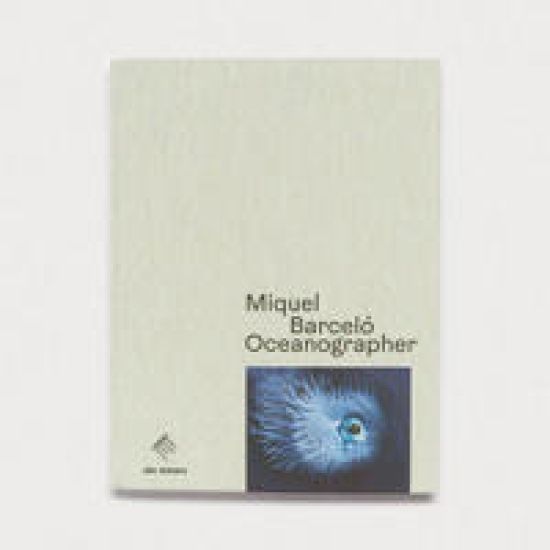
Miquel Barcelo´’s work is entwined with the intimate bond he has maintained with the sea since childhood, and which he continues to study and explore every day. This book offers an immersion into the profuse production of an artist who is passionate about fishing, swimming and diving, for whom the aquatic world remains the primordial environment, omnipresent in his work from his earliest paintings to his most recent creations. Between abysses and shores, ocean floors merge with the water’s surface, underwater caves turn into waves, the forms and fauna of the deep adjoin fossil compositions and seafood banquets. Featuring unseen contributions by Marie Darrieussecq and Chantal Thomas, an interview with Patrick Maurie`s and a critical review by Bjo¨rn Dahlstro¨m, Guillaume de Sardes and Ste´phane Vacquier, Miquel Barcelo´: Oceanographer invites us to discover fifty years of artistic experimentations by this essential contemporary creator.
Cahiers d’Art 2018
Rémi Labrusse; Jean-Louis Cohen; Miquel Barceló; Rosa Maria Mallet; Elisa Sclaunick; Hans Ulrich Obrist; Helen Marten; Koo Jeong A; Karel Malich
Cahiers d'art
2020
nidottu
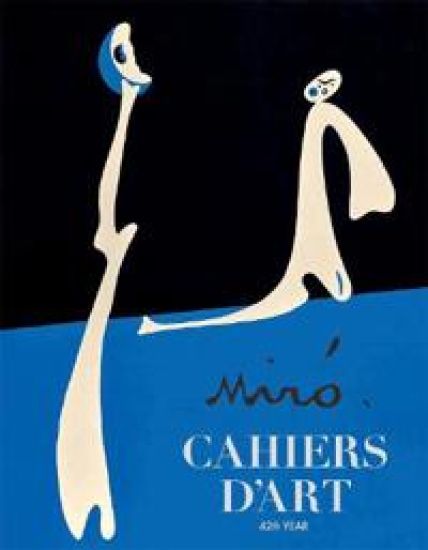
The 2018 Cahiers d'Art revue revisits Mir 's works and relationship between Mir and Cahiers d'Art through an anthology of the most beautiful texts published in the revue. It also introduces unpublished objects and pieces from the artist's collection. The stencil Mir made for the No. 1-4 of the 1936 revue is silkscreened as this revue's cover. The issue also includes an interview with Staffan Ahrenberg and Miquel Barcel , and works by Helen Marten, Koo Jong A and Karel Malich. Anchored in the beauty of the Catalan land and in the primitive power of objects, Mir 's works unfold their magical dimension alongside movements and theories. The art critic and founder of Cahiers d'Art, Christian Zervos never stopped following and defending the work of this unclassifiable artist, "the most lyrical painter of his time" and "the most important post cubist artist". Mir is indeed present in Cahiers d'Art from the first year of its existence, 1926, utill the last, 1960. He drew many covers and his famous stencil "Help Spain " (Aidez l'Espagne ) was published in the No. 4-5 of the 1937 issue of the Cahiers d'Art revue. This issue of the new revue, under the direction of R mi Labrusse, revisits the relationship between Mir and Cahiers d'Art through an anthology of the most beautiful texts published in the revue. It also provides insight into the great originality of Mir 's primitivism and a discovery of two collections of the artist: the objects that filled his studio, and the unpublished paintings that he added into certain books in his library. An essay by lisa Sclaunick is dedicated to Mir 's unpublished correspondence with writer Jacques Dupin. A text by Jean-Louis Cohen pays tribute to the architect Jos -Luis Sert who created the buildings of the Palma studio and the Barcelona Foundation, while Rosa Maria Mallet returns to the history of the Mir Foundation. Lastly, four artists complete the revue with a contemporary counterpoint: the Spanish Miquel Barcel , the English Helen Marten, the South Korean Koo Jong A and the Czech Karel Malich.
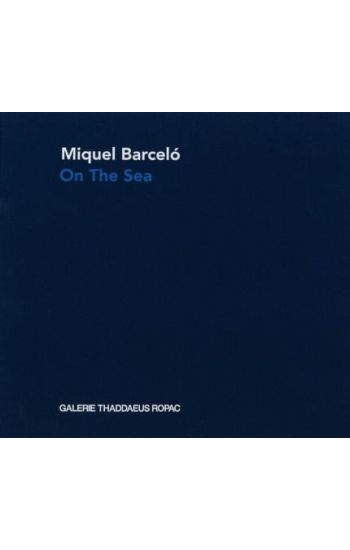
On the Sea features the most recent series by Spanish painter Miquel Barcel (born 1957). The exhibition catalog presents his textural and atmospheric paintings inspired by the seascapes of his native Mallorca, alongside a text by Nobel Prize Laureate Mario Vargas Llosa.
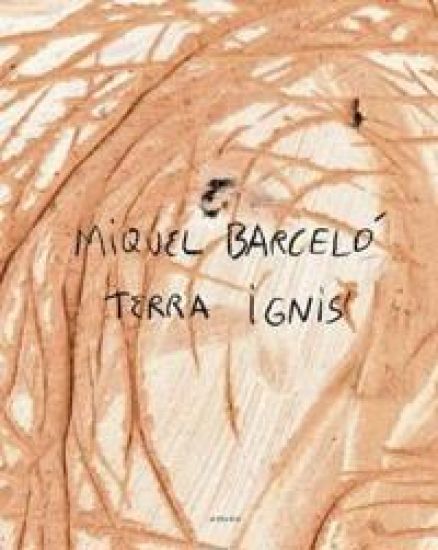
This book, published to accompany the recent ‘Works of Fire’ exhibition at the Céret Museum of Modern Art, presents Miquel Barceló’s ceramics work. Created in Majorca in a former tilery and brickyard transformed into a workshop, the terracotta figures are damaged or disturbed by the introduction of bricks in the still-fresh clay, which humanizes their familiar forms. The self-portrait is a recurrent theme: eyes and mouth engraved into vases, and amphorae in shapes inherited from Antiquity; skulls and heads explicitly evoke the idea of vanity, an ever-present theme in Barceló’s work, which appears in the fractures, cracks, and swelling that the clay undergoes before or during firing. Apart from the self-portraits, there are emanations of the animal or plant world, also disturbed by the bricks which come to inhabit or destroy them. Rosebuds bloom, fish live and fossilize, bricks form secret cavities. These spectacular works owe their presence to their apparent fragility as well as to their life force, and the struggle and dramas they welcome. All Barceló’s themes are present in his ceramic works. As ever, the passage of time and death are expressed in the most fragile and durable way.