
Kirjailija
Mircea Eliade
Kirjat ja teokset yhdessä paikassa: 41 kirjaa, julkaisuja vuosilta 1968–2026, suosituimpiin kuuluu Yoga. Vertaile teosten hintoja ja tarkista saatavuus suomalaisista kirjakaupoista.
41 kirjaa
Kirjojen julkaisuvuodet: 1968–2026.
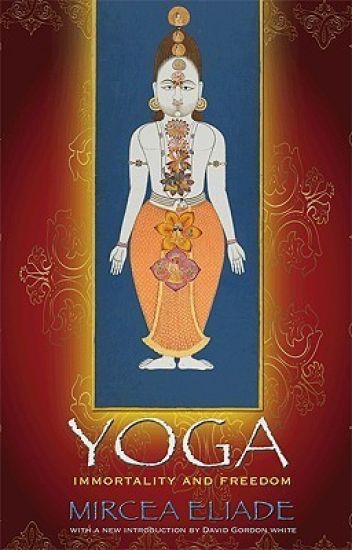
Yoga: Immortality and Freedom
Mircea Eliade
PRINCETON UNIVERSITY PRESS
2009
nidottu
Halvin toimitettuna 29,10 €
In this landmark book, first published in English in 1958, renowned scholar of religion Mircea Eliade lays the groundwork for a Western understanding of Yoga. Drawing on years of study and experience in India, Eliade provides a comprehensive survey of Yoga in theory and practice from its earliest antecedents in the Vedas through the twentieth century. A new introduction by David Gordon White provides invaluable insight into Eliade's life and work, highlighting the key moments in Eliade's academic and spiritual education, as well as the personal experiences that shaped his worldview. Yoga is not only one of Eliade's most important books, it is also his most personal--the only one to analyze a religious tradition that he had truly lived.
Mircea Eliade stellt in seinem Buch Kosmos und Geschichte eine der Grundfragen der menschlichen Existenz überhaupt: Wie erträgt der Mensch das Leid und die Katastrophen, denen er hilflos ausgeliefert ist? Wie deutet er das historische Geschehen und gibt damit seinem Leben einen Sinn? Bei dem Versuch des Menschen, seine Stellung im Universum zu deuten, lassen sich, so zeigt Eliade, zwei einander prinzipiell entgegengesetzte Grundhaltungen unterscheiden: Der historische (moderne) Mensch sieht sich als Schöpfer der Geschichte, der Mensch der archaischen Kulturen dagegen wehrt Geschichte ab, indem er alles Historische in ein System von Mythen und Archetypen einordnet. Eliade gibt dafür eine Fülle von Beispielen aus den verschiedensten Kulturen der Welt und vermittelt somit überraschende Einsichten in die Ursprünge unseres eigenen Denkens und Verhaltens.
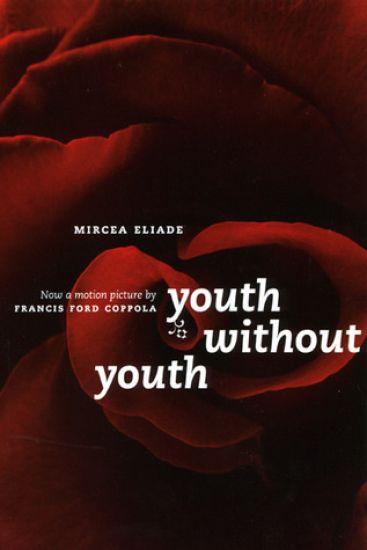
This is soon to be a major motion picture starring Tim Roth and directed by Francis Ford Coppola. Bucharest, 1938: while Hitler gains power in Germany, the Romanian police start arresting students they suspect of belonging to the Iron Guard. Meanwhile, a man who has spent his life studying languages, poetry, and history - a man who thought his life was over - lies in a hospital bed, inexplicably alive and miraculously healthy, trying to figure out how to conceal his identity. At the intersection of the natural and supernatural, myth and history, dream and science, lies Mircea Eliade's novella. Now, in its first paperback edition, the psychological thriller features Dominic Matei, an elderly academic who experiences a cataclysmic event that allows him to live a new life with startling intellectual capacity. Sought by the Nazis for their medical experiments on the potentially life-prolonging power of electric shocks, Matei is helped to flee through Romania, Switzerland, Malta, and India. Newly endowed with prodigious powers of memory and comprehension, he finds himself face-to-face with the glory and terror of the supernatural. In this surreal, philosophy-driven fantasy, Eliade tests the boundaries of literary genre as well as the reader's imagination. Suspenseful, witty, and poignant, "Youth Without Youth" illuminates Eliade's longing for past loves and new texts, his erotic imagination, and his love of a thrilling mystery. It will be adapted for the screen in 2007 as Francis Ford Coppola's first feature film in over ten years.
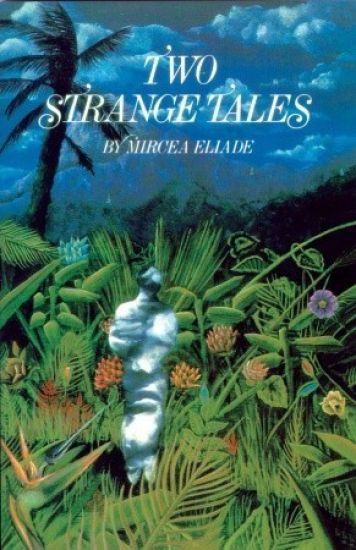
"No event in our world is "real, " my friend. Everything that occurs in this universe is illusory... And in a world of appearances, in which no thing and no event has any permanence, any reality of its own--whoever is master of certain forces can do anything he wishes..." So speaks a character in "Two Strange Tales, " a pair of novellas in which Westerners are caught up in the uncanny realm of Eastern religion and magic. In "Nights at Serampore," three European scholars, traveling deep into the forests of Bengal, are inexplicably cast into another time and space where they witness the violent murder of a young Hindu wife. In "The Secret of Dr. Honingberger," a respectable Rumanian physician vanishes without a trace after experimenting with yogic techniques in his quest for the legendary invisible world called Shambhala. In "Two Strange Tales, " author Mircea Eliade combined yogic folklore with the literary genre of the supernatural suspense tale so as to reveal dimensions of experience that are inaccessible to other intellectual approaches. These well-crafted stories will appeal to both lovers of the supernatural and those fascinated by mysticism of the East.
Symbolism, the Sacred, and the Arts
Mircea Eliade
Continuum International Publishing Group Ltd.
1997
nidottu
Halvin toimitettuna 41,00 €
Major work is distinguished by an intensity of inspiration and an overwhelming sense of personal vision. This merging of inspiration and vision permits the creation of a classic oeuvre whose creator is deemed to be a 'master of his craft, ' or perhaps better, 'a seminal mind.' Such is the work of the historian of religious, Mirceas Eliade. In his lifelong quest to understand the presence of the Sacred throughout human history, Eliade has been fascinated by two central themes: Creation and Time.
In this era of increased knowledge the essence of religious phenomena eludes the psychologists, sociologists, linguists, and other specialists because they do not study it as religious. According to Mircea Eliade, they miss the one irreducible element in religious phenomena—the element of the sacred. Eliade abundantly demonstrates universal religious experience and shows how humanity's effort to live within a sacred sphere has manifested itself in myriad cultures from ancient to modern times; how certain beliefs, rituals, symbols, and myths have, with interesting variations, persisted.
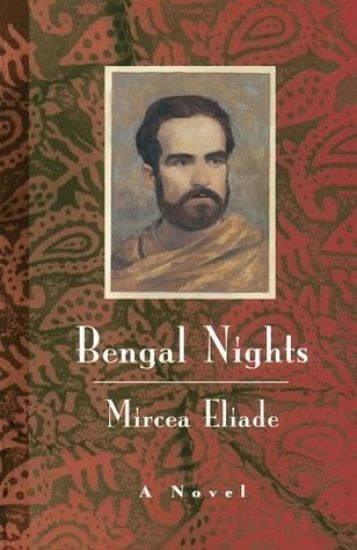
Bengal Nights – A Novel
Mircea Eliade; Catherine Spencer
University of Chicago Press
1995
nidottu
Halvin toimitettuna 24,70 €
Set in 1930s Calcutta, this is a roman a clef of remarkable intimacy. Originally published in Romanian in 1933, this semiautobiographical novel by the world renowned scholar Mircea Eliade details the passionate awakenings of Alain, an ambitious young French engineer flush with colonial pride and prejudice and full of a European fascination with the mysterious subcontinent. Offered the hospitality of a senior Indian colleague, Alain grasps at the chance to discover the authentic India firsthand. He soon finds himself enchanted by his host's daughter, the lovely and inscrutable Maitreyi, a precocious young poet and former student of Tagore. What follows is a charming, tentative flirtation that soon, against all the proprieties and precepts of Indian society, blossoms into a love affair both impossible and ultimately tragic. This erotic passion plays itself out in Alain's thoughts long after its bitter conclusion. In hindsight he sets down the story, quoting from the diaries of his disordered days, and trying to make sense of the sad affair. A vibrantly poetic love story, Bengal Nights is also a cruel account of the wreckage left in the wake of a young man's self discovery. At once horrifying and deeply moving, Eliade's story repeats the patterns of European engagement with India even as it exposes and condemns them. Invaluable for the insight it offers into Eliade's life and thought, it is a work of great intellectual and emotional power. Translated into French in 1950, Bengal Nights was an immediate critical success. The film, Les Nuits Bengali, appeared in 1987.
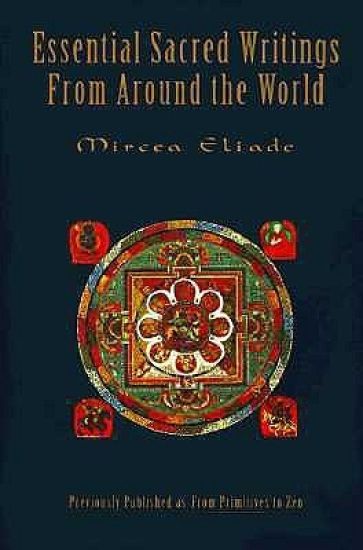
Formerly published as "From Primitives to Zen", this book is a collection of religious writings from traditions other than Christianity and Judaism. Selections are excerpted from texts such as the Quran, the Book of the Dead, the Rig Veda, the Bhagavad Gita, the Homeric Hymns and the Popul Vuh. The thematic arrangement allows readers to compare the essential structure and the divergent variety of religious expression throughout the ages and around the world. Descriptions of deities from various sources are arranged together as are myths of creation and of origin, understandings of death and depictions of the afterlife, teachings on the relationship between humanity and the sacred, various religious rituals and practices, prayers and hymns. Indexes allow the reader to substitute an ethnic or geographic arrangement for the thematic one.
Images and Symbols
Mircea Eliade
Princeton University Press
1991
pokkari
Halvin toimitettuna 33,80 €
Mircea Eliade--one of the most renowned expositors of the psychology of religion, mythology, and magic--shows that myth and symbol constitute a mode of thought that not only came before that of discursive and logical reasoning, but is still an essential function of human consciousness. He describes and analyzes some of the most powerful and ubiquitous symbols that have ruled the mythological thinking of East and West in many times and at many levels of cultural development.
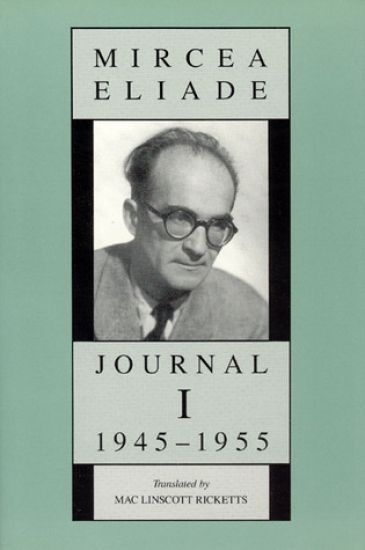
Journal I is a story of revewal—of the new life that began for Mircea Eliade in the fall of 1945 when he became an expatriate. Eliade came to Paris virtually empty-handed, following the death of his first wife and the Soviet takeover of Romania, which made him a persona non grata there. He had left half a lifetime in Romania: his parents, whom he never saw again; his library; unpublished and unfinished manuscripts, including the journal notebooks prior to 1940; an academic career; and Zalmoxis, the journal of religious studies he founded. During the lean years in Paris Eliade lived and worked in small, cold rooms; prepared meals on a Primus stove; pawned his valuables; and asked friends for loans. Eventually he secured a research stipend from the Bollingen Foundation. His ten years in Paris were among his most productive; the books he wrote during this period brought him worldwide acclaim as a historian of religions. He records his first meetings with Carl Jung, Pierre Teilhard de Chardin, Gershom Scholem, Georges Bataille, André Breton, Raffaele Pettazzoni, and many other scholars and writers. Eliade also continued to write literary works. Numerous entries describe his five-year struggle with his novel The Forbidden Forest. Spanning the twelve fateful years from 1936 to 1948, it expresses within a fictional framework the central themes of Eliade's work on religions. Writing the novel was a Herculean task in which Eliade summarized and memorialized his old Romanian life.

History of Religious Ideas, Volume 3
Mircea Eliade
University of Chicago Press
1988
nidottu
Halvin toimitettuna 29,20 €
Illuminates the creative moments of the major traditions from prehistoric times through classical Greece arguing that religious values and meaning grew with social and technological innovation
History of Religious Ideas, Volume 2
Mircea Eliade
University of Chicago Press
1985
nidottu
Halvin toimitettuna 48,90 €
Illuminates the creative moments of the major traditions from prehistoric times through classical Greece arguing that religious values and meaning grew with social and technological innovation

This French translation of the original English play, The Endless Column by Mircea Eliade, summarizes the philosophy of artist and philosopher, Constantin Brancusi. Probes the meaning of Brancusi's work and his silence after his well-known India visit. According to the play, the fact that Brancusi did not accomplish his Meditation Monument was due to the difficulty in putting the light of human contemplation into sculpture.
In The Quest Mircea Eliade stresses the cultural function that a study of the history of religions can play in a secularized society. He writes for the intelligent general reader in the hope that what he calls a new humanism "will be engendered by a confrontation of modern Western man with unknown or less familiar worlds of meaning." "Each of these essays contains insights which will be fruitful and challenging for professional students of religion, but at the same time they all retain the kind of cultural relevance and clarity of style which makes them accessible to anyone seriously concerned with man and his religious possibilities."—Joseph M. Kitagawa, Religious Education
A History of Religious Ideas, Volume 1
Mircea Eliade
University of Chicago Press
1981
nidottu
Halvin toimitettuna 30,60 €
"No one has done so much as Mr. Eliade to inform literature students in the West about 'primitive' and Oriental religions... Everyone who cares about the human adventure will find new information and new angles of vision."--Martin E. Marty, "New York Times Book Review"
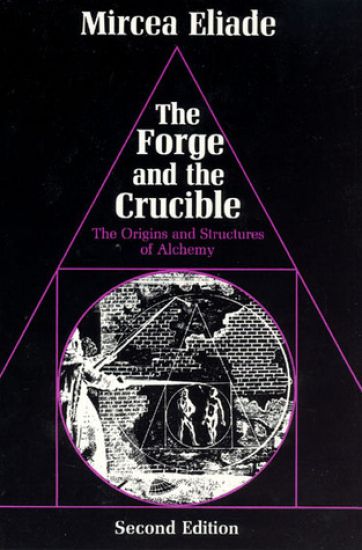
The Forge and the Crucible
Mircea Eliade
University of Chicago Press
1979
nidottu
Halvin toimitettuna 41,70 €
Primitive man's discovery of the ability to change matter from one state to another brought about a profound change in spiritual behavior. In The Forge and the Crucible, Mircea Eliade follows the ritualistic adventures of these ancient societies, adventures rooted in the people's awareness of an awesome new power. The new edition of The Forge and the Crucible contains an updated appendix, in which Eliade lists works on Chinese alchemy published in the past few years. He also discusses the importance of alchemy in Newton's scientific evolution.
Presents discussions concerning the ways in which modern and historical religious and occult movement correspond to recurrent human social and emotional needs
in Druck