Kirjojen hintavertailu – 12 859 828 kirjaa ja 27 kauppaa

Kirjailija

Miroslav Nemcok

Kirjat ja teokset yhdessä paikassa: 4 kirjaa, julkaisuja vuosilta 2022–2024, suosituimpiin kuuluu More People, Fewer States. Vertaile teosten hintoja ja tarkista saatavuus suomalaisista kirjakaupoista.

4 kirjaa

Kirjojen julkaisuvuodet: 2022–2024.

More People, Fewer States

More People, Fewer States

Rein Taagepera; Miroslav Nemcok

Cambridge University Press
2024
pokkari
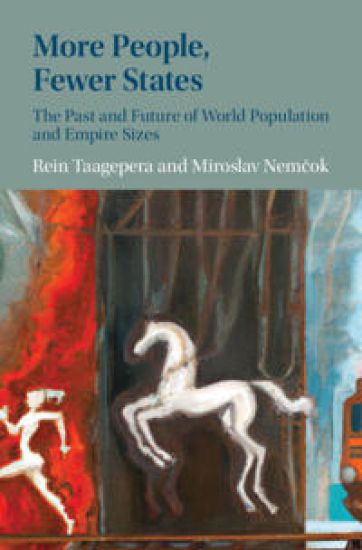
The long-term development of political systems over extended time periods has been somewhat neglected. More People, Fewer States examines world history through population explosion and empire size changes across 5000 years of socio-technological development, revealing three distinct phases: Runner, Rider, and Engineer empires. A careful comparative approach reveals that Old Egypt, Achaemenid, Caliphate, Mongol, and Britain each achieved remarkable yet rarely acknowledged expansions, leading to their successive record empire sizes. If identified past trends persist, a potential single world state could emerge by 4600, although environmental concerns may intervene. Focusing on population dynamics and area metrics of states, this book provides a novel framework for evaluating the growth, structure, and decline of empires. It not only illuminates ancient historical space but also ventures into future projections, making it an essential read for scholars interested in the long-term evolution of political systems.
More People, Fewer States

More People, Fewer States

Rein Taagepera; Miroslav Nemcok

Cambridge University Press
2024
sidottu
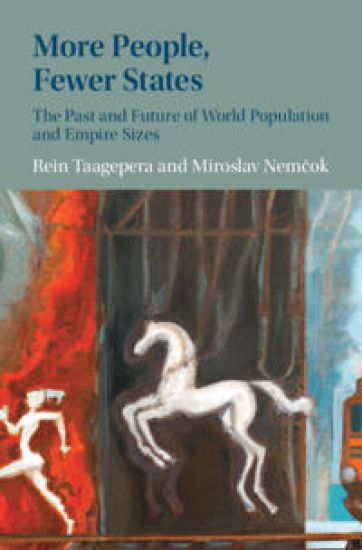
The long-term development of political systems over extended time periods has been somewhat neglected. More People, Fewer States examines world history through population explosion and empire size changes across 5000 years of socio-technological development, revealing three distinct phases: Runner, Rider, and Engineer empires. A careful comparative approach reveals that Old Egypt, Achaemenid, Caliphate, Mongol, and Britain each achieved remarkable yet rarely acknowledged expansions, leading to their successive record empire sizes. If identified past trends persist, a potential single world state could emerge by 4600, although environmental concerns may intervene. Focusing on population dynamics and area metrics of states, this book provides a novel framework for evaluating the growth, structure, and decline of empires. It not only illuminates ancient historical space but also ventures into future projections, making it an essential read for scholars interested in the long-term evolution of political systems.
The Politics of Public Spending

The Politics of Public Spending

Peter Spác; Petr Voda; Michal Tóth; Miroslav Nemcok; Lenka Hrbková

Springer International Publishing AG
2023
nidottu
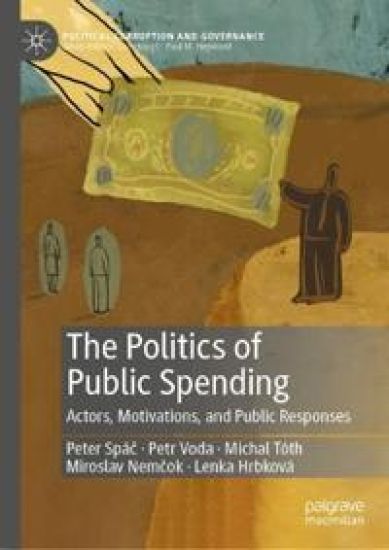
This book provides a comprehensive analysis of the distribution of public money and its political and societal implications. Drawing on evidence from central and eastern Europe, it offers an innovative insight into public responses to various strategies of public spending. Given that public expenditures are funded mainly from tax revenues, it also assesses public attitudes to politically motivated allocations of funds. The book seeks to identify how people evaluate the material benefits of funding in light of the fairness - or lack thereof - of the distribution process, whether popular acceptance of variations in public spending depends on the framing of the beneficiaries, and the implications of money allocation for political trust in political institutions.
The Politics of Public Spending

The Politics of Public Spending

Peter Spác; Petr Voda; Michal Tóth; Miroslav Nemcok; Lenka Hrbková

Springer International Publishing AG
2022
sidottu
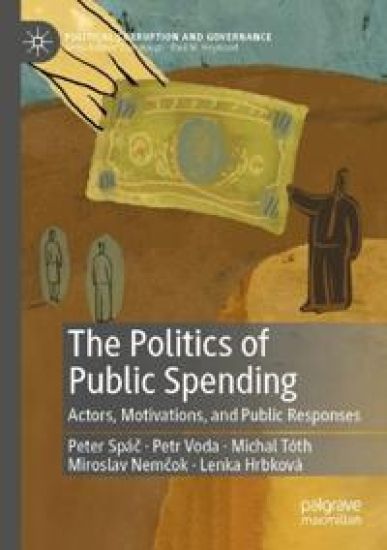
This book provides a comprehensive analysis of the distribution of public money and its political and societal implications. Drawing on evidence from central and eastern Europe, it offers an innovative insight into public responses to various strategies of public spending. Given that public expenditures are funded mainly from tax revenues, it also assesses public attitudes to politically motivated allocations of funds. The book seeks to identify how people evaluate the material benefits of funding in light of the fairness - or lack thereof - of the distribution process, whether popular acceptance of variations in public spending depends on the framing of the beneficiaries, and the implications of money allocation for political trust in political institutions.