Kirjojen hintavertailu – 12 903 725 kirjaa ja 27 kauppaa

Kirjailija

Miroslav Volf

Kirjat ja teokset yhdessä paikassa: 37 kirjaa, julkaisuja vuosilta 2001–2026, suosituimpiin kuuluu The Cost of Ambition. Vertaile teosten hintoja ja tarkista saatavuus suomalaisista kirjakaupoista.

37 kirjaa

Kirjojen julkaisuvuodet: 2001–2026.

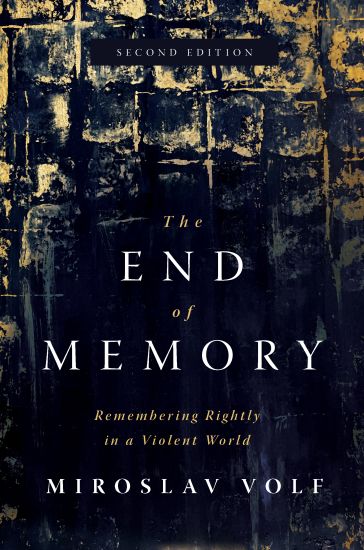
The End of Memory

The End of Memory

Miroslav Volf

William B Eerdmans Publishing Co
2021
sidottu
Winner of the Christianity Today Book Award in Christianity and Culture How should we remember atrocities? Should we ever forgive abusers? Can we not hope for final reconciliation, even if it means redeemed victims and perpetrators spending eternity together? We live in an age that insists that past wrongs--genocides, terrorist attacks, bald personal injustices--should never be forgotten. But Miroslav Volf here proposes the radical idea that letting go of such memories--after a certain point and under certain conditions--may actually be a gift of grace we should embrace. Volf's personal stories of persecution and interrogation frame his search for theological resources to make memories a wellspring of healing rather than a source of deepening pain and animosity. Controversial, thoughtful, and incisively reasoned, The End of Memory begins a conversation that we avoid to our great detriment. This second edition includes an appendix on the memories of perpetrators as well as victims, a response to critics, and a James K. A. Smith interview with Volf about the nature and function of memory in the Christian life.
Exclusion and Embrace

Exclusion and Embrace

Miroslav Volf

Abingdon Press
2019
nidottu
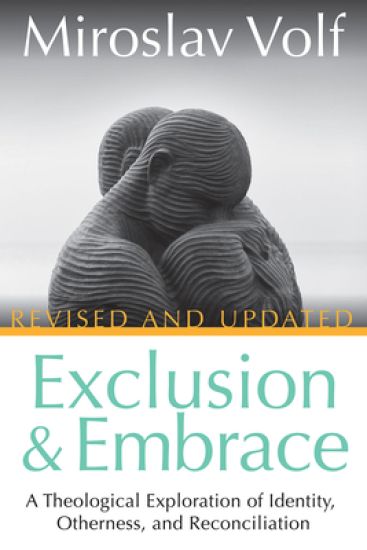
Life in the twenty-first century presents a disturbing reality. Otherness, the simple fact of being different in some way, has come to be defined as in and of itself evil. Miroslav Volf contends that if the healing word of the gospel is to be heard today, Christian theology must find ways of speaking that address the hatred of the other. Is there any hope of embracing our enemies? Of opening the door to reconciliation? Reaching back to the New Testament metaphor of salvation as reconciliation, Volf proposes the idea of embrace as a theological response to the problem of exclusion. Increasingly we see that exclusion has become the primary sin, skewing our perceptions of reality and causing us to react out of fear and anger to all those who are not within our (ever-narrowing) circle. In light of this, Christians must learn that salvation comes, not only as we are reconciled to God, and not only as we "learn to live with one another," but as we take the dangerous and costly step of opening ourselves to the other, of enfolding him or her in the same embrace with which we have been enfolded by God. Volf won the 2002 Louisville Grawemeyer Award in Religion for the first edition of his book, Exclusion & Embrace: A Theological Exploration of Identity, Otherness, and Reconciliation (Abingdon, 1996). In that first edition, professor Volf, a Croatian by birth, analyzed the civil war and "ethnic cleansing" in the former Yugoslavia, and he readily found other examples of cultural, ethnic, and racial conflict to illustrate his points. Since September 11, 2001, and the subsequent epidemic of terror and massive refugee suffering throughout the world, Volf revised Exclusion and Embrace to account for the evolving dynamics of inter-ethnic and international strife.

Exclusion and Embrace, Revised and Updated

Exclusion and Embrace, Revised and Updated

Miroslav Volf

Abingdon Press
2019
sidottu

Halvin toimitettuna 39,30 €

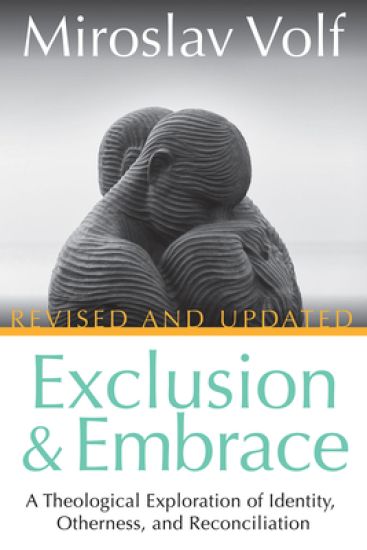
Life in the twenty-first century presents a disturbing reality. Otherness, the simple fact of being different in some way, has come to be defined as in and of itself evil. Miroslav Volf contends that if the healing word of the gospel is to be heard today, Christian theology must find ways of speaking that address the hatred of the other. Is there any hope of embracing our enemies? Of opening the door to reconciliation? Reaching back to the New Testament metaphor of salvation as reconciliation, Volf proposes the idea of embrace as a theological response to the problem of exclusion. Increasingly we see that exclusion has become the primary sin, skewing our perceptions of reality and causing us to react out of fear and anger to all those who are not within our (ever-narrowing) circle. In light of this, Christians must learn that salvation comes, not only as we are reconciled to God, and not only as we "learn to live with one another," but as we take the dangerous and costly step of opening ourselves to the other, of enfolding him or her in the same embrace with which we have been enfolded by God. Volf won the 2002 Louisville Grawemeyer Award in Religion for the first edition of his book, Exclusion & Embrace: A Theological Exploration of Identity, Otherness, and Reconciliation (Abingdon, 1996). In that first edition, professor Volf, a Croatian by birth, analyzed the civil war and "ethnic cleansing" in the former Yugoslavia, and he readily found other examples of cultural, ethnic, and racial conflict to illustrate his points. Since September 11, 2001, and the subsequent epidemic of terror and massive refugee suffering throughout the world, Volf revised Exclusion and Embrace to account for the evolving dynamics of inter-ethnic and international strife.
Redeeming Capitalism

Redeeming Capitalism

Kenneth J. Barnes; Miroslav Volf

William B Eerdmans Publishing Co
2018
sidottu
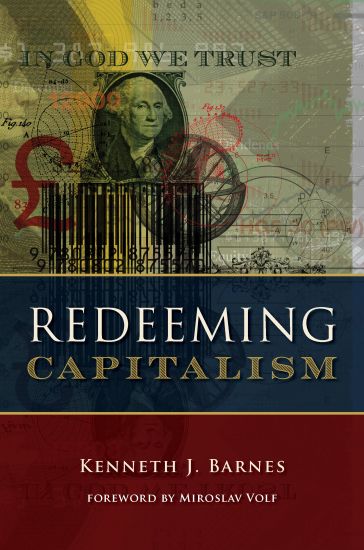
On reclaiming the moral roots of capitalism for a virtuous futureFor good or ill, the capitalism we have is the capitalism we have chosen, says Kenneth Barnes. Capitalism works, and the challenge before us is not to change its structure but to address the moral vacuum at the core of its current practice. In Redeeming Capitalism Barnes explores the history and workings of this sometimes-brutal economic system. He investigates the effects of postmodernism and unpacks biblical-theological teachings on work and wealth. Proposing virtuous choices as a way out of such pitfalls as the recent global financial crisis, Barnes envisions a more just and flourishing capitalism for the good of all.
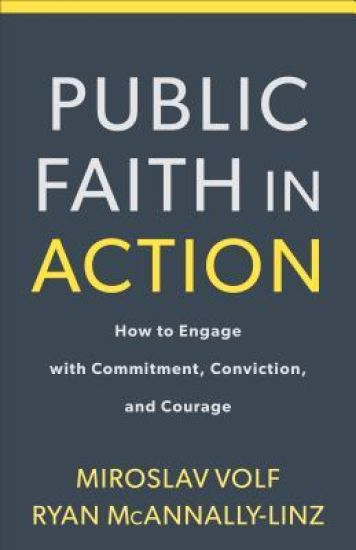
Public Faith in Action – How to Engage with Commitment, Conviction, and Courage

Public Faith in Action – How to Engage with Commitment, Conviction, and Courage

Miroslav Volf; Ryan Mcannally–linz

Brazos Press, Div of Baker Publishing Group
2017
nidottu
Celebrated Theologian Offers Wisdom for Civic EngagementChristian citizens have a responsibility to make political and ethical judgments in light of their faith and to participate in the public lives of their communities--from their local neighborhoods to the national scene. But it can be difficult to discern who to vote for, which policies to support, and how to respond to the social and cultural trends of our time. This nonpartisan handbook offers Christians practical guidance for thinking through complicated public issues and faithfully following Jesus as citizens of their countries. The book focuses on enduring Christian commitments that should guide readers in their judgments and encourages legitimate debate among Christians over how to live out core values. The book also includes lists of resources for further reflection in each chapter and "room for debate" questions to consider.
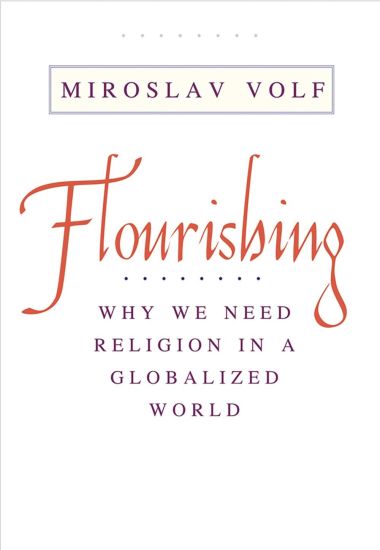
Flourishing

Flourishing

Miroslav Volf

Yale University Press
2017
pokkari
A celebrated theologian explores how the greatest dangers to humanity, as well as the greatest promises for human flourishing, are at the intersection of religion and globalization More than almost anything else, globalization and the great world religions are shaping our lives, affecting everything from the public policies of political leaders and the economic decisions of industry bosses and employees, to university curricula, all the way to the inner longings of our hearts. Integral to both globalization and religions are compelling, overlapping, and sometimes competing visions of what it means to live well. In this perceptive, deeply personal, and beautifully written book, a leading theologian sheds light on how religions and globalization have historically interacted and argues for what their relationship ought to be. Recounting how these twinned forces have intersected in his own life, he shows how world religions, despite their malfunctions, remain one of our most potent sources of moral motivation and contain within them profoundly evocative accounts of human flourishing. Globalization should be judged by how well it serves us for living out our authentic humanity as envisioned within these traditions. Through renewal and reform, religions might, in turn, shape globalization so that can be about more than bread alone.
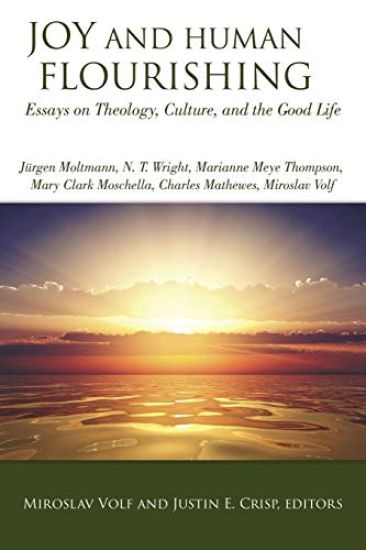
Joy and Human Flourishing

Joy and Human Flourishing

Miroslav Volf

Fortress Press,U.S.
2015
pokkari
Joy is crucial to human life and central to God's relationship to the world, yet it is remarkably absent from contemporary theology and, increasingly, from our own lives! This collection remedies this situation by considering the import of joy on human flourishing. These essays - written by experts in systematic and pastoral theology, Christian ethics, and biblical studies - demonstrate the promise of joy to throw open new theological possibilities and cast fresh light on all dimensions of human life. With contributions from Jurgen Moltmann, N. T. Wright, Marianne Meye Thompson, Mary Clark Moschella, Charles Mathewes, and Miroslav Volf, this volume puts joy at the heart of Christian faith and life, exploring joy's biblical, dogmatic, ecclesiological, and ethical dimensions in concert with close attention to the shifting tides of culture. Convinced of the need to offer to the world a compelling Christian vision of the good life, the authors treat the connections between joy and themes of creation, theodicy, politics, suffering, pastoral practice, eschatology, and more, driven by the conviction that vital relationship with the living God is integral to our fullest flourishing as human creatures.
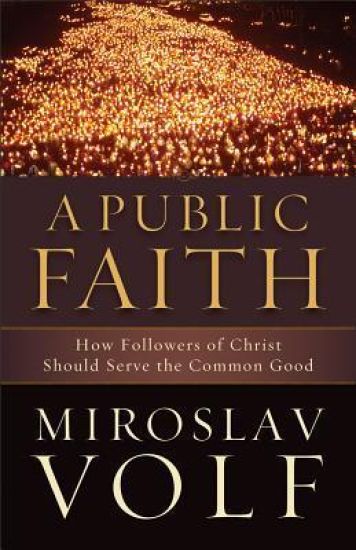
A Public Faith – How Followers of Christ Should Serve the Common Good

A Public Faith – How Followers of Christ Should Serve the Common Good

Miroslav Volf

Brazos Press, Div of Baker Publishing Group
2013
nidottu
Covering such timely issues as witness in a multifaith society and political engagement in a pluralistic world, this compelling book highlights things Christians can do to serve the common good. Now in paperback. Praise for the cloth editionNamed one of the "Top 100 Books" and one of the "Top 10 Religion Books" of 2011 by Publishers Weekly"Accessible, wise guidance for people of all faiths."--Publishers Weekly (starred review)"Highly original. . . . The book deserves a wide audience and is one that will affect its readers well after they have turned the final page."--Christianity Today (5-star review)
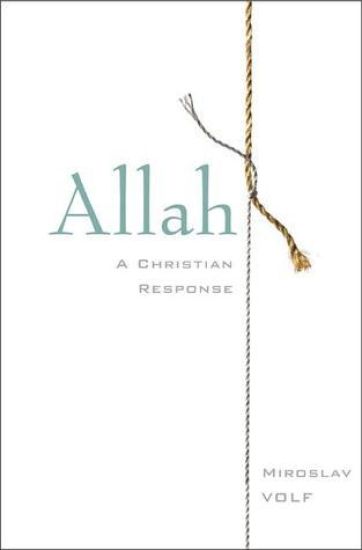
Allah

Allah

Miroslav Volf

HarperOne
2012
nidottu
From Miroslav Volf, one of the world's foremost Christian theologians--and co-teacher, along with Tony Blair, of a groundbreaking Yale University course on faith and globalization--comes Allah, a timely and provocative argument for a new pluralism between Muslims and Christians. In a penetrating exploration of every side of the issue, from New York Times headlines on terrorism to passages in the Koran and excerpts from the Gospels, Volf makes an unprecedented argument for effecting a unified understanding between Islam and Christianity. In the tradition of Seyyed Hossein Nasr's Islam in the Modern World, Volf's Allah is essential reading for students of the evolving political science of the twenty-first century.
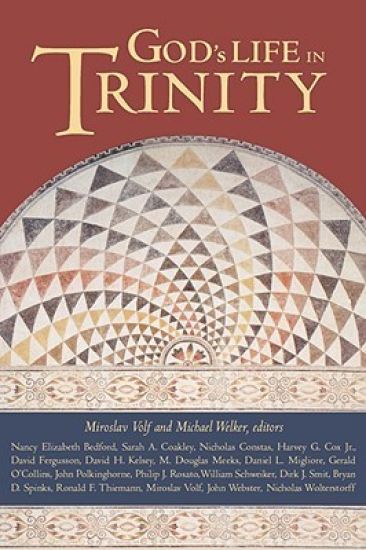
God's Life in Trinity

God's Life in Trinity

Miroslav Volf; Michael Welker

Augsburg Fortress
2006
pokkari
Jurgen Moltmann's distinctive insights in trinitarian theology - especially about the relations within God and God's presence in creation - are revolutionary for theology and set the stage for these further explorations. The esteemed group of contributors in this volume probes new ways of understanding the triune character of God. Among the contributors are: Nicholas Constas Sarah A. Coakley Harvey G. Cox Jr. Lyle Dabney David Fergusson David H. Kelsey Daniel Migliore Gerald O'Collins John Polkinghorne William Schweiker Dirk Smit Bryan D. Spinks Kathryn Tanner Ronald F. Thiemann Miroslav Volf John Webster Nicholas Wolterstorff
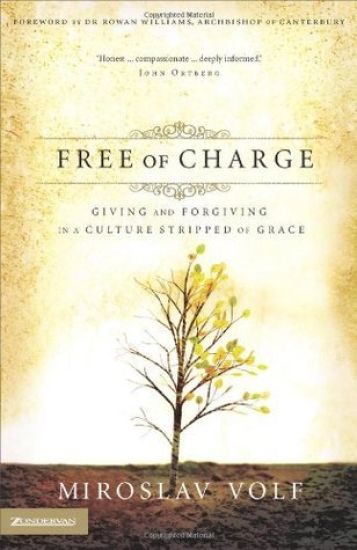
Free of Charge

Free of Charge

Miroslav Volf

Zondervan
2006
nidottu
We are at our human best when we give and forgive. But we live in a world in which it makes little sense to do either one. In our increasingly graceless culture, where can we find the motivation to give? And how do we learn to forgive when forgiving seems counterintuitive or even futile? A deeply personal yet profoundly thoughtful book, Free of Charge explores these questions--and the further questions to which they give rise--in light of God's generosity and Christ's sacrifice for us. Miroslav Volf draws from popular culture as well as from a wealth of literary and theological sources, weaving his rich reflections around the sturdy frame of Paul's vision of God's grace and Martin Luther's interpretation of that vision. Blending the best of theology and spirituality, he encourages us to echo in our own lives God's generous giving and forgiving. A fresh examination of two practices at the heart of the Christian faith--giving and forgiving--the Archbishop of Canterbury's Lenten study book for 2006 is at the same time an introduction to Christianity. Even more, it is a compelling invitation to Christian faith as a way of life." Miroslav Volf, one of the most celebrated theologians of our day, offers us a unique interweaving of intense reflection, vivid and painfully personal stories and sheer celebration of the giving God . . . I cannot remember having read a better account of what it means to say that Jesus suffered for us in our place." -- Dr. Rowan Williams, Archbishop of Canterbury