Kirjojen hintavertailu – 12 903 733 kirjaa ja 27 kauppaa

Kirjailija

Misa Izuhara

Kirjat ja teokset yhdessä paikassa: 7 kirjaa, julkaisuja vuosilta 2000–2019, suosituimpiin kuuluu The harassment and abuse of older people in the private rented sector. Vertaile teosten hintoja ja tarkista saatavuus suomalaisista kirjakaupoista.

7 kirjaa

Kirjojen julkaisuvuodet: 2000–2019.

Housing in Post-Growth Society

Housing in Post-Growth Society

Yosuke Hirayama; Misa Izuhara

Routledge
2019
nidottu
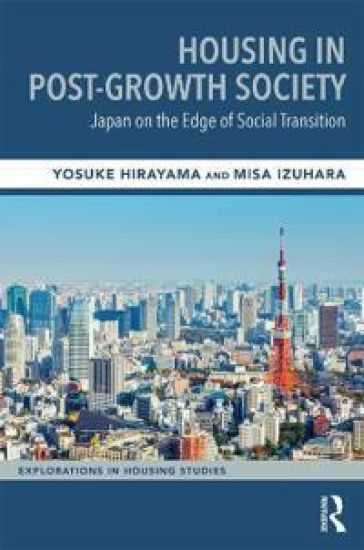
In a globalising world, many mature economies share post-growth characteristics such as low economic growth, low fertility, declining and ageing of the population and increasing social stratification. Japan stands at the forefront of such social change in the East Asian region as well as in the Global North. It is in this context of ‘post-growth society’ that housing issues are examined, using the experiences of Japan at the leading edge of social transition in the region. The post-war housing system was developed during the golden age of economy and welfare, when upward social trajectories such as increasing population, high-speed economic growth with rising real incomes, housing construction driven by high demands, increasing rates of home ownership supported by generous government subsidies generated new housing opportunities and accompanying issues. As we have entered the post-growth phase of socio-economic development, however, it requires a re-examination of such structure, policy and debates. This volume explores what roles housing plays in the reorganisation and reconstruction of economic processes, social policy development, ideology and identity, and intergenerational relations. The volume offers a greater understanding of the characteristics of post-growth society – changing demography, economy and society – in relation to housing. It considers how a definitive shift to the post-growth period has produced new housing issues including risks as well as opportunities. Through analysis of the impact on five different areas: post-crisis economy, urban and regional variations, young adults and housing pathways, fertility and housing, and ageing and housing wealth, the authors use policy and institutions as overarching analytical tools to examine the contemporary housing issues in a post-growth context. It also considers any relevance from the Japanese experiences in the wider regional and global context. This original book will be of great interest to academics and students as well as policy makers and practitioners internationally in the fields of housing studies, urban studies, social policy, sociology, political economy, comparative analysis, and East Asian Studies.
Housing in Post-Growth Society

Housing in Post-Growth Society

Yosuke Hirayama; Misa Izuhara

Routledge
2018
sidottu
In a globalising world, many mature economies share post-growth characteristics such as low economic growth, low fertility, declining and ageing of the population and increasing social stratification. Japan stands at the forefront of such social change in the East Asian region as well as in the Global North. It is in this context of ‘post-growth society’ that housing issues are examined, using the experiences of Japan at the leading edge of social transition in the region. The post-war housing system was developed during the golden age of economy and welfare, when upward social trajectories such as increasing population, high-speed economic growth with rising real incomes, housing construction driven by high demands, increasing rates of home ownership supported by generous government subsidies generated new housing opportunities and accompanying issues. As we have entered the post-growth phase of socio-economic development, however, it requires a re-examination of such structure, policy and debates. This volume explores what roles housing plays in the reorganisation and reconstruction of economic processes, social policy development, ideology and identity, and intergenerational relations. The volume offers a greater understanding of the characteristics of post-growth society – changing demography, economy and society – in relation to housing. It considers how a definitive shift to the post-growth period has produced new housing issues including risks as well as opportunities. Through analysis of the impact on five different areas: post-crisis economy, urban and regional variations, young adults and housing pathways, fertility and housing, and ageing and housing wealth, the authors use policy and institutions as overarching analytical tools to examine the contemporary housing issues in a post-growth context. It also considers any relevance from the Japanese experiences in the wider regional and global context. This original book will be of great interest to academics and students as well as policy makers and practitioners internationally in the fields of housing studies, urban studies, social policy, sociology, political economy, comparative analysis, and East Asian Studies.
Family Change and Housing in Post-War Japanese Society
This book explores the experiences of older women in post-war Japanese society through analysis of their family and housing histories. Three broad themes - family relations, welfare systems and housing - were chosen to highlight issues surrounding the changing role and position of women in the family and society. A qualitative approach is used to address a gap in the literature and to illustrate the real-life experiences of women in Japan. Many aspects of the book are comparable, or related, to studies exploring other industrial and East Asian societies and the book thus contributes to international debates surrounding housing policy, the ageing society and the changing nature of the family. It also provides useful insights into and analysis of, Japan’s society and socio-economic system.
Housing, Care and Inheritance

Housing, Care and Inheritance

Misa Izuhara

Routledge
2016
nidottu
Housing, Care and Inheritance draws on the author’s long-standing research into housing issues surrounding the ageing society, a phenomenon which is now a concern in many mature economies. If an adult child provides care for their elderly parent, should that person be rewarded? If so, should they inherit their parent’s house or a larger share of the assets? The ‘generational contract’ is often influenced by cultural norms, family traditions, social policy and housing market, so it is negotiated differently in different societies and at different times. Such generational contract is however breaking down as a result of socio-economic and demographic changes. Drawn from the two-part study funded by the UK Economic & Social Research Council, Misa Izuhara explores the myth and the changing patterns of the particular exchange of long-term care and housing assets between older parents and their adult children in Britain and Japan. Highly international and comparative in perspectives, this study addresses important sociological as well as policy questions regarding intergenerational relations involving housing wealth, long-term care, and inheritance.
Housing, Care and Inheritance

Housing, Care and Inheritance

Misa Izuhara

Routledge
2008
sidottu
Housing, Care and Inheritance draws on the author’s long-standing research into housing issues surrounding the ageing society, a phenomenon which is now a concern in many mature economies. If an adult child provides care for their elderly parent, should that person be rewarded? If so, should they inherit their parent’s house or a larger share of the assets? The ‘generational contract’ is often influenced by cultural norms, family traditions, social policy and housing market, so it is negotiated differently in different societies and at different times. Such generational contract is however breaking down as a result of socio-economic and demographic changes. Drawn from the two-part study funded by the UK Economic & Social Research Council, Misa Izuhara explores the myth and the changing patterns of the particular exchange of long-term care and housing assets between older parents and their adult children in Britain and Japan. Highly international and comparative in perspectives, this study addresses important sociological as well as policy questions regarding intergenerational relations involving housing wealth, long-term care, and inheritance.
The harassment and abuse of older people in the private rented sector

The harassment and abuse of older people in the private rented sector

Nancy Carlton; Frances Heywood; Misa Izuhara; Jenny Pannell; Tina Fear; Robin Means

Policy Press
2003
nidottu
Help the Aged funded this major study because of concerns that older people living in private rented housing were vulnerable to abuse and harassment by landlords. Drawing upon detailed research with older people, professionals and landlords in six different localities, the report provides the first major study of this important issue. The report concludes with a series of recommendations to central and local government. These include the need for changes in such areas as the overall regulation of the sector, the rights of older tenants and in the housing benefit system. The recommendations also cover the need for better training for professionals about abuse and harassment, improved age related records and the need for improved funding for advice and advocacy services. This study will be essential reading for a wide range of practitioners and academics whose interests and responsibilities span older people and their reliance upon the housing and welfare systems.
Family Change and Housing in Post-War Japanese Society

Family Change and Housing in Post-War Japanese Society

Misa Izuhara

Ashgate Publishing Limited
2000
sidottu
This book explores the experiences of older women in post-war Japanese society through analysis of their family and housing histories. Three broad themes - family relations, welfare systems and housing - were chosen to highlight issues surrounding the changing role and position of women in the family and society. A qualitative approach is used to address a gap in the literature and to illustrate the real-life experiences of women in Japan. Many aspects of the book are comparable, or related, to studies exploring other industrial and East Asian societies and the book thus contributes to international debates surrounding housing policy, the ageing society and the changing nature of the family. It also provides useful insights into and analysis of, Japan’s society and socio-economic system.