Kirjojen hintavertailu – 12 859 829 kirjaa ja 27 kauppaa

Kirjailija

Mitchell Rolls

Kirjat ja teokset yhdessä paikassa: 5 kirjaa, julkaisuja vuosilta 2010–2019, suosituimpiin kuuluu Historical Dictionary of Australian Aborigines. Vertaile teosten hintoja ja tarkista saatavuus suomalaisista kirjakaupoista.

5 kirjaa

Kirjojen julkaisuvuodet: 2010–2019.

Historical Dictionary of Australian Aborigines

Historical Dictionary of Australian Aborigines

Mitchell Rolls; Murray Johnson

Rowman Littlefield
2019
sidottu
The Aboriginal Australians first arrived on the continent at least 60,000 years ago. Indigenous Australians occupied and adapted to a range of environmental conditions from tropical estuarine habitats, densely forested regions, open plains and arid desert country, to cold, mountainous and often wet and snowy high country. Cultures adapted according to the different conditions and adapted again to environmental changes brought about by rising sea levels at the end of the last ice age. Colonization of the island continent in 1788 brought not only introduced diseases to which Aborigines had no immunity, but also heralded the commencement of enduring conflict over land and other resources. At times this conflict was violent and recognized as war. Still today the issue of reconciliation between Aborigines and the settler population remains unresolved. This second edition of Historical Dictionary of Australian Aborigines contains a chronology, an introduction, and an extensive bibliography. The dictionary section has over 300 cross-referenced entries on important personalities, politics, economy, foreign relations, religion, and culture. This book is an excellent resource for students, researchers, and anyone wanting to know more about Australian Aborigines.
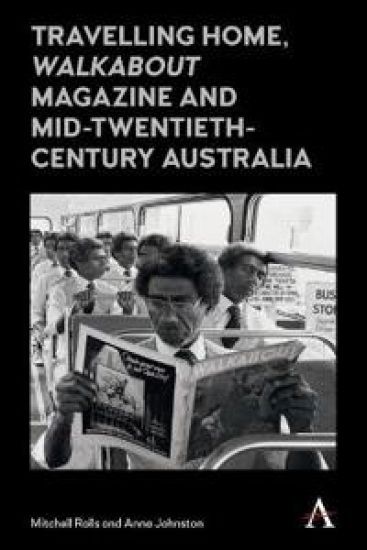
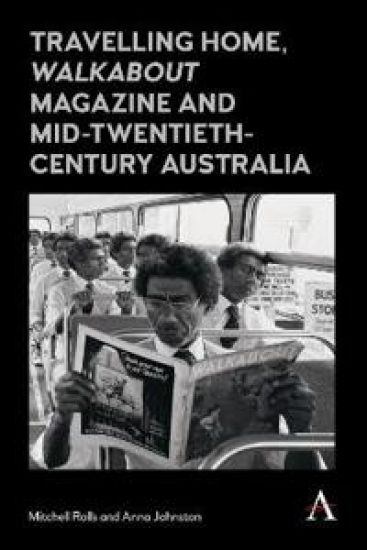
Travelling Home, 'Walkabout Magazine' and Mid-Twentieth-Century Australia
'Travelling Home' provides a detailed analysis of the contribution that the mid twentieth-century 'Walkabout' magazine made to Australia’s cultural history. Spanning five central decades of the twentieth century (1934-1974), 'Walkabout' was integral to Australia’s sense of itself as a nation. By advocating travel—both vicarious and actual—'Walkabout' encouraged settler Australians to broaden their image of the nation and its place in the Pacific region. In this way, 'Walkabout' explicitly aimed to make its readers feel at home in their country, as well as including a diverse picture of Aboriginal and Pacific cultures. Given its wide availability and distribution, together with its accessible and entertaining content, 'Walkabout' changed how Australia was perceived, and the magazine is recalled with nostalgic fondness by most if not all of its former readers. Drawing on interdisciplinary scholarship, 'Travelling Home' engages with key questions in literary, cultural, and Australian studies about national identity and modernity. The book’s diverse topics demonstrate how 'Walkabout' canvassed subtle and shifting fields of representation; as a result, this analysis produces complex and nuanced readings of Australian literary and cultural history.
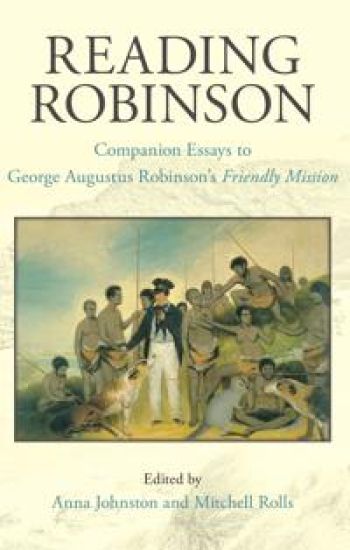
Reading Robinson

Reading Robinson

Anna Johnston; Mitchell Rolls

Monash University Publishing
2012
nidottu
This reprint - originally published by Quintus Publishing - brings together essays by leading Australian and international historians in an analysis of the monumental Friendly Mission: The Tasmanian Journals and Papers of George Augustus Robinson 1829-1834, edited by N. J. B. Plomley and republished in 2008. Until this book, Friendly Mission has rarely been considered in a context beyond the immediacy of "Van Diemen's Land" (the original European name for Tasmania). Yet, George Augustus Robinson's diverse writings constitute a body of work that typically has one set of meanings for local readers, and another for those outside its sphere of production. Robinson's texts are exemplary of the ways in which colonial texts circulated around what Alan Lester, Professor of Historical Geography at the University of Sussex, has called 'imperial networks.' Reading Robinson, while remaining cognizant of local resonances, extends Friendly Mission from parochial particularity and situates it within international contexts, both in terms of contemporary accounts of colonial/settler contact, conflict with indigenes, and current scholarship analyzing this material.
Historical Dictionary of Australian Aborigines

Historical Dictionary of Australian Aborigines

Mitchell Rolls; Murray Johnson; Henry Reynolds

Scarecrow Press
2010
sidottu
The Australian Aborigines first arrived on the continent at least 60,000 years ago. They almost certainly landed on the northwest coast by sea from the nearby islands of the Indonesian archipelago. That first arrival may have been replicated many times over. The following exploration and settlement of a vast and varied continent was a venture of heroic proportions. The new settlers had reached southern Tasmania, the point farthest from the original landfall at least 30,000 years ago. By the early 17th century, when the first European seafarers arrived in Australian waters, the Aboriginal nations were living in every part of the continent, having colonized the tropical rainforests of the north, the vast arid deserts of the interior, and the cool and damp woodlands of the southeast. The Historical Dictionary of Australian Aborigines relates the history of Australia's indigenous inhabitants from their arrival on the continent 60,000 years ago to the centuries long European colonization process starting in the 1600s to their role in today's Australia. This is done through a chronology, an introductory essay, an extensive bibliography, and over 300 cross-referenced dictionary entries on significant persons, places, events, institutions, and aspects of culture, society, economy, and politics. This book is an excellent access point for students, researchers, and anyone wanting to know more about Australian Aboriginal peoples.