Kirjojen hintavertailu – 12 903 724 kirjaa ja 27 kauppaa

Kirjailija

Mitsuo Matsushita

Kirjat ja teokset yhdessä paikassa: 4 kirjaa, julkaisuja vuosilta 1993–2017, suosituimpiin kuuluu Competition Policy in Global Trading System. Vertaile teosten hintoja ja tarkista saatavuus suomalaisista kirjakaupoista.

4 kirjaa

Kirjojen julkaisuvuodet: 1993–2017.

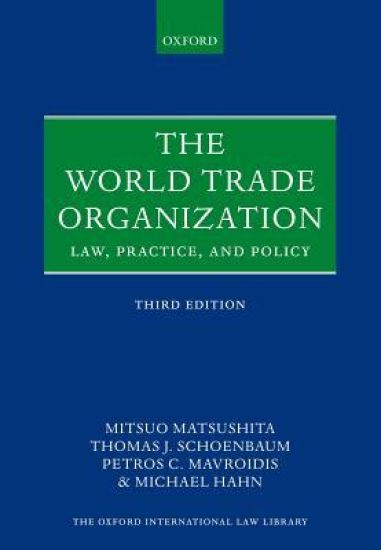
The World Trade Organization

The World Trade Organization

Mitsuo Matsushita; Thomas J. Schoenbaum; Petros C. Mavroidis; Michael Hahn

Oxford University Press
2017
nidottu
The WTO is one of the most important intergovernmental organizations in the world, yet the way in which it functions as an organization and the scope of its authority and power are still poorly understood. This comprehensively revised new edition of the acclaimed work by an outstanding team of WTO law specialists provides a complete overview of the law and practice of the WTO. The authors begin with the institutional law of the WTO (such as the sources of law and remedies of the dispute settlement system), then tackle the principal substantive obligations of the WTO regime (including tariffs, quotas, and MFN). They then move on to consider unfair trade, regional trading arrangements, and developing countries. In its final section the book deals with the consequences of globalization: first, where free trade is seen to be incompatible with environmental protection and, second, where WTO law confronts legal regimes governing issues of competition and intellectual property.
The World Trade Organization

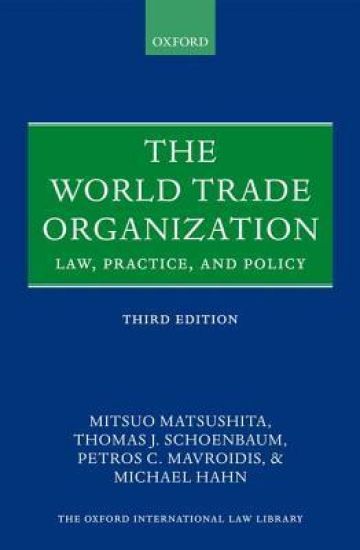
The World Trade Organization

Mitsuo Matsushita; Thomas J. Schoenbaum; Petros C. Mavroidis; Michael Hahn

Oxford University Press
2015
sidottu
The WTO is one of the most important intergovernmental organizations in the world, yet the way in which it functions as an organization and the scope of its authority and power are still poorly understood. This comprehensively revised new edition of the acclaimed work by an outstanding team of WTO law specialists provides a complete overview of the law and practice of the WTO. The authors begin with the institutional law of the WTO (such as the sources of law and remedies of the dispute settlement system), then tackle the principal substantive obligations of the WTO regime (including tariffs, quotas, and MFN). They then move on to consider unfair trade, regional trading arrangements, and developing countries. In its final section the book deals with the consequences of globalization: firstly, where free trade is seen to be incompatible with environmental protection and, secondly, where WTO law confronts legal regimes governing issues of competition and intellectual property.
Competition Policy in Global Trading System

Competition Policy in Global Trading System

Clifford Jones; Mitsuo Matsushita

Kluwer Law International
2002
sidottu
While the global trade regime has made significant strides in eliminating tariffs and other barriers to free trade, it has yet to develop a consistent and enforceable antitrust and competition policy that combats monopolies, cartels, and other private arrangements that continue to hamper equitable access to the world's goods and services. This book takes a step toward achieving this goal. Based on a conference of national authorities and leading scholars in antitrust and competition law and policy, the text presents 20 essays which together provide an in-depth assessment of achievements and impasses, as well as a variety of possible ways forward.
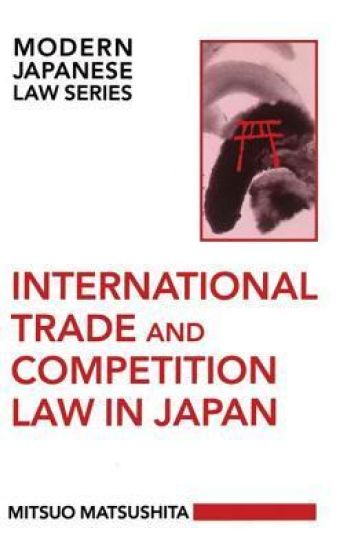
International Trade and Competition Law in Japan

International Trade and Competition Law in Japan

Mitsuo Matsushita

Oxford University Press
1993
sidottu
Modern Japanese Law Series This new series has been established to provide scholars and practitioners with a library of books which deal with contemporary issues in Japanese law, particularly in areas of law which are of importance to the international business community. It will include books on Japanese labour law, the Law of Civil Procedure, Securities Regulation, and environmental law. Two volumes containing accurate and up-to-date translations of all the major Japanese Codes (Civil and Criminal) are planned for 1994. This book analyses the means by which the Japanese government regulates business activity, principally through the use of competition or anti-monopoly laws. These laws operate both within Japan and, to a lesser extent, beyond. The book also looks at legal aspects of industrial policy as well as the legal framework of foreign trade and investment in Japan. As such it goes to the very heart of industrial and commercial life in Japan, and will be of interest to all those who are involved in doing business with Japan, as well as to their legal and financial advisers.