
Kirjailija
Mizuko Ito
Kirjat ja teokset yhdessä paikassa: 6 kirjaa, julkaisuja vuosilta 2015–2026, suosituimpiin kuuluu Youth Well-Being by Design. Vertaile teosten hintoja ja tarkista saatavuus suomalaisista kirjakaupoista.
6 kirjaa
Kirjojen julkaisuvuodet: 2015–2026.
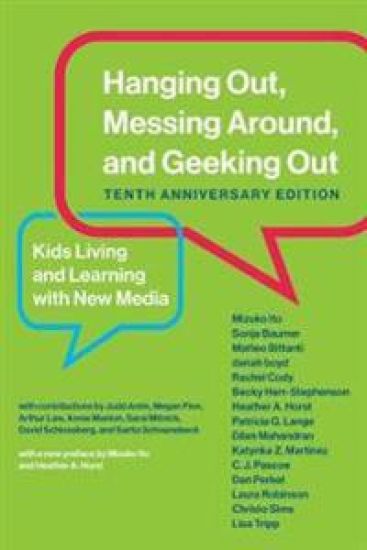
Hanging Out, Messing Around, and Geeking Out
Mizuko Ito; Sonja Baumer; Matteo Bittanti; danah boyd; Rachel Cody; Becky Herr Stephenson; Heather A. Horst; Patricia G. Lange; Dilan Mahendran; Katynka Z. Martínez; C. J. Pascoe; Dan Perkel; Laura Robinson; Christo Sims; Lisa Tripp
MIT Press
2019
pokkari
The tenth-anniversary edition of a foundational text in digital media and learning, examining new media practices that range from podcasting to online romantic breakups. Hanging Out, Messing Around, and Geeking Out, first published in 2009, has become a foundational text in the field of digital media and learning. Reporting on an ambitious three-year ethnographic investigation into how young people live and learn with new media in varied settings-at home, in after-school programs, and in online spaces-it presents a flexible and useful framework for understanding the ways that young people engage with and through online platforms: hanging out, messing around, and geeking out, otherwise known as HOMAGO. Integrating twenty-three case studies-which include Harry Potter podcasting, video-game playing, music sharing, and online romantic breakups-in a unique collaborative authorship style, Hanging Out, Messing Around, and Geeking Out combines in-depth descriptions of specific group dynamics with conceptual analysis. Since its original publication, digital learning labs in libraries and museums around the country have been designed around the HOMAGO mode and educators have created HOMAGO guidebooks and toolkits. This tenth-anniversary edition features a new introduction by Mizuko Ito and Heather Horst that discusses how digital youth culture evolved in the intervening decade, and looks at how HOMAGO has been put into practice. This book was written as a collaborative effort by members of the Digital Youth Project, a three-year research effort funded by the John D. and Catherine T. MacArthur Foundation and conducted at the University of California, Berkeley, and the University of Southern California.

Affinity Online
Mizuko Ito; Crystle Martin; Rachel Cody Pfister; Matthew H. Rafalow; Katie Salen; Amanda Wortman
New York University Press
2018
sidottu
How online affinity networks expand learning and opportunity for young people Boyband One Direction fanfiction writers, gamers who solve math problems together, Harry Potter fans who knit for a cause. Across subcultures and geographies, young fans have found each other and formed community online, learning from one another along the way. From these and other in-depth case studies of online affinity networks, Affinity Online considers how young people have found new opportunities for expanded learning in the digital age. These cases reveal the shared characteristics and unique cultures and practices of different online affinity networks, and how they support "connected learning"—learning that brings together youth interests, social activity, and accomplishment in civic, academic, and career relevant arenas. Although involvement in online communities is an established fixture of growing up in the networked age, participation in these spaces show how young people are actively taking up new media for their own engaged learning and social development. While providing a wealth of positive examples for how the online world provides new opportunities for learning, the book also examines the ways in which these communities still reproduce inequalities based on gender, race, and socioeconomic status. The book concludes with a set of concrete suggestions for how the positive learning opportunities offered by online communities could be made available to more young people, at school and at home. Affinity Online explores how online practices and networks bridge the divide between in-school and out-of-school learning, finding that online affinity networks are creating new spaces of opportunity for realizing the ideals of connected learning.
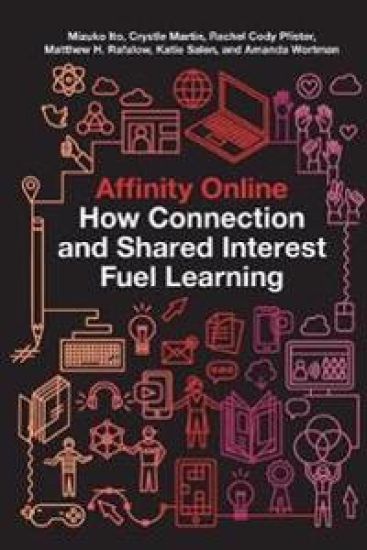
Affinity Online
Mizuko Ito; Crystle Martin; Rachel Cody Pfister; Matthew H. Rafalow; Katie Salen; Amanda Wortman
New York University Press
2018
pokkari
How online affinity networks expand learning and opportunity for young people Boyband One Direction fanfiction writers, gamers who solve math problems together, Harry Potter fans who knit for a cause. Across subcultures and geographies, young fans have found each other and formed community online, learning from one another along the way. From these and other in-depth case studies of online affinity networks, Affinity Online considers how young people have found new opportunities for expanded learning in the digital age. These cases reveal the shared characteristics and unique cultures and practices of different online affinity networks, and how they support "connected learning"—learning that brings together youth interests, social activity, and accomplishment in civic, academic, and career relevant arenas. Although involvement in online communities is an established fixture of growing up in the networked age, participation in these spaces show how young people are actively taking up new media for their own engaged learning and social development. While providing a wealth of positive examples for how the online world provides new opportunities for learning, the book also examines the ways in which these communities still reproduce inequalities based on gender, race, and socioeconomic status. The book concludes with a set of concrete suggestions for how the positive learning opportunities offered by online communities could be made available to more young people, at school and at home. Affinity Online explores how online practices and networks bridge the divide between in-school and out-of-school learning, finding that online affinity networks are creating new spaces of opportunity for realizing the ideals of connected learning.
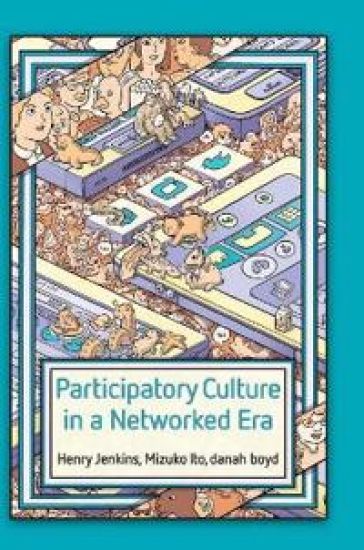
Participatory Culture in a Networked Era
Henry Jenkins; Mizuko Ito; danah boyd
Polity Press
2015
sidottu
In the last two decades, both the conception and the practice of participatory culture have been transformed by the new affordances enabled by digital, networked, and mobile technologies. This exciting new book explores that transformation by bringing together three leading figures in conversation. Jenkins, Ito and boyd examine the ways in which our personal and professional lives are shaped by experiences interacting with and around emerging media. Stressing the social and cultural contexts of participation, the authors describe the process of diversification and mainstreaming that has transformed participatory culture. They advocate a move beyond individualized personal expression and argue for an ethos of “doing it together” in addition to “doing it yourself.” Participatory Culture in a Networked Era will interest students and scholars of digital media and their impact on society and will engage readers in a broader dialogue and conversation about their own participatory practices in this digital age.
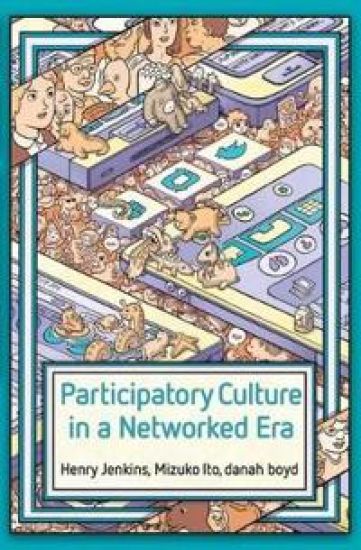
Participatory Culture in a Networked Era
Henry Jenkins; Mizuko Ito; danah boyd
Polity Press
2015
nidottu
In the last two decades, both the conception and the practice of participatory culture have been transformed by the new affordances enabled by digital, networked, and mobile technologies. This exciting new book explores that transformation by bringing together three leading figures in conversation. Jenkins, Ito and boyd examine the ways in which our personal and professional lives are shaped by experiences interacting with and around emerging media. Stressing the social and cultural contexts of participation, the authors describe the process of diversification and mainstreaming that has transformed participatory culture. They advocate a move beyond individualized personal expression and argue for an ethos of “doing it together” in addition to “doing it yourself.” Participatory Culture in a Networked Era will interest students and scholars of digital media and their impact on society and will engage readers in a broader dialogue and conversation about their own participatory practices in this digital age.