Kirjojen hintavertailu – 12 859 818 kirjaa ja 27 kauppaa

Kirjailija

Mladen Dolar

Kirjat ja teokset yhdessä paikassa: 15 kirjaa, julkaisuja vuosilta 2001–2026, suosituimpiin kuuluu Lamella: Tidsskrift for teoretisk psykoanalyse #10. Vertaile teosten hintoja ja tarkista saatavuus suomalaisista kirjakaupoista.

15 kirjaa

Kirjojen julkaisuvuodet: 2001–2026.

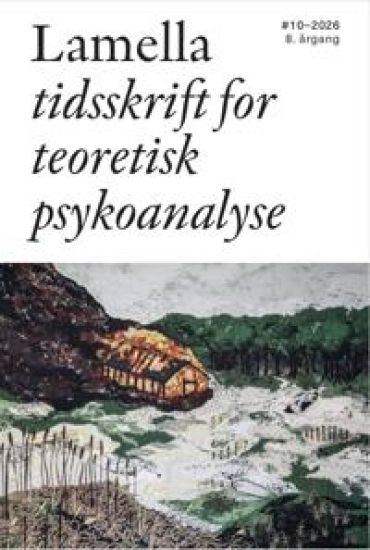
Lamella: Tidsskrift for teoretisk psykoanalyse #10

Lamella: Tidsskrift for teoretisk psykoanalyse #10

Malte Bøgelund Agerby; Brian Benjamin Hansen; Søren Larsen; Jakob Rosendal; Lilian Munk Rösing; Mladen Dolar; Alenka Zupancic; Anders Ruby; Joona Taipale; Pablo Lerner; Marie Boesgaard Bendtsen; Jakob Staberg; Henrik Klasson

-
2026
pokkari
Lamella is the Latin name for a thin, flat plate or membrane. And it is Lacan’s suggestive metaphor for the drive. Lamella is the immortal principle behind the mortal appearances, that which one cannot get rid of, that which keeps returning, the extra little piece of je ne sais quoi that cannot be boiled, burned, chopped up, or gnawed through – like a piece of aluminum foil that cannot be broken down, a stain that cannot be washed away, a turd that cannot be flushed. Lamella is also a journal of theoretical psychoanalysis.

Rumors

Rumors

Mladen Dolar

JOHN WILEY AND SONS LTD
2024
nidottu

Halvin toimitettuna 20,10 €

When Socrates was standing before the Athenian tribunal in 399 BC, he said in his defence that the opponents he feared most were the invisible ones, those who had been spreading rumors against him for years but none of whom were being brought to court – it was like fighting shadows. The moment was iconic: Socrates, the harbinger of logos and true knowledge, was eventually defeated by rumors and mendacious slander. Where does the strange power of rumors come from? Everyone knows that rumors are unfounded and based on thin air, but still they pass them on: rumors spread, and what appeared as a small breeze can grow into a mighty whirlwind and produce serious effects, ruin people’s lives and change the course of events. This book scrutinizes the mysterious power of rumors and seeks to analyse it philosophically, examining along the way some key moments of our cultural history concerning rumors, from Shakespeare and Cervantes to Gogol and Kafka. It also underlines the fact that, although rumors are as old as humankind, the advent of the internet and social media has raised the spreading of rumors to an entirely new level, to the point where we could speak of the rumorization of the social. The more communication there is, the more the social fabric threatens to fall apart – and the more urgent it becomes to find strategies to counteract this.
Rumors

Rumors

Mladen Dolar

JOHN WILEY AND SONS LTD
2024
sidottu
When Socrates was standing before the Athenian tribunal in 399 BC, he said in his defence that the opponents he feared most were the invisible ones, those who had been spreading rumors against him for years but none of whom were being brought to court – it was like fighting shadows. The moment was iconic: Socrates, the harbinger of logos and true knowledge, was eventually defeated by rumors and mendacious slander. Where does the strange power of rumors come from? Everyone knows that rumors are unfounded and based on thin air, but still they pass them on: rumors spread, and what appeared as a small breeze can grow into a mighty whirlwind and produce serious effects, ruin people’s lives and change the course of events. This book scrutinizes the mysterious power of rumors and seeks to analyse it philosophically, examining along the way some key moments of our cultural history concerning rumors, from Shakespeare and Cervantes to Gogol and Kafka. It also underlines the fact that, although rumors are as old as humankind, the advent of the internet and social media has raised the spreading of rumors to an entirely new level, to the point where we could speak of the rumorization of the social. The more communication there is, the more the social fabric threatens to fall apart – and the more urgent it becomes to find strategies to counteract this.
Om sladder og rygter

Om sladder og rygter

Mladen Dolar

-
2024
nidottu
Rygtet siger, sladderen går, men hvordan bliver en lille fjer til ti høns? I dette appetitlige og veloplagte essay sporer den slovenske filosof og psykoanalytiker Mladen Dolar rygternes og sladderens ophav til selve sproget. “I begyndelsen var ordet”, begynder Johannesevangeliet, men måske bør denne grundlæggende sentens i stedet oversættes med “I begyndelsen var rygtet”. Mennesket er ikke det eneste dyr, der har sprog, men det er det eneste dyr, der kan sladre. Gennem læsninger af kunst, politik og videnskab skitserer Dolar en original og tankevækkende filosofi om rygter. Han fælder ikke nogen moralsk dom over dem, som spreder dem, men tager i stedet udgangspunkt i, hvorfor rygter synes at sprede sig selv. Det bliver til et underholdende og sprudlende lynkursus i rygternes kulturhistorie fra Sokrates til Shakespeare, fra Cervantes til Kafka, og med Freud, Lacan og Hegel som vejvisere.
O skuposti i svjazannykh s nej veschakh: tema i variatsii

O skuposti i svjazannykh s nej veschakh: tema i variatsii

Mladen Dolar

Izdatelstvo Ivana Limbakha
2021
sidottu
Skupost s nezapamjatnykh vremen schitalas odnim iz glavnykh grekhov, v to zhe vremja ej vsegda bylo prisusche nechto opasno blizkoe k samoj prirode chelovecheskogo zhelanija, vnutrennjaja sposobnost ego izvraschenija. Sleduet li sokhranjat i nakaplivat dlja sebja odnogo ili delitsja s drugimi? Etot vybor lezhit v osnove ljubogo obschestva. Avtor predlagaet psikhoanaliticheskij vzgljad na problemu, issleduet kulturnuju istoriju obraza skuptsa, analiziruet razvitie skuposti na fone podema i rastsveta kapitalizma. Mladen Dolar (r. 1951) - slovenskij filosof, professor Ljubljanskogo universiteta. Odin iz osnovatelej Ljubljanskoj lakanianskoj shkoly. Osnovnye napravlenija ego issledovanij - psikhoanaliz, sovremennaja frantsuzskaja filosofija, nemetskij idealizm i teorija iskusstva. On avtor chetyrnadtsati knig i bolee sta pjatidesjati statej. Kniga "Golos i nichego bolshe" (2006) perevedena na desjat jazykov, v tom chisle na russkij. Kniga "O skuposti i svjazannykh s nej veschakh" byla dopolnena avtorom v perspektive ee perevoda na russkij jazyk i potomu otlichaetsja ot originalnogo izdanija 2002 goda. Perevodchik: Krasovets A.
The Voice as Something More

The Voice as Something More

Mladen Dolar

University of Chicago Press
2019
sidottu
In the contemporary world, voices are caught up in fundamentally different realms of discourse, practice, and culture: between sounding and nonsounding, material and nonmaterial, literal and metaphorical. In The Voice as Something More, Martha Feldman and Judith Zeitlin tackle these paradoxes with a bold and rigorous collection of essays that look at voice as both object of desire and material object. Using Mladen Dolar's influential A Voice and Nothing More as a reference point, The Voice as Something More reorients Dolar's psychoanalytic analysis around the material dimensions of voices--their physicality and timbre, the fleshiness of their mechanisms, the veils that hide them, and the devices that enhance and distort them. Throughout, the essays put the body back in voice. Ending with a new essay by Dolar that offers reflections on these vocal aesthetics and paradoxes, this authoritative, multidisciplinary collection, ranging from Europe and the Americas to East Asia, from classics and music to film and literature, will serve as an essential entry point for scholars and students who are thinking toward materiality.
The Voice as Something More

The Voice as Something More

Mladen Dolar

University of Chicago Press
2019
pokkari
In the contemporary world, voices are caught up in fundamentally different realms of discourse, practice, and culture: between sounding and nonsounding, material and nonmaterial, literal and metaphorical. In The Voice as Something More, Martha Feldman and Judith Zeitlin tackle these paradoxes with a bold and rigorous collection of essays that look at voice as both object of desire and material object. Using Mladen Dolar's influential A Voice and Nothing More as a reference point, The Voice as Something More reorients Dolar's psychoanalytic analysis around the material dimensions of voices--their physicality and timbre, the fleshiness of their mechanisms, the veils that hide them, and the devices that enhance and distort them. Throughout, the essays put the body back in voice. Ending with a new essay by Dolar that offers reflections on these vocal aesthetics and paradoxes, this authoritative, multidisciplinary collection, ranging from Europe and the Americas to East Asia, from classics and music to film and literature, will serve as an essential entry point for scholars and students who are thinking toward materiality.
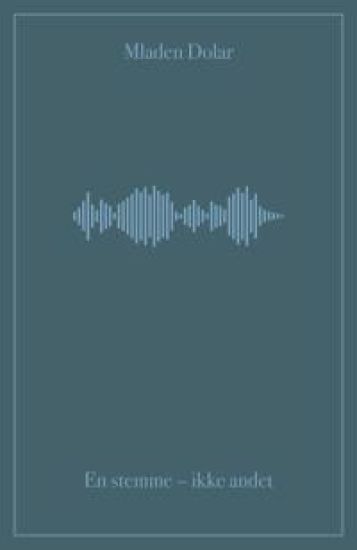
En stemme - ikke andet

En stemme - ikke andet

Mladen Dolar

Forlaget Mindspace
2019
pokkari
”Mladen Dolars bog er mærkværdigt underholdende, sådan som kun store intellektuelle fortællinger kan være det. Man opdager undervejs, at stemmen er et helt centralt filosofisk spørgsmål og en nøgle til genfortolkninger af etik, æstetik, politik og metafysik. Stemmen forener kroppen og sproget, ligesom koglekirtlen gjorde det hos Descartes, men med helt andre konsekvenser.” – Henrik Jøker Bjerre, filosof Hvad er en stemme for noget? Noget, vi kan beundre for dens skønhed? Noget, der overbringer mening fra en person til en anden? Er stemmen den bro, der forbinder den enkelte med de andre, naturen med kulturen, kroppen med sprog? Er stemmen ligefrem løftestang for vores tænkning? En stemme – ikke andet er både en teori om stemmen og en hæsblæsende tur op igennem idehistoriens hav af stemmer, fra de gamle grækere til den lacanianske psykoanalyse, vidende og vittigt fortalt af Mladen Dolar, hvilket gør bogen interessant for alle, der beskæftiger sig med kommunikation, filosofi, psykoanalyse, tale, retorik eller sang. Mladen Dolar (født 1951) er slovensk filosof, psykoanalytiker, kulturteoretiker og film- og musikkritiker. Dolar tilhører den såkaldte slovenske skole, der også tæller Slavoj Žižek og Alenka Zupancic, der begge som Dolar arbejder med Jacques Lacans ideer om psykoanalysen i forhold til populærkulturen.
What's in a Name?

What's in a Name?

Mladen Dolar

Lulu.com
2014
pokkari
A name always bears a symbolic mandate. As soon as false pretenders appear, questions arise as to the symbolic mandate's power, its validity and justification. Names refer to genealogies, yet thereby always involve a certain distribution of power. To arrogate a name is to arrogate power. There is a claim to power in every name, in assuming the social role that goes with it, in transmitting symbolic legacy, in social impact, in genealogical inscription. The story of false pretenders entails the moment of bemusement - one's feeling that, really, one is always a false pretender, as there's no way one could inhabit a name legitimately, naturally, feeling fully justified bearing the name one bears. No sufficient grounds can ever substantiate it; no name is ever covered by the Leibnizian principle of sufficient reason. The feeling of being an impostor, false pretender to a name, isn't personal sentiment or idiosyncrasy; it's a structural feeling accompanying names - their shadow and effect.
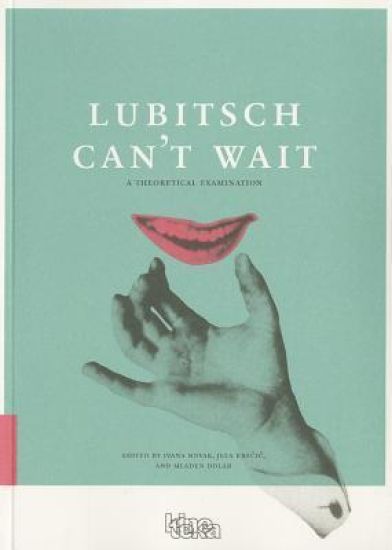
Lubitsch Can't Wait – A Collection of Ten Philosophical Discussions on Ernst Lubitsch's Film Comedy
Ernst Lubitsch, the great author of Hollywood comedy and pioneer of such genres as the sophisticated romantic comedy, the musical, and the screwball comedy, is a relatively overlooked figure in mainstream film theory. In this collection, renowned world thinkers and philosophers position Lubitsch as the premium director of subversive cinema, reflecting on his attitude toward love and politics which correspond to contemporary issues. Followers of the Hegelian, Marxist, Freudian, Lacanian, and Deleuzian traditions discuss thephilosophical, political, and ethical dimensions of Lubitsch's late Hollywood work. They focus on love as stealing, the ethics of style, and comedy in times of austerity in the director's masterpiece, Trouble in Paradise (1932); answer the question of why comedy is always polygamous; discuss links between masochism, melancholia, and ideology in Ninotchka(1939); celebrate the ethical gesture of comedy in To Be or Not to Be (1942); and promote the revolutionary comic spirit of Lubitsch's last directorial effort, Cluny Brown (1946). These essays' witty, subversive, and provocative approaches highlight Lubitsch's unique understanding of love, sex, comedy, and politics and idiosyncratic conception of totalitarian"nightmares" and capitalistic "paradise," countering the non-dialectic and politically correct discourse of mainstream and independent cinema today.
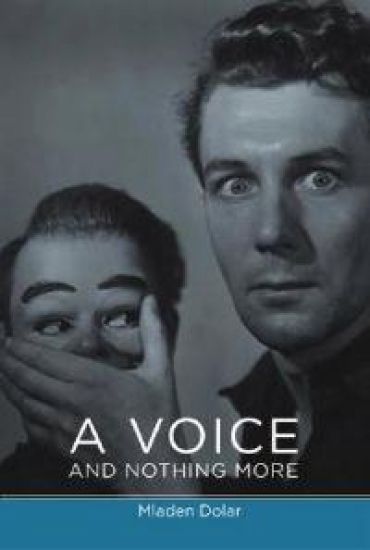
A Voice and Nothing More

A Voice and Nothing More

Mladen Dolar

MIT Press
2006
pokkari

Halvin toimitettuna 47,10 €

The voice was not a major philosophical topic until the 1960s, when Derrida and Lacan separately proposed it as a central theoretical concern. Here, Dolar goes beyond Derrida's idea of "phonocentrism" and revives and develops Lacan's claim that the voiceis one of the paramount embodiments of the psychoanalytic object. He proposes that, apart from the uses of the voice as a vehicle of meaning and as a source of aesthetic admiration, there is a third level of understanding: the voice as an object that canbe seen as the lever of thought. He investigates the object voice on a number of different levels--linguistics, metaphysics, ethics (the voice of conscience), the paradoxical relation between the voice and the body, the politics of the voice--and finallyscrutinizes the uses of the voice in Freud and Kafka. With this foundational work, Dolar gives us a philosophically grounded theory of the voice as a Lacanian object-cause.--From publisher description.
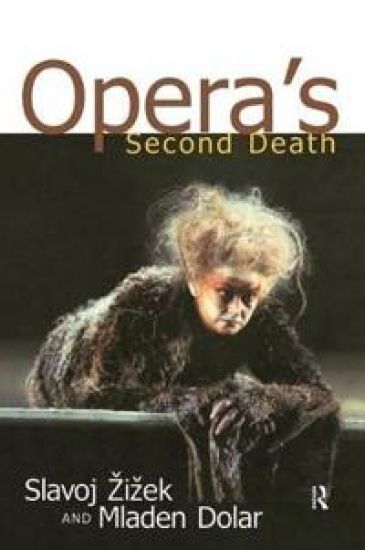
Opera's Second Death

Opera's Second Death

Slavoj Zizek; Mladen Dolar

Routledge
2001
sidottu
Opera's Second Death is a passionate exploration of opera - the genre, its masterpieces, and the nature of death. Using a dazzling array of tools, Slavoj Zizek and coauthor Mladen Dolar explore the strange compulsions that overpower characters in Mozart and Wagner, as well as our own desires to die and to go to the opera.
Opera's Second Death

Opera's Second Death

Slavoj Zizek; Mladen Dolar

Routledge
2001
nidottu
Opera's Second Death is a passionate exploration of opera - the genre, its masterpieces, and the nature of death. Using a dazzling array of tools, Slavoj Zizek and coauthor Mladen Dolar explore the strange compulsions that overpower characters in Mozart and Wagner, as well as our own desires to die and to go to the opera.