Kirjojen hintavertailu – 12 903 724 kirjaa ja 27 kauppaa

Kirjailija

Mo Yee Lee

Kirjat ja teokset yhdessä paikassa: 7 kirjaa, julkaisuja vuosilta 2003–2020, suosituimpiin kuuluu Integrative Family and Systems Treatment (I-FAST). Vertaile teosten hintoja ja tarkista saatavuus suomalaisista kirjakaupoista.

7 kirjaa

Kirjojen julkaisuvuodet: 2003–2020.

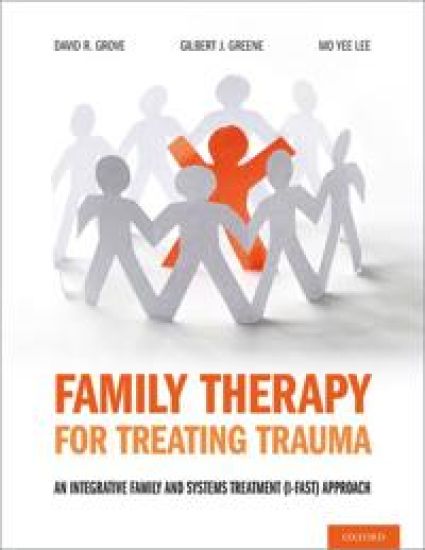
Family Therapy for Treating Trauma

Family Therapy for Treating Trauma

David R. Grove; Gilbert J. Greene; Mo Yee Lee

Oxford University Press Inc
2020
nidottu
Trauma can result in a variety of symptoms and problems such as behavioral disorders, emotional dysregulation, sleep disturbances, recurring nightmares, intrusive thoughts, and learning and academic challenges. Children and adolescents who have posttraumatic stress disorder are usually presented to therapists in one of four clinical situations: (1) the traumatized child and parents request trauma-focused therapy, (2) the child with trauma history refuses treatment, (3) a parent is impaired by their own trauma history but does not want to receive treatment, (4) a child has experienced trauma but the parent wants to focus on a behavioral issue and symptoms rather than the trauma. Family Therapy for Treating Trauma offers a stand-alone family therapy approach for trauma survivors and provides a cross-culturally competent family treatment framework for working with trauma. It outlines both how to assess family patterns that reinforce or exacerbate effects of trauma and how to mobilize the healing power of family relationships to moderate or resolve effects of trauma. Via an integrative approach, the book offers flexible ways to adapt to client choices so as to enhance difficult to engage clients and families. It serves as a resource for professional audiences and can be offered as a text for courses on both family therapy and trauma treatment.
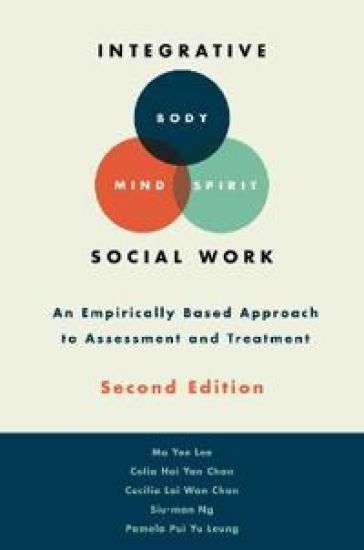
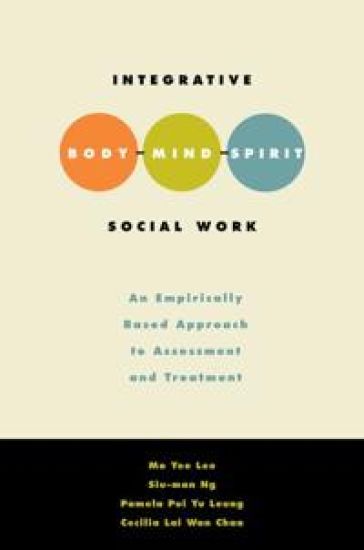
Integrative Body-Mind-Spirit Social Work

Integrative Body-Mind-Spirit Social Work

Mo Yee Lee; Celia Hoi Yan Chan; Cecilia Lai Wan Chan; Siu-man Ng; Pamela Pui Yu Leung

Oxford University Press Inc
2018
sidottu
Integrative therapy focuses on the mind-body-spirit relationship, recognizes spirituality as a fundamental domain of human existence, acknowledges and utilizes the mind's power as well as the body's, and reaches beyond self-actualization or symptom reduction to broaden a perception of self that connects individuals to a larger sense of themselves and to their communities. When it was published in 2009, Integrative Body-Mind-Spirit Social Work was the first book to strongly connect Western therapeutic techniques with Eastern philosophy and practices, while also providing a comprehensive and pragmatic agenda for social work, and mental health professionals. This breakthrough text, written by a cast of highly regarded researchers from both Asia and America, presented a holistic, therapeutic approach that ties Eastern philosophy and practical techniques to Western forms of therapy in order to help bring about positive, transformative changes in individuals and families. This second features a major reorganization of Part III: Applications and Treatment Effectiveness, renamed to "Evidence-informed Translational Practice and Evidence." Based on systematic reviews of Integrative body-mind-spirit practices, Part III provides a "resource guide" of different types of integrative practices used in diverse health and mental health conditions. A new companion website includes streaming video clips showing demonstrations of the BMS techniques described in the book and worksheets and client resources/handouts. Here, the authors provide a pragmatic, step-by-step description of assessment and treatment techniques that employ an integrative, holistic perspective. They begin by establishing the conceptual framework of integrative body-mind-spirit social work, then expertly describe, step-by-step, assessment and treatment techniques that utilize integrative and holistic perspectives. Numerous case studies demonstrate the approach in action, such as one with breast cancer patients who participated in body-mind-spirit and social support groups and another in which trauma survivors used meditation to get onto a path of healing. These examples provide solid empirical evidence that integrative body-mind-spirit social work is indeed a practical therapeutic approach in bringing about tangible changes in clients. The authors also discuss ethical issues and give tips for learning integrative body-mind-spirit social work. Professionals in social work, psychology, counseling, and nursing, as well as graduate students in courses on integral, alternative, or complementary clinical practice will find this a much-needed resource that complements the growing interest in alternatives to traditional Western psychotherapy.
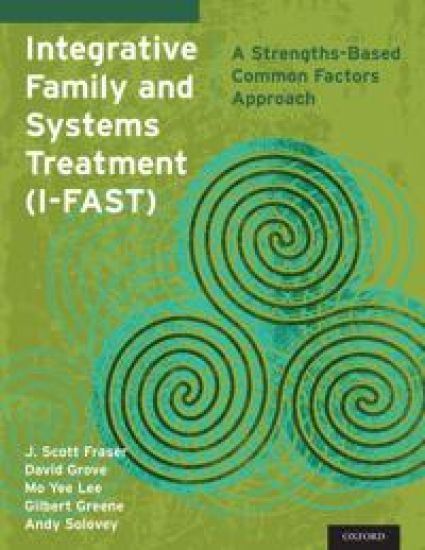
Integrative Family and Systems Treatment (I-FAST)

Integrative Family and Systems Treatment (I-FAST)

J. Scott Fraser; David Grove; Mo Yee Lee; Gilbert Greene; Andy Solovey

Oxford University Press Inc
2014
nidottu
Funders of mental health services to youth and families have increasingly required providers to use treatments deemed to be "evidence-based." There are several evidence-based family treatment (EBFT) approaches found to be effective with the same types of presenting problems and populations. All of these EBFTs claim to be based on similar theoretical approaches and have specified treatment protocols that providers must follow to be faithful to the model. These EBFTS are expensive for agencies to establish and maintain. Many agencies that initially adopted one of these EBFTs later de-adopted it because they could not sustain it when billing Medicaid is the only way to pay for such services. Meta-analyses of treatment outcome studies have found that various theoretical approaches to therapy are effective but no one approach is more effective than any other. What accounts for client improvement is not the specific treatment approach but rather the factors they all have in common. To provide an effective, affordable, and flexible approach to family treatment the authors of this book developed and have conducted researched on an approach they call Integrative Family and Systems Treatment (I-FAST). I-FAST is a meta-model organized around the common factors to family treatment. Such a model does not require practitioners to learn a completely new way to provide treatment but rather it builds on and incorporates the clinical strengths and skills they already possess. This book is a manual for how to faithfully and flexibly provide I-FAST. A manual for a meta-model to treatment based on the common factors has never been provided. This book provides clear guidelines illustrated by cases examples for not only how to provide I-FAST but also how to teach and supervise it as well as how to integrate I-FAST with the rest of an agency's services and programs.
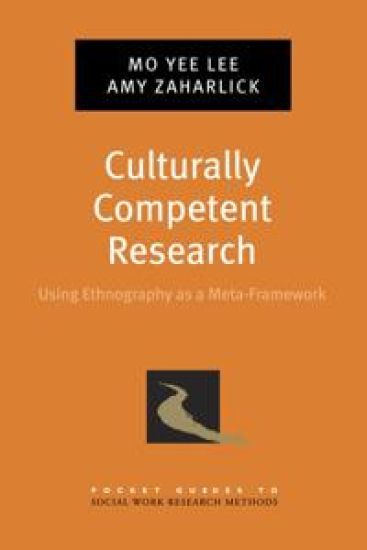
Culturally Competent Research

Culturally Competent Research

Mo Yee Lee; Amy Zaharlick

Oxford University Press Inc
2013
nidottu
With the changing demographic landscape of American society, there has been a steady increase in studies and research on diverse populations and groups. However, it is not uncommon for these studies to be affected by methodological problems, including but not limited to the problems of overgeneralization, misuse of measurements, misinterpretation of findings, and the interpretation of differences not as diversity but as deficiencies. Simply put, the application of conventional research strategies with a different population does not qualify a study as culturally competent research. This pocket guide adopts ethnography as a meta-framework for conducting culturally competent research. This suggests the following components of culturally competent research: (1) a collaborative social relationship with the study group and community, (2) use of firsthand, long-term participant observation, (3) use of self as research instrument, (4) researcher as learner, (5) a contextual view of phenomena, (6) a holistic perspective, (7) an interactive-reactive research process, (8) a cross-cultural frame of reference, and (9) a spirit of discovery. Each phase of research is described and incorporated throughout the process, from framing and designing the study; to data collection, management, and analysis; to final analysis and report writing; and to dissemination to a variety of audiences. With a practical, step-by-step approach, this book provides social work researchers, doctoral students, and professionals with a model for conducting culturally competent research with and close to the lived experience of diverse populations and groups.
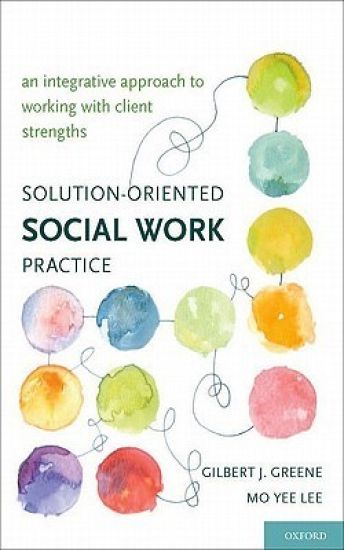
Solution-Oriented Social Work Practice

Solution-Oriented Social Work Practice

Gilbert J. Greene; Mo Yee Lee

Oxford University Press Inc
2011
sidottu
Too often in practice, there is a tendency to pathologize clients, requiring a diagnosis as part of the helping relationship. Suppose, however, that most of the client problems that social workers encounter have more to do with the vagaries of life and not with what clients are doing wrong. This powerful idea is the philosophy behind the strengths-based approaches to social work. This groundbreaking practice handbook takes this concept one step further, combining the different strengths-based approaches into an overarching model of solution-oriented social work for greater impact. The strengths perspective emphasizes client strengths, goal-setting, and a shared definition of positive outcome. Solution-focused therapy approaches ongoing problems when they have temporarily abated, amplifying exceptions as solutions. This natural but rarely explored pairing is one component in the challenging and effective practice framework presented here by the authors, two seasoned practitioners with over 50 years of combined experience. By integrating the most useful aspects of the major approaches, a step-by-step plan for action emerges. With this text in hand, you will: - Integrate elements from the strengths perspective, solution-focused therapy, narrative therapy, and the strategic therapy of the Mental Research Institute (the MRI approach) into an effective and eclectic framework - Build and practice your skills using case examples, transcripts, and practical advice - Equip yourself with the tools you need to emphasize clients' strengths - Challenge the diagnosis-first medical model of behavioral health care - Collaborate with clients to get past thinking (first-order change), and more to acting "outside the box" (second-order change) - Learn to work with a wide variety of clients, including individuals, groups, and families; involuntary clients; clients with severe mental illness; and clients in crisis For any student or practitioner interested in working with clients towards collaborative and empowering change, this is the essential text.
Integrative Body Mind Spirit Social Work

Integrative Body Mind Spirit Social Work

Mo Yee Lee; Cecilia Chan; Siu-Man Ng; Pamela Leung

Oxford University Press Inc
2009
sidottu
In recent years, interest in non-Western curative techniques among Americans has grown by leaps and bounds. Integrative Body-Mind-Spirit Social Work is the first book to strongly connect Western therapeutic techniques with Eastern philosophy and practices, while also providing a comprehensive and pragmatic agenda for social work, and mental health professionals. This breakthrough text, written by a cast of highly regarded researchers from both Asia and America, presents a holistic, therapeutic approach that ties Eastern philosophy and practical techniques to Western forms of therapy in order to help bring about positive, transformative changes in individuals and families. Integrative therapy focuses on the mind-body-spirit relationship, recognizes spirituality as a fundamental domain of human existence, acknowledges and utilizes the mind's power as well as the body's, and reaches beyond self-actualization or symptom reduction to broaden a perception of self that connects individuals to a larger sense of themselves and to their communities. Here, the authors provide a pragmatic, step-by-step description of assessment and treatment techniques that employ an integrative, holistic perspective. They begin by establishing the conceptual framework of integrative body-mind-spirit social work, then expertly describe, step-by-step, assessment and treatment techniques that utilize integrative and holistic perspectives. Several case studies demonstrate the approach in action, such as one with breast cancer patients who participated in body-mind-spirit and social support groups and another in which trauma survivors used meditation to get onto a path of healing. These examples provide solid empirical evidence that integrative body-mind-spirit social work is indeed a practical therapeutic approach in bringing about tangible changes in clients. The authors also discuss ethical issues and give tips for learning integrative body-mind-spirit social work. Professionals in social work, psychology, counseling, and nursing, as well as graduate students in courses on integral, alternative, or complementary clinical practice will find this a much-needed resource that complements the growing interest in alternatives to traditional Western psychotherapy.
Solution-Focused Treatment of Domestic Violence Offenders

Solution-Focused Treatment of Domestic Violence Offenders

Mo Yee Lee; John Sebold; Adriana Uken

Oxford University Press Inc
2003
sidottu
Every fifteen seconds someone commits a crime of domestic violence in the United States, and most violators will be court-mandated to receive group treatment. Outcome studies of traditional treatment programs (those with confrontational or educational approaches) indicate high rates of dropping out and low effectiveness, lending urgency to the need to find an alternative method. This book describes a cutting-edge treatment approach that creates effective, positive changes in domestic violence offenders. Solution-focused therapy focuses on holding offenders accountable and responsible for building solutions, rather than emphasizing their problems and deficits. By focusing on "solution-talk" instead of "problem-talk," clients are assisted in developing useful goals and solution behaviors that are then amplified, supported, and reinforced through a solution-building process. The book will be of great interest to professionals and graduate students in social work, psychology, and counseling.