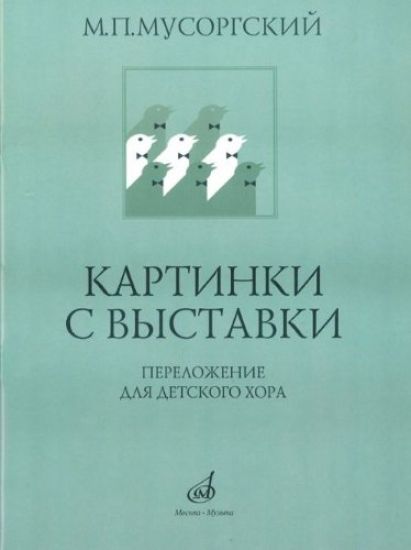
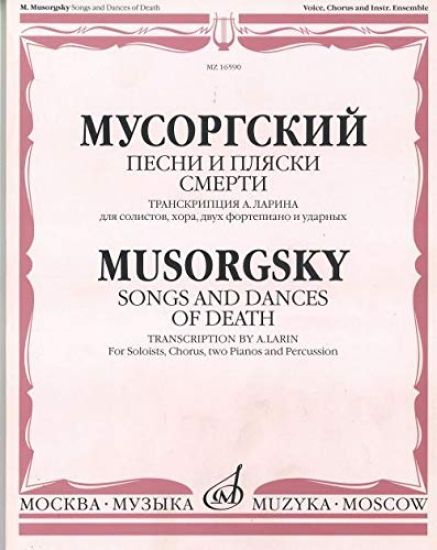
Aleksey L'vovich LARIN, Honoured Arts Worker, member of the Union of Composers of Russia, prize-winner of several international composers' competitions (Musica Mundi, Germany, 1997; 'Classical Heritage', Russia, 1999Jihlava, Czechia, 2000), was born in 1954 in Saratov. Graduated from the Moscow Boys' Chapel (1971), Gnesin Musical Pedagogical Institute (GMPI, 1976, composition class of N. Peyko), postgraduate courses at GMPI (1979). Now he is Professor of the latter institution, renamed in Russian Gnesin Academy of Music, and Honorary Visiting Professor of Korea University. The scope of A Larin's work is large. He is author of orchestral and vocal-orchestral scores (Poem, Symphony, suite A Summer in Mitrofanovo Village', tableau 'The Birth of a City1, 'Praise to the Academy', etc), choral compositions (an oratorio, seven cantatas, choral concertos and cycles), compositions for Russian folk orchestra ('Till the Cocks Crow for the Third Time', 'Concerto-Bylina', etc) and for wind band ('Russian Fantasy*), chamber compositions, works for Children, music for movies, etc. Aleksey Larin participates in the performances of his own music as pianist, organist, conductor, and member of a chorus. His works appear in the concert programs of such renowned performers as V. Fedoseev, K. Orbelian, A Vedernikov, V. Pon'kin, B. Ungrangsee, V. Minin, G. Dmitryak, V. Sudakov, N. Nekrasov, A Poletaev, V. Matorin, M. Shaposhnikova, and many others. In 1989 Aleksey Larin turned to one of Modest Musorgsky's most important work, the vocal cycle Songs and Dances of Death. As he himself confessed, 'at first I did not dare to touch the legendary cycle. And this was not only because of its fame. Would the sound of chorus be appropriate there? Wouldn't the result be a trivial arrangement? Any good transcription - from Liszt's paraphrases to the Carmen Suite - provides a new quality; it is like a poetic rendering rather than a word-for-word translation. Only later I felt that the cycle's epic range and the richness of its content may be expressed not only by means of its original (chamber) or symphonic sound (remember the orchestrations made by D. Shostakovich and others): the choral texture might impart to the many-sided image of Death some new, perhaps unexpected colours.'In Larin's transcription, the work by Mussorgsky sounds in a new, impressive and vibrant way. ContentsLullabySerenadeTrepakThe Field-Marshal