Kirjojen hintavertailu – 12 859 829 kirjaa ja 27 kauppaa

Kirjailija

Mohammad Anis

Kirjat ja teokset yhdessä paikassa: 5 kirjaa, julkaisuja vuosilta 2012–2024, suosituimpiin kuuluu In Vitro Propagation and Secondary Metabolite Production from Medicinal Plants. Vertaile teosten hintoja ja tarkista saatavuus suomalaisista kirjakaupoista.

5 kirjaa

Kirjojen julkaisuvuodet: 2012–2024.

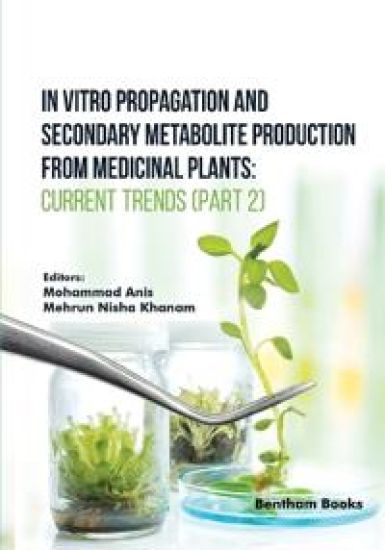
In Vitro Propagation and Secondary Metabolite Production from Medicinal Plants
This book is a comprehensive review of secondary metabolite production from plant tissue culture. The editors have compiled 12 meticulously organized chapters that provide the relevant theoretical and practical frameworks in this subject using empirical research findings. The goal of the book is to explain the rationale behind in vitro production of secondary metabolites from some important medicinal plants. Biotechnological strategies like metabolic engineering and the biosynthesis, transport and modulation of important secondary metabolites are explained along with research studies on specific plants. In addition to the benefits of secondary metabolites, the book also aims to highlight the commercial value of medicinal plants for pharmaceutical and healthcare ventures. Topics covered in this part include: 1. In vitro propagation and tissue culture for several plants including Withania somnifera (L.) Dunal, Aloe vera, Oroxylum indicum (L) Kurz, Ocimum basilicum L, Rhubarb, Tea, and many others (including plants in Northern India). 2. Genetic Improvement of Pelargonium 3. Bioactive Components in Senna alata L. Roxb 4. Plant tissue culture techniques The book caters to a wide readership. It primarily prepares graduate students, researchers, biotechnologists, giving them a grasp of the key methodologies in the secondary metabolite production. It is a secondary reference for support executives, industry professionals, and policymakers at corporate and government levels to understand the importance of plant tissue culture and maximizing its impact in the herbal industry.
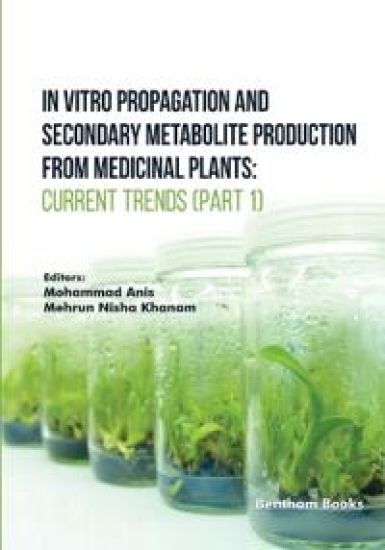
In Vitro Propagation and Secondary Metabolite Production from Medicinal Plants
This book is a comprehensive review of secondary metabolite production from plant tissue culture. The editors have compiled 12 meticulously organized chapters that provide the relevant theoretical and practical frameworks in this subject using empirical research findings. The goal of the book is to explain the rationale behind in vitro production of secondary metabolites from some important medicinal plants. Biotechnological strategies like metabolic engineering and the biosynthesis, transport and modulation of important secondary metabolites are explained along with research studies on specific plants. In addition to the benefits of secondary metabolites, the book also aims to highlight the commercial value of medicinal plants for pharmaceutical and healthcare ventures. Topics covered in this part include: 1. Elicitation Strategies and Metabolic Engineering to boost metabolite production with case studies in metabolic engineering with examples of Scaevola Taccada and Catharanthus Roseus. 2. Stress response investigation and the role of glandular trichomes as bio-cell factories 3. Plant growth regulators and rapid regeneration techniques using swift plantlets regeneration and phytochemical characterization 4. Nutraceuticals, antimicrobials, and genomic applications of in vitro cultures with an example of Hassawi rice and its genomics 5. Sustainable approaches for saving endangered medicinal plants The book caters to a wide readership. It primarily prepares graduate students, researchers, biotechnologists, giving them a grasp of the key methodologies in the secondary metabolite production. It is a secondary reference for support executives, industry professionals, and policymakers at corporate and government levels to understand the importance of plant tissue culture and maximizing its impact in the herbal industry.
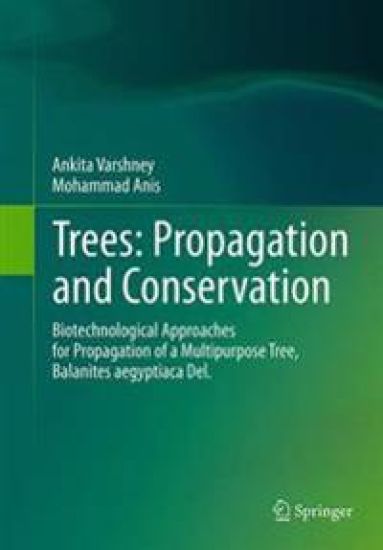
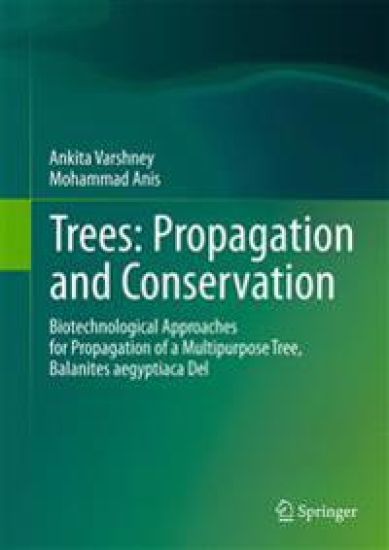
Trees: Propagation and Conservation

Trees: Propagation and Conservation

Ankita Varshney; Mohammad Anis

Springer, India, Private Ltd
2016
nidottu
Plant tissue culture is an essential component of Biotechnology which has gained unbeatable recognition in plant sciences for successful micropropagation and improvement of plant species, leading to the commercial application. A number of plant species have been investigated around the globe. This book presents current research on the application of in vitro technology in the improvement of Balanites aegyptiaca Del., a medicinal plant of semi-arid tropics. The worldwide importance of forestry, summed to the lengthy generation cycles of tree species, makes unavoidable development of new technologies that complement conventional tree breeding programmes in order to obtain improved genotypes. Recently, a new set of tools has become available in the past 20 years that combined with traditional plant breeding will allow scientists to generate products that are genetically improved varieties of the future. These set of tools come under the general title of ‘Biotechnology’. The three specific biotechnological tools have been successfully used in several programmes of plant conservation, namely, tissue culture techniques for in vitro propagation, the use of molecular markers to assess the degree of variability among population and techniques of long-term conservation such as encapsulation and cryopreservation. Plant tissue culture techniques are particularly relevant and become an alternative not only for large scale propagation of individuals that are threatened, reduce production costs and increase gains to the industry, but also to provide ecological advantages as in phytoremediation or in the establishment of artificial plantings in weed infested site. The book gives a complete documentation of the results and demonstration of Balanites aegyptiaca conducted by the authors over the past 5 years. The end-to-end approach developed through plant tissue culture techniques is reflected in the book and there has been a successful transfer of technology from lab tofield. The authors hope that this information would provide valuable data and also be a reference material for future research activities in this area.
Trees: Propagation and Conservation

Trees: Propagation and Conservation

Ankita Varshney; Mohammad Anis

Springer, India, Private Ltd
2014
sidottu
Plant tissue culture is an essential component of Biotechnology which has gained unbeatable recognition in plant sciences for successful micropropagation and improvement of plant species, leading to the commercial application. A number of plant species have been investigated around the globe. This book presents current research on the application of in vitro technology in the improvement of Balanites aegyptiaca Del., a medicinal plant of semi-arid tropics. The worldwide importance of forestry, summed to the lengthy generation cycles of tree species, makes unavoidable development of new technologies that complement conventional tree breeding programmes in order to obtain improved genotypes. Recently, a new set of tools has become available in the past 20 years that combined with traditional plant breeding will allow scientists to generate products that are genetically improved varieties of the future. These set of tools come under the general title of ‘Biotechnology’. The three specific biotechnological tools have been successfully used in several programmes of plant conservation, namely, tissue culture techniques for in vitro propagation, the use of molecular markers to assess the degree of variability among population and techniques of long-term conservation such as encapsulation and cryopreservation. Plant tissue culture techniques are particularly relevant and become an alternative not only for large scale propagation of individuals that are threatened, reduce production costs and increase gains to the industry, but also to provide ecological advantages as in phytoremediation or in the establishment of artificial plantings in weed infested site. The book gives a complete documentation of the results and demonstration of Balanites aegyptiaca conducted by the authors over the past 5 years. The end-to-end approach developed through plant tissue culture techniques is reflected in the book and there has been a successful transfer of technology from lab tofield. The authors hope that this information would provide valuable data and also be a reference material for future research activities in this area.