
Kirjojen hintavertailu – 12 859 829 kirjaa ja 27 kauppaa

Kirjailija

Mohammad Reza Nosouhi

Kirjat ja teokset yhdessä paikassa: 2 kirjaa, julkaisuja vuosilta 2021–2022, suosituimpiin kuuluu Personalized Privacy Protection in Big Data. Vertaile teosten hintoja ja tarkista saatavuus suomalaisista kirjakaupoista.

2 kirjaa

Kirjojen julkaisuvuodet: 2021–2022.

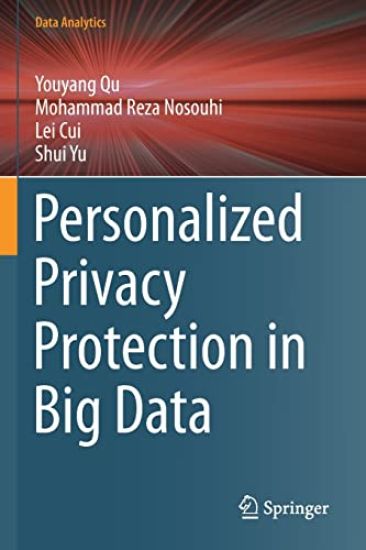
Personalized Privacy Protection in Big Data

Personalized Privacy Protection in Big Data

Youyang Qu; Mohammad Reza Nosouhi; Lei Cui; Shui Yu

SPRINGER VERLAG, SINGAPORE
2022
nidottu
This book presents the data privacy protection which has been extensively applied in our current era of big data. However, research into big data privacy is still in its infancy. Given the fact that existing protection methods can result in low data utility and unbalanced trade-offs, personalized privacy protection has become a rapidly expanding research topic. In this book, the authors explore emerging threats and existing privacy protection methods, and discuss in detail both the advantages and disadvantages of personalized privacy protection. Traditional methods, such as differential privacy and cryptography, are discussed using a comparative and intersectional approach, and are contrasted with emerging methods like federated learning and generative adversarial nets. The advances discussed cover various applications, e.g. cyber-physical systems, social networks, and location-based services. Given its scope, the book is of interest to scientists, policy-makers, researchers, and postgraduates alike.
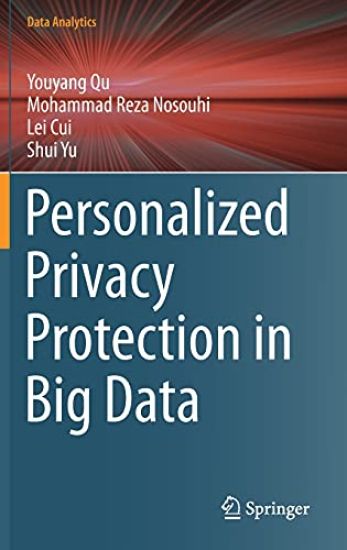
Personalized Privacy Protection in Big Data

Personalized Privacy Protection in Big Data

Youyang Qu; Mohammad Reza Nosouhi; Lei Cui; Shui Yu

Springer Verlag, Singapore
2021
sidottu
This book presents the data privacy protection which has been extensively applied in our current era of big data. However, research into big data privacy is still in its infancy. Given the fact that existing protection methods can result in low data utility and unbalanced trade-offs, personalized privacy protection has become a rapidly expanding research topic. In this book, the authors explore emerging threats and existing privacy protection methods, and discuss in detail both the advantages and disadvantages of personalized privacy protection. Traditional methods, such as differential privacy and cryptography, are discussed using a comparative and intersectional approach, and are contrasted with emerging methods like federated learning and generative adversarial nets. The advances discussed cover various applications, e.g. cyber-physical systems, social networks, and location-based services. Given its scope, the book is of interest to scientists, policy-makers, researchers, and postgraduates alike.