Kirjojen hintavertailu – 12 903 725 kirjaa ja 27 kauppaa
Kirjailija
Mohandas Karamchand Gandhi
Kirjat ja teokset yhdessä paikassa: 9 kirjaa, julkaisuja vuosilta 1992–2026, suosituimpiin kuuluu My Early Life. Vertaile teosten hintoja ja tarkista saatavuus suomalaisista kirjakaupoista.
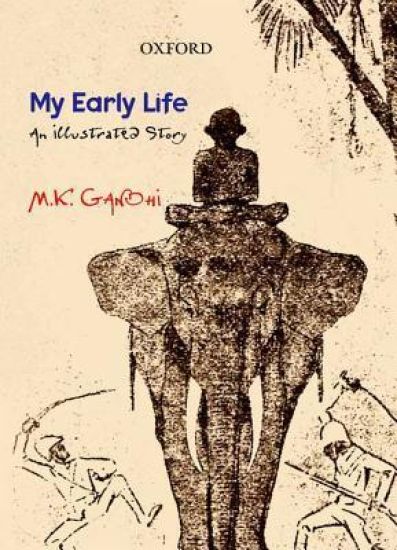
Mohandas Karamchand Gandhi's My Early Life (1932)-an adaptation of his authoritative autobiography-is one of the earliest books developed by the Press in India. The charming little book has its own history: at the time Gandhi was in prison, and so was able to devote time to the project being put together by his secretary, Mahadev Desai, in consultation with the Press. This illustrated edition of Mohandas Karamchand Gandhi's My Early Life, specially designed for children and young adults, bears testimony to the classic that continues to sell as a school edition even today. Complemented by contextual notes and including close to 45 evocative line drawings and photos, the book covers the crucial years 1869-1914: from childhood days at home, school life, and teenage desires and confessions to the trip to England and struggles as an attorney, and finally his South African years. This is the story of the flesh-and-blood Mohandas, who finds himself, along with many others, in a particular socio-historical context that sets him off on a life-altering path-towards becoming the Mahatma.
"My purpose," Mahatma Gandhi writes of this book, "is to describe experiments in the science of Satyagraha, not to say how good I am." Satyagraha, Gandhi's nonviolent protest movement (satya = true, agraha = firmness), came to stand, like its creator, as a moral principle and a rallying cry; the principle was truth and the cry freedom. The life of Gandhi has given fire and fiber to freedom fighters and to the untouchables of the world: hagiographers and patriots have capitalized on Mahatma myths. Yet Gandhi writes: "Often the title Mahatma, Great Soul] has deeply pained me. . . . But I should certainly like to narrate my experiments in the spiritual field which are known only to myself, and from which I have derived such power as I possess for working in the political field." Clearly, Gandhi never renounced the world; he was neither pacifist nor cult guru. Who was Gandhi? In the midst of resurging interest in the man who freed India, inspired the American Civil Rights Movement, and is revered, respected, and misunderstood all over the world, the time is proper to listen to Gandhi himself -- in his own words, his own "confessions," his autobiography. Gandhi made scrupulous truth-telling a religion and his Autobiography inevitably reminds one of other saints who have suffered and burned for their lapses. His simply narrated account of boyhood in Gujarat, marriage at age 13, legal studies in England, and growing desire for purity and reform has the force of a man extreme in all things. He details his gradual conversion to vegetarianism and ahimsa (non-violence) and the state of celibacy (brahmacharya, self-restraint) that became one of his more arduous spiritual trials. In the political realm he outlines the beginning of Satyagraha in South Africa and India, with accounts of the first Indian fasts and protests, his initial errors and misgivings, his jailings, and continued cordial dealings with the British overlords. Gandhi was a fascinating, complex man, a brilliant leader and guide, a seeker of truth who died for his beliefs but had no use for martyrdom or sainthood. His story, the path to his vision of Satyagraha and human dignity, is a critical work of the twentieth century, and timeless in its courage and inspiration.
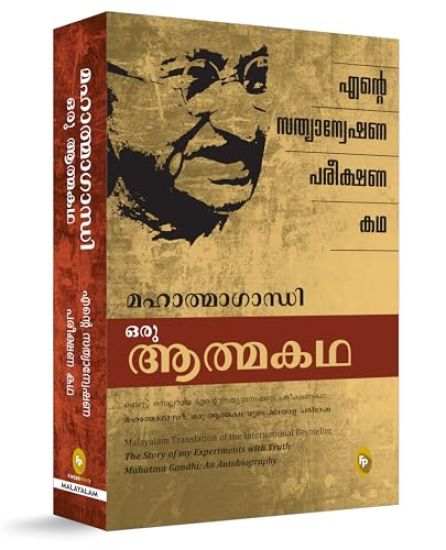
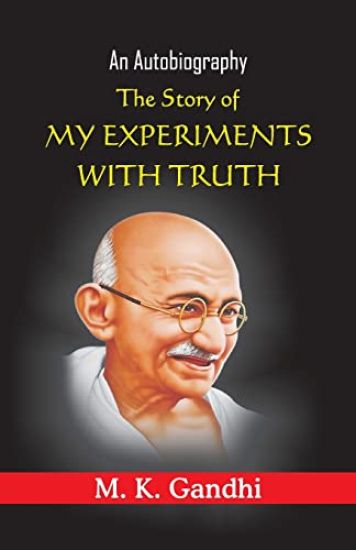
The Story of My Experiments With Truth is an eternal narrative that remains a legacy for ages to come. It is an autobiography of Mohandas Karamchand Gandhi, popularly known as 'Mahatma Gandhi' or 'Bapu' which covers all aspects of his life. It contains Gandhi's self penned essays which gives the detailed account of his habits and belief system. His vision and transformational journey makes this book one of the most widely read till date. Mohandas Karamchand Gandhi also known as Mahatma Gandhi or Bapu was an Indian lawyer, anti-colonial nationalist and political ethicist who employed non-violent resistance to lead the successful campaign for India's Independence from British rule. Gandhi's birthday on 2 October is commemorated in India as Gandhi Jayanti, a national holiday and worldwide as the International Day ofnon-violence. He is also known as the 'Father of the Nation' in India.