Kirjojen hintavertailu – 12 903 725 kirjaa ja 27 kauppaa

Kirjailija

Molly Ladd-Taylor

Kirjat ja teokset yhdessä paikassa: 6 kirjaa, julkaisuja vuosilta 1995–2022, suosituimpiin kuuluu Women, Health, and Nation. Vertaile teosten hintoja ja tarkista saatavuus suomalaisista kirjakaupoista.

6 kirjaa

Kirjojen julkaisuvuodet: 1995–2022.

When Mortals Play God

When Mortals Play God

John Erickson; Molly Ladd-Taylor

BLOOMSBURY PUBLISHING PLC
2022
sidottu
American history is full of examples of discrimination in all forms, but never before has the wreckage from America’s infatuation with eugenics and its state-sanctioned policy of hate toward the mentally ill been put in such personal terms. In this extraordinary debut book, Pulitzer Prize winning journalist John Erickson answers the questions that have long haunted an immigrant family: Why was a mother in her early twenties imprisoned and then sterilized? What caused her three children to be taken from her and placed in an orphanage that later preyed on children? What led her oldest son to commit an unspeakable act of violence? And, finally, whatever happened to her youngest son who disappeared from her life and was never seen by the family again? This is a tragic story, yet strangely an uplifting one. Because just as officials believed immorality and mental illness were as genetically linked as eye and hair color, various family members would prove them wrong. In a story that will make you seethe with anger and well with tears, When Mortals Play God shows how valuable life is, and how grit and determination can sometimes relegate evil and injustice to a back seat.
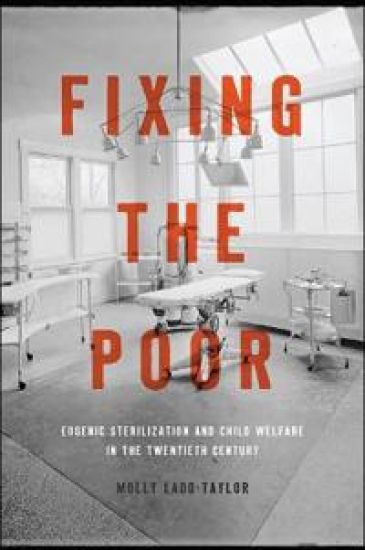
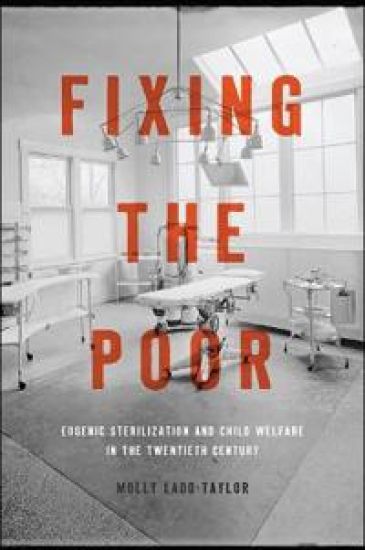
Fixing the Poor

Fixing the Poor

Molly Ladd-Taylor

Johns Hopkins University Press
2020
pokkari
How state welfare politics—not just concerns with "race improvement"—led to eugenic sterilization practices. Honorable Mention, 2018 Outstanding Book Award, The Disability History AssociationShortlist, 2019 Wallace K. Ferguson Prize, Canadian Historical AssociationBetween 1907 and 1937, thirty-two states legalized the sterilization of more than 63,000 Americans. In Fixing the Poor, Molly Ladd-Taylor tells the story of these state-run eugenic sterilization programs. She focuses on one such program in Minnesota, where surgical sterilization was legally voluntary and administered within a progressive child welfare system. Tracing Minnesota's eugenics program from its conceptual origins in the 1880s to its official end in the 1970s, Ladd-Taylor argues that state sterilization policies reflected a wider variety of worldviews and political agendas than previously understood. She describes how, after 1920, people endorsed sterilization and its alternative, institutionalization, as the best way to aid dependent children without helping the "undeserving" poor. She also sheds new light on how the policy gained acceptance and why coerced sterilizations persisted long after eugenics lost its prestige. In Ladd-Taylor's provocative study, eugenic sterilization appears less like a deliberate effort to improve the gene pool than a complicated but sadly familiar tale of troubled families, fiscal and administrative politics, and deep-felt cultural attitudes about disability, dependency, sexuality, and gender. Drawing on institutional and medical records, court cases, newspapers, and professional journals, Ladd-Taylor reconstructs the tragic stories of the welfare-dependent, sexually delinquent, and disabled people who were labeled "feebleminded" and targeted for sterilization. She chronicles the routine operation of Minnesota's three-step policy of eugenic commitment, institutionalization, and sterilization in the 1920s and 1930s and shows how surgery became the "price of freedom" from a state institution. Combining innovative political analysis with a compelling social history of those caught up in Minnesota's welfare system, Fixing the Poor is a powerful reinterpretation of eugenic sterilization.
Fixing the Poor

Fixing the Poor

Molly Ladd-Taylor

Johns Hopkins University Press
2018
sidottu
Between 1907 and 1937, thirty-two states legalized the sterilization of more than 63,000 Americans. In Fixing the Poor, Molly Ladd-Taylor tells the story of these state-run eugenic sterilization programs. She focuses on one such program in Minnesota, where surgical sterilization was legally voluntary and administered within a progressive child welfare system. Tracing Minnesota's eugenics program from its conceptual origins in the 1880s to its official end in the 1970s, Ladd-Taylor argues that state sterilization policies reflected a wider variety of worldviews and political agendas than previously understood. She describes how, after 1920, people endorsed sterilization and its alternative, institutionalization, as the best way to aid dependent children without helping the "undeserving" poor. She also sheds new light on how the policy gained acceptance and why coerced sterilizations persisted long after eugenics lost its prestige. In Ladd-Taylor's provocative study, eugenic sterilization appears less like a deliberate effort to improve the gene pool than a complicated but sadly familiar tale of troubled families, fiscal and administrative politics, and deep-felt cultural attitudes about disability, dependency, sexuality, and gender. Drawing on institutional and medical records, court cases, newspapers, and professional journals, Ladd-Taylor reconstructs the tragic stories of the welfare-dependent, sexually delinquent, and disabled people who were labeled feebleminded and targeted for sterilization. She chronicles the routine operation of Minnesota's three-step policy of eugenic commitment, institutionalization, and sterilization in the 1920s and 1930s and shows how surgery became the "price of freedom" from a state institution. Combining innovative political analysis with a compelling social history of those caught up in Minnesota's welfare system, Fixing the Poor is a powerful reinterpretation of eugenic sterilization.
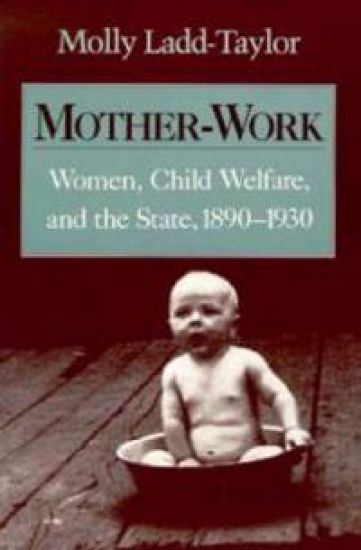
Mother-Work

Mother-Work

Molly Ladd-Taylor

University of Illinois Press
1995
nidottu
Early in the twentieth century, maternal and child welfare evolved from a private family responsibility into a matter of national policy. Molly Ladd-Taylor explores both the private and public aspects of child-rearing, using the relationship between them to cast new light on the histories of motherhood, the welfare state, and women's activism in the United States. Ladd-Taylor argues that mother-work, "women's unpaid work of reproduction and caregiving," motivated women's public activism and "maternalist" ideology. Mothering experiences led women to become active in the development of public health, education, and welfare services. In turn, the advent of these services altered mothering in many ways, including the reduction of the infant mortality rate.