Kirjojen hintavertailu – 12 859 829 kirjaa ja 27 kauppaa

Kirjailija

Mona Lilja

Kirjat ja teokset yhdessä paikassa: 9 kirjaa, julkaisuja vuosilta 2008–2025, suosituimpiin kuuluu Researching Resistance and Social Change. Vertaile teosten hintoja ja tarkista saatavuus suomalaisista kirjakaupoista.

9 kirjaa

Kirjojen julkaisuvuodet: 2008–2025.

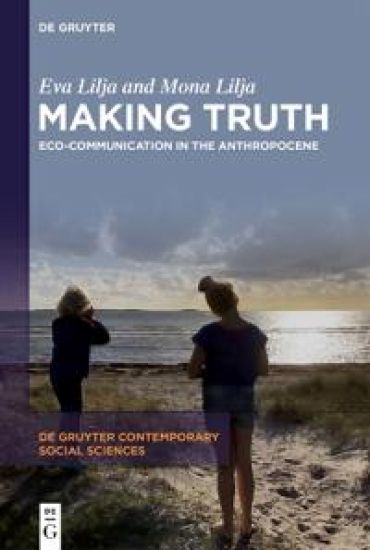
Making Truth

Making Truth

Eva Lilja; Mona Lilja

De Gruyter
2025
sidottu

Halvin toimitettuna 137,80 €

The pursuit of truth is of crucial importance in environmentalism. How can we establish shared realities that encompass biodiversity loss, climate change, and pollutions that disrupt essential ecosystems? Taking signs and repetitions as a point of departure, Eva Lilja and Mona Lilja suggest a range of basic communicative practices that could be the foundation of a semiotics of sustainability. Their book aims for an in-depth exploration of eco-strategies and expands on how we could – perhaps even should – communicate sustainability issues. Homing in on problems related to communication, Making Truth probes into the role of signs, the importance of reality effects, repetitions, scripts, emotions, and strategies of (de)politicization.
Constructive Resistance

Constructive Resistance

Mona Lilja

BLOOMSBURY PUBLISHING PLC
2023
nidottu
This book examines constructive resistance practices that range from street protests to the use of photographic images, and displays their role in local and global political processes. By building on a rich selection of interview material and other empirical research, the book elaborates on different cases of constructive resistance, where close attention is paid to the productive qualities that are involved. It offers new perspectives on the undertakings of different epistemic battles that occur around current issues such as gender, nationalism, climate change, migration and the right to land, and explores personal narratives, artistic expressions and public statements that are utilized as means of resistance, and performed in order to negotiate different established truths. More specifically, the book discusses the discursive struggles regarding migrant bodies, where artifacts that pertain to the hardship are presented in Swedish museums; the Preah Vihear temple conflict between Cambodia and Thailand; the border conflict in West Sahara; the self-making of (self-defined) women politicians in Cambodia; and climate activism communication. Through discussions on the importance of figurations, posters, narratives, photographs, artifacts and buildings in the establishing of contemporary discussions and world views, the book inquires how and why these representations are (re)imparted with meaning and the effect that this has. The book does not only illustrate different forms of resistance, but also contributes theoretically to our understanding of repetitions, emotions and time, which are properties that must be embarked upon in order to capture the various dimension of resistance. Given that the type of constructive resistance that is expanded upon is about processes of significations, the time aspect—how alternative truths are repeated and thereby established over time—becomes crucial. And, resistance has a temporality of its own; for example, close authorities are instantly resisted here and now, while meaning-making resistance suffers from the inescapable time-lag of processes of signification. In all forms of resistance, emotions prevail as an important engine of political struggles and, as is displayed in this book, emotions are an important means of constructive resistance.

Constructive Resistance

Constructive Resistance

Mona Lilja

Rowman Littlefield
2021
sidottu
This book provides insights into forms of resistance that produce new world views and subject positions. It explores how productive forms of resistance not only works against power, but rather it can be seen as practices that produce new subject positions and realities. In doing so, the book does not only illustrate different forms of resistance, but a major contribution will be to theoretically display different properties that must be embarked upon in order to capture various dimension of ‘productive’ resistance. The book contributes to future empirically grounded studies and propose some considerations on how to study resistance in terms of producing different realities and identity positions.
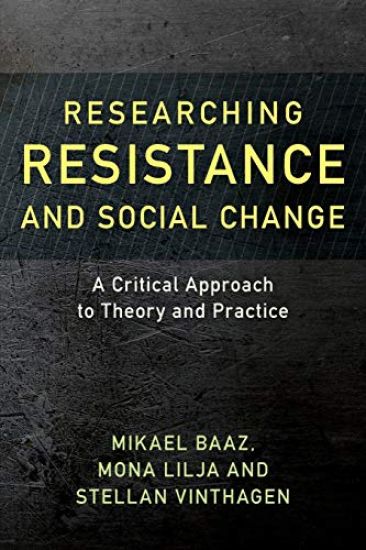
Researching Resistance and Social Change

Researching Resistance and Social Change

Mikael Baaz; Mona Lilja; Stellan Vinthagen

Rowman Littlefield
2017
sidottu
Resistance has often been connected with anti-social attitudes, destructiveness, reactionary or revolutionary ideologies, unusual and sudden explosions of violence and emotional outbursts. This book goes beyond these conventions. Exploring various key questions, ranging from concept definitions of affect and temporality, to complex entanglements of various social dimensions and ethical questions, this accessible guide provides a robust theoretical and methodological framework for researching of resistance and social change. By drawing connections between resistance and politics, between performance and everyday strategies, and between the juridical and its counter-strategies, this book provides students with a transdisciplinary understanding of contemporary debates in this emerging field.
Researching Resistance and Social Change

Researching Resistance and Social Change

Mikael Baaz; Mona Lilja; Stellan Vinthagen

Rowman Littlefield
2017
nidottu
Resistance has often been connected with anti-social attitudes, destructiveness, reactionary or revolutionary ideologies, unusual and sudden explosions of violence and emotional outbursts. This book goes beyond these conventions. Exploring various key questions, ranging from concept definitions of affect and temporality, to complex entanglements of various social dimensions and ethical questions, this accessible guide provides a robust theoretical and methodological framework for researching of resistance and social change. By drawing connections between resistance and politics, between performance and everyday strategies, and between the juridical and its counter-strategies, this book provides students with a transdisciplinary understanding of contemporary debates in this emerging field.
Resisting Gendered Norms

Resisting Gendered Norms

Mona Lilja

Routledge
2016
nidottu
Political scientists have, on occasion, missed subtle but powerful forms of ’everyday resistance’ and have not been able to show how different representations (pictures, statements, images, practices) have different impacts when negotiating power. Instead they have concentrated on open forms of resistance, organized rebellions and collective actions. Departing from James Scott's idea that oppression and resistance are in constant change, Resisting Gendered Norms provides us with a compelling account on the nexus between gender, resistance and gender-based violence in Cambodia. To illustrate how resistance is often carried out in the tension between, on the one hand, universal/globalised representations and, on the other, local ’truths’ and identity constructions, in-depth interviews with civil society representatives, politicians as well as stakeholders within the legal/juridical system were conducted.
Resisting Gendered Norms

Resisting Gendered Norms

Mona Lilja

Ashgate Publishing Limited
2013
sidottu
Political scientists have, on occasion, missed subtle but powerful forms of ’everyday resistance’ and have not been able to show how different representations (pictures, statements, images, practices) have different impacts when negotiating power. Instead they have concentrated on open forms of resistance, organized rebellions and collective actions. Departing from James Scott's idea that oppression and resistance are in constant change, Resisting Gendered Norms provides us with a compelling account on the nexus between gender, resistance and gender-based violence in Cambodia. To illustrate how resistance is often carried out in the tension between, on the one hand, universal/globalised representations and, on the other, local ’truths’ and identity constructions, in-depth interviews with civil society representatives, politicians as well as stakeholders within the legal/juridical system were conducted.
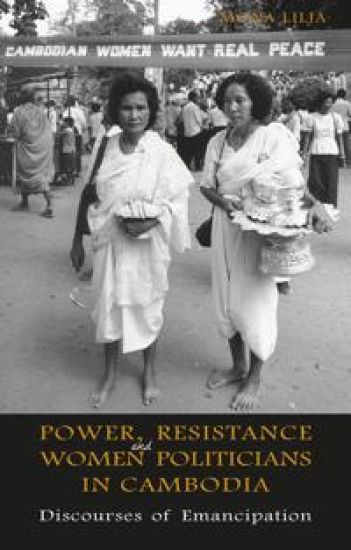
Power, Resistance and Women Politicians in Cambodia
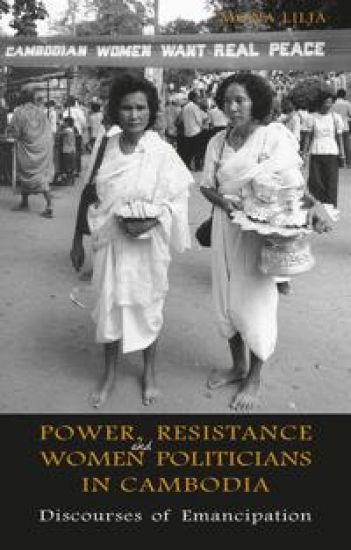
These unique insights into the political struggles of Cambodian women extend the concept of resistance and create a framework of analysis that will inspire researchers in other fields. In a world where there are few women politicians, Cambodia is still noticeable as a country where strong cultural and societal forces act to subjugate women and limit their political opportunities. However, in their everyday life, Cambodian women do try to improve their situation and increase their political power, not least via manifold strategies of resistance. This book focuses on Cambodian female politicians and the strategies they deploy in their attempts to destabilize the cultural boundaries and hierarchies that restrain them. In particular, the book focuses on how women use discourses and identities as means of resistance, a concept only recently of wide interest among scholars studying power. The value of this book is thus twofold: not only does it give a unique insight into the political struggles of Cambodian women but also offers new insights to studies of power.