Kirjojen hintavertailu – 12 874 946 kirjaa ja 26 kauppaa

Kirjailija

Mónica Brito Vieira

Kirjat ja teokset yhdessä paikassa: 6 kirjaa, julkaisuja vuosilta 2008–2024, suosituimpiin kuuluu The Politics of the Book. Vertaile teosten hintoja ja tarkista saatavuus suomalaisista kirjakaupoista.

Nimi esiintyy myös muodoissa: Monica Brito Vieira

6 kirjaa

Kirjojen julkaisuvuodet: 2008–2024.

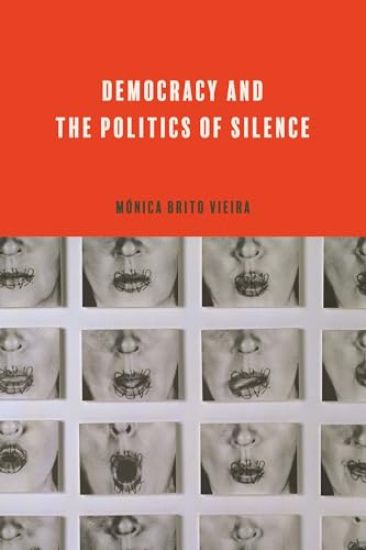
Democracy and the Politics of Silence

Democracy and the Politics of Silence

Mónica Brito Vieira

Pennsylvania State University Press
2024
sidottu
Most people equate democracy with discussion, speech, and making one’s voice heard. But where does silence fit in? Democracy and the Politics of Silence investigates the largely overlooked role of silence in democratic politics. It challenges conventional wisdom by arguing that silence can support and affirm democratic pillars and outcomes like empowerment, inclusion, and equality. The book focuses on a particular set of problems concerning the relationship between political silence and the democratic triad of voice, agency, and representation. Each of the book’s chapters draws on a selection of hand-picked case studies, both historical and contemporary, including the NAACP’s Silent Parade in 1917, demonstrations by the Women in Black, Spain’s post-Franco Pact of Forgetting, Trump’s silent majority, debates related to the representation of nonhuman beings, and the famous Miranda judgment on the right to silence. Together they offer an innovative, ambitious investigation of democratically undesirable silences and practices of silence that are powerfully affirmative of democratic subjectivities, aims, and norms. In thus expanding the repertoire of democratic citizenship, Mónica Brito Vieira invites readers to consider what silence might teach them about democracy. This timely book should appeal to political science students and scholars as well as anyone interested in the history of democracies and popular resistance movements.
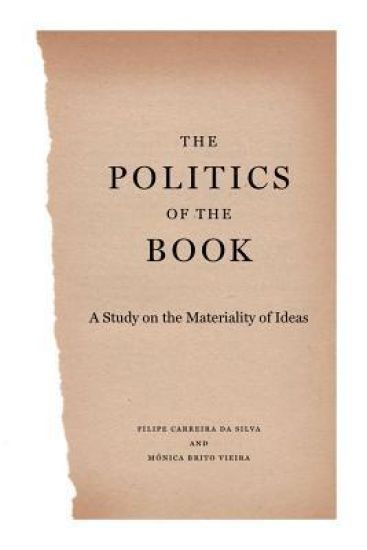
The Politics of the Book

The Politics of the Book

Filipe Carreira da Silva; Mónica Brito Vieira

Pennsylvania State University Press
2021
pokkari
It is impossible to separate the content of a book from its form. In this study, Filipe Carreira da Silva and Mónica Brito Vieira expand our understanding of the history of social and political scholarship by examining how the entirety of a book mediates and constitutes meaning in ways that affect its substance, appropriation, and reception over time. Examining the evolving form of classic works of social and political thought, including W. E. B. Du Bois’s The Souls of Black Folk, G. H. Mead’s Mind, Self, and Society, and Karl Marx’s 1844 Economic and Philosophic Manuscripts, Carreira da Silva and Brito Vieira show that making these books involved many hands. They explore what publishers, editors, translators, and commentators accomplish by offering the reading public new versions of the works under consideration, examine debates about the intended meaning of the works and discussions over their present relevance, and elucidate the various ways in which content and material form are interwoven. In doing so, Carreira da Silva and Brito Vieira characterize the editorial process as a meaning-producing action involving both collaboration and an ongoing battle for the importance of the book form to a work’s disciplinary belonging, ideological positioning, and political significance. Theoretically sophisticated and thoroughly researched, The Politics of the Book radically changes our understanding of what doing social and political theory—and its history—implies. It will be welcomed by scholars of book history, the history of social and political thought, and social and political theory.
The Politics of the Book

The Politics of the Book

Filipe Carreira da Silva; Mónica Brito Vieira

Pennsylvania State University Press
2019
sidottu
It is impossible to separate the content of a book from its form. In this study, Filipe Carreira da Silva and Mónica Brito Vieira expand our understanding of the history of social and political scholarship by examining how the entirety of a book mediates and constitutes meaning in ways that affect its substance, appropriation, and reception over time. Examining the evolving form of classic works of social and political thought, including W. E. B. Du Bois’s The Souls of Black Folk, G. H. Mead’s Mind, Self, and Society, and Karl Marx’s 1844 Economic and Philosophic Manuscripts, Carreira da Silva and Brito Vieira show that making these books involved many hands. They explore what publishers, editors, translators, and commentators accomplish by offering the reading public new versions of the works under consideration, examine debates about the intended meaning of the works and discussions over their present relevance, and elucidate the various ways in which content and material form are interwoven. In doing so, Carreira da Silva and Brito Vieira characterize the editorial process as a meaning-producing action involving both collaboration and an ongoing battle for the importance of the book form to a work’s disciplinary belonging, ideological positioning, and political significance. Theoretically sophisticated and thoroughly researched, The Politics of the Book radically changes our understanding of what doing social and political theory—and its history—implies. It will be welcomed by scholars of book history, the history of social and political thought, and social and political theory.
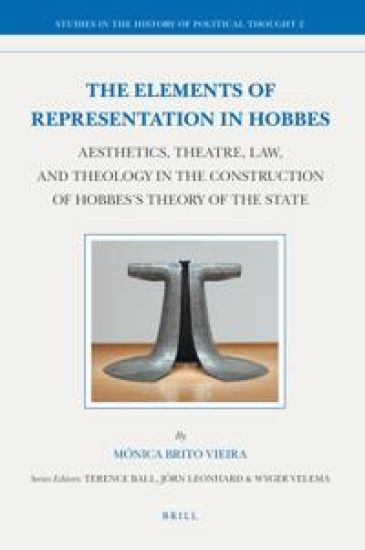
The Elements of Representation in Hobbes
Commentators have traditionally constructed Hobbes's thinking on representation too narrowly, as a self-contained area of his political theory. This book challenges this orthodoxy of Hobbes scholarship, which owes less to Hobbes’s thought than to contemporary preconceptions of what counts as political thinking. In her powerful and original analysis, Mónica Brito Vieira mines neglected strands of Hobbes's theory of representation, and reinstates it in a much wider pattern of Hobbes’s theorizing about human thought and action in relation to widely varied images, roles and fictions. The result is a compelling portrait of how man's natural power to form representations through the imagination and artifice underpins his capacity to break away from nature, and fashion a world that best suits his needs.
Representation

Representation

Monica Brito Vieira; David Runciman

Polity Press
2008
nidottu

Halvin toimitettuna 31,30 €

What is representation? What does it mean when a politician represents citizens in government? How can citizens be represented beyond the boundaries of the nation-state? These are just some of the questions which will be answered by David Runciman and Mónica Brito Vieira as they explain why representation should be understood as one of the key concepts in modern politics. The first part of the book examines the historical roots of the concept of representation, from its origins in ancient Rome through to its role in the revolutionary politics of the modern world. The second looks at different varieties of representation – in law as well as politics. The final part asks how the concept of representation can help us think creatively about current and future challenges facing the world. Representation is too often treated as a secondary or qualifying idea – as in the phrase ‘representative democracy’. This book argues that we have this the wrong way round. Representation is the foundational idea in almost all areas of our political life. Making sense of representation in its own terms is crucial for seeing why democracy functions the way it does, and for exploring how it might function differently.
Representation

Representation

Monica Brito Vieira; David Runciman

Polity Press
2008
sidottu
What is representation? What does it mean when a politician represents citizens in government? How can citizens be represented beyond the boundaries of the nation-state? These are just some of the questions which will be answered by David Runciman and Mónica Brito Vieira as they explain why representation should be understood as one of the key concepts in modern politics. The first part of the book examines the historical roots of the concept of representation, from its origins in ancient Rome through to its role in the revolutionary politics of the modern world. The second looks at different varieties of representation – in law as well as politics. The final part asks how the concept of representation can help us think creatively about current and future challenges facing the world. Representation is too often treated as a secondary or qualifying idea – as in the phrase ‘representative democracy’. This book argues that we have this the wrong way round. Representation is the foundational idea in almost all areas of our political life. Making sense of representation in its own terms is crucial for seeing why democracy functions the way it does, and for exploring how it might function differently.