

Kirjailija
Monica de La Torre
Kirjat ja teokset yhdessä paikassa: 6 kirjaa, julkaisuja vuosilta 2017–2025, suosituimpiin kuuluu Aisha. Vertaile teosten hintoja ja tarkista saatavuus suomalaisista kirjakaupoista.
Nimi esiintyy myös muodoissa: Mónica de la Torre
6 kirjaa
Kirjojen julkaisuvuodet: 2017–2025.

An intimate and unique collection of the work of John Ashbery—a prolific poet and art critic—pairing poetry and art writings with playlists of music from his personal library. This book places poetry by Ashbery (1927–2017), gathered from his later collections, in conversation with a selection of contemporaneous art writing. In addition, as Ashbery loved music and listened to it while writing, the “playlists” here offer representative samplings of music from these same years, culled from Ashbery’s own library of recordings. Ashbery’s poetry is frequently described as ekphrastic, though, rather than writing a poem “based on'' or “inspired” by the content of an artwork of or piece of music, he engages with how the experience of seeing it and the artistic strategies employed offer ways of thinking about it and through it. Many of the observations from Ashbery’s art writing also offer keys to how we might read his poetry. Many of the recordings he listened to feature contemporary classical works that emphasize complex textures, disparate sounds, and disjunct phrases. Ashbery’s poetry similarly plays with a diversity of poetic textures and sudden turns such that a reader might construct multiple narratives or pathways of meaning. He rarely offers linear stories or focuses on evocative descriptions of a scene or object. In exploring this ekphrastic book project, the reader is invited to discover how, for Ashbery, these three forms might illuminate and inform one another.
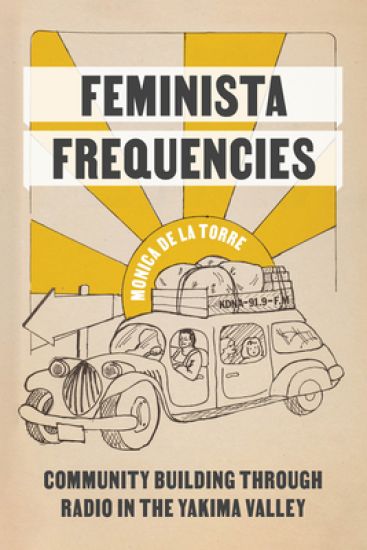
How Chicana and Chicano community radio strengthened a movement and transformed the airwavesBeginning in the 1970s Chicana and Chicano organizers turned to community radio broadcasting to educate, entertain, and uplift Mexican American listeners across the United States. In rural areas, radio emerged as the most effective medium for reaching relatively isolated communities such as migrant farmworkers. And in Washington's Yakima Valley, where the media landscape was dominated by perspectives favorable to agribusiness, community radio for and about farmworkers became a life-sustaining tool. Feminista Frequencies unearths the remarkable history of one of the United States' first full-time Spanish-language community radio stations, Radio KDNA, which began broadcasting in the Yakima Valley in 1979. Extensive interviews reveal the work of Chicana and Chicano producers, on-air announcers, station managers, technical directors, and listeners who contributed to the station's success. Monica De La Torre weaves these oral histories together with a range of visual and audio artifacts, including radio programs, program guides, and photographs to situate KDNA within the larger network of Chicano community-based broadcasting and social movement activism. Feminista Frequencies highlights the development of a public broadcasting model that centered Chicana radio producers and documents the central role of women in developing this infrastructure in the Yakima Valley. De La Torre shows how KDNA revolutionized community radio programming, adding new depth to the history of the Chicano movement, women's activism, and media histories.
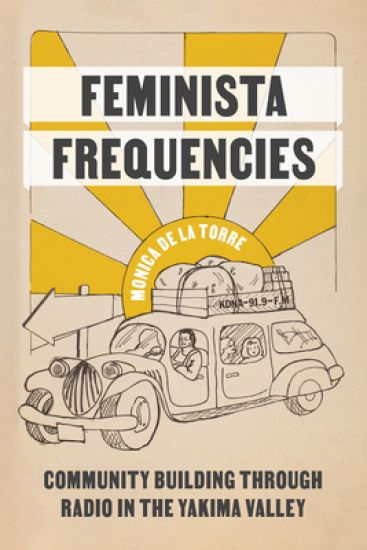
How Chicana and Chicano community radio strengthened a movement and transformed the airwavesBeginning in the 1970s Chicana and Chicano organizers turned to community radio broadcasting to educate, entertain, and uplift Mexican American listeners across the United States. In rural areas, radio emerged as the most effective medium for reaching relatively isolated communities such as migrant farmworkers. And in Washington's Yakima Valley, where the media landscape was dominated by perspectives favorable to agribusiness, community radio for and about farmworkers became a life-sustaining tool. Feminista Frequencies unearths the remarkable history of one of the United States' first full-time Spanish-language community radio stations, Radio KDNA, which began broadcasting in the Yakima Valley in 1979. Extensive interviews reveal the work of Chicana and Chicano producers, on-air announcers, station managers, technical directors, and listeners who contributed to the station's success. Monica De La Torre weaves these oral histories together with a range of visual and audio artifacts, including radio programs, program guides, and photographs to situate KDNA within the larger network of Chicano community-based broadcasting and social movement activism. Feminista Frequencies highlights the development of a public broadcasting model that centered Chicana radio producers and documents the central role of women in developing this infrastructure in the Yakima Valley. De La Torre shows how KDNA revolutionized community radio programming, adding new depth to the history of the Chicano movement, women's activism, and media histories.
At the heart of Repetition Nineteen are twenty-five unreliable translations of a poem in Mónica de la Torre’s first book, written in Spanish. She embarked on this new genre-defying project after realizing she had been living in New York for as long as she had lived in Mexico City, where she was born. The works here focus on translation as displacement, mediation, and a form of code-switching. In the latter half of the book, “Replay,” we get a glimpse of de la Torre's translation practice in action as she invites passers-by to participate in series of translation experiments during an artist residency in Madison Square Park. Given the nativism of our current climate, both halves of Repetition Nineteen celebrate translation’s possibilities and political relevancy.
Poetry. THE HAPPY END / ALL WELCOME is set in a job fair inspired by the Nature Theater of Oklahoma from Kafka's unfinished novel Amerika: the largest theater company in the world is recruiting all kinds of employees. De la Torre builds, fastens, cuts, pastes, performs, and extrudes a variety of poems to suit this most serious situation comedy: poems as job interviews, poems as postings, poems as questionnaires, reports, speeches, lyrical rants... At its heart, this playful bricolage explores the norms of the workplace and its notions of competence, while tackling office design, performativity, and skilled vs. deskilled creative labor.