Kirjojen hintavertailu – 12 859 819 kirjaa ja 27 kauppaa

Kirjailija

Monica Rico

Kirjat ja teokset yhdessä paikassa: 4 kirjaa, julkaisuja vuosilta 2013–2024, suosituimpiin kuuluu Pinion. Vertaile teosten hintoja ja tarkista saatavuus suomalaisista kirjakaupoista.

4 kirjaa

Kirjojen julkaisuvuodet: 2013–2024.

Pinion

Pinion

Monica Rico

Four Way Books
2024
nidottu
"I / step into the kitchen because I can / no longer smell the lilac / bush my father cut down," Monica Rico writes in the opening poem of her astonishing debut collection. Deeply invested in unearthing women's identity from a patriarchal family structure, these pages catalog life beside loss, the truth of cruelty accompanied by a defiant vitality. Here, where the declaration "I can" is modified to "I can / no longer," Rico untangles the paradox of love, how a persistent absence keeps the missing object present, asserting itself through grief and memory; the scent of lilac lingers precisely because we cannot smell it anymore. The dual meaning of "pinion" scaffolds this collection, which considers Rico's family and their experiences in the context of her grandparents' immigration to the USA from M xico, American racial capitalism, and the mass migration catalyzed and necessitated by Western colonialism. "Pinion" in noun form refers to a bird's outer flight feathers; in verb form, it means to bind or sever this part of the wing to hinder flight. Bound up in this word, then, is a thing and its destruction -- a possibility and a thwarted hope side by side. Rico creates her own motifs to write a representative genealogy, approaching her family as an ornithologist: across poems, her grandfather (who worked at General Motors) appears as an owl, her grandmother figures as a robin, and the American project shows up in the eagle's warped beak and surveilling eye. A field work of restoration, these poems compose a personal history and a deconstruction of global capitalism as articulated through an encyclopedia of birds. From the chaos of our flawed world, Rico salvages an enduring hope, reminding us that "a broken / song like an ugly duckling isn't ugly / but unique, and stands out like the flightless / dodo who trusts because it is too awful not to."
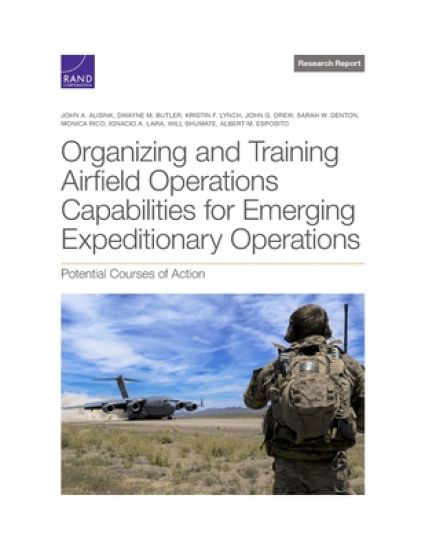
Organizing and Training Airfield Operations Capabilities for Emerging Expeditionary Operations

Organizing and Training Airfield Operations Capabilities for Emerging Expeditionary Operations

John A Ausink; Dwayne M Butler; Kristin F Lynch; John G Drew; Monica Rico; Ignacio A Lara; Will Shumate

RAND Corporation
2023
pokkari
The authors set out to identify ways to enable the airfield operations (AO) career fields to respond to the needs created by the Dynamic Force Employment concept and the USAF implementation of Agile Combat Employment by reviewing USAF and joint documents for background, interviewing experts to learn current challenges and the potential impact of new demands, and developing tools to analyze the ability of AO personnel to meet those demands.
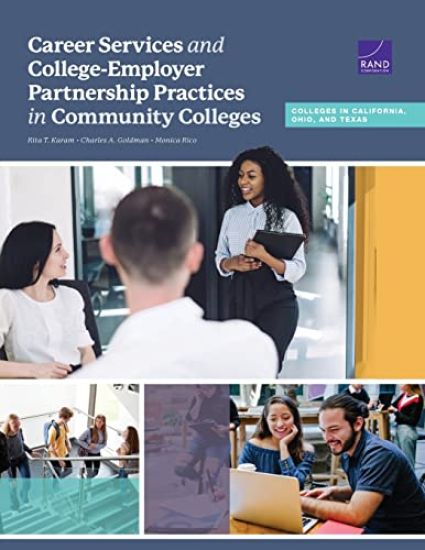
Career Services and College-Employer Partnership Practices in Community Colleges

Career Services and College-Employer Partnership Practices in Community Colleges

Rita T Karam; Charles A Goldman; Monica Rico

RAND Corporation
2022
pokkari
Community colleges play a key role in driving talent development in the United States, producing workers with the kinds of training that employers need while enhancing economic mobility for students. In this report, the authors systemically examine the type of career services and college-employer partnership practices across three states--California, Ohio, and Texas--and a sample of community colleges that operate within them.
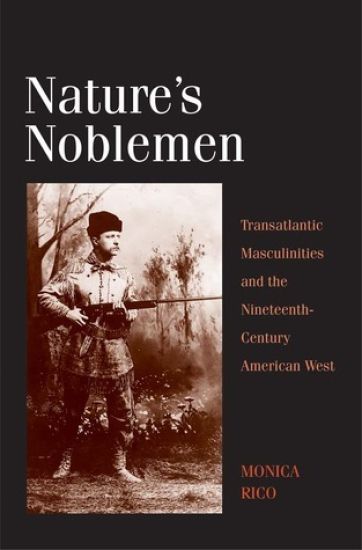
Nature's Noblemen

Nature's Noblemen

Monica Rico

Yale University Press
2013
sidottu
In this fascinating book Monica Rico explores the myth of the American West in the nineteenth century as a place for men to assert their masculinity by “roughing it” in the wilderness and reveals how this myth played out in a transatlantic context. Rico uncovers the networks of elite men—British and American—who circulated between the West and the metropoles of London and New York. Each chapter tells the story of an individual who, by traveling these transatlantic paths, sought to resolve anxieties about class, gender, and empire in an era of profound economic and social transformation. All of the men Rico discusses—from the well known, including Theodore Roosevelt and Buffalo Bill Cody, to the comparatively obscure, such as English cattle rancher Moreton Frewen—envisioned the American West as a global space into which redemptive narratives of heroic upper-class masculinity could be written.