Kirjojen hintavertailu – 12 859 819 kirjaa ja 27 kauppaa

Kirjailija

Monika Kin Gagnon

Kirjat ja teokset yhdessä paikassa: 3 kirjaa, julkaisuja vuosilta 2014–2019, suosituimpiin kuuluu Dana Claxton. Vertaile teosten hintoja ja tarkista saatavuus suomalaisista kirjakaupoista.

3 kirjaa

Kirjojen julkaisuvuodet: 2014–2019.

Dana Claxton

Dana Claxton

Grant Arnold; Monika Kin Gagnon; Olivia Michiko Gagnon; Jaleh Mansoor

Figure 1 Publishing
2019
sidottu
Known for her expansive multidisciplinary approach to art making Vancouver-based Dana Claxton, who is Hunkpapa Lakota (Sioux), has investigated notions of Indigenous identity, beauty, gender and the body, as well as broader social and political issues through a practice which encompasses photography, film, video and performance. Rooted in contemporary art strategies, her practice critiques the representations of Indigenous people that circulate in art, literature and popular culture in general. In doing so, Claxton regularly combines Lakota traditions with “Western” influences, using a powerful and emotive “mix, meld and mash” approach to address the oppressive legacies of colonialism and to articulate Indigenous world views, histories and spirituality. This timely catalogue will be the first monograph to examine the full breadth and scope of Claxton’s practice. It will be extensively illustrated and will include essays by Claxton’s colleague Jaleh Mansoor, Associate Professor in the Department of Art History, Visual Art & Theory at the University of British Columbia; Monika Kin Gagnon, Professor in the Communications Department at Concordia University, who has followed Claxton’s work for 25 years; Olivia Michiko Gagnon, a New York–based scholar and doctoral student in Performance Studies; and Grant Arnold, Audain Curator of British Columbia Art at the Vancouver Art Gallery.
Reimagining Cinema

Reimagining Cinema

Monika Kin Gagnon; Janine Marchessault

McGill-Queen's University Press
2014
sidottu
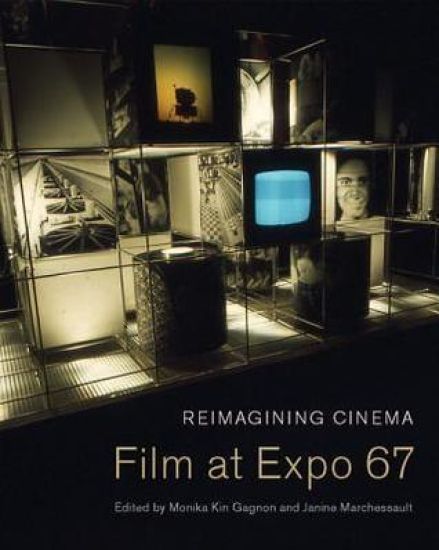
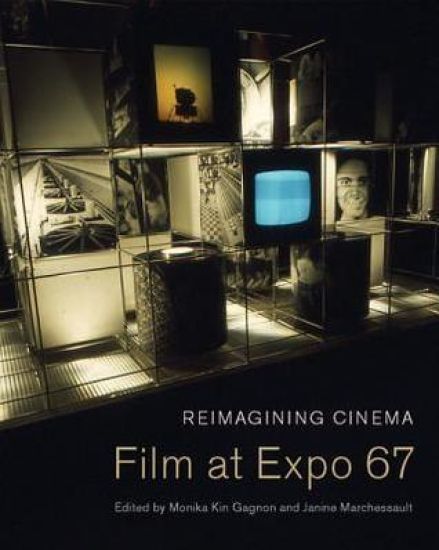
Expo 67, in its utopian aspirations, invited artists to create the world anew. What distinguished Montreal's exhibition from previous world fairs were its dramatic displays of film and media, transformed into urban and futuristic architectures. Reimagining Cinema explores the innovations that film and media artists offered Expo audiences and presents extensive visual material to reconstruct the viewer's experience. At the pinnacle of a new global humanism, cinema was expanded beyond the frame into total environments, multi-screens, multi-image and 360-degree immersion - experiments often seen as a harbinger of the digital age. Taking this expanded cinema as a starting point, the contributors focus on eight screen experiments, and employ innovative methodologies to reveal the intricacies and processes of production, while including factual descriptions, interpretive essays, interviews, and image dossiers. The book reflects how the Expo 67 film-events were encountered as creative experimentations that resonated with broader 1960s arts and culture, and as institutional collaborations with artists. More displays of photographic, cinematic, and telematic technology were experienced at Expo 67 than in any other previous world exposition. Reimagining Cinema captures the complexity and imaginative fervour of this exciting period in film history. Contributors include Seth Feldman (York University), Monika Kin Gagnon, (Concordia University), Anthony Kinik, (Concordia University), Janine Marchessault, (York University), Gary Mediema, Chief Historian and Associate Director, Heritage Toronto (Ontario), Aimee Mitchell, Canadian Filmmaker's Distribution Centre (Ontario), Johanne Sloan, (Concordia University), Donald Theall (Trent University).
Reimagining Cinema

Reimagining Cinema

Monika Kin Gagnon; Janine Marchessault

McGill-Queen's University Press
2014
nidottu
Expo 67, in its utopian aspirations, invited artists to create the world anew. What distinguished Montreal's exhibition from previous world fairs were its dramatic displays of film and media, transformed into urban and futuristic architectures. Reimagining Cinema explores the innovations that film and media artists offered Expo audiences and presents extensive visual material to reconstruct the viewer's experience. At the pinnacle of a new global humanism, cinema was expanded beyond the frame into total environments, multi-screens, multi-image and 360-degree immersion - experiments often seen as a harbinger of the digital age. Taking this expanded cinema as a starting point, the contributors focus on eight screen experiments, and employ innovative methodologies to reveal the intricacies and processes of production, while including factual descriptions, interpretive essays, interviews, and image dossiers. The book reflects how the Expo 67 film-events were encountered as creative experimentations that resonated with broader 1960s arts and culture, and as institutional collaborations with artists. More displays of photographic, cinematic, and telematic technology were experienced at Expo 67 than in any other previous world exposition. Reimagining Cinema captures the complexity and imaginative fervour of this exciting period in film history. Contributors include Seth Feldman (York University), Monika Kin Gagnon, (Concordia University), Anthony Kinik, (Concordia University), Janine Marchessault, (York University), Gary Mediema, Chief Historian and Associate Director, Heritage Toronto (Ontario), Aimee Mitchell, Canadian Filmmaker's Distribution Centre (Ontario), Johanne Sloan, (Concordia University), Donald Theall (Trent University).