Kirjojen hintavertailu – 12 903 724 kirjaa ja 27 kauppaa
Kirjailija
Monika Tandan
Kirjat ja teokset yhdessä paikassa: 51 kirjaa, julkaisuja vuosilta 2020–2023, suosituimpiin kuuluu Instrumentos de corte manuais e rotativos na Odontologia Operativa. Vertaile teosten hintoja ja tarkista saatavuus suomalaisista kirjakaupoista.
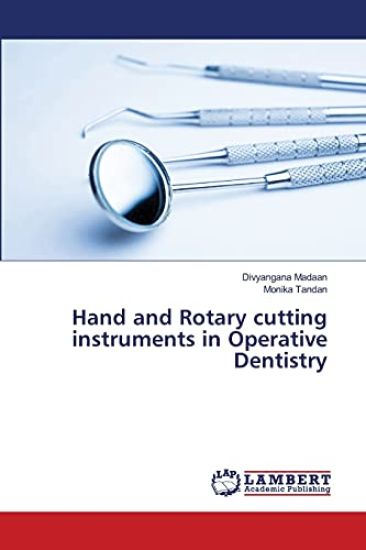
Instruments are used to examine, clean, cut, and restore teeth. The main types are either hand-held or rotary instruments driven in a handpiece. Operative dentistry as an art employs the appropriate use of tool with the proper kind of abrasive and cutting or polishing agent to accomplish a given task. In order to properly prepare a cavity, the tooth tissues, enamel and dentin must be excised with specific instruments in an efficiently ordered sequence. Most cavity preparations require the use of both rotary and hand instruments. Their use demands a sound knowledge of the equipment and instruments without which the optimum effect of these instruments will not be achievable. Familiarity with the design, handling and application of different instruments will enable the dental professionals to develop the high degree of technical skill that is necessary to perform quality restorative treatment. For improved working and increased efficiency it is necessary to have a sound knowledge about the cutting instruments and their application.
The well-finished and polished restorations are not only esthetically pleasing but are also conducive to the oral environment. Finishing and polishing of both the occlusal and proximal areas is important, since the proper marginal adaptability of the restoration, by and large, saves an individual from periodontal problems thereby achieving better clinical success of the treatment. Finishing and polishing techniques are important in preparing clinically successful restorations. Untoward surface irregularities resulting from poor finishing and polishing may lead to the accumulation of plaque, recurrent decay, chronic gingival inflammation, and staining by chromagenic foods and beverages- all of which shorten the efficacy and durability of even the most meticulously placed restoration. Hence, it is important for a dental clinician to have appropriate knowledge regarding finishing and polishing procedures for restorations. The process of abrasion is affected by properties of the abrasive and the material being abraded. Finishing and polishing begin with coarse abrasives and end with fine abrasives. Clinically it is easier to control the rate of abrasion by speed rather than the pressure.
Pain is one of the most commonly experienced symptoms in dentistry and, as such, is a major concern to the dentist. It is often spoken of as a protective mechanism, since it is usually manifested when an environmental change occurs that causes injury to the responsive tissue. An efficient patient management in endodontic pain is founded with the accurate diagnosis, specific dental treatment as well as application of drug therapy. As a matter of fact, the management of pain should focus on removal of peripheral mechanisms of hyperalgesia, which normally requires treatment that removes or reduces etiologic factors like bacterial immunologic factors. While managing endodontic pain, treatment plan must be modified according to the requirements as per the situation, mechanism of hyperalgesia, complementing the general principles of endodontics and not to forget the medical history and contemporary medications of the patient. For the successful management of endodontic pain, universal principles of pain mechanisms and management must be fully understood and applied to careful treatment development.