Kirjojen hintavertailu – 12 859 828 kirjaa ja 27 kauppaa
Kirjailija
Monisha Bajaj
Kirjat ja teokset yhdessä paikassa: 9 kirjaa, julkaisuja vuosilta 2011–2026, suosituimpiin kuuluu A Year of Kites: Traditions Around the World. Vertaile teosten hintoja ja tarkista saatavuus suomalaisista kirjakaupoista.
In this inviting and informative picture book, travel the globe and learn how kites are flown to honor gods and ancestors, bring good fortune, celebrate milestones, and join communities together. Kites fly high across the sky, around the world, all through the year. Kites have been flown for nearly 3,000 years by people all over the world. In A Year of Kites, take a journey through kite-flying festivals in countries from Greece to New Zealand, from South Africa to Japan. Discover how kids fly kites in twelve unique places and be inspired by the beautiful kites that have captivated people across cultures and throughout history. With warm and well-researched text from debut author Monisha Bajaj and vivid, sweeping art from New York Times bestselling illustrator Amber Ren, this colorful and inviting picture book celebrates the diversity of our world and the connections we share.
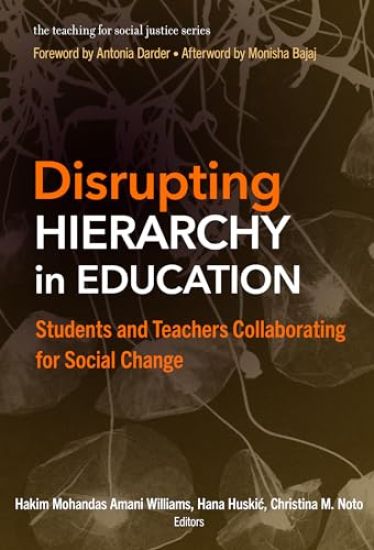
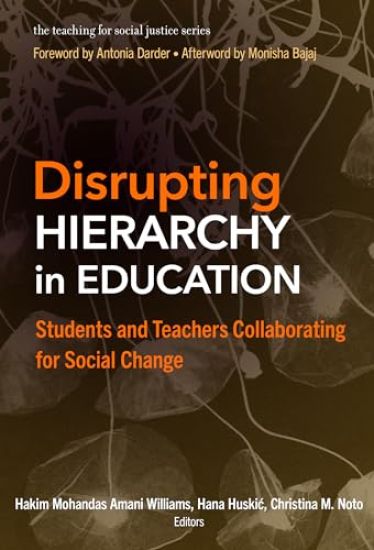
This timely book features rich examples of students and teachers, defined as learning partners, disrupting hierarchy in education by collaborating on social change projects. At the book's core is Paulo Freire's theorization of students and teachers working together toward co-liberation. Co-written by learning partners, each chapter in this collection highlights a social change project that puts Freire's theories into action. Projects span a range of academic disciplines and geographical locations from K-12, university/college, and non-formal educational contexts. Appropriate as both a textbook and a primer on collaborative social change-making, Disrupting Hierarchy in Education offers inspiration and models of community-engaged learning programs from across the globe. Topics include community education, public writing, using media for popular education, adolescent and youth development, climate change education, peace and justice leadership development, revolutionary nonviolence, literacy teacher education, citizenship education, development of Latin American studies, palliative care, reflections on identity and subjectivity, anti-racism education, trauma-informed pedagogy, wellness, and art curation. Book Features:Real-world examples of teaching and learning for social justice in ways that disrupt traditional educational hierarchy. Chapters written by teachers in collaboration with undergraduate and graduate students, youth advocates, professors, artists, curators, founders and leaders of NGOs, and elementary school teachers. Projects that cover a wide terrain, including K–12 settings, university/college, wellness, arts, and media and popular education. Examples from across the globe, including the United States, Brazil, South Africa, the United Kingdom, and Jamaica. Discussion questions and/or suggested activities at the end of each chapter.
This timely book features rich examples of students and teachers, defined as learning partners, disrupting hierarchy in education by collaborating on social change projects. At the book's core is Paulo Freire's theorization of students and teachers working together toward co-liberation. Co-written by learning partners, each chapter in this collection highlights a social change project that puts Freire's theories into action. Projects span a range of academic disciplines and geographical locations from K-12, university/college, and non-formal educational contexts. Appropriate as both a textbook and a primer on collaborative social change-making, Disrupting Hierarchy in Education offers inspiration and models of community-engaged learning programs from across the globe. Topics include community education, public writing, using media for popular education, adolescent and youth development, climate change education, peace and justice leadership development, revolutionary nonviolence, literacy teacher education, citizenship education, development of Latin American studies, palliative care, reflections on identity and subjectivity, anti-racism education, trauma-informed pedagogy, wellness, and art curation. Book Features:Real-world examples of teaching and learning for social justice in ways that disrupt traditional educational hierarchy. Chapters written by teachers in collaboration with undergraduate and graduate students, youth advocates, professors, artists, curators, founders and leaders of NGOs, and elementary school teachers. Projects that cover a wide terrain, including K-12 settings, university/college, wellness, arts, and media and popular education. Examples from across the globe, including the United States, Brazil, South Africa, the United Kingdom, and Jamaica. Discussion questions and/or suggested activities at the end of each chapter.
This important book offers strategies, models, and concrete ideas for better serving newcomer immigrant and refugee youth in U. S. schools, with a focus on grades 6–12. The authors present 20 strategies grouped under three categories: (1) classroom and instructional design, (2) school design, and (3) extracurricular, community, and alumni partnerships. Each chapter provides research-based information, classroom examples, tips for implementing each strategy, and additional resources. Readers will find engaging profiles of schools, students, and alumni interspersed throughout the book, offering both varied perspectives and practical advice. Humanizing Education for Immigrant and Refugee Youth will assist today's educators, school leaders, policymakers, and scholars interested in the holistic success and well-being of immigrant and refugee students. Book Features:Practical strategies for educators and school leaders are rooted in empirical research and classroom narratives from across the United States. Multiple, real-life examples are used to illustrate each strategy. Each chapter concludes with a brief summary and recommended resources. School and student profiles demonstrate what the strategies look like in practice, as well as their benefits for students. Diverse perspectives are presented by researchers, classroom teachers, school leaders, and newcomer students.
This important book offers strategies, models, and concrete ideas for better serving newcomer immigrant and refugee youth in U. S. schools, with a focus on grades 6–12. The authors present 20 strategies grouped under three categories: (1) classroom and instructional design, (2) school design, and (3) extracurricular, community, and alumni partnerships. Each chapter provides research-based information, classroom examples, tips for implementing each strategy, and additional resources. Readers will find engaging profiles of schools, students, and alumni interspersed throughout the book, offering both varied perspectives and practical advice. Humanizing Education for Immigrant and Refugee Youth will assist today's educators, school leaders, policymakers, and scholars interested in the holistic success and well-being of immigrant and refugee students. Book Features:Practical strategies for educators and school leaders are rooted in empirical research and classroom narratives from across the United States. Multiple, real-life examples are used to illustrate each strategy. Each chapter concludes with a brief summary and recommended resources. School and student profiles demonstrate what the strategies look like in practice, as well as their benefits for students. Diverse perspectives are presented by researchers, classroom teachers, school leaders, and newcomer students.
Over the past five decades, both peace education and human rights education have emerged distinctly and separately as global fields of scholarship and practice. Promoted through multiple efforts (the United Nations, civil society, grassroots educators), both of these fields consider content, processes, and educational structures that seek to dismantle various forms of violence, as well as move towards cultures of peace, justice and human rights. Educating for Peace and Human Rights Education introduces students and educators to the challenges and possibilities of implementing peace and human rights education in diverse global sites. The book untangles the core concepts that define both fields, unpacking their histories and conceptual foundations, and presents models and key research findings to help consider their intersections, convergences, and divergences. Including an annotated bibliography, the book sets forth a comprehensive research agenda, allowing emerging and seasoned scholars the opportunity to situate their research in conversation with the global fields of peace and human rights education.
Over the past five decades, both peace education and human rights education have emerged distinctly and separately as global fields of scholarship and practice. Promoted through multiple efforts (the United Nations, civil society, grassroots educators), both of these fields consider content, processes, and educational structures that seek to dismantle various forms of violence, as well as move towards cultures of peace, justice and human rights. Educating for Peace and Human Rights Education introduces students and educators to the challenges and possibilities of implementing peace and human rights education in diverse global sites. The book untangles the core concepts that define both fields, unpacking their histories and conceptual foundations, and presents models and key research findings to help consider their intersections, convergences, and divergences. Including an annotated bibliography, the book sets forth a comprehensive research agenda, allowing emerging and seasoned scholars the opportunity to situate their research in conversation with the global fields of peace and human rights education.
Schooling for Social Change offers fresh perspectives on the emerging field of human rights education in India. 60 years after independence, the Indian schooling system remains unequal. Building on over a year of fieldwork, including interviews and focus groups with policymakers, educators, parents and students, Monisha Bajaj examines different understandings of human rights education at the levels of policy, pedagogy and practice. She provides an in-depth study of the origins and effects of the Institute of Human Rights Education, a non-governmental program that operates in over 4,000 schools in India. This enlightening book offers an instructive case study of how international mandates and grassroots activism can work together. Bajaj shows how the Institute of Human Rights Education has gained significant momentum for school-based adoption, textbook reform, and policy changes in a nation-state still struggling to ensure universal access to education. Schooling for Social Change provides a wealth of analysis from the frontlines of education reform and will be of interest to all those working in international and comparative education, human rights, and South Asian development.
This focused, original work examines human rights education in India and offers key insights into larger international educational policy discussions. "Schooling for Social Change" offers fresh perspectives on the emerging field of human rights education in India. 60 years after independence, the Indian schooling system remains unequal. Building on over a year of fieldwork, including interviews and focus groups with policymakers, educators, parents and students, Monisha Bajaj examines different understandings of human rights education at the levels of policy, pedagogy and practice. She provides an in-depth study of the origins and effects of the Institute of Human Rights Education, a non-governmental program that operates in over 4,000 schools in India. This enlightening book offers an instructive case study of how international mandates and grassroots activism can work together. Bajaj shows how the Institute of Human Rights Education has gained significant momentum for school-based adoption, textbook reform, and policy changes in a nation-state still struggling to ensure universal access to education. "Schooling for Social Change" provides a wealth of analysis from the frontlines of education reform and will be of interest to all those working in international and comparative education, human rights, and South Asian development.